

We use cookies to improve your online experiences. To learn more and choose your cookies options, please refer to our cookie policy.
10 March, 2026
Why Schools Matter Most During Uncertain Times
The world our children are growing up in is evolving at an extraordinary pace. Technological innovation, global connectivity and social change mean that today’s young people are navigating a future that looks very different from the one their parents experienced. News travels instantly, global events shape daily conversations, and the careers of tomorrow are still being invented.
For parents, this creates a natural question: how do we provide our children with stability in a world that can feel unpredictable?
One of the most powerful responses is education, specifically the role of schools in a child's life.
Schools are often viewed as places of academic learning, but their impact extends far beyond the classroom. Schools shape how children see themselves, how they interact with others and how they develop the confidence to navigate challenges. In uncertain times especially, schools provide something that every child needs: structure, support and community.
In a city like Dubai, where families come from across the globe, the role of schools becomes even more significant. Dubai’s private education sector now educates over 387,000 students across 227 schools, representing 185 nationalities, making it one of the most diverse education ecosystems in the world (KHDA, 2025). This diversity reflects something important about the city itself. Families choose Dubai not only for opportunity but also for education. Schools here are more than just institutions; they are pillars of community and stability for families establishing themselves in a global city.
Why do schools provide such a powerful sense of stability?
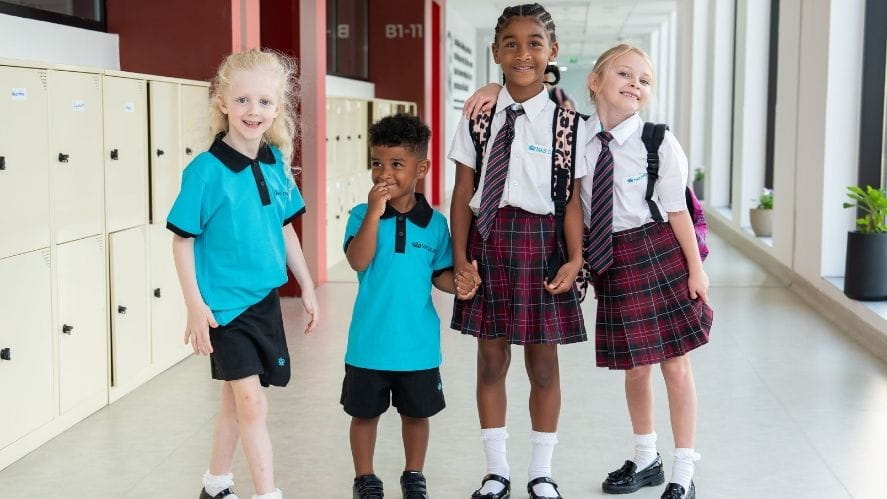
Consider the start of a typical school day. Students arrive on campus and are greeted by teachers who know their names. Friends get together before lessons begin. The flow of the day unfolds through classes, activities and shared experiences. To an outside observer, this may seem routine. A child, on the other hand, finds these moments to be deeply reassuring: a predictable environment where they feel safe and supported.
Routine plays a powerful psychological role in a child’s development. Predictable daily structures help young people regulate emotions, build focus and feel secure. When students know what their day looks like, they are better able to engage with learning and develop confidence.
Global research highlights just how important schools are during periods of uncertainty. During the COVID-19 pandemic, school closures disrupted education for 1.6 billion students across more than 190 countries, making it the largest disruption to learning in modern history (UNESCO, 2020). The impact extended far beyond academic learning. Studies later found that symptoms of anxiety and depression among young people doubled during the pandemic, highlighting how essential school environments are for emotional stability (Racine et al., 2021).
What became clear during that time was something educators have long understood: schools provide far more than lessons. They offer structure, familiarity and reassurance when the outside world feels uncertain. This stability is one of the reasons families increasingly choose international schools in Dubai. The consistency of strong educational environments allows students to thrive even while living in a fast-moving global city.
The ongoing tension in the Middle East serves to further emphasise this point. Hear from one of our parents:
“I must say that once again, in these unusual and highly stressful circumstances, the school has proved to be truly special and supportive of every individual involved. I have two daughters who have been in NAS for 11 years, and once again I’m happy with the choice i made many years ago. Thank you so much for always being there, ready, with your humanity and your professionalism.” - NAS Parent
How do teacher relationships shape a child’s experience of school?
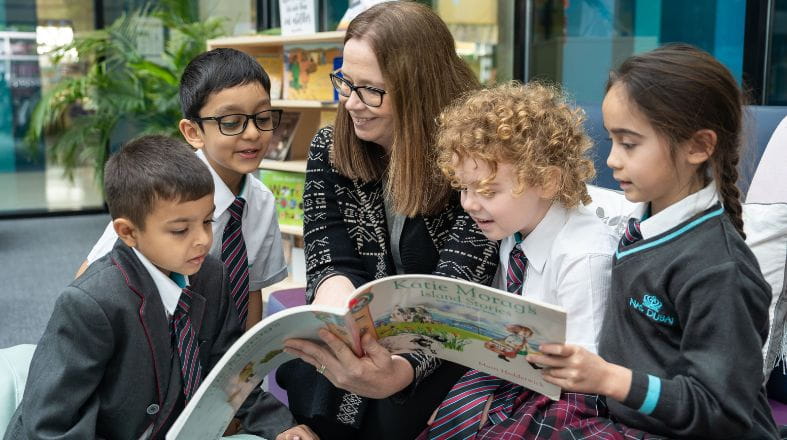
While routines provide stability, it is the relationships within schools that often leave the most lasting impression. Teachers play a uniquely influential role in shaping a child’s educational journey. They are educators, mentors and role models who help students discover their strengths and overcome challenges.
Most parents can recall a teacher who made a difference in their own lives. Perhaps it was the teacher who noticed a hidden talent, encouraged a passion for science or literature, or provided reassurance during a difficult moment. These relationships often become defining parts of a student’s school experience.
Studies published in Educational Psychology Review have found that positive teacher-student relationships significantly improve academic engagement, motivation and emotional wellbeing (Roorda et al., 2017). When students feel respected and supported by their teachers, they are more likely to participate actively in learning and develop confidence in their abilities.
In many cases, teachers also become trusted adults who notice changes in a child’s behaviour or emotional state. A student might share concerns with a teacher before they feel ready to speak about them at home. These everyday interactions play a crucial role in helping students feel supported.
Dubai’s education leaders often stress the value of strong educator relationships. Both former and current Directors General of Knowledge and Dubai’s Knowledge and Human Development Authority (KHDA), Abdulla Al Karam and Aisha Abdulla Miran, have emphasized that the city’s schools thrive because of dedicated educators who shape students’ futures. They highlight the vital role of school leaders and teachers in raising education standards and sustaining Dubai’s ambition to be a global learning destination, regardless of who holds the role.
These relationships remind us that education is not simply about curriculum. It is about the human connections that inspire young people to learn and grow.
Why are schools such important communities for families in Dubai?
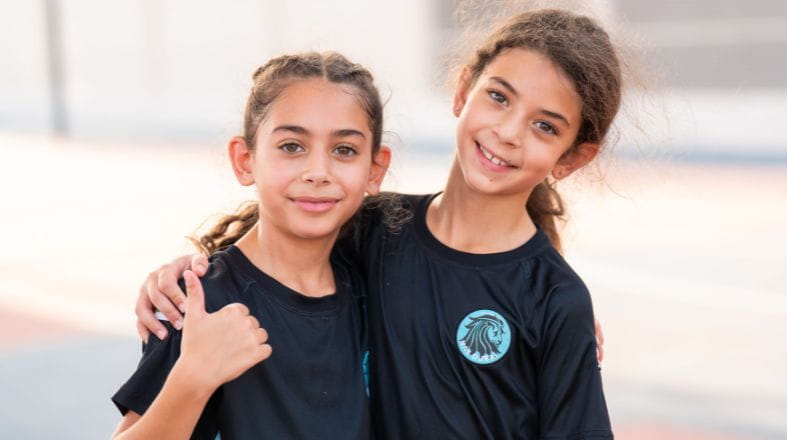
Schools not only influence students' lives, but they also build family communities.
Dubai is one of the most international cities in the world. Many families arrive here for new opportunities, often leaving behind extended family networks and familiar support systems. In this context, schools often become one of the first places where families establish meaningful connections.
Parents meet at school events, sports fixtures and performances. Students build friendships across cultures and backgrounds. Teachers support families as they adapt to new environments and education systems. Over time, these shared experiences create a sense of belonging that extends far beyond the classroom.
The scale and diversity of education in Dubai highlight the strength of this community. This variety allows families to choose educational pathways that align with their goals while still participating in a broader international community. British curriculum schools alone account for around 37% of student enrolment in Dubai, reflecting their popularity among international families.
Schools therefore serve as important meeting points where cultures, ideas and experiences come together. Within these communities, students learn not only academic knowledge but also how to collaborate, communicate and respect diverse perspectives.
Why is student wellbeing becoming central to education?

As education continues to evolve, one priority has become increasingly clear: student wellbeing. Educators around the world now recognise that academic success cannot be separated from emotional health. When students feel supported, safe and confident, they are far more likely to engage with their learning and achieve their potential.
The OECD’s PISA research found that students who report higher levels of wellbeing are significantly more likely to demonstrate strong academic outcomes and motivation in school (OECD, 2017).
Schools support wellbeing in many ways. Pastoral care systems ensure that students have access to guidance and support. Sports programmes encourage physical activity and teamwork. Creative subjects such as art, music and drama allow students to express themselves and explore their interests.
These opportunities are particularly important during adolescence, when young people are developing their identities and navigating social challenges. Schools provide structured environments where students can explore who they are while receiving encouragement and guidance from educators.
In Dubai, the focus on wellbeing has become a key part of the education system’s long-term vision. Education leaders emphasise that schools must nurture not only academic excellence but also resilience, empathy and confidence among students.
How do schools prepare students for an unpredictable future?
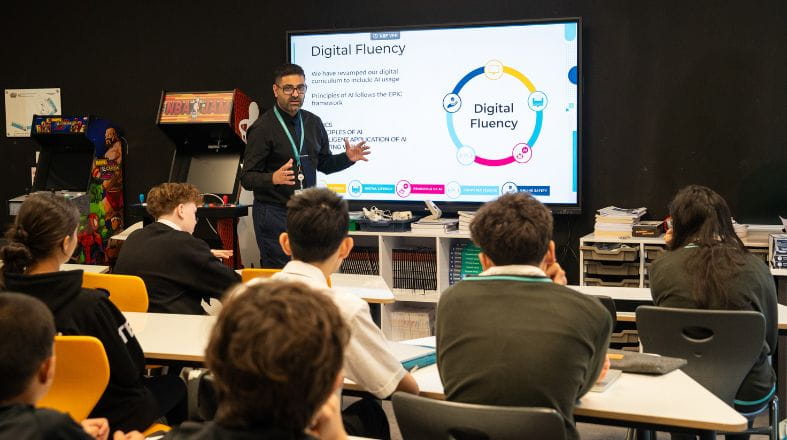
If schools' primary duty is to give students stability in the here and now, then preparing them for the future is just as important.
The nature of work and society is changing rapidly. Automation, artificial intelligence and global collaboration are reshaping industries and creating entirely new career paths. According to the World Economic Forum, 65% of children entering primary school today will eventually work in jobs that do not yet exist (World Economic Forum, 2023). This means that education must focus not only on knowledge but also on skills. Students need to develop critical thinking, creativity, adaptability and collaboration in order to thrive in an unpredictable world.
Schools cultivate these abilities through inquiry-based learning, interdisciplinary projects and opportunities for leadership. Students are encouraged to ask questions, explore different perspectives and develop solutions to real-world challenges.
Dubai’s education strategy reflects this forward-looking approach. The city continues to expand its education sector to meet growing demand, with new schools opening each year and long-term plans to significantly increase capacity for future generations. By investing in education, Dubai is investing in the next generation of innovators, leaders and global citizens.
Schools as a constant in a changing world
When parents reflect on what they want most for their children, the answers are often simple yet fundamental. They hope their children will grow into confident, compassionate individuals who are prepared to pursue their ambitions and contribute positively to the world.
Ultimately, the importance of schools lies not only in the lessons taught within classrooms but also in the environments they create. Schools offer young people a place to learn, to question and to grow. They provide the stability and support that children need to face an unpredictable world with confidence.
That role is more crucial than ever in uncertain times. Schools remain one of the most consistent and influential spaces in a child’s life, a place where knowledge, relationships and community come together to shape the future.
Related news
News image ![Two students embracing each other in a school setting.]() Blog | blog
Blog | blog
 Blog | blog
 How Strong School Community and Communication Drive Student Success
Discover how an international school in Dubai like NAS Dubai drives student wellbeing, academic excellence, and parent engagement through strong community and communication.
News image ![A group of five individuals standing indoors behind a large display board labeled “UGANDA,” which includes photos and information about a school‑support project in Uganda. The individuals are dressed in school uniforms, and the board features images related to the fundraising and awareness initiative.]() News | School Events | School News
News | School Events | School News
 News | School Events | School News
 How NAS Dubai Is creating life-changing social impact
Find out how NAS Dubai is creating life-changing social impact by working together with Bwindi Plus Orphanage School in Uganda to support 443 vulnerable children through education and community fundraising initiatives.
News image  Podcasts | School Events | Homepage Featured Article
.jpg?h=499&iar=0&w=887&rev=6c796104c67c464bb8f76eac783b48ca&hash=CBA52CFDBB6838F86D222A2DD6E9DB91 "Childhood Cancer Awareness Day Students Wear Yellow to Show Support") Podcasts | School Events | Homepage Featured Article
Podcasts | School Events | Homepage Featured Article Episode 4 Childhood Cancer Awareness Day
Karin, the mother of Alexa in Year 6, Lama, the mother of Sami in Year 2, and Jill, the mother of Alexis in Reception, come together to reflect on diagnosis, treatment, recovery, and life beyond cancer.


