28 January, 2026
Learning Pathways in BSKL – an explainer
At BSKL, education is a two-way street, with teachers and students giving feedback to each other on how they can progress academically.
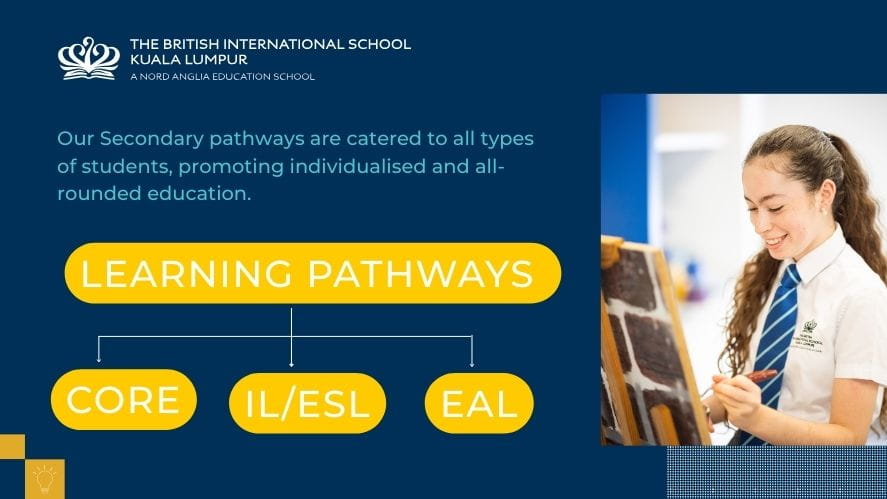
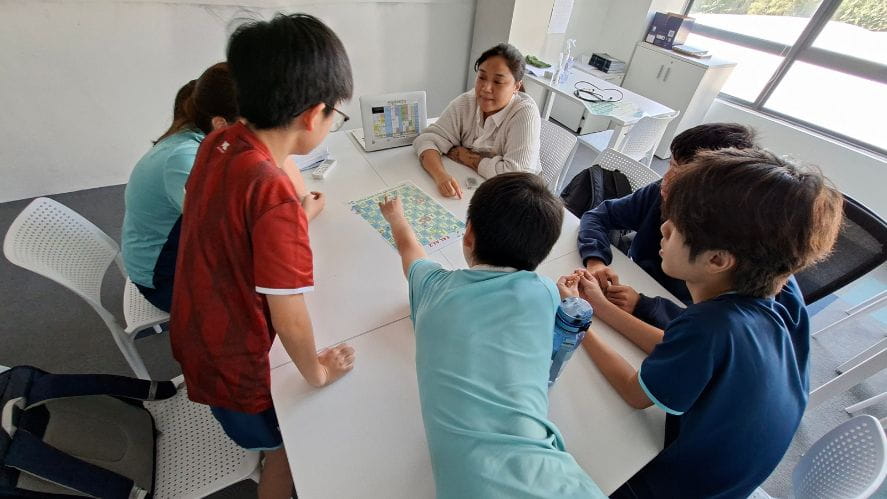
Secondary Assistant Head for Pathways & Student Support Mr Daniel Green and the secondary management team recognised that some students were struggling academically when the UK curriculum was taught in the same way to all students at the same pace. “We looked at our students, and we reflected how our teaching can meet their needs, then we started thinking outside the box, thinking deeply about how we could differentiate for each students’ needs, and we came up with our Learning Pathways system,” he said recently. After researching and planning, the Learning Pathways were fully implemented in BSKL across Years 7 to 9 beginning the academic year of 2025/2026. “The Learning Pathways system is based partially on language, tailoring to the students’ language needs, but we began to see that it also allows us to tailor our provision for other students’ needs as well, whether that be in terms of support, or being pushed beyond the curriculum when appropriate,” he said. The Learning Pathways – in detail In Years 7 to 9, all students’ subjects lessons (aside from Maths and Modern Foreign Languages) are taught in different groups within the Learning Pathways system: “However, just because a student is placed in the EAL pathway, it does not mean they will remain there for the whole academic year; far from it, we periodically assess and evaluate their readiness to receive the full UK curriculum,” said Mr Green. He highlighted an example of a Year 8 student in the EAL pathway, but because of the feedback from her teachers about her English progress and how well she was accessing the curriculum, she was placed in the IL pathway by the end of Term 1. “Similarly, if we see a student placed in the Core pathway who may find the pace challenging or who needs some more scaffolding with written responses, we have the IL Pathway; it is all about finding the optimal learning environment for each student,” he said. He added that while they were initially worried about students being separated socially by the pathways, it became clear that students are mixing and socialising outside of lessons, as well as through all the other activities happening at school. Also, the students in the EAL Pathway are building confidence more quickly and therefore able to start to building multilingual friendships sooner. Positive Outcomes Mr Green also said the implementation of the Learning Pathways required getting the teachers on board with the changes. “However, the teaching staff’s feedback has been very positive in terms of being empowered to adapt their teaching for the students to meet their needs. The feedback I receive is that the teachers often now rethink the way they teach, because they realise they are teaching different cohorts of students, and now they know they can push Core students further, support IL students in specific ways, and help EAL students develop English rapidly,” he said. He added that the learning pathways are formulated to prepare the students to be well-rounded students in general. “It aligns with BSKL’s values because we are being ambitious with our children. The pathways are designed with the students in mind; in short, students achieve more if supported in the most appropriate ways. Therefore, with this tailored system put in place, we hope parents trust our judgment in determining the right pathway for their children,” he said, “as this will lead to every child thriving and achieving their potential.”
Related news
News image ![How should schools teach in the age of AI? - How should schools teach in the age of AI]() Blog
Blog
 Blog
Blog How should schools teach in the age of AI?
Schools continue to be central to education by providing students with curated knowledge, expert guidance and a structured environment for learning.
News image ![From EAL to Excellence: Two BSKL Success Stories - from eal to excellence two bskl success stories]() News
News
 News
News From EAL to Excellence: Two BSKL Success Stories
Sunny and Daisy are two students who are a testament to the fact that they can make great strides with the right kind of support
.jpg?h=499&iar=0&w=887&rev=98522effd32b47cd81d9b9e0f7b6d927&hash=0B1931C5A412DF94B46901ADCCF9B9F4)