11 March, 2026
Understanding real student progress and wellbeing at school
.png?h=300&iar=0&w=400&rev=94d04a8f278246089a8a63979a10c2dc&hash=1EDDBD5207B391298F6F1E7998BAAA2A)

As children move through school, many parents look first at grades. Test scores provide useful data and help track academic standards. Yet student progress and student wellbeing are rarely captured by numbers alone.
At the British International School Kuala Lumpur (BSKL), leaders encourage families to look for patterns over time.
“Progress is not measured by test scores alone,” explains Mr Simon Clarke, Head of Primary. “Meaningful growth is often seen in everyday behaviours and attitudes.”
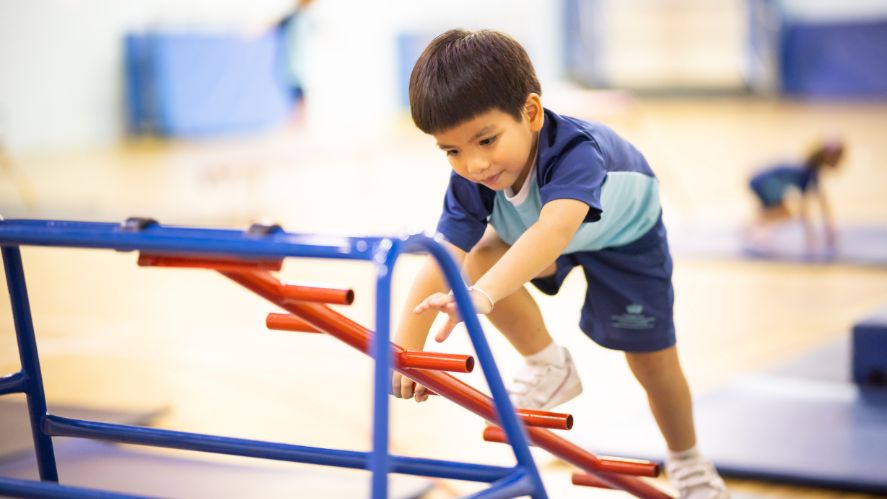
In Primary, this can mean increased independence, stronger communication, improved problem solving, and greater curiosity in class. It may show in the quality of work, in social confidence, or in a child’s ability to regulate emotions when learning feels challenging.
These are not soft indicators. They are foundations of long-term learning progress.
What healthy progress looks like in practice
When student progress is steady, small changes accumulate.
A child begins to organise their work without prompting, attempts more complex tasks and asks better questions. They show resilience after mistakes, and over time, they develop unique talents and interests.
In Secondary, these signals continue, though they may look different.
“Students who are progressing well often start to talk more confidently about what they are learning,” says Dr Nicola Brown, Head of Secondary. “They become more willing to participate in subjects and in activities beyond the classroom.”
Parents may notice that their child is engaging more deeply in lessons, contributing to discussions, or volunteering for co-curricular activities. Enjoyment of school becomes more consistent. Confidence grows alongside competence.
Student wellbeing and academic growth move together, as one supports the other.
How student progress and wellbeing are monitored
Strong outcomes depend on strong systems. At the British International School Kuala Lumpur, student progress and student wellbeing are monitored through a blend of academic tracking and pastoral care.
In Primary, teachers observe pupils closely in the classroom. Attitude to learning is shared in reports, alongside academic attainment. Informal communication, emails, and early conversations help parents understand how their child is developing.
In Secondary, every subject provides opportunities for student voice. Tutors monitor their groups carefully and work closely with Heads of Year to support individuals. Reporting cycles provide structured insight into learning progress. Teacher observations, feedback systems, and regular communication ensure that concerns are addressed early.
“We have detailed wellbeing and safeguarding processes, supported by systems for tracking and reporting,” Dr Brown explains. “This means we can respond quickly if a student needs support.”
Surveys, tutor meetings, and regular reporting are not simply administrative routines. They help staff understand how students are progressing so support can be offered early and in the right areas.
This is how high academic standards are maintained while student wellbeing remains a priority.
What changes over time as learners settle
A settled learner is not only academically capable but feels secure and connected. At BSKL, leaders describe this as a student who is fully engaged in school life.
Greater enthusiasm about learning is often visible first. Students speak confidently about subjects and understand themselves better as learners. They demonstrate stronger independence in managing homework or revision.
Resilience strengthens and mistakes are treated as part of growth. Social confidence deepens through more secure friendships and participation in activities such as sports, music, and co-curricular programmes.
In Secondary, students often begin to seek broader opportunities. They volunteer for leadership roles, join new clubs, or challenge themselves in unfamiliar areas. Academic progression becomes more self-directed.
These changes signal healthy child development. They show that learning progress and child wellbeing are moving forward together.
Looking at the whole picture
Grades reflect subject mastery and readiness for future pathways. Yet they are only one part of a broader picture of student progression.When parents see steady improvement in independence, communication, resilience, and engagement, they are witnessing meaningful growth. These qualities underpin long-term academic success and child health and wellbeing.
At the British International School Kuala Lumpur, student progress and student wellbeing are monitored deliberately and discussed openly. The aim is not only strong examination results, but confident, capable learners prepared for the next stage of education.
If you would like to understand how progress is tracked and supported at different stages, a conversation with academic leaders can provide clarity and reassurance grounded in evidence rather than assumption.
Related news
News image ![How should schools teach in the age of AI? - How should schools teach in the age of AI]() Blog
Blog
 Blog
Blog How should schools teach in the age of AI?
Schools continue to be central to education by providing students with curated knowledge, expert guidance and a structured environment for learning.
News image ![From EAL to Excellence: Two BSKL Success Stories - from eal to excellence two bskl success stories]() News
News
 News
News From EAL to Excellence: Two BSKL Success Stories
Sunny and Daisy are two students who are a testament to the fact that they can make great strides with the right kind of support
.jpg?h=499&iar=0&w=887&rev=98522effd32b47cd81d9b9e0f7b6d927&hash=0B1931C5A412DF94B46901ADCCF9B9F4)