Schools continue to be central to education by providing students with curated knowledge, expert guidance and a structured environment for learning.

22 September, 2026
How should schools teach in the age of AI?

As artificial intelligence becomes increasingly embedded in everyday life, it’s prompting a fundamental question for education: what should schools prioritise in a world where information is instantly accessible and answers can be generated in seconds?
The conversation is not simply about introducing new tools into the classroom. It is about rethinking what meaningful learning looks like, what skills truly matter, and how students can be prepared for a future shaped by rapid technological change.
At The British International School Kuala Lumpur (BSKL), this discussion is centred on ensuring that education remains purposeful, rigorous and deeply human, placing as much emphasis on how students think as on what they know.
Moving beyond content delivery
For decades, education systems have focused heavily on the acquisition of knowledge. However, in an age where AI can retrieve and generate information almost instantly, content alone is no longer the defining measure of learning.
What becomes more important is how students engage with that knowledge:
- Can they question it?
- Can they apply it in new contexts?
- Can they evaluate its reliability and relevance?
Rather than reducing the importance of knowledge, AI reshapes how it is used. Students must move beyond memorisation towards interpretation, application and synthesis—skills that require active thinking and judgement.
The Challenge of Measuring Learning
As schools begin integrating AI more meaningfully into teaching and learning, evaluating its impact becomes increasingly complex.
Dr Bruce Geddes, Deputy Head of Secondary: Academic at BSKL, highlights this challenge:
“The schools can look at learning outcomes before and after. Part of the problem is that the range of AI integration is so vast you can't just say one project is the same as another. It's a bit like saying how can we evaluate whether the use of the internet is any good for teaching or not? Well, what does that really mean? It can mean many vastly different things so we need to be very specific around what we're measuring.”
His insight reflects a critical shift in thinking. AI is not a single, uniform intervention—it is a broad and evolving set of tools, each with different applications and outcomes. As such, schools must be precise in defining what success looks like.
Is the goal improved academic performance?
Deeper understanding?
Greater independence?
More personalised learning pathways?
Without clarity on these outcomes, it becomes difficult to meaningfully assess the role AI should play.
Focusing on the Process of Thinking
In this context, teaching students how to think becomes more important than ever.
AI can assist with generating ideas, structuring responses and providing feedback. However, it cannot replace the internal processes that underpin learning—analysing, questioning, reflecting and making informed decisions.
Schools, therefore, need to place greater emphasis on:
- Critical thinking: evaluating information, identifying bias and forming reasoned conclusions
- Metacognition: understanding how one learns and recognising when thinking needs to be challenged or extended
- Problem-solving: approaching unfamiliar situations with adaptability and creativity
- Judgement: making decisions based on context, ethics and understanding
These are the processes that transform information into meaningful knowledge.
Teaching Students to Use AI Responsibly
In the age of AI, digital literacy evolves into something more nuanced. Students must not only know how to use technology, but also when and why to use it.
This includes:
- Recognising when AI can support learning and when it may hinder it
- Questioning the accuracy and bias of AI-generated outputs
- Taking ownership of their work rather than outsourcing thinking
- Using AI as a tool for refinement, not a substitute for effort
By developing this awareness, students become active participants in their learning, rather than passive recipients of generated answers.
Balancing Efficiency and Depth
AI introduces greater efficiency into the learning process, but education must be careful not to prioritise speed over depth.
Struggle, reflection and iteration are essential components of learning. If AI removes these entirely, it risks undermining the very skills students need to develop.
Instead, the goal should be to use AI to support these processes:
- Providing timely feedback that helps students improve
- Offering alternative explanations that deepen understanding
- Creating opportunities for practice and refinement
In this way, AI enhances learning without replacing the effort required to achieve it.
Preparing Students for an Evolving Future
Ultimately, the role of schools in the age of AI is not to predict every future skill, but to develop learners who can adapt, think independently and navigate complexity.
This requires a shift in emphasis—from delivering content to cultivating capability.
At BSKL, students are encouraged to engage deeply with ideas, reflect on their thinking, and develop the confidence to question and explore. AI becomes part of this process, but it does not define it.
Because while technology will continue to evolve, the need for thoughtful, discerning and capable individuals remains constant.
A More Intentional Approach to Education
The age of AI does not simplify education—it makes it more intentional.
Schools must be clear about what they value, precise about what they measure, and deliberate in how they integrate new tools into learning. As Dr Geddes highlights, clarity around purpose is essential in navigating this shift.
In the end, the most important outcomes are not determined by the technology itself, but by how it is used—and by the people who use it.
Education, therefore, must continue to focus on developing those people: learners who are not only equipped to use AI, but who can think beyond it.
Related news
News image ![Finding Strength in Speaking Up: BSKL Marks World Mental Health Day - finding strength in speaking up bskl marks world mental health day]() News
News
 News
News Finding Strength in Speaking Up: BSKL Marks World Mental Health Day
The Primary School in BSKL has made efforts to encourage their students to speak openly about what they are feeling
News image ![BSKL wins two Nord Anglia Global Awards for outstanding IGCSE results - bskl wins two nord anglia global awards for outstanding igcse results]() News
News
 News
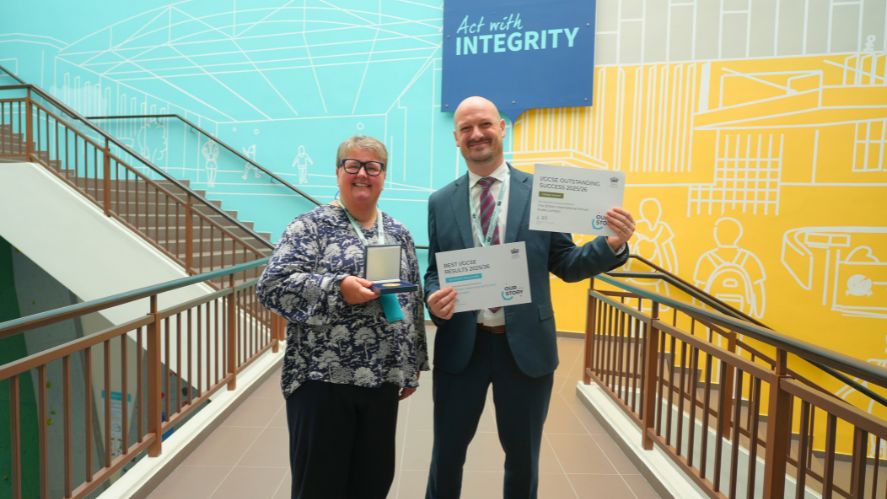
News BSKL wins two Nord Anglia Global Awards for outstanding IGCSE results
The awards were a testament to BSKL’s commitment to academic excellence