Why play is a powerful foundation for academic success.
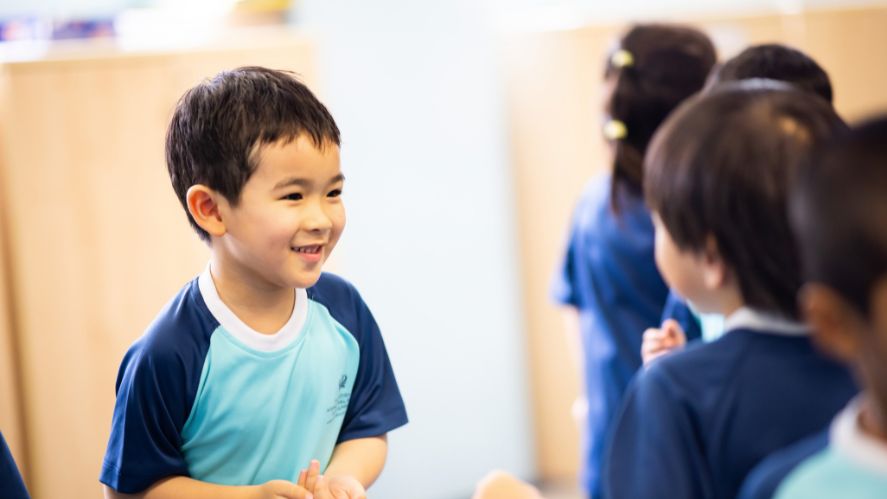
For some parents, the words "play-based learning" can raise questions. How does play prepare children for the demands of Primary? How can children learn to read, write and develop mathematical understanding if they spend much of their day exploring, building, creating and playing?
These are important questions, particularly for families who want reassurance that their child is developing strong academic foundations from an early age.
At BSKL, we know play and academic learning are not separate ideas. In fact, meaningful play is one of the most effective ways young children develop the skills and understanding that support future academic success.
Children are naturally curious. From the moment they begin exploring the world around them, they learn through investigation, experimentation and discovery. Play provides the ideal environment for these natural learning behaviours to flourish.
Consider a child building a bridge using blocks. While this may appear to be a simple activity, the child is engaging with mathematical concepts such as shape, size, balance and measurement. They are testing ideas, solving problems and making predictions about what will happen next. These experiences develop critical thinking and reasoning skills that form the foundation for later mathematical learning.
The same principle applies to literacy. When children engage in role play, storytelling and imaginative games, they expand their vocabulary, develop communication skills and learn how language works. A child pretending to run a restaurant may create menus, write orders or discuss recipes with friends. Through these meaningful experiences, literacy emerges naturally and purposefully.
Head of Primary, Simon Clarke, highlights the research: children learn best when they are actively engaged in their learning.
“When children are motivated, interested and emotionally invested in an activity, they are more likely to remember information, make connections and apply their understanding in new situations,” he said. “This is one reason why play can be such a powerful driver of academic development.”
Play also develops skills that are essential for success across all areas of learning. Through play, children learn how to focus their attention, persevere when tasks become challenging, collaborate with others and regulate their emotions. These learning behaviours play a crucial role in future academic achievement.
“In many ways, play allows children to practice being learners,” Simon said. “When children negotiate roles during imaginative play, they develop communication and collaboration skills. When they encounter challenges while building a structure or completing a task, they learn resilience and problem-solving. When they explore new materials and ideas, they develop creativity and curiosity.”
These are skills that cannot be taught effectively through direct instruction alone. They must be experienced, practiced and refined over time.
At BSKL, our approach combines purposeful play with outstanding expertise. Our specialized educators carefully observe children's interests and development while introducing new knowledge, skills and concepts at the right moment. This ensures that play remains both enjoyable and educational.
For example, phonics may be taught explicitly through structured sessions, but children then apply their learning through games, storytelling and practical experiences. Mathematical concepts may be introduced by teachers and reinforced through investigations, construction activities and everyday problem-solving opportunities.
This balanced approach helps children develop both strong academic foundations and a positive relationship with learning.
As our Head of Early Years, Lana Turner explains: "Learning through play is not the opposite of academic learning. It is often the most effective route to it. Perhaps the greatest benefit of play is that it helps children become active participants in their own learning. Rather than simply receiving information, they explore ideas, ask questions and develop a genuine sense of curiosity about the world around them.”
These are the qualities that underpin lifelong learning.
Academic success is not built through memorisation alone. It is built through confidence, creativity, critical thinking and the ability to apply knowledge in meaningful ways. That journey begins with play.
“At BSKL, we see the evidence every day,” Lana said. “Through purposeful, carefully planned learning experiences, children develop the literacy, numeracy, communication and problem-solving skills they need for future success, while preserving the joy, wonder and excitement that should define childhood.”
Play is not a distraction from learning; it is the foundation upon which great learning is built.
Related news
 News
News  News
News