Play-based learning is often celebrated as the gold standard in Early Years education, but many parents still ask an important question: is play alone enough? Discover how BSKL combines purposeful play with explicit teaching to help children develop confidence, independence and strong academic foundations.

24 September, 2026
Is play-based learning enough? Finding the right balance between play and teaching
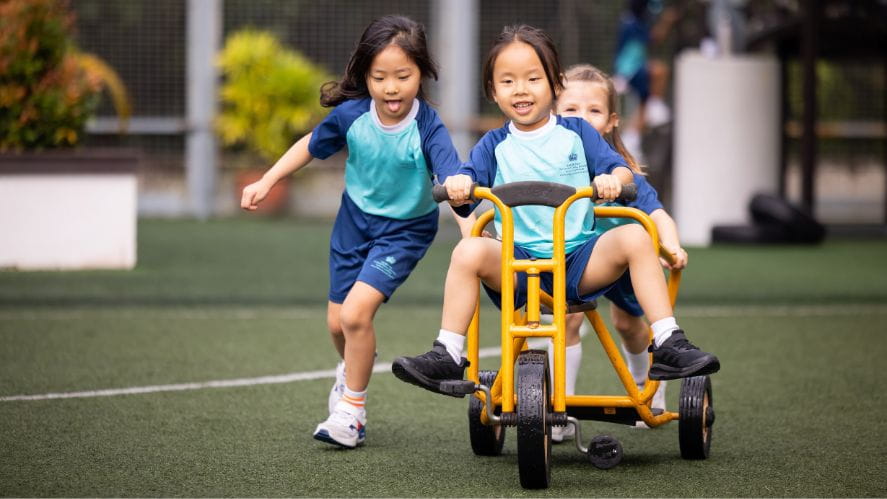
Imagine walking into two Early Years classrooms. In one, children are sitting quietly at tables, completing worksheets and following instructions. In the other, children are building cities from blocks, negotiating roles in a role-play restaurant, writing menus, investigating materials and asking endless questions.
For many parents, the second classroom can feel both exciting and slightly unsettling. Where is the teaching? How will children learn to read? Will they be prepared for Primary?
These are valid questions, as parents decide on one of the most important investments in their child's future. However, is that the debate should not be framed as play versus teaching. The most successful Early Years environments do not choose one over the other. They carefully combine both.
Why play matters
When play-based learning is misunderstood, it’s usually because the focus is on what children are doing, rather than what they are learning.
A child pretending to be a chef may appear to be simply having fun. But they may also be:
- Developing vocabulary
- Practising conversation skills
- Applying mathematical thinking
- Exploring writing through menus and signs
- Learning to collaborate with others
The learning is often hidden beneath the activity itself.
According to child development researcher Peter Gray, play allows children to take ownership of their learning, solve problems, make decisions and develop independence in ways that are difficult to replicate through direct instruction alone.
"Play is how children practice the skills they need for life," he said.
Through play, children develop resilience, creativity, curiosity and critical thinking—qualities that support success far beyond the Early Years classroom.
Why teaching matters too
At the same time, it would be misleading to suggest that children should simply be left to play all day without guidance. Children benefit enormously from expert teaching. There are times when new knowledge, concepts and skills need to be explicitly introduced and carefully modelled.
Phonics is a good example. Learning to recognise sounds, blend words and develop early reading skills is not something that happens entirely by accident. Skilled teachers play a vital role in introducing and reinforcing these foundations.
Similarly, mathematical understanding often develops most effectively when teachers ask questions, introduce new vocabulary and challenge children to think more deeply.
We know from the research, "children need opportunities to discover, but they also need experts who know when to step in, extend thinking and introduce new learning.”
The question is not whether children need teaching. The question is what that teaching should look like for young learners.
The BSKL approach: purposeful play, expert teaching
At BSKL, we know the strongest Early Years education combines the best of both worlds.
Children learn through carefully planned experiences that are engaging, meaningful and developmentally appropriate, while also benefiting from explicit teaching and skilled adult guidance.
A typical day might include:
- Direct phonics teaching
- Storytelling and language activities
- Mathematical exploration
- Child-led investigation
- Specialist music lessons
- Swimming
- Outdoor learning
- Opportunities for imaginative play
Every experience has a purpose. Every activity contributes to learning. Every child is observed, supported and challenged according to their individual needs. Play is not the absence of teaching. In the best Early Years classrooms, teaching is woven seamlessly into children's interests, questions and experiences.
What parents really want
When parents say they want their child to be ready for school, they’re usually hoping for something much bigger than academic achievement alone.
They want a child who:
- Loves learning
- Can communicate confidently
- Solves problems independently
- Builds positive relationships
- Approaches challenges with resilience
These outcomes are not developed through worksheets alone. Neither are they developed through completely unrestricted play. They emerge when children experience a thoughtful balance of exploration, challenge, support and guidance.
Preparing children for the future
The world our children will grow up in is changing rapidly. Future success will depend not only on knowledge, but also on creativity, adaptability, collaboration and problem-solving. These are precisely the skills that develop most effectively through rich play experiences, supported by expert educators who know how to turn curiosity into learning.
Children need opportunities to explore independently, but they also benefit from skilled teachers who know when to model, challenge and extend learning. And perhaps that is the answer to the original question: Is play enough?
On its own, probably not. But when purposeful play is combined with expert teaching, thoughtful planning and a deep understanding of child development, it becomes one of the most powerful foundations for future success.
At BSKL, that's exactly the balance we strive to achieve every day.
Related news
News image ![Finding Strength in Speaking Up: BSKL Marks World Mental Health Day - finding strength in speaking up bskl marks world mental health day]() News
News
 News
News Finding Strength in Speaking Up: BSKL Marks World Mental Health Day
The Primary School in BSKL has made efforts to encourage their students to speak openly about what they are feeling
News image ![BSKL wins two Nord Anglia Global Awards for outstanding IGCSE results - bskl wins two nord anglia global awards for outstanding igcse results]() News
News
 News
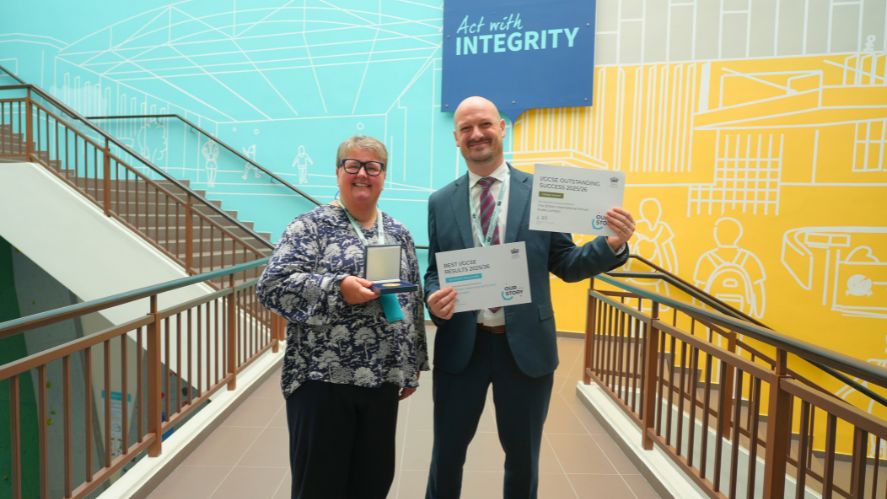
News BSKL wins two Nord Anglia Global Awards for outstanding IGCSE results
The awards were a testament to BSKL’s commitment to academic excellence