

.jpg?h=5464&iar=0&w=8192&rev=d25c2e8a10054f4eaa147d554bcdc656&hash=0513C3A7A8B0D63204022FDBF42240DC)



We use cookies to improve your online experiences. To learn more and choose your cookies options, please refer to our cookie policy.
02 March, 2026
How international schools track student progress throughout the year
.jpg?h=4471&iar=0&w=6706&rev=c8569356f86c4a6bb7b63e19b8844893&hash=BCE700BC944E2B6125D9B36810AC0247)
Parents often ask the question, ‘How will my child’s progress be monitored?’ when comparing schools. It is also one of the easiest things to misunderstand if you are used to equating progress with grades. It can feel unsettling to hear that learning is assessed in many different ways, often without a formal exam at the end of every unit.
At the British Vietnamese International School Hanoi (BVIS Hanoi), teachers describe monitoring student progress as something that happens continuously, through what students say, do, write, and attempt every day.
Claire Slowther, Head of Secondary, puts it simply: “Teachers are constantly assessing student progress each and every day. For many parents, the words assessment and progress are synonymous with tests and academic results. In reality, the picture of student progress is far bigger than this.”
.jpg?h=3870&w=5805&rev=f09ed0d82ecc49c4a7624f73200193ce&hash=4E91AB4EAC5CDCEEDA684DDB0EC534DB)
What teachers are looking for in the classroom
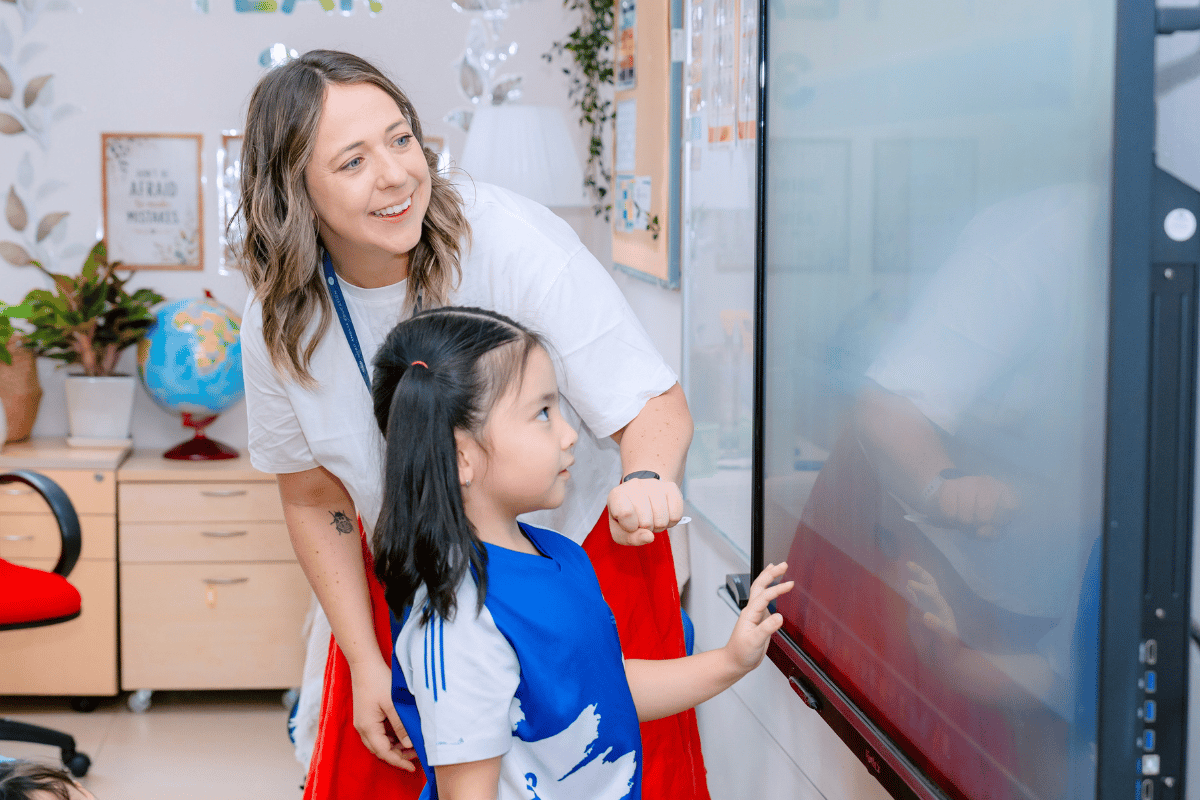
Student progress monitoring starts with close observation. Teachers pay attention to how students approach tasks, how they contribute to class discussion, and how they respond to questions.
Claire explains that BVIS Hanoi teachers are “constantly observing students, monitoring their learning and work, gauging their contributions to class discussions and listening to their answers to questions.” This is a form of student learning assessment that can be more revealing than a single score. A test can show what a student remembers on one day. Classroom evidence shows how learning is developing over time.
.jpg?rev=492b66fe04ff46ecbf16a019a512851e&hash=B57A2127EB4A93EDA8FBF9BF2AFD9B42)
Malcolm Wood, Head of Primary, describes a similar approach, in the primary school: “Through a range of day-to-day assessment techniques including skilled questioning and observation of students as well as regular testing and marking of work, we build a clear picture of where each learner is and what their next steps should be.”
The practical impact for parents is that progress is not judged by one moment. It is built from repeated evidence.
Progress is built from more than formal tests
Parents often assume that if there is not a test, there is no performance assessment happening. In practice, BVIS Hanoi teachers use a mix of informal and formal checks to assess students' progress in a way that is both detailed and consistent.
Claire notes that “many of the online learning and games and activities which students think are just ‘fun activities’ will give teachers feedback and data around student progress.” When combined with classwork, homework, and teacher observation, this adds to an “ongoing picture of how students are progressing individually.”
.jpg?rev=4311f78a672243b5881f63a075944ec4&hash=55F43692D0E04FE476D8CE088ECFAC40)
More formal assessment still plays a role. Claire describes teachers assessing and analysing “homework, classwork, activities, informal topic tests and more formal assessments.” The difference is that these sit within a wider approach. Monitoring student progress does not rely only on one method, because no single method is enough on its own.
This also supports student progression in a more stable way. Teachers can spot patterns early, respond to gaps, and adjust learning steps before small issues become bigger ones.
How student progress is shared with families
Progress monitoring only builds confidence if parents can understand it. Many families are not looking for more information. They are looking for clearer information, shared at the right time, in a way that helps them act.
Claire explains that “our parents receive a report at the end of each term which summarises the students’ progress.” Families also have “2 PTCs (parent teacher conferences) each year,” which she describes as opportunities for parents to have a 1:1 discussion with subject teachers and hear about successes, as well as areas for improvement.
.jpg?rev=b390fd69f40340e0986ab9f9238f0dd7&hash=01A8A748364201D0C5FCA042C430F5D7)
She also notes recent improvements in parent communication to improve clarity and consistency in updates. “Over the past year we have been working closely with our parents and receiving feedback on other methods of how we can communicate updates with parents,” she says. “This term we are introducing regular parent updates with information such as attendance, house points, reading age data and standardised assessment feedback.”
In primary, Malcolm describes regular communication as part of maintaining a close relationship with families, including “face-to-face encounters, telephone calls and diligent messaging,” alongside “regular academic reports and parent-teacher conferences.”
The practical impact is simple. Parents receive a clearer picture of progress and next steps, not just a summary at the end of term.
What parents can look for beyond results
For families evaluating international schools, it is reasonable to ask what student progress monitoring looks like between reports and conference dates. Can teachers explain how they know a student is progressing? Can they describe next steps clearly? Can they share examples of the types of work and behaviours that inform their judgement?
When monitoring student progress is done well, it helps parents understand where their child is now, what improvement looks like, and how school and home can work together without guesswork.
If you would like to understand how this works in practice at the British Vietnamese International School Hanoi, we welcome thoughtful conversations with our academic leaders about how progress is assessed, and communicated, across the school year.
.jpg?rev=8a022ec62e8d48c3b71ecd10dc0ddfa8&hash=7E5BA3F8BDC084B0A52A65B025F0602F)
Related news
News image ![Student Highlights & Success Stories (21/09 - 25/09/2026) | BVIS Hanoi - Weekly Updates 25-09-26]() News | Weekly School Updates
News | Weekly School Updates
 News | Weekly School Updates
 Student Highlights & Success Stories (21/09 - 25/09/2026)
Student Highlights & Success Stories updated from BVIS Hanoi's Senior Leadership Team (21/09 - 25/09/2026)
News image ![Student Highlights & Success Stories (14/09 - 18/09/2026) | BVIS Hanoi - Weekly Updates 18-09-26]() News | Weekly School Updates
News | Weekly School Updates
 News | Weekly School Updates
 Student Highlights & Success Stories (14/09 - 18/09/2026)
Student Highlights & Success Stories updated from BVIS Hanoi's Senior Leadership Team (14/09 - 18/09/2026)


