

We use cookies to improve your online experiences. To learn more and choose your cookies options, please refer to our cookie policy.
11 March, 2026
How academic progress is monitored and supported over time

Parents rarely worry about a single test result. What concerns them more is whether academic progress is steady, visible, and supported year after year. Confidence in a school grows when progress is not assumed, but carefully monitored.
At the British Vietnamese International School Ho Chi Minh City (BVIS HCMC), academic progress is tracked through structured systems embedded into daily practice rather than left to periodic review.
“We use observations alongside meaningful conversations with students and provide feedback at every stage of their learning, alongside formative assessment,” explains Deirdre Grimshaw, Principal. “Peer assessments and teacher assessments against clear rubrics help us build an accurate picture of progress.”
This layered approach ensures that academic performance is understood in context. Teachers do not rely on isolated data points. They gather evidence continuously through classroom interaction, written work, and structured assessment tools.
Monitoring that begins in the classroom

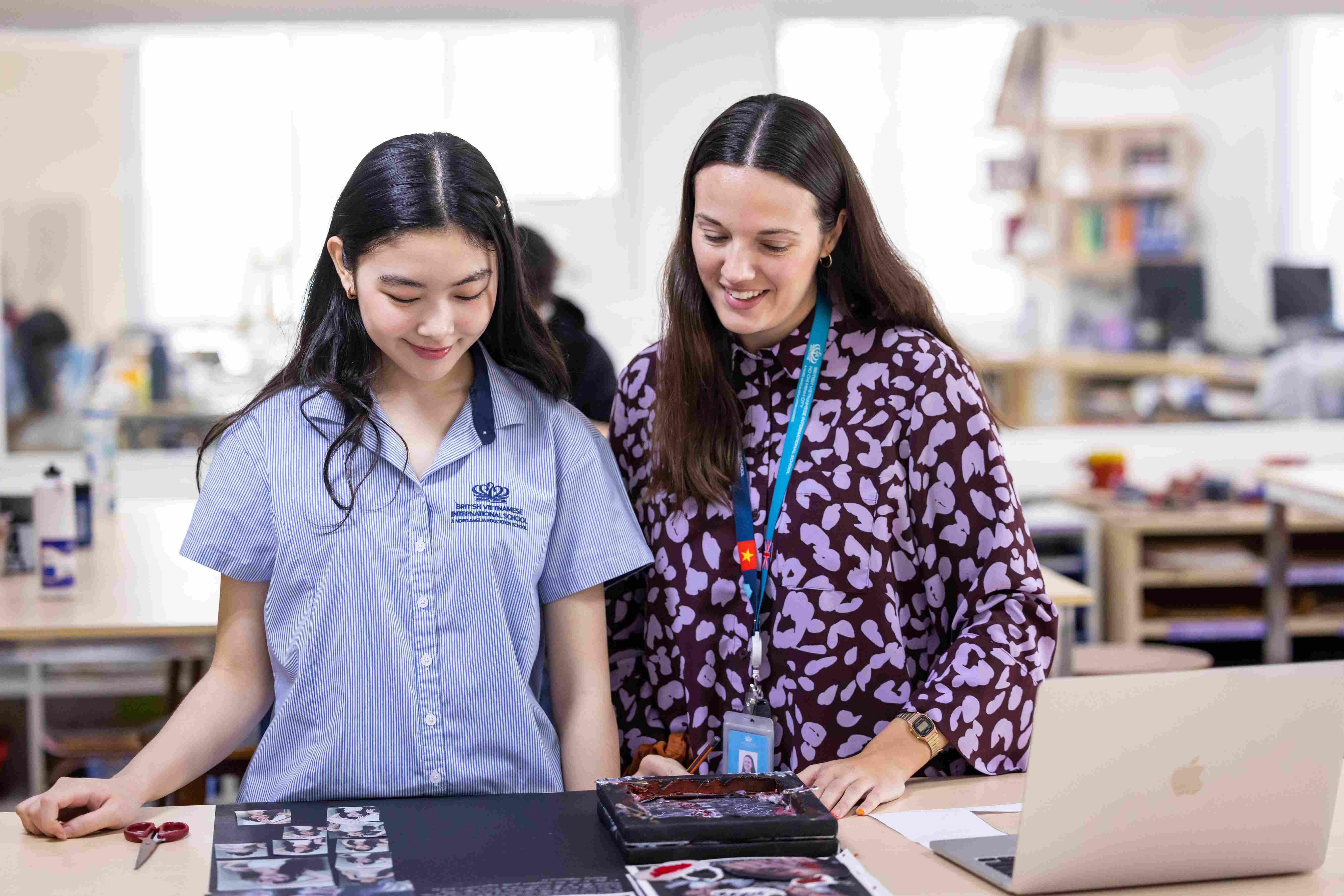
Strong academic progress starts with consistent teaching practice. Lesson observations and marking in class provide immediate feedback. Formative assessments allow teachers to adjust instruction in response to students’ understanding. Informal discussions during Tutor Time or soft starts offer additional insight into how confidently students are engaging with their work.
“We combine formal assessment with professional judgement,” says Ms Grimshaw. “Teachers know their classes well, and that knowledge matters.”
This combination of evidence and experience allows small shifts in learning progress to be identified early. When a student’s engagement drops or their written work changes in quality, teachers respond quickly. Early and ongoing intervention protects momentum and supports sustained academic performance.
Student wellbeing plays an important role here, too. A student who feels secure and understood is more likely to persist with challenging tasks. Monitoring therefore considers both academic performance and observable engagement.
Clear communication with families
Academic progress is strengthened when parent communication is transparent and regular.

Formal written reports are shared several times a year, outlining attainment, effort, and next steps. Scheduled parent-teacher meetings provide space for discussion and clarification. Informal conversations at drop-off, pick-up, or school events add further opportunities to strengthen the home-school connection.
“Communication is not limited to reports,” Ms Grimshaw explains. “If a parent has concerns or questions, specific meetings can be arranged as needed. Equally, teachers are encouraged to reach out to parents should there be a need, ensuring that home-school partnership is prioritised and impactful. We want families to feel informed rather than uncertain.”
This structured approach ensures that parents receive more than summary grades. They gain a clear understanding of educational development and learning progress over time.
The questions that matter most
When meeting with teachers, the quality of questions can shape the clarity of information parents receive.
Ms Grimshaw encourages families to focus on practical targets. “Ask about key academic goals and the next steps needed to reach them. Ask about attitudes to learning and behaviour, because those influence academic performance.”
She also highlights the importance of engagement. “If a child is happy at school and enjoying their learning, that often supports stronger outcomes. If they are not, we explore why and what we can do together to help.”
This partnership matters. Academic progress strengthens when home and school share a clear understanding of expectations and support strategies.
A structured framework for long-term progress

At BVIS, academic progress is not left to chance. It is supported through structured assessment, attentive teaching, and ongoing dialogue with families. Systems operate consistently across year groups so that students experience continuity.
Parents who would like to understand how academic progress is monitored in their child’s phase are welcome to speak with our academic leaders. Clear systems and open conversation are central to ensuring that learning progress remains steady and visible throughout a student’s school journey.
Related news
News image ![What Are Life Skills? Why Is It Important to Develop Life Skills for Children? - ky nang song]() Blog | Educational Insights
Blog | Educational Insights
 Blog | Educational Insights
 What Are Life Skills? The Role of Life Skills Education in Child Development
Developing life skills helps children become more adaptable, strengthen their wellbeing, and build the confidence to solve everyday challenges effectively.
News image ![Soft skills: 8 Essential soft skills and their importance for students - ky nang mem]() Blog | Educational Insights
Blog | Educational Insights
 Blog | Educational Insights
 Soft Skills: 8 Essential Soft Skills and Their Importance for Students
Discover 8 essential soft skills that help students communicate confidently, collaborate effectively, solve problems and adapt to a changing world. Learn why these skills are vital for future success.
News image ![Top 5 essential life skills for children to build their confidence and independence - ky nang song cho tre mam non]() Blog | Educational Insights
Blog | Educational Insights
 Blog | Educational Insights
 Top 5 Essential Life Skills for Children to Build Confidence and Independence
Discover 5 essential life skills for children and learn how parents can help them build confidence, independence and healthy habits from an early age.
News image ![What Is an International School? A Parent’s Guide to Choosing A Suitable One - truong quoc te la gi]() Blog | Educational Insights
Blog | Educational Insights
 Blog | Educational Insights
 What Is an International School? Understanding the Different Types of Schools
What is an international school? Learn about international curricula such as the British curriculum, IB and American programmes, as well as the benefits, entry requirements and key factors to consider when choosing a school for your child.


