



We use cookies to improve your online experiences. To learn more and choose your cookies options, please refer to our cookie policy.
09 February, 2026
Language That Empowers: A Community Guide to Neurodiversity Affirming Communication
At Dover Court International School, we believe that the words we choose shape the way our community understands, supports and celebrates every learner. In this insightful piece, Fatima Ionescu, our Lead Speech and Language Therapist, invites us to rethink the language we use when talking about neurodivergence – shifting from deficit‑based terms to communication that empowers, validates and uplifts. This guide offers practical, compassionate strategies that help us create a more inclusive community.
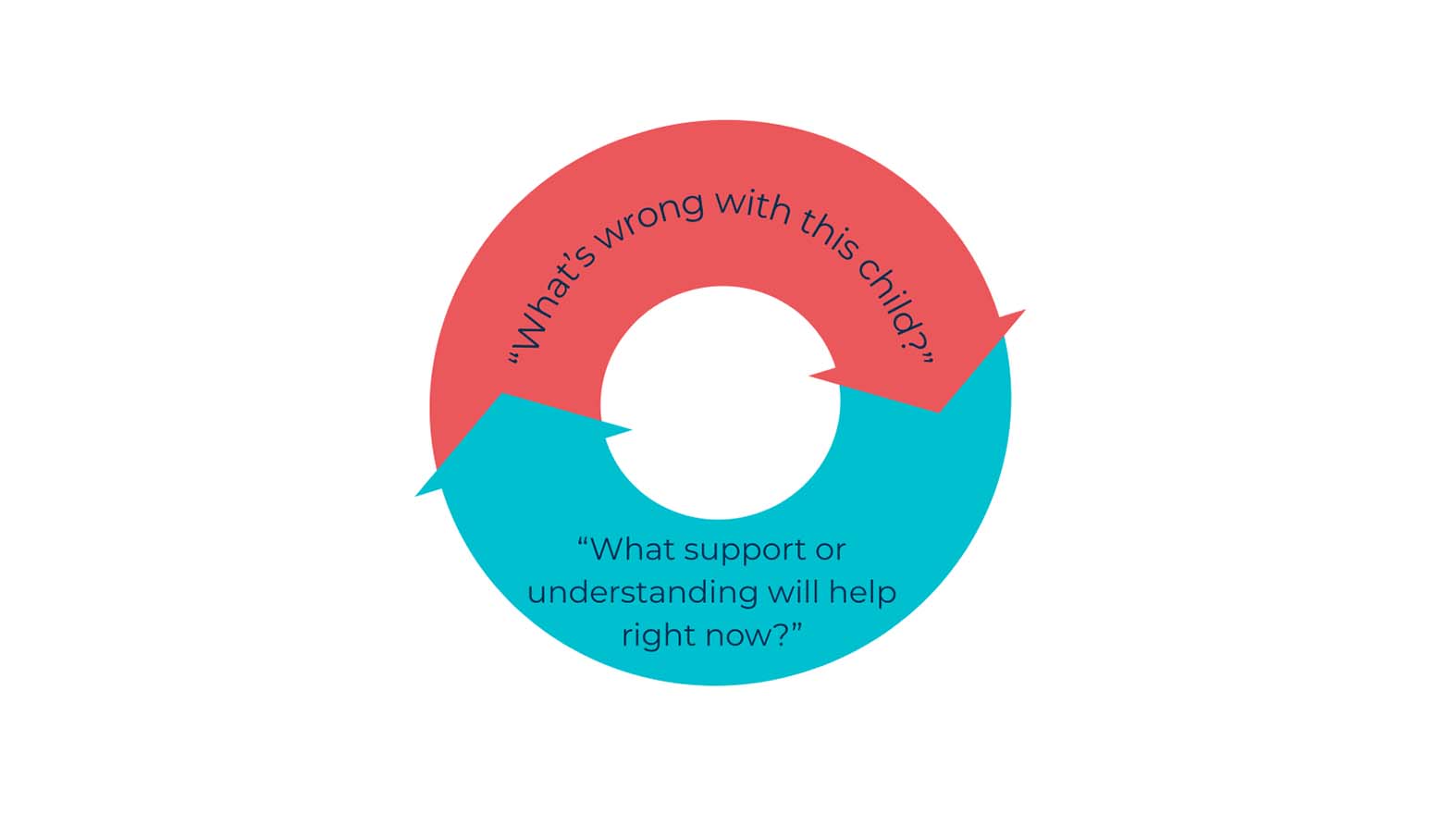
Words shape how children see themselves and how others treat them. Moving from a deficit lens (“What’s wrong?”) to a strength + support lens (“What helps?”) is one of the toughest, yet quickest ways to build an inclusive community.
A gentle note before you dive in: Changing lifelong language habits is hard work and even seasoned educators and clinicians slip into language that is non-affirming. This article’s aim is not to shame anyone; it is here to help all of us notice the words that shape our mindsets and to offer inclusive, factual alternatives that are neurodiversity affirming. Give yourself (and others) permission to stumble, correct, and keep going. Every small language shift you make, spoken aloud or typed in a chat, email or social media post, actively builds a safer, more inclusive world for our children and for ourselves.
The Lens Through Which We See Neurodiversity
Before we can choose neurodiversity affirming words, we need to know which lens we’re using to see children through. When we shift lenses, our language shifts with it: from “symptom” to “trait,” from “non-compliant” to “needs safety,” from “fix” to “support.”

Language is powerful: It can quietly reinforce ableism - the belief that one way of learning, behaving, or communicating is “normal” and everything else is a deficit, or it can dismantle bias and open doors. Non affirming language may seem harmless and follow the status quo, as it can be daily ingrained; yet it implies a hierarchy of brains and behaviours, of perceived worth. Children absorb these cues, internalising shame from a young age. We need to redirect our focus from deficit-based thinking to neurodiversity affirming.
Quick‑Swap Language Guide: The guide below shows how a simple wording change redirects our focus. Try to swap the phrase, add a matching support, if appropriate, and you’ve taken a concrete step toward decreasing ableism.
| Instead of saying... | You may hear / Try... | Why? |
|---|---|---|
| High/low‑functioning | “Needs less / more support” | Removes hierarchy; centres support. |
| Non‑compliant | “Needs help to feel safe / regulated” | Shifts from blame to underlying need. |
| Defiant | “Protecting autonomy / expressing boundaries” | Recognises self‑advocacy and safety‑seeking. |
| Manipulative | “Using available strategies to meet a need” | Acknowledges dysregulation; invites compassion. |
| Disruptive | “Dysregulated / communicates differently / needs co‑regulation” | Treats behaviour as communication; invites understanding of emotional and sensory differences. |
| Attention‑seeking | “Connection‑seeking / needs co-regulation” | Names a legitimate relational need. |
| Aggressive | “Fight response to perceived threat” | Highlights stress physiology; calls for safety. |
| Resistant / Inflexible | “Prefers predictability / needs clear rationale” | Acknowledges agency, need for control & information. |
| Self‑absorbed / Withdrawn | “Re‑charging / processing internally” | Values downtime as regulation strategy. |
| Fixated / Obsessive interest | “hyper / intense focus” | Frames interests as learning assets. |
| Tantrum | “Dysregulation / nervous‑system overload” / "sensory / emotional meltdown" | Signals distress and not disobedience, seeking regulation. Re‑labels for support, not blame. |
| Bad behaviour / Problem behaviour / Acting out | “Stress behaviour / unmet need / communication of a need / unsafe / dysregulated” | Keeps lens on support, not deficit. Focuses on the cause to guide support / accommodations. |
| Normal kids | “Neurotypical peers” | Affirms neurodiversity as typical variation. |
| Special‑needs child | “Disabled / neurodivergent child” | Uses identity‑first and/ or ND‑affirming language preferred by many in the community. |
Small steps, big shifts: Four‑Week Mini‑Challenge
To support you in making meaningful changes, you can follow this month-long challenge that offers a few bite‑sized actions to help your family practice neurodiversity affirming language and accommodations. You can stick the table on the fridge and tick tasks as you go.
Focus and Actions
Week 1
Focus: Notice & Swap - Replace one “stop ___” phrase:
- “Stop whining” → “Looks like you need a sip of water and quiet time.”
- “Stop fidgeting” → “Do you want a fidget cube while we talk / you do your homework?
- “Stop interrupting” → “I’ll listen after I finish this sentence; can you hold your thought / hold my hand while I finish talking?”
ND-positive picture books to read together: Some Brains – Nelly Thomas / All the Ways to Be Smart – Davina Bell / Wiggles, Stomps, and Squeezes Calm My Jitters Down - Lindsey Rowe Parker
Week 2
Focus: Celebrate voice - Thank your child when they self-advocate:
- “Can you dim the lights?” → “Great self-advocacy, let’s dim them.”
- “I need to move” → “Thanks for telling me, let’s walk to the supermarket / let’s put some music and dance.”
- “These tags itch” → “Good noticing, let’s find your tag-free shirt.”
ND-positive picture books to read together: A Day With No Words – Tiffany Hammond / Wonderfully Wired Brains - Louise Gooding / Neurodiversity! What's That? - Nadine Ramina Arthur
Week 3
Focus: Accommodate proudly - Introduce (or refresh) a support in public without apology and practise simple exit scripts, e.g.:
- Noisy place: Noise-reducing headphones + “crowd break” ticket, e.g. “My ears feel funny. I need the quiet seating area for 5 min please”
- Playdate: Pre-packed sensory kit (your child’s preferences, e.g. chewable, putty, earbuds); visual timer so your child can cue “break time” independently, e.g. “I need my squeeze ball for a minute, then I’ll come back to play.”
- Eating out: Pack favourite sensory toys / activities, e.g. “My body feels buzzy; I need my headphones until the food comes, please”
- Bus or train: weighted backpack + seat near window; calming playlist ready on phone / iPad, e.g. “Movement is tricky right now and music helps me feel steady.”
ND-positive picture books to read together: My Brain is a Race Car - Nell Harris / My Body has a Bubble - Nell Harris / Do you want to play? - Daniel Share-Strom RSW
Week 4
Focus: Embed & Reflect - 30-min decompression ideas: Introduce the practice of self-regulation and decompression while providing items / activities your child loves, e.g. "When we're tired, taking care of our bodies and minds is very important. Let's take a moment to do what our brains and bodies love":
- Swinging in the park / Weighted blanket & audiobook / Building trains in a quiet room / Sensory bin with rice / Walking the dog in silence.
Strength-based praise (two per day): “Your Minecraft world shows amazing creativity.” / “You solved that puzzle by thinking outside the box.” / “I admire how kind you were to your sister when she was upset.” / “Your deep passion for space teaches our family new facts every day.”
ND-positive picture books to read together: The Reason I Jump - Naoki Higashida
Learn More — Extra Neuro‑Affirmative Language Resources
Networks/Blogs
- Neurowild
- ASAN - Identity-First Language
- Reframing Autism - Neurodiversity-affirming Language Letter for Children's Supporters
- Neurodiverse Connection - Neurodivergent Affirming Language Guide
- Autistic Realms
- Neurodivergent Rebels
- Think Autism Guide - Person-first Language
- Think Autism Guide - Recognising Ableist Language
Podcasts
- Tilt Parenting - Declarative Language
- Play Learn Chat - Words Matter
- Neurodiversity Podcast - Beyond Buzzwords
Videos
- Use Neuro-Affirming Language
- Neurodivergent Affirming Phrases
- Neurodivergent - It's Just a Different Language
- Neurodiversity Affirming Language
Related news
News image ![Equity in Action What Placement Means at DCIS - Equity in Action What Placement Means at DCIS]() Blog
Blog
 Blog
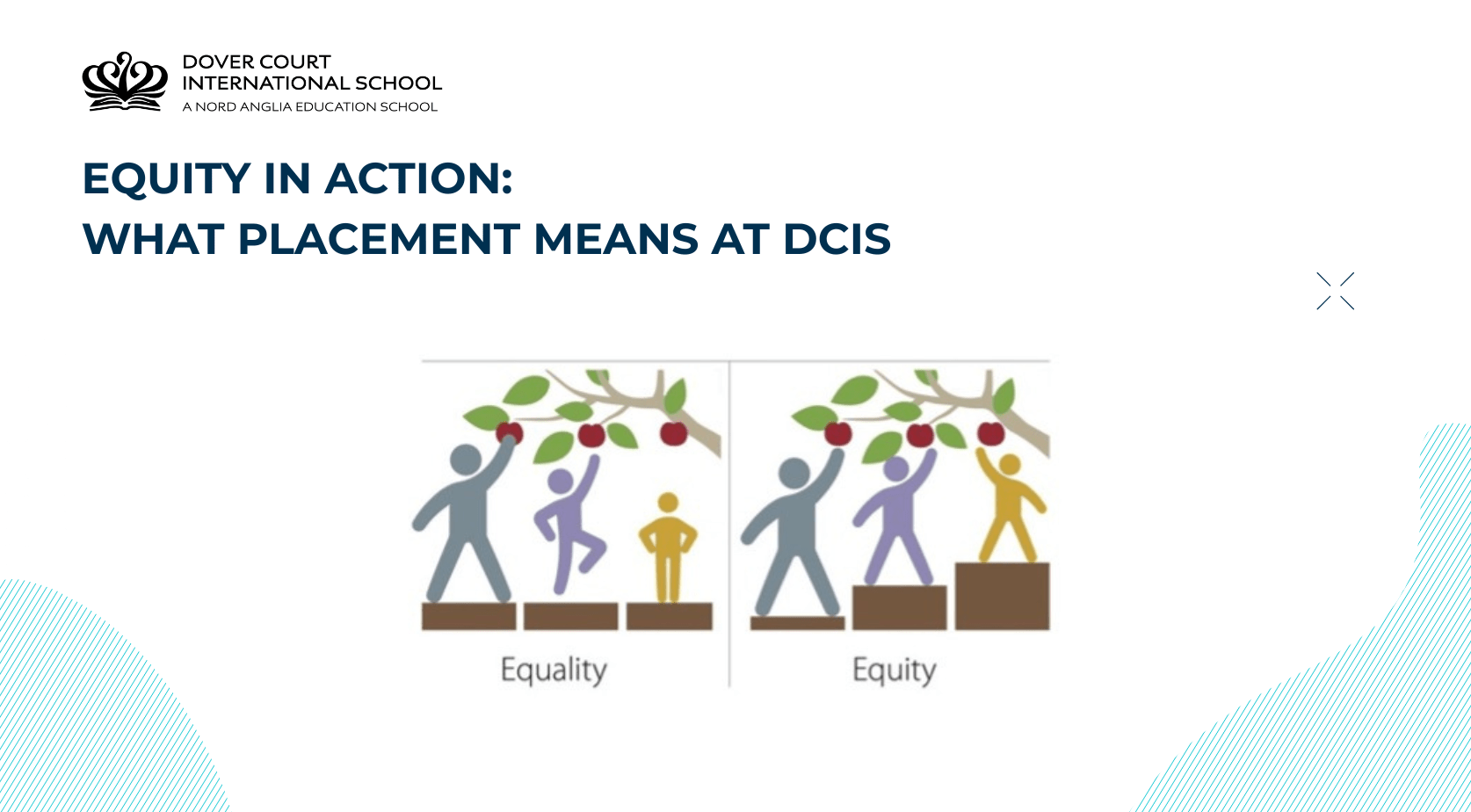
Blog Equity in Action: What Placement Means at Dover Court
At Dover Court, placement is about providing the right support for every learner to thrive. This article explains how our pathways reflect equity, belonging, and a commitment to meeting students where they are.
News image ![Supporting Regulation at Home Practical Strategies for Every - Supporting Regulation at Home Practical Strategies for Every Family]() Blog
Blog
 Blog
Blog Supporting Regulation at Home: Practical Strategies for Every Family
At Dover Court International School, we recognise that when a child feels calm, safe, and supported, they are more ready to engage in meaningful learning and connection. In this article, Rebecca Murray, our Occupational Therapist, offers practical, family‑friendly strategies to help children with sensory processing differences feel more grounded and supported at home.
News image ![Dover Court International School Shortlisted for the Tes - Dover Court International School Shortlisted for the Tes Awards for International Schools 2025]() News
News
 News
News Dover Court International School Shortlisted for the Tes Awards for International Schools 2025
We are excited to announce that Dover Court International School has been shortlisted for the Diversity, Equity, and Inclusion Award in the Tes Awards for International Schools 2025, celebrating excellence across the global education community.
News image ![Why Struggle and Joy Belong Together in Maths | Dover Court International School Singapore - Why Struggle and Joy Belong Together in Maths]() Blog | Academic | Parent Guides
Blog | Academic | Parent Guides
 Blog | Academic | Parent Guides
 Why Struggle and Joy Belong Together in Maths: Reflections from a Parent Workshop
How can we help children develop confidence and enjoyment in mathematics? Following a parent workshop at Dover Court International School, internationally recognised mathematics educator Dr Jennifer Chang Wathall explores the relationship between challenge, resilience and joyful learning.


