



We use cookies to improve your online experiences. To learn more and choose your cookies options, please refer to our cookie policy.
30 March, 2026
How teachers help students develop rigorous thinking

In many classrooms, students can appear busy, engaged, and productive. They complete tasks, answer questions, and move through lessons efficiently. But this does not always mean that deep learning is taking place.
For parents considering international schools in Singapore, a more important question arises: are students being challenged to think carefully, question ideas, and develop real understanding?
At Dover Court International School (DCIS), deep thinking is not left to chance. It is built through structured teaching approaches, purposeful classroom discussion, and a consistent focus on developing higher-order thinking skills.
Creating a classroom where thinking is expected
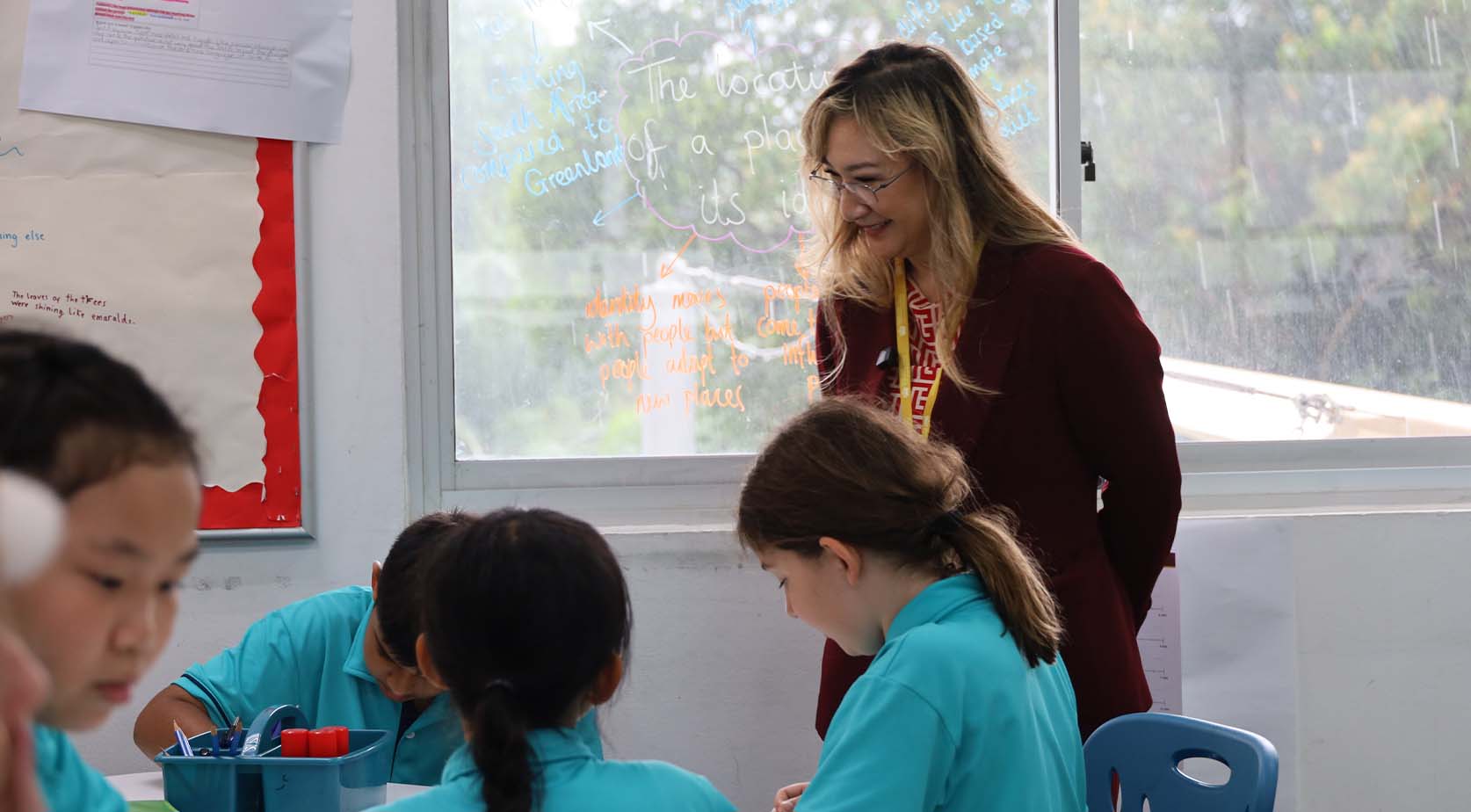
Students are more likely to share ideas, question concepts, and explore complex thinking when they feel confident and supported. Teachers at Dover Court place a strong emphasis on building positive relationships, creating a climate where students feel comfortable expressing their ideas.
Russell Moriarty, Deputy Head for Upper Primary, explains how this supports learning.
"Positive relationships with teachers build confidence. When students feel secure, they are more likely to take risks, articulate their thinking, and explore ideas more deeply."
Within this environment, students are empowered not just to answer questions but to explain their reasoning, challenge assumptions, and consider alternative perspectives.
This shift from answering to thinking is a key driver of strong academic progress and long-term success.
Using structured routines to deepen thinking
One of the ways teachers support rigorous thinking is through structured thinking routines.
These are simple but carefully designed sequences of questions that help students organise their ideas and explore concepts more deeply. Rather than relying on spontaneous discussion alone, thinking routines provide a consistent framework for developing analytical thinking.
At Dover Court, these routines are used regularly across classrooms to make students’ thinking more visible, allowing teachers to gauge understanding, identify gaps, and adjust teaching accordingly.
Russell Moriarty describes their role in learning.
“When paired with purposeful provocations, thinking routines push learners beyond surface responses by helping them notice, question, and connect ideas, allowing patterns to emerge and understanding to shift from isolated observations to transferable conceptual insight.”
Examples of these routines include prompts such as:
- What do you notice and what do you think is happening?
- What makes you say that?
- How does this connect to what you already know?
These approaches may appear simple, but they encourage students to slow down, reflect, and engage more deeply with the material.
Instead of just "knowing" a fact, students learn how to organize their thoughts and look at big ideas from different angles. They stop seeing facts in isolation and start connecting them to the bigger picture.
Over time, students become more confident in analysing ideas and articulating their thinking.
Focusing on depth rather than speed
A key feature of effective learning is the emphasis on developing deep understanding over time.
Rather than moving quickly through content, teachers at Dover Court prioritise helping students fully understand concepts. This often involves revisiting ideas, exploring them from different angles, and applying them in new contexts.
Russell Moriarty highlights this approach.
“Depth is more important than speed. Students develop stronger understanding when they have time to explore concepts fully and make connections across different contexts.”
This approach supports higher order thinking skills, allowing students to transfer knowledge and apply it in unfamiliar situations. It also helps students build a more secure and flexible understanding of what they are learning.
Balancing challenge and support for every learner
Strong teaching also involves knowing how to support and extend students so that every learner can make meaningful progress.
At Dover Court, teachers use questioning, discussion, targeted support and enrichment opportunities to deepen students’ thinking. This means providing additional guidance where needed, while also offering opportunities for students to deepen and extend their thinking. Rather than simply moving students on to new content, teachers encourage all learners to explore ideas in greater depth at the right level for them.
Russell Moriarty explains how this works in practice.
“Concept‑based inquiry prioritises depth over coverage, supporting students to explore ideas from multiple perspectives and develop integrated conceptual understanding rather than isolated topic knowledge.”
Opportunities such as global challenges and enrichment activities provide additional ways for students to apply their thinking beyond the classroom. These experiences encourage problem solving, analytical thinking, and the ability to engage with complex ideas.
Building thinking that lasts
Developing deep thinking is not about a single lesson or activity. It is about creating consistent opportunities for students to analyse, question, and reflect over time.Through structured routines, thoughtful classroom discussion, and a focus on depth, Dover Court International School Singapore helps students develop the critical thinking and problem-solving skills they will need in the future.
For parents, this provides reassurance that learning goes beyond surface engagement. It reflects a deliberate approach to developing deep understanding and independent thinking.
Parents who would like to explore how these approaches are used in practice are always welcome to speak with the academic team and see how thinking is developed across the school.
Related news
News image ![How Dover Court Develops Leadership, Initiative and Human Skills - How Student Voice and Leadership Come to Life at Dover Court]() Blog | Art Drama and Music | Academic
Blog | Art Drama and Music | Academic
 Blog | Art Drama and Music | Academic
 How Student Voice and Leadership Come to Life at Dover Court
What happens when students are empowered to turn ideas into reality? Discover how Year 9 student Daksh developed leadership, communication and problem-solving skills through a student-led initiative, and how experiences like these help young people develop the human skills needed for the future.
News image ![Why Struggle and Joy Belong Together in Maths | Dover Court International School Singapore - Why Struggle and Joy Belong Together in Maths]() Blog | Academic | Parent Guides
Blog | Academic | Parent Guides
 Blog | Academic | Parent Guides
 Why Struggle and Joy Belong Together in Maths: Reflections from a Parent Workshop
How can we help children develop confidence and enjoyment in mathematics? Following a parent workshop at Dover Court International School, internationally recognised mathematics educator Dr Jennifer Chang Wathall explores the relationship between challenge, resilience and joyful learning.
News image ![Student Leadership at Dover Court International School Singapore | Meet Our 2026-27 Head and Deputy Head Students - Student Leadership at Dover Court Meet Our Head and Deputy Head Students for 2026-27]() News
News
 News
News Student Leadership at Dover Court: Meet Our Head and Deputy Head Students for 2026-27
Meet our Head and Deputy Head Students for 2026-27 and learn how leadership opportunities at Dover Court help students develop confidence, responsibility and a strong sense of community. From Primary School leadership opportunities to student-led initiatives and global experiences, leadership is nurtured at every stage of the Dover Court journey.
News image ![Dover Court International School Welcomes New Principal Richard Vaughan - Dover Court International School Welcomes New Principal Richard Vaughan]() News
News
 News
News Dover Court International School Welcomes New Principal Richard Vaughan
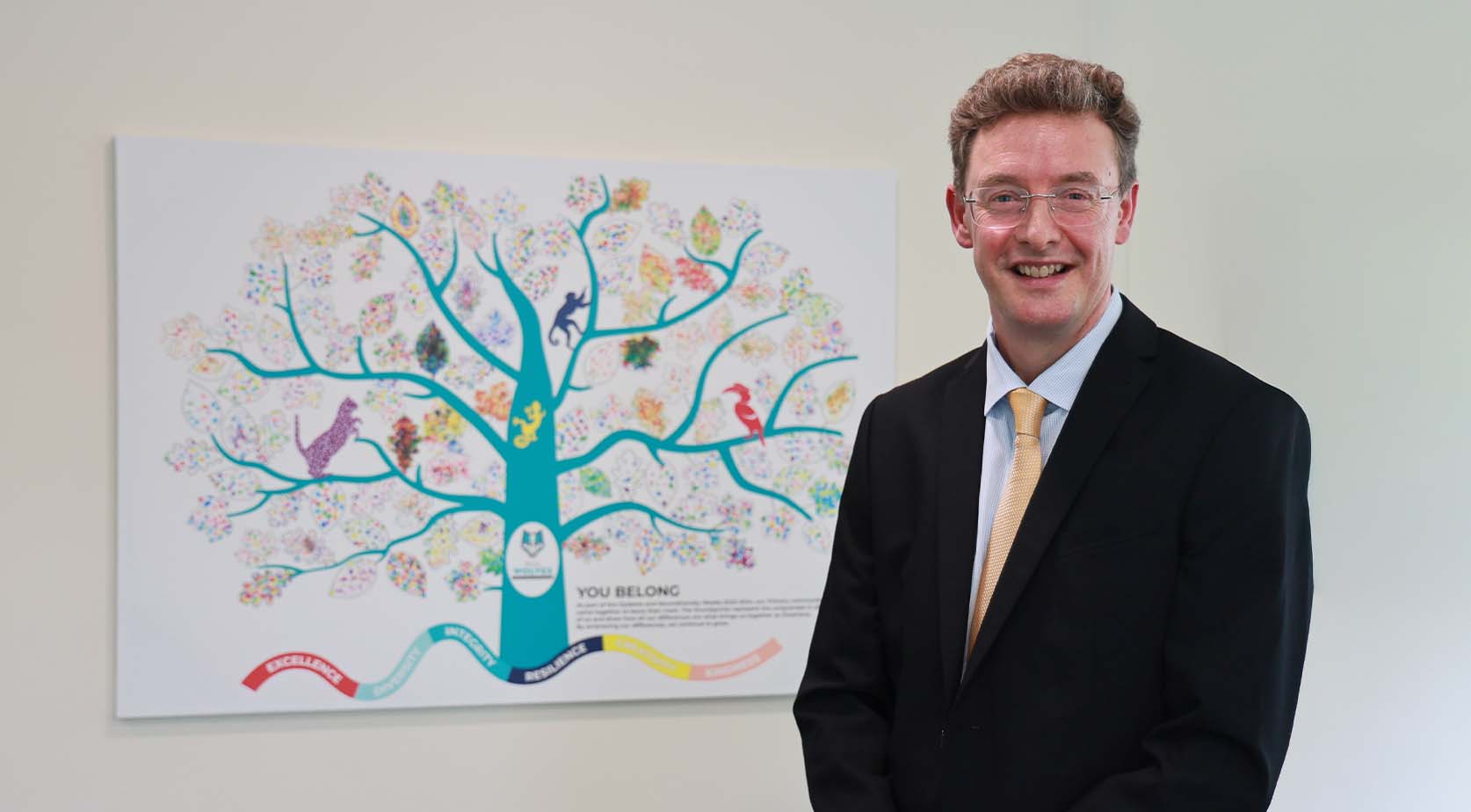
Dover Court International School is delighted to welcome Richard Vaughan as Principal, having joined the school at the start of the 2026-27 academic year. Bringing more than 25 years of educational leadership experience across the UK and internationally, Mr Vaughan joins Dover Court with a strong track record of fostering academic excellence, inclusive education and community-building.


