


We use cookies to improve your online experiences. To learn more and choose your cookies options, please refer to our cookie policy.
30 March, 2026
Why strong school leadership matters more than parents often realise
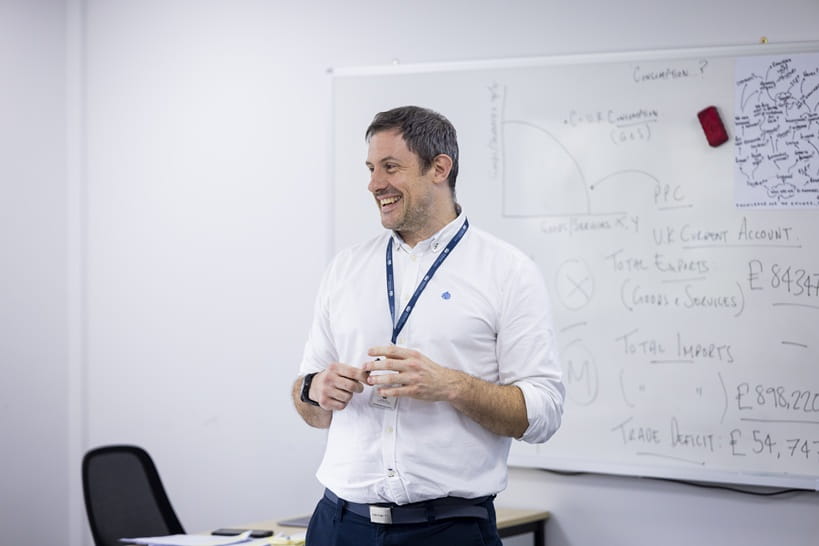
When parents visit international schools in Singapore, they naturally focus on what they can see. Classrooms, facilities, student behaviour, and the overall atmosphere all shape first impressions. Yet one of the most important factors influencing educational quality is often less visible: school leadership.
Leadership in schools plays a central role in shaping teaching standards, consistency, and long-term stability.
School governance plays an important role in supporting this. At Dover Court, leadership is guided not only at a school level, but also through the wider Nord Anglia Education network. Regional teams across Asia, alongside central teams in London, provide oversight, training and support across key areas such as academic standards, safeguarding, and operations.
This structure helps ensure that leadership decisions are informed, consistent, and aligned with wider best practice, reducing variability and strengthening long-term stability.
For families thinking carefully about long-term decision risk, understanding how a school is led can provide important reassurance about what their child will experience over time.
At Dover Court International School (DCIS), leadership is not separate from learning. It is closely connected to how teaching is guided, supported, and sustained across the school.
Setting clear expectations across the school
Strong educational leadership begins with clarity. Students and teachers benefit from knowing what is expected, how learning should look, and what standards are being worked towards.
School leaders play a key role in establishing this clarity. They set the tone for teaching and learning by defining expectations that apply from Early Years through to Sixth Form (Years 11 - 13). This includes a shared focus on helping every student achieve their best, regardless of their starting point.
Clear expectations also create consistency. When teaching standards are aligned across the school, students experience a more stable and coherent learning journey.
This consistency is supported by well-defined roles and responsibilities. Teachers understand their role in delivering strong classroom instruction, and leaders provide accountability through clear systems and structures.
When procedures are simple and clearly communicated, teachers can focus on teaching instead of second-guessing expectations. Over time, this helps embed high expectations into the daily life of the school.
Supporting teachers to maintain strong practice
Strong leadership does not stop at setting expectations. It also involves actively supporting teachers to maintain and develop high-quality teaching.
At Dover Court, this support is built through structured professional development and regular collaboration among teachers.
Staff have access to structured professional development both locally and through Nord Anglia Education. This includes Nord Anglia University (NAU), a global professional learning platform offering certified training, leadership development, and classroom resources. Teachers also have opportunities to complete a master's in international education through King’s College London.
In addition, teachers regularly collaborate both within the school and across the wider Nord Anglia network, sharing approaches, reflecting on practice, and learning from colleagues in different contexts.
For parents, this provides reassurance that teaching quality is not dependent on individual variation but is supported through local collaboration and global expertise to ensure consistent leadership and professional development.
Creating a culture that lasts over time
One of the strongest indicators of effective school management is the presence of a stable and consistent culture.
School leaders help build this culture by embedding expectations and values into everyday practice. Over time, these become part of the school’s institutional memory, shaping how teaching and learning are approached across different year groups and phases.
This continuity matters. It ensures that students experience consistent expectations as they move through the school, and that teachers work within a shared understanding of what strong learning looks like.
Why leadership stability matters for families
For parents, one of the key concerns when choosing a school is whether the experience will remain consistent over time.
Leadership stability plays an important role in reducing this uncertainty. Schools with stable leadership are more likely to maintain consistent teaching standards, clear systems, and a coherent long-term vision.
At Dover Court International School Singapore, leadership continuity is supported in part through recruitment within the wider Nord Anglia Education network. This helps ensure that new leaders are already familiar with established expectations and approaches.
Clear policies and procedures also support smooth transitions when leadership changes occur. This reduces disruption and helps maintain consistency for students.
Confidence built through strong leadership
While leadership may not always be visible in a classroom, its impact can be seen in the quality and consistency of learning across the school.Strong leadership ensures that expectations are clear, teachers are supported, and systems are in place to sustain high standards over time. It helps create an environment where students are consistently challenged, supported, and able to make progress.
For families exploring the best schools in Singapore, strong leadership provides an important layer of reassurance. It means that the quality of education is not dependent on short-term factors, but is supported by stable, well-structured leadership.
Parents who would like to understand more about how Dover Court International School is led are always welcome to speak with the academic leadership team and explore how leadership supports teaching and learning across the school.
Related news
News image ![Why Struggle and Joy Belong Together in Maths | Dover Court International School Singapore - Why Struggle and Joy Belong Together in Maths]() Blog | Academic | Parent Guides
Blog | Academic | Parent Guides
 Blog | Academic | Parent Guides
 Why Struggle and Joy Belong Together in Maths: Reflections from a Parent Workshop
How can we help children develop confidence and enjoyment in mathematics? Following a parent workshop at Dover Court International School, internationally recognised mathematics educator Dr Jennifer Chang Wathall explores the relationship between challenge, resilience and joyful learning.
News image ![Student Leadership at Dover Court International School Singapore | Meet Our 2026-27 Head and Deputy Head Students - Student Leadership at Dover Court Meet Our Head and Deputy Head Students for 2026-27]() News
News
 News
News Student Leadership at Dover Court: Meet Our Head and Deputy Head Students for 2026-27
Meet our Head and Deputy Head Students for 2026-27 and learn how leadership opportunities at Dover Court help students develop confidence, responsibility and a strong sense of community. From Primary School leadership opportunities to student-led initiatives and global experiences, leadership is nurtured at every stage of the Dover Court journey.
News image ![Dover Court International School Welcomes New Principal Richard Vaughan - Dover Court International School Welcomes New Principal Richard Vaughan]() News
News
 News
News Dover Court International School Welcomes New Principal Richard Vaughan
Dover Court International School is delighted to welcome Richard Vaughan as Principal, having joined the school at the start of the 2026-27 academic year. Bringing more than 25 years of educational leadership experience across the UK and internationally, Mr Vaughan joins Dover Court with a strong track record of fostering academic excellence, inclusive education and community-building.
News image ![The Power of Parent Volunteers | Building a Stronger Dover Court Community - The Power of Parent Volunteers Building a Stronger Dover Court Community]() Blog
Blog
 Blog
Blog The Power of Parent Volunteers: Building a Stronger Dover Court Community
Behind many of the events, celebrations and initiatives that enrich life at Dover Court is a dedicated community of parent volunteers. Through the Dover Court Association (DCA), parents help build connections, support students and create meaningful experiences for families across the school. From welcoming new families and organising community events to supporting sustainability projects and student-led initiatives, every contribution helps strengthen our community. Find out how you can get involved and make a difference this year.


