



We use cookies to improve your online experiences. To learn more and choose your cookies options, please refer to our cookie policy.
31 March, 2026
Preparing for Change: Supporting Children Through Transitions

Change is a part of life and it can feel overwhelming. In this article, Rebecca Murray, Occupational Therapist at Dover Court International School, shares practical strategies to help children feel supported and regulated during upcoming changes or transitions. Whether preparing for a holiday, a new routine or the return to school, discover how small steps can make a big difference.
Preparing for Change: A practical guide to help families navigate upcoming transitions – from holidays and school breaks to returning to school, moving house, welcoming new family members and more.
Any form of change or transition can feel big. For many children (neurotypical and neurodivergent), predictability supports regulation, so change to routine can increase uncertainty, causing discomfort and stress. Change may include a new wake-up time, changes in food or environment, new people, travel, different expectations or sensory differences.
For many neurodivergent children, routines are not just preferences; they are regulation tools. Predictable patterns help the nervous system feel safe. When change occurs, a child may experience increased worry, withdrawal, changes in emotional responses, sleep disturbances and ask more ‘what if’ or ‘why’ questions. Each of these responses is a form of communication, letting us know the child’s nervous system is working hard to manage the uncertainty associated with the change.
Change can feel uncomfortable for all of us, including adults. The goal is not to eliminate discomfort, but to increase predictability, connection and regulation so that children feel supported through it. With preparation, co-regulation and a clear rationale, change can be a success for everyone.
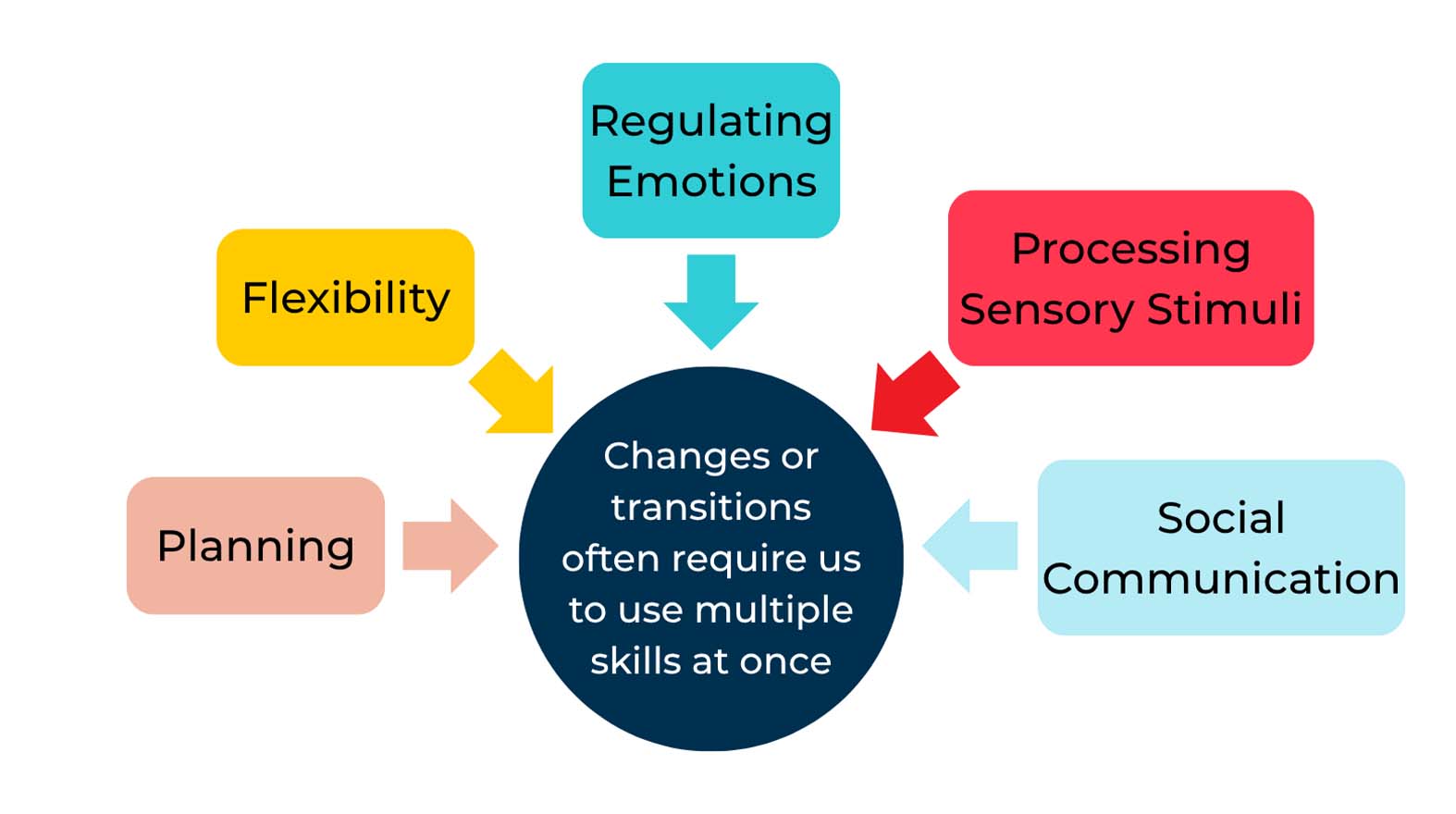
Here are some practical tips to support an upcoming change:
- Gradually shift routines 1 or 2 weeks before the new routine, where possible e.g. waking up earlier, having meals at the new timing.
- Increase regulation opportunities for everyone, not just the child. Remember, a dysregulated adult cannot co-regulate with a dysregulated child!
- Use visuals to increase predictability and reduce language demands.
- Create social stories to go through what will happen.
- Food is fuel and comfort. Bringing preferred or familiar foods to support regulation, digestion and ease toileting difficulties, e.g. constipation.
- Predictability: Everyone wants a little break from their usual routine on holiday; keeping something predictable throughout each day can support children who find unpredictability challenging, e.g., waking up every morning and going for a family walk, a bedtime story, or a lunchtime game of Uno.
- Plan for flexibility: A skeleton plan provides structure while still allowing for choice and flexibility.
- Model silently and consistently: When you hear ‘No, I am not doing this’, continue modelling the predictable routine and offer regulation before reasoning.
- Preparing extended family members or friends: If you are visiting relatives who don’t know your child’s routines, proactively share your child’s preferences, sensory needs and strategies.
- An everywhere safe space: A blanket over a chair in the hotel room, a snug-fitting jumper, or a favourite song can provide predictability in unfamiliar environments.
Travel specific tips
- Contact the airport ahead of your flight: Some airports have sensory rooms you can book or lanyards that can help with queuing.
- Prepare for the airport waiting and queues: Regulation tools are paramount - headphones, ear defenders or ear buds, crunchy snacks, fidget tool, heavy bag or weighted soft toy, doodle pad.
- A ‘What If’ Plan: Children may be worried about ‘what if’ scenarios during travel (and probably some adults too!), preparing a book on what if scenarios or saving a short voice recording on what would happen if delayed, or you missed your connecting flight.
- Regulation on board: iPad with downloaded shows, doodling/colouring/drawing, ear defenders, preferred snacks, fidgets, chewy, snug jumper.
Even with implementing all the above tips, know that it is okay to find change or transitions hard. Remember, a lot of neurodivergent and neurotypical individuals prefer and need routine!
Resources:
https://www.neurowild.com.au Neurowild
https://open.spotify.com/show/2g80pw5mMNdcfKQ0eAAsYs The Hidden 20% Podcast
https://www.instagram.com/ot_sorcharice/ OT Sorcha Rice Social Media
Related news
News image ![How Dover Court Develops Leadership, Initiative and Human Skills - How Student Voice and Leadership Come to Life at Dover Court]() Blog | Art Drama and Music | Academic
Blog | Art Drama and Music | Academic
 Blog | Art Drama and Music | Academic
 How Student Voice and Leadership Come to Life at Dover Court
What happens when students are empowered to turn ideas into reality? Discover how Year 9 student Daksh developed leadership, communication and problem-solving skills through a student-led initiative, and how experiences like these help young people develop the human skills needed for the future.
News image ![Why Struggle and Joy Belong Together in Maths | Dover Court International School Singapore - Why Struggle and Joy Belong Together in Maths]() Blog | Academic | Parent Guides
Blog | Academic | Parent Guides
 Blog | Academic | Parent Guides
 Why Struggle and Joy Belong Together in Maths: Reflections from a Parent Workshop
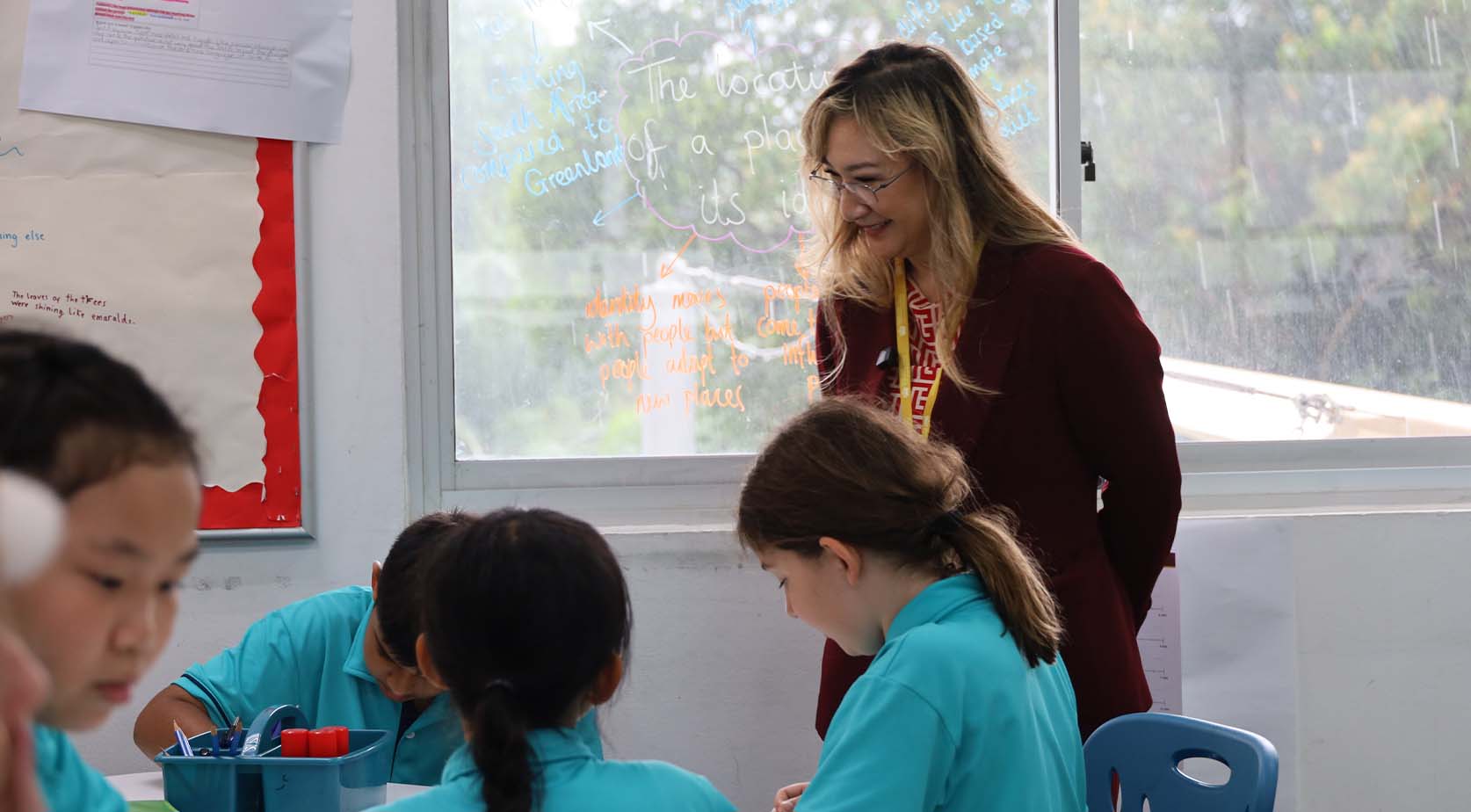
How can we help children develop confidence and enjoyment in mathematics? Following a parent workshop at Dover Court International School, internationally recognised mathematics educator Dr Jennifer Chang Wathall explores the relationship between challenge, resilience and joyful learning.
News image ![Student Leadership at Dover Court International School Singapore | Meet Our 2026-27 Head and Deputy Head Students - Student Leadership at Dover Court Meet Our Head and Deputy Head Students for 2026-27]() News
News
 News
News Student Leadership at Dover Court: Meet Our Head and Deputy Head Students for 2026-27
Meet our Head and Deputy Head Students for 2026-27 and learn how leadership opportunities at Dover Court help students develop confidence, responsibility and a strong sense of community. From Primary School leadership opportunities to student-led initiatives and global experiences, leadership is nurtured at every stage of the Dover Court journey.
News image ![Dover Court International School Welcomes New Principal Richard Vaughan - Dover Court International School Welcomes New Principal Richard Vaughan]() News
News
 News
News Dover Court International School Welcomes New Principal Richard Vaughan
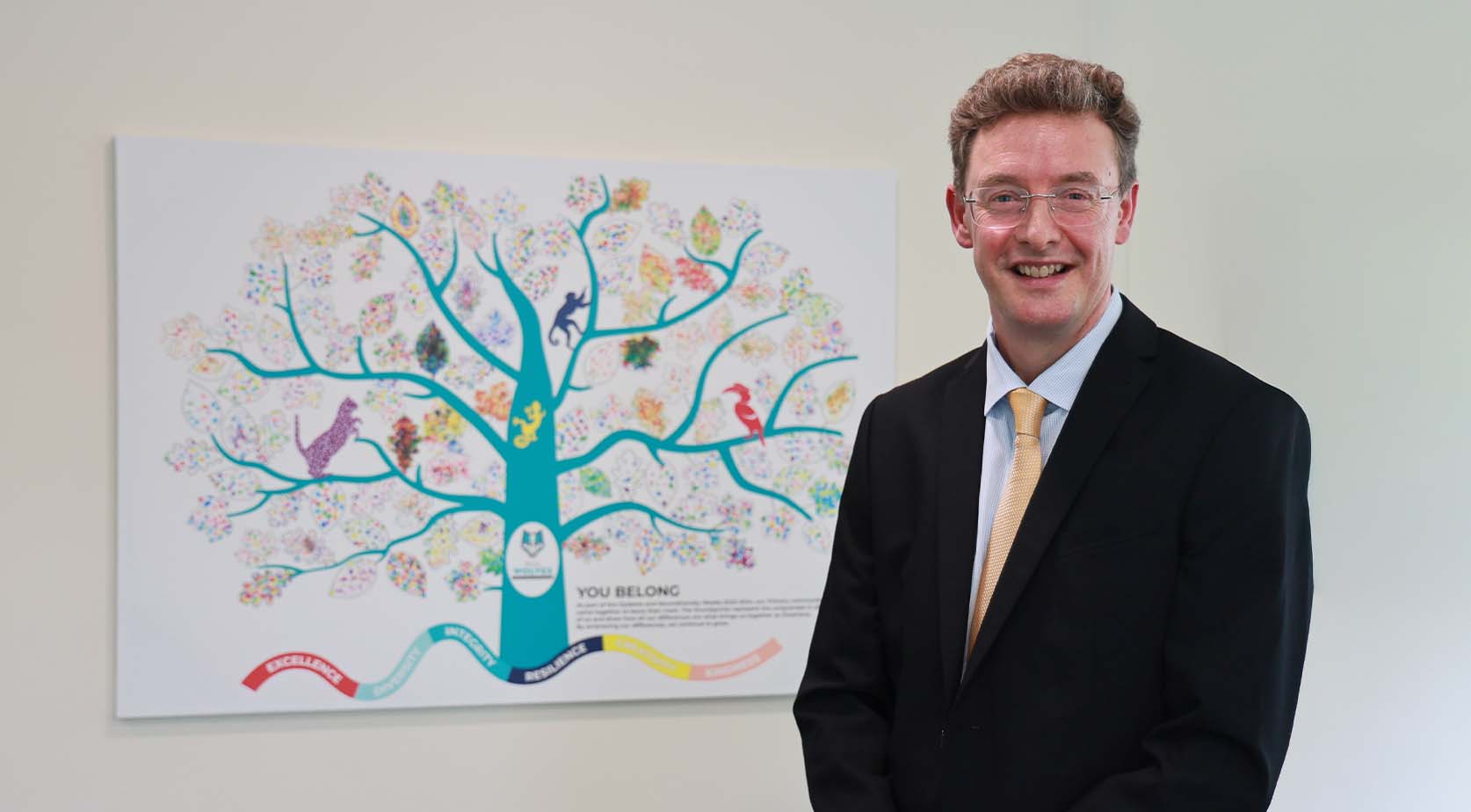
Dover Court International School is delighted to welcome Richard Vaughan as Principal, having joined the school at the start of the 2026-27 academic year. Bringing more than 25 years of educational leadership experience across the UK and internationally, Mr Vaughan joins Dover Court with a strong track record of fostering academic excellence, inclusive education and community-building.


