As artificial intelligence reshapes how we work, learn, and live, many parents are asking the same question: what will truly prepare children for the future? This blog explores the human skills technology cannot replace, and how early childhood experiences help children build confidence, attention, creativity, and resilience in a fast-changing world.

30 April, 2026
Raising future-ready children in the age of AI
START THE JOURNEY OF A LIFETIME
The MET offers an extraordinary experience that your child will never forget — a one-of-a-kind foundation that will guide them throughout their years as a global citizen. Our Admissions team looks forward to learning more about your child’s interests and welcoming you into our friendly community.
Inquire nowWhat children will need in a world shaped by AI
It’s a question more parents are quietly asking: what will my child need to thrive in a world where so much is changing so fast?
Technology is advancing. Artificial intelligence is becoming part of everyday life. Information is no longer scarce; it’s everywhere.
And yet, the most important skills children will carry into the future are not technical.
They are deeply human.
The ability to focus.
To communicate clearly.
To think creatively.
To adapt when things don’t go as planned.
These are not built through screens or shortcuts. They are built slowly, through experience.
Why attention is becoming a superpower
In a world full of distractions, attention is no longer a given; it’s a skill.
Many parents are noticing how easily children move between stimuli: videos, games, sounds, constant input. While technology has its place, too much stimulation can make it harder for children to stay with one idea, one task, one moment.
But attention doesn’t develop by being forced. It grows when children are given the right kind of experiences.
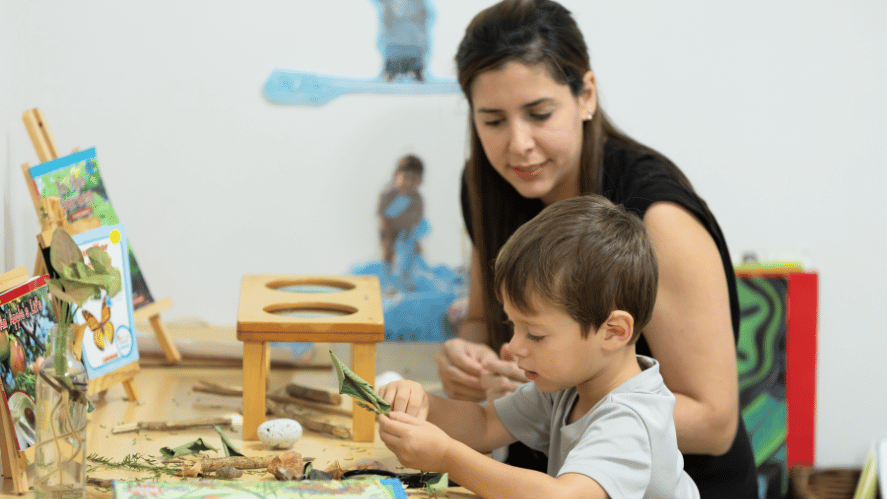
When they build something with their hands.
When they listen to a story and imagine what comes next.
When they explore, ask questions, and stay curious.
These moments may look simple, but they are building something essential: the ability to think deeply.
What technology cannot replace
Artificial intelligence can generate answers. It can solve problems quickly. It can even imitate creativity.
But it cannot replace:
- Genuine curiosity
- Emotional awareness
- Confidence in trying something new
- The ability to collaborate and connect with others
These are the qualities that allow children not just to keep up with the world, but to shape it.
And they begin much earlier than most people think.
Why the early years matter more than ever
The foundations for these skills are not built later in life. They begin in early childhood.
It’s in these early years that children learn how to:
- Pay attention and stay engaged
- Express their thoughts and ideas
- Navigate emotions and social interactions
- Approach learning with confidence
What may look like play is, in reality, deep learning.
A child building, creating, questioning, imagining, this is where independence and agency begin to take shape.
A quiet reminder for parents
It’s easy to feel pressure to prepare children for the future by doing more. More activities, more structure, more exposure.
But often, what children need most is not more, it’s better.
Better spaces to explore.
Better opportunities to think and create.
Better environments that allow them to grow at their own pace.
If you are creating space for curiosity, for conversation, for unstructured moments, you are already supporting something that matters deeply.
Where this learning comes to life
Environments that value inquiry, creativity, and real-world thinking help children develop the skills that will stay with them long after technology evolves.
Spaces where children are encouraged to ask questions, take risks, and engage meaningfully with the world around them.
Because in a future shaped by AI, it won’t be what children know that sets them apart.
It will be how they think, how they connect, and how they continue learning.
If you would like to explore how these foundations are nurtured from the earliest years, you are welcome to schedule a tour or visit our campus.
It’s a question more parents are quietly asking: what will my child need to thrive in a world where so much is changing so fast?
Technology is advancing. Artificial intelligence is becoming part of everyday life. Information is no longer scarce; it’s everywhere.
And yet, the most important skills children will carry into the future are not technical.
They are deeply human.
The ability to focus.
To communicate clearly.
To think creatively.
To adapt when things don’t go as planned.
These are not built through screens or shortcuts. They are built slowly, through experience.
Why attention is becoming a superpower
In a world full of distractions, attention is no longer a given; it’s a skill.
Many parents are noticing how easily children move between stimuli: videos, games, sounds, constant input. While technology has its place, too much stimulation can make it harder for children to stay with one idea, one task, one moment.
But attention doesn’t develop by being forced. It grows when children are given the right kind of experiences.
When they build something with their hands.
When they listen to a story and imagine what comes next.
When they explore, ask questions, and stay curious.
These moments may look simple, but they are building something essential: the ability to think deeply.
What technology cannot replace
Artificial intelligence can generate answers. It can solve problems quickly. It can even imitate creativity.
But it cannot replace:
- Genuine curiosity
- Emotional awareness
- Confidence in trying something new
- The ability to collaborate and connect with others
These are the qualities that allow children not just to keep up with the world, but to shape it.
And they begin much earlier than most people think.
Why the early years matter more than ever
The foundations for these skills are not built later in life. They begin in early childhood.
It’s in these early years that children learn how to:
- Pay attention and stay engaged
- Express their thoughts and ideas
- Navigate emotions and social interactions
- Approach learning with confidence
What may look like play is, in reality, deep learning.
A child building, creating, questioning, imagining, this is where independence and agency begin to take shape.
A quiet reminder for parents
It’s easy to feel pressure to prepare children for the future by doing more. More activities, more structure, more exposure.
But often, what children need most is not more, it’s better.
Better spaces to explore.
Better opportunities to think and create.
Better environments that allow them to grow at their own pace.
If you are creating space for curiosity, for conversation, for unstructured moments, you are already supporting something that matters deeply.
Where this learning comes to life
Environments that value inquiry, creativity, and real-world thinking help children develop the skills that will stay with them long after technology evolves.
Spaces where children are encouraged to ask questions, take risks, and engage meaningfully with the world around them.
Because in a future shaped by AI, it won’t be what children know that sets them apart.
It will be how they think, how they connect, and how they continue learning.
If you would like to explore how these foundations are nurtured from the earliest years, you are welcome to schedule a tour or visit our campus.
Related news
News image ![IB vs Traditional Education - IB vs Traditional Education]() Blog
Blog
.png?h=499&iar=0&w=887&rev=0ddd6039d5614e3cb9841658569eeae5&hash=7B67BEFCD926EF31AA7E8D1899D407E6) Blog
Blog IB vs. Traditional Education: What’s the difference for your child?
What makes an IB education different? Discover how inquiry, reflection, and student agency can shape the way children experience learning.
News image ![Is your child ready for kindergarten? What to look for in a Kinder Program in Panama - Child ready for Kinder]() Blog
Blog
 Blog
Blog Is your child ready for kindergarten? What to look for in a Kinder Program in Panama
Choosing Kinder is a big step. Discover what parents should look for in a Kinder program that builds confidence, curiosity, independence, and readiness for Grade 1.