


We use cookies to improve your online experiences. To learn more and choose your cookies options, please refer to our cookie policy.
23 April, 2026
How presenting learning builds lasting confidence in children
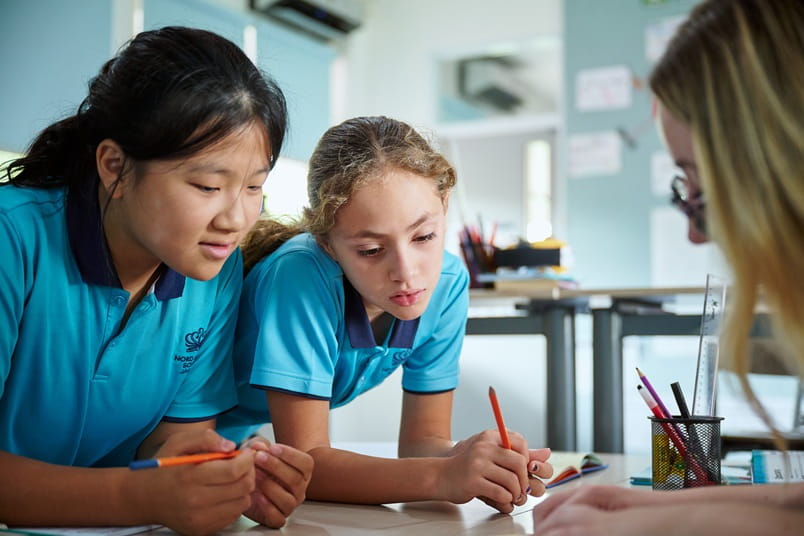
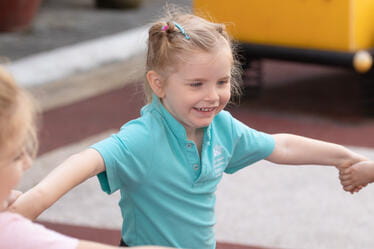
WHAT MAKES NAS JAKARTA SO SPECIAL?
At NAS Jakarta, your child will build the confidence to thrive through every experience, embracing what makes them special and having the courage to take on any of life's colourful challenges. Contact our Admissions team today to visit our vibrant campus and meet our talented teachers.
ENQUIRE NOWFor many parents, confidence is not something they expect to see immediately. The real question is whether it will grow steadily over time, supported by the right environment and teaching approach.
At Nord Anglia School Jakarta (NAS Jakarta), confidence is developed deliberately through structured opportunities for students to share, explain, and reflect on their learning. One of the most effective ways this is achieved is through regular student presentations embedded within the International Primary Curriculum (IPC).
Confidence built through consistent practice
Confidence in children develops through regular opportunities to speak, present, reflect and take on leadership roles within a team. Within the IPC, students are given regular opportunities to present their ideas in ways that are appropriate to their age and stage.
David Webb, Milepost Leader and IPC campaign leader, explains how this progression is built over time. “Confidence is developed year on year through opportunities to practise, reflect, and take increasing responsibility for their work.”
In younger years, this may begin with simple sharing. Children talk about a model they have created or explain key facts they have learned. As they grow older, expectations increase. Students begin to structure their ideas more formally, leading to presentations that require clarity, organisation, and audience awareness.
The role of Exit Points in developing public speaking skills
A distinctive feature of the IPC is the “Exit Point” at the end of each unit. These events provide a clear purpose for learning and a meaningful opportunity for students to demonstrate what they understand.
“The Exit Point is an opportunity for students to share what they have learned and to demonstrate their knowledge and skills,” David Webb explains.
These presentations take many forms. Younger students may guide parents through a display or talk about their work informally. Older students may deliver more structured presentations, supported by written work and visual materials.
For example, to conclude the unit 'Celebrations', students took on the role of curators to transform their classroom into a museum of learning, developing confidence in presenting ideas to an audience. Similarly, in the 'Chocolate' unit, students visited a local chocolate factory to connect their classroom learning with real-world industry practice.
The format varies, but the core expectation remains consistent. Students are encouraged to explain their thinking clearly and confidently to an audience.
This regular exposure to public speaking builds familiarity and reduces anxiety. Over time, students develop the ability to communicate with increasing precision and confidence.
Structured teaching of presentation techniques
Strong presentation skills do not develop without guidance. NAS Jakarta teachers play an active role in helping students understand how to communicate effectively.
“Our approach is to prepare children to share their learning in a structured and engaging way,” David Webb explains. “Teachers support students in identifying key information, organising ideas, and using precise vocabulary.”
This focus on presentation techniques ensures that communication is not left to instinct. Students learn how to select relevant information, structure their message, and adapt their language to different audiences, whether it be for other children, parents or even visitors to the school.
Time is also built into the process for rehearsal and refinement. Students are encouraged to practise, reflect, and improve before presenting. This helps them understand what effective communication looks like and builds confidence through preparation.
Collaborative learning that strengthens student voice
Confidence is also shaped by the environment in which students learn. A safe learning environment, where every contribution is valued, is essential for developing student voice.
At NAS Jakarta, collaborative learning is embedded throughout classroom practice. Students work together, share ideas, and support each other’s thinking.
This creates a culture where speaking is normalised. Children become comfortable expressing their ideas, listening to others, and responding thoughtfully.
Through storytelling, group discussions, and shared presentations, students develop communication skill development in a natural and supportive way. They learn not only to speak, but to listen and engage with others.
This balance of individual and collaborative experiences ensures that confidence is built both independently and within a group.
Real audiences that make learning meaningful
One of the most powerful aspects of student presentations is the presence of a real audience. Exit Points often involve parents, peers, or the wider school community, giving students a genuine sense of purpose.
Each unit is designed with its own unique conclusion. “Every Exit Point has its own signature,” David Webb explains. “For example, younger students might create a storyboard with their parents, while other units may involve exhibitions or visits to real-world settings.”
These experiences reinforce the value of student work. When children know their learning will be shared, they are more motivated to engage deeply and present it clearly.
Just as importantly, presenting to a real audience strengthens self-esteem in children. It provides recognition, builds pride, and reinforces a sense of achievement.
A clear pathway to confident communication
Confidence is not a single moment of success. It is the result of consistent opportunities, structured guidance, and meaningful experiences over time.
At Nord Anglia School Jakarta, student presentations are embedded within a wider approach that combines collaborative learning, clear teaching of presentation techniques, and purposeful opportunities to share learning.
For parents considering long-term development, the outcome is clear. Children do not simply gain knowledge. They develop the confidence to express it, explain it, and apply it in a range of contexts.
Families who would like to understand more about how confidence is developed through daily learning are always welcome to speak with the academic team and explore how student voice is supported and strengthened at NAS Jakarta.
Related news
News image ![Building Confident Communicators at NAS Jakarta - Building Confident Communicators at NAS Jakarta]() Blog
Blog
 Blog
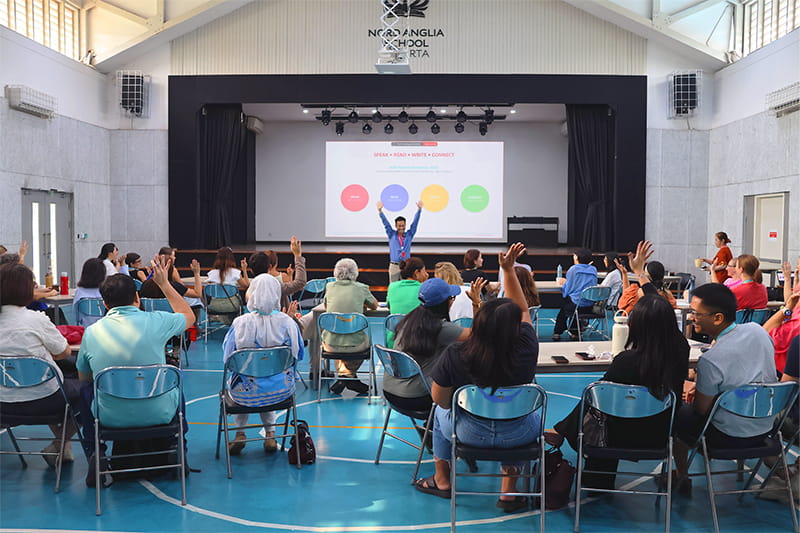
Blog Speak, Read, Write, Connect: Building Confident Communicators at NAS Jakarta
How speech, language, reading and writing help children develop confidence, strengthen relationships and become successful learners.
News image ![How Transparent Assessment Helps Parents Understand Their Child's Progress - How Transparent Assessment]() Blog
Blog
 Blog
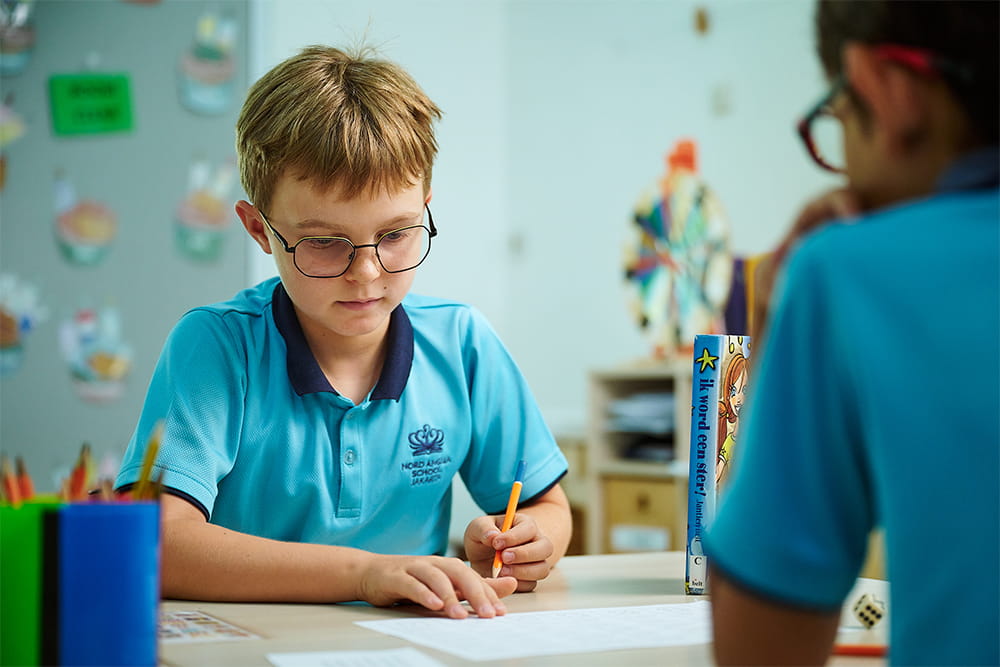
Blog How Transparent Assessment Helps Parents Understand Their Child's Progress
Please input short description.
News image ![Moving to Jakarta - Moving to Jakarta]() Blog
Blog
 Blog
Blog Moving to Jakarta? Here’s What to Know About Choosing an International School
Choosing a school from overseas can feel overwhelming. You may find yourself comparing websites late at night, calculating commute times, exploring different curricula and wondering how your child will adapt to yet another new environment.


