
/microsoftteams-image-(7)/hanoi-w.png?h=48&iar=0&w=235&rev=1d3bc711cdeb4b6282c27183e9a86f6a&hash=0DF2F1F1B8575D3D4EC23A938468783C)
We use cookies to improve your online experiences. To learn more and choose your cookies options, please refer to our cookie policy.
10 March, 2026
How school subjects guide future pathways as students move through school
.jpg?h=666&iar=0&w=1000&rev=41467c04040345e29ebca24160b1f44a&hash=C0D45CA98CF72FF8EC3D9AE56CA3D41F)
“A good pathway is rarely built in the final year of school.”
That is how Joe McKinney, Head of Careers and University Guidance at the British International School Hanoi, describes the process of preparing students for life beyond school. While many families focus on the final stage of education, the choices that shape future opportunities begin much earlier and develop gradually as students move through secondary school.
Understanding how school subjects evolve over time helps parents see how academic progression connects to future pathways. Rather than a single high-stakes decision, the process involves a series of thoughtful choices supported by guidance from teachers and counsellors.
At BIS Hanoi, this guidance begins early in secondary school through a structured careers curriculum that runs alongside academic study.
“We start introducing career exploration in the earlier secondary years,” Joe explains. “Then, as students approach the IGCSE options process, we work more closely with them to explore how subject choices may connect to possible university pathways.”
This guidance may include personality assessments, career exploration activities, and conversations about students’ academic interests. The aim is not to push students toward a single career, but to help them understand how different subject combinations can support different opportunities.
Joe describes the process as a way of working backwards from potential futures.
“We look at possible careers and university options, and then we work backwards to understand which subject choices might support those goals.”
At the same time, flexibility remains important. Students’ interests often change as they mature, so guidance focuses on keeping pathways open rather than closing them too early.
Students begin with a broad academic experience, gradually refine their interests, and then develop greater depth in the subjects that support their future pathways.
At the British International School Hanoi, this process is supported through structured academic guidance, career exploration, and ongoing conversations between students, families, and teachers.
For families considering how subject choices shape future pathways, the most valuable insight is often understanding how decisions are supported over time. Our academic and university guidance teams are always happy to discuss how students are guided through this journey as they move through the secondary years.
That is how Joe McKinney, Head of Careers and University Guidance at the British International School Hanoi, describes the process of preparing students for life beyond school. While many families focus on the final stage of education, the choices that shape future opportunities begin much earlier and develop gradually as students move through secondary school.
Understanding how school subjects evolve over time helps parents see how academic progression connects to future pathways. Rather than a single high-stakes decision, the process involves a series of thoughtful choices supported by guidance from teachers and counsellors.
How subject choices gradually narrow over time
In the early years of secondary school, students usually study a broad range of secondary school subjects. This breadth is intentional. It allows students to explore different disciplines and begin to recognise where their interests and strengths lie.
.jpg?rev=2e0f0594e21e4c4c9d0200e3a71a9332&hash=92F9FC6FF8D193F15948A9039A6089AF)
As students move into examination stages, subject pathways become more focused. Joe explains that this narrowing process is typical in many international systems.
“In a curriculum pathway from IGCSE to the IBDP, the range of subjects gradually narrows as students begin to specialise, while still maintaining breadth. At IGCSE, students may study eight or nine subjects. In the IBDP, that typically becomes six. However, the programme remains balanced because students select subjects from different groups, ensuring they continue to study a range of disciplines.”
This progression gives students time to build a strong academic foundation while also developing deeper expertise in subjects that support their future plans.
Helping students make informed subject choices
Selecting high school subjects is an important moment for both students and parents. Schools therefore aim to ensure that choices are guided by careful reflection rather than guesswork.At BIS Hanoi, this guidance begins early in secondary school through a structured careers curriculum that runs alongside academic study.
“We start introducing career exploration in the earlier secondary years,” Joe explains. “Then, as students approach the IGCSE options process, we work more closely with them to explore how subject choices may connect to possible university pathways.”
This guidance may include personality assessments, career exploration activities, and conversations about students’ academic interests. The aim is not to push students toward a single career, but to help them understand how different subject combinations can support different opportunities.
Joe describes the process as a way of working backwards from potential futures.
“We look at possible careers and university options, and then we work backwards to understand which subject choices might support those goals.”
At the same time, flexibility remains important. Students’ interests often change as they mature, so guidance focuses on keeping pathways open rather than closing them too early.
Preparing students for university readiness
As students move into the final years of secondary school, subject choices become more closely linked to university preparation.
At BIS Hanoi, this stage includes structured support from the careers and university guidance team. Students meet regularly with counsellors to discuss academic progress, interests, and possible university pathways.
.jpg?rev=e7d8e57d31ce463aacf7c84e91e24f06&hash=2F17927A9026F73B083A910EC5ABD3A8)
“We meet with students throughout Years 12 and 13 to talk about their plans and their next steps,” Joe says. “We also invite parents to University Guidance Counsellor Connect sessions so they can understand the process and hear about the discussions we are having with students.”
These meetings help families understand how subject choices connect to future applications. They also give students space to reflect on their goals and take increasing ownership of their decisions.
This approach ensures that university planning is not rushed. Instead, it develops through regular conversations that take place across the later years of school.
Seeing school subjects as part of a longer journey
When parents consider which school subjects their child should study, it can be tempting to think about a single decision point. In reality, strong schools treat subject selection as part of a longer journey.Students begin with a broad academic experience, gradually refine their interests, and then develop greater depth in the subjects that support their future pathways.
At the British International School Hanoi, this process is supported through structured academic guidance, career exploration, and ongoing conversations between students, families, and teachers.
For families considering how subject choices shape future pathways, the most valuable insight is often understanding how decisions are supported over time. Our academic and university guidance teams are always happy to discuss how students are guided through this journey as they move through the secondary years.
Related news
News image ![BIS Hanoi welcomes Juilliard specialists to inspire learning in the performing arts | British International School Hanoi - BIS Hanoi welcomes Juilliard specialists to inspire learning in the performing arts]() News
News
 News
News BIS Hanoi welcomes Juilliard specialists to inspire learning in the performing arts
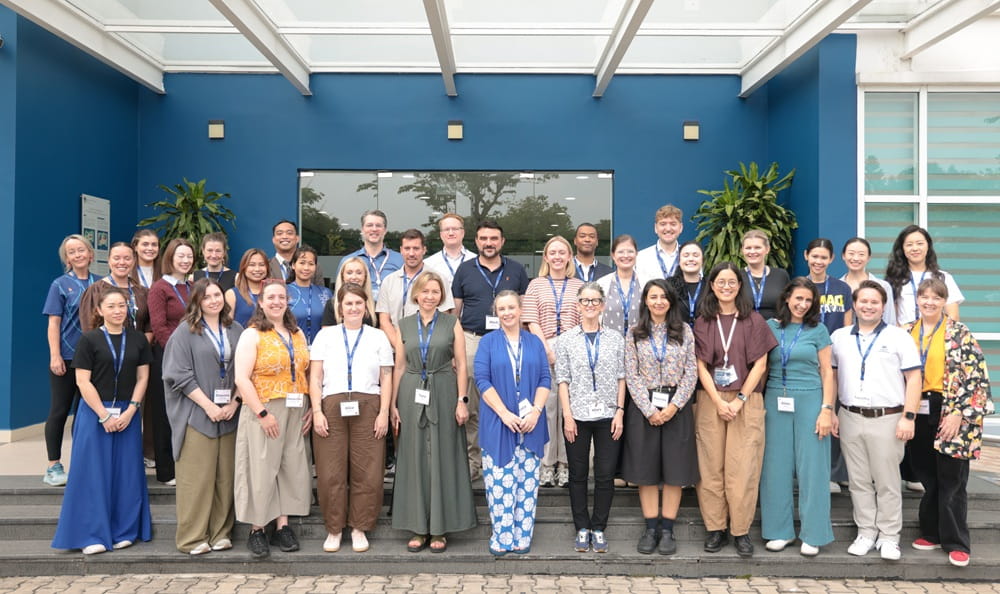
BIS Hanoi was delighted to welcome seven specialists from The Juilliard School for three days of professional learning, collaboration and creativity. The visit brought together our Performing Arts team and 30 educators from Nord Anglia Education schools across Asia, creating an inspiring opportunity to learn from world-leading experts and from one another.
News image ![BIS Hanoi celebrates Mid-Autumn Festival with music, culture and community | British International School Hanoi - BIS Hanoi Celebrates Mid Autumn Festival with Music Culture and Community]() News
News
 News
News BIS Hanoi celebrates Mid-Autumn Festival with music, culture and community
The BIS Hanoi community came together on Friday for a joyful Mid-Autumn Festival assembly, celebrating one of Vietnam’s most cherished cultural traditions through music, dance and performances from students and parents across the school.
News image ![BIS Hanoi scholars for AY 2026-27: Celebrating excellence across our community | British International School in Hanoi9 - BIS Hanoi scholar for AY 2026 2027 Celebrating Excellence Across Our Community]() News
News
 News
News BIS Hanoi scholars for AY 2026-27: Celebrating excellence across our community
BIS Hanoi is proud to recognise and celebrate 48 exceptional students who have been awarded scholarships for the 2026-27 academic year.
News image ![What Is the IB Diploma Programme? A Parent's Guide to IBDP in Hanoi | BIS Hanoi - A Parent Guide to IBDP in Hanoi]() Blog | IB Diploma Programme | International Education | Educational Insights
Blog | IB Diploma Programme | International Education | Educational Insights
 Blog | IB Diploma Programme | International Education | Educational Insights
 What Is the IB Diploma Programme? A Parent's Guide to IBDP in Hanoi
Discover what the IB Diploma Programme (IBDP) is, what students study, and how it prepares them for university. Learn why families choose BIS Hanoi, a leading IB school in Hanoi.