

We use cookies to improve your online experiences. To learn more and choose your cookies options, please refer to our cookie policy.

April 02, 2026
Why Learning a Second Language Early Matters
A WORLD-CLASS EDUCATION
British International School of Boston gives your child just the right balance of support and challenge that they need to accelerate through their strengths. We welcome you to visit our campus to meet our talented teachers and see our world-class learning experiences firsthand.
Inquire nowAcross the world, multilingualism is the norm. Children grow up speaking more than one language at home, in school, and in their communities.
In the United States, however, access to language learning is becoming more uneven. In some districts, language programs are being reduced as schools face budget pressures and shifting priorities. As a result, many families are asking an important question:
How important is it for children to learn a second language in school?
The answer matters more than ever.
Learning another language isn’t just about vocabulary or grammar. It shapes how children think, communicate, and understand the world.
For families exploring private schools in Boston or private schools near Brookline, language learning is often one of the key factors they consider when evaluating a school’s academic program.
The cognitive benefits of learning languages early
Children’s brains are uniquely suited for language learning in the early years. Young learners absorb sounds, pronunciation, and grammar patterns much more naturally than older students.
Starting early helps children:
- Strengthen memory and concentration
- Improve problem-solving skills
- Develop stronger reading and literacy skills
- Build flexibility in how they think and learn
Learning another language also supports metacognition — students become more aware of how they learn, how language works, and how to approach new challenges.
These cognitive skills benefit children across all subjects, from reading and writing to mathematics and science.
Language learning builds cultural understanding
Language is more than communication. It’s a window into culture.
When students learn another language, they begin to understand different perspectives, traditions, and ways of thinking. They discover that the world can be interpreted in many different ways.
In today’s connected world, this cultural awareness is essential.
Students who grow up learning languages often develop stronger empathy, curiosity, and openness. These qualities help them collaborate with people from different backgrounds and prepare them to thrive in an increasingly global society.
That’s why many families looking for schools with strong language programs in Boston prioritize international schools or schools with globally focused curricula.
Confidence and communication skills grow with language learning
Speaking another language requires courage.
Students experiment with new words. They make mistakes. They try again. Over time, this process builds confidence and resilience.
Language learning also strengthens broader communication skills. Students learn to listen closely, express ideas clearly, and adapt their communication depending on their audience.
These are essential life skills that extend far beyond the language classroom.
Language learning supports future opportunities
Multilingual students often gain advantages in university admissions and future careers.
Global industries increasingly value professionals who can communicate across cultures. But the benefits go beyond career opportunities.
Students who learn languages develop a broader worldview. They understand how different cultures think, collaborate, and solve problems.
That perspective helps them become thoughtful leaders and engaged global citizens.
Why starting young makes the biggest difference
Timing matters.
When language programs begin later in a student’s education, it becomes much harder to build fluency and confidence. Short programs introduced in middle school or high school often don’t provide enough time for meaningful language development.
Young children, by contrast, learn languages naturally through play, storytelling, music, and conversation.
Language becomes part of their everyday experience rather than a subject to memorize.
By the time they reach adolescence, they already have the foundation to think and communicate in another language.
Preparing students for a global future
Education today is about more than academic achievement. It’s about preparing young people to succeed in a complex and interconnected world.
Learning another language helps students develop the mindset and skills they need to navigate that world with confidence.
It strengthens how they think.
It expands how they see others.
And it gives them the tools to communicate across cultures.
Language learning at the British International School of Boston
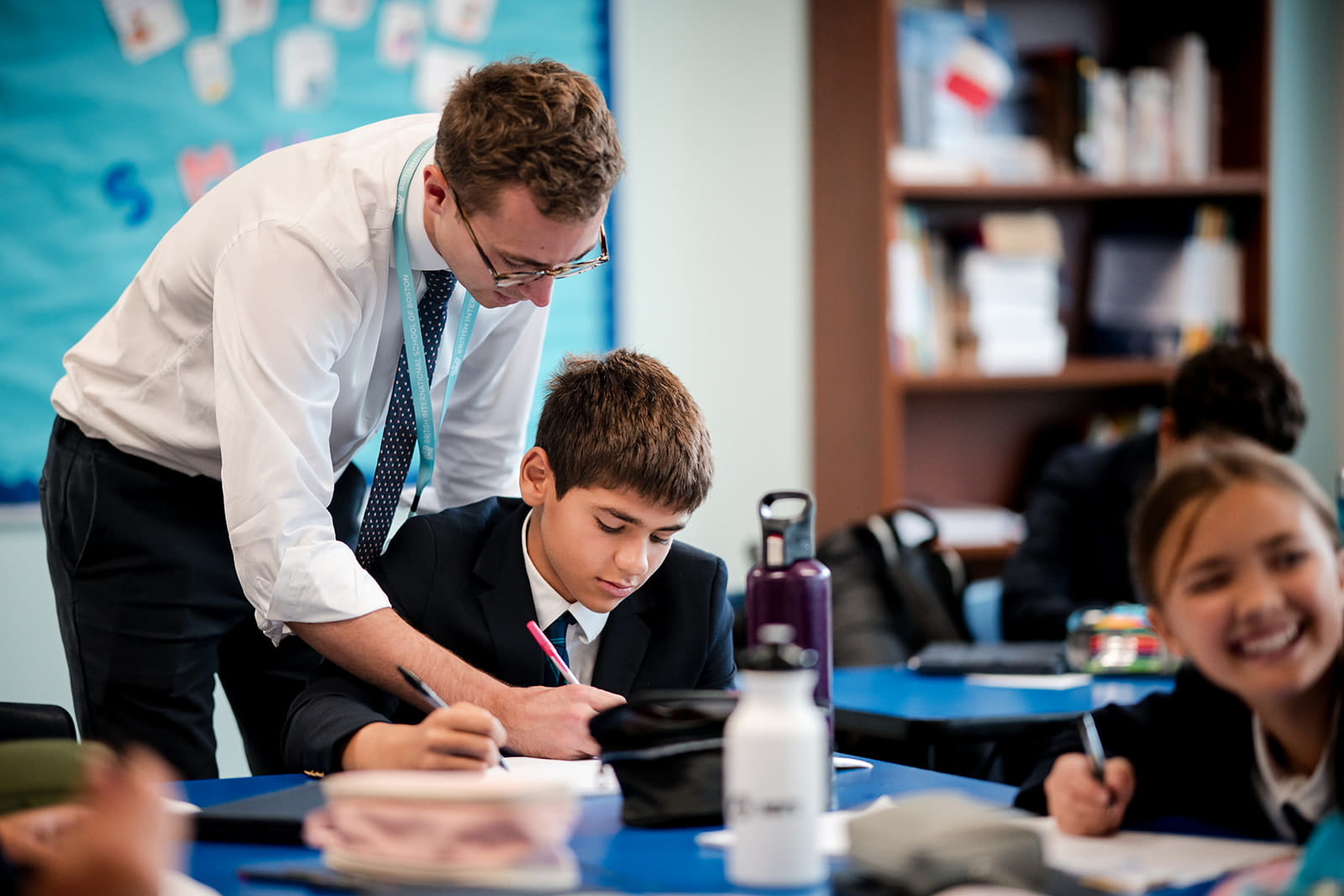
At the British International School of Boston, language learning begins early and grows with each student. Children start learning Spanish or French in the toddler years, building confidence through immersive and age-appropriate experiences. As students progress through the school, their language learning evolves, with opportunities to study multiple languages and receive personalized support based on their level, including heritage language support for native speakers.
"At BISB, we are so fortunate to be surrounded by so many people from different countries and that speak so many languages. In this community, we understand the importance of language learning and how it connects us to one another and opens our eyes to other parts of the world. Starting language learning early is an important step towards fluency, but more importantly, it fosters curiosity, empathy, and the confidence to engage with cultures beyond our own." - James MacInnes, Head of Foreign Languages at the British International School of Boston
For families exploring private schools in Boston or near Brookline that offer strong language programs, the British International School of Boston provides an international environment where students develop the confidence, cultural awareness, and communication skills needed to thrive in a global world.
Interested in learning more about BISB?
Submit an inquiry to speak with our admissions team and discover how our international approach to education supports every student’s growth.
Related news
News image ![Teacher with students]() Blog | TeachingPractice
Blog | TeachingPractice
Blog | TeachingPractice Why Learning a Second Language Early Matters
Discover how the British International School of Boston helps students develop language skills, confidence, and global perspective from an early age.
News image ![Boy and girl in class]() Blog | TeachingPractice
Blog | TeachingPractice
 Blog | TeachingPractice
 Is Grade Inflation Hiding Your Child’s True Academic Progress
Grade inflation has become a growing topic in education. When most students receive very high grades, it can be difficult for families and universities to understand true academic progress. In our latest blog, we explore why externally assessed programmes like the IB and IGCSE provide meaningful academic benchmarks and why this matters for university admissions. Read the full article.