


We use cookies to improve your online experiences. To learn more and choose your cookies options, please refer to our cookie policy.

April 23, 2026
From the Classroom to Home: Using Movement to Support Self-Regulation in Early Years Learners
.png?h=720&iar=0&w=1280&rev=29db3eaaa2864b37b4258fa88e5271bb&hash=35C9B3BF3F734B11BC1F0204B78C2E9B)
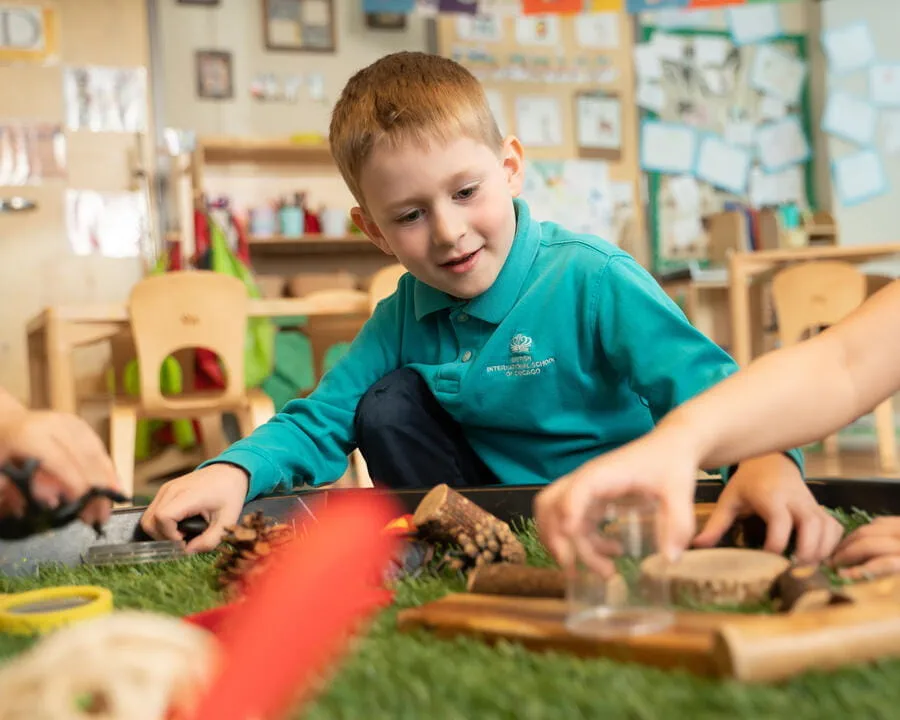
In Early Years classrooms, we often discuss behavior, but what we are often observing is a child’s need for regulation support. Children do not leave their nervous systems at the classrooms door. The same body that struggles with transitions at school is the same one that resists getting dressed in the morning. The child we see who holds it all together at school may unravel once they get home. This means regulation is not merely a school skill; it is a whole-child, whole-day experience. Understanding sensory processing allows us to view behavior from a different perspective. Some children feel overwhelmed by noise, touch, or visual stimuli, while others actively seek movement, pressure, or oral input to feel organized. Many fluctuate between these needs depending on fatigue, hunger, or emotional load. Recognizing these differences is crucial. They are signals that require our attention, not problems to solve.
The Role of Movement in Regulation and Development
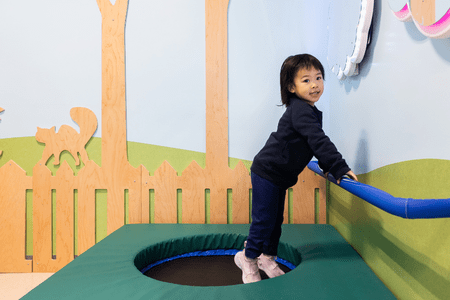
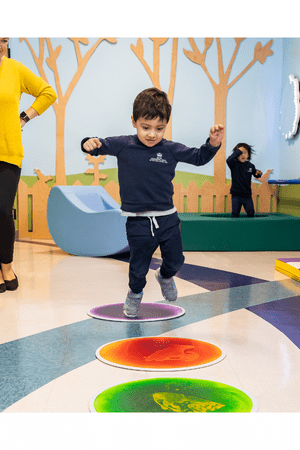
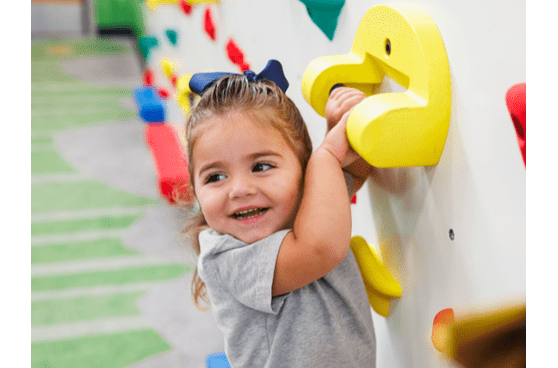
Movement is one of the most effective tools to support both regulation and development. Proprioceptive input, such as pushing, pulling, carrying, squeezing, and jumping, helps ground and organize the body. While vestibular input from activities like swinging, spinning, climbing, or rocking supports balance and helps regulate a child’s level of alertness. Intentionally incorporating movement into daily routines not only prepares the brain for learning but also plays a vital role in helping young children thrive.
For young children, movement is essential to their development. During this formative stage, they learn to navigate their emotions, follow routines, and interact with others. Activities like jumping, balancing, climbing, and dancing help children develop self-control, collaboration, and body awareness, all critical skills as they grow. When children engage in movement, they release built-up energy and stress, promoting a calmer state that enhances their focus and ability to listen. What might sometimes appear as “challenging” behavior often signals a child’s need for movement or sensory input rather than intentional misbehavior. Without sufficient movement opportunities, children may express frustration through impatience or big emotions. By intentionally integrating movement throughout the day, adults can create a supportive environment during play, transitions, and learning moments that reduces frustration and prevents behavioral escalation.
In the classroom, movement strategies might include:
- Animal walks before circle time to boost engagement.
- Heavy work jobs during transitions create a sense of grounding.
- Movement songs between activities to maintain appropriate energy levels.
- A predictable daily rhythm to provide structure.
These proactive supports anticipate dysregulation rather than react to it. However, it’s important to keep in mind that regulation does not reset at dismissal. After a day filled with sensory input and social expectations, many children experience what adults refer to as “after-school collapse.” Their nervous systems are tired, and their capacity to cope is lower, which can sometimes be mistaken for defiance.
Building a Partnership Between Home and School
When educators and families collaborate to support regulation through movement, we create continuity instead of confusion. Strategies don’t need to be complex. At home, you can try:
- Jumping or animal walks before getting dressed to release pent-up energy.
- Limiting clothing choices to ease sensory overload during morning routines.
- Engaging in a few minutes of physical play before transitioning to calmer activities, like dinner or getting ready for bed.
- Providing quiet decompression time after school, allowing children to unwind.
The goal is not to achieve perfect behavior but to create a nervous system that feels safe and supported in both environments. Consistent language is equally important. By using similar phrases, such as “Let’s help your body feel ready” or “Your body needs a break,” adults can help children understand regulation as a skill rather than a correction. Supporting sensory processing differences doesn’t require a complete overhaul of classroom practices or a rigid home routine. Small, intentional supports used consistently over time make the greatest impact. Predictable routines, built-in movement, and calm, consistent adult responses can transform how children experience their environments.
By recognizing and supporting the connection between movement and self-regulation, we can build learning spaces at school and at home where children truly thrive. Kids don’t choose to stop moving. They need our support to manage it in ways that support their attention, emotions, and relationships. When we guide them to understand and care for their bodies, we are setting them up for a lifetime of confidence and self-awareness. Working together, we can give children the tools to find balance in their physical, emotional, and social lives, supporting the understanding that movement is not just about improving behavior. It is about helping children grow and succeed in every part of their development.
Supporting movement and self‑regulation is part of how we prepare children for lifelong success. Learn more about how BISC Lincoln Park empowers students to grow socially, emotionally, and academically.
Maya Benguche & Melanee Neely
Assistant Directors, Pre-Nursery Program
Related news
News image ![Year 3 Leader, Carla Williamson]() Blog | Featured | Global Education
Blog | Featured | Global Education
 Blog | Featured | Global Education
 The Importance of Self-Regulation in Children: A Foundation for Learning and Wellbeing
Discover how co-regulation, emotional awareness, and practical strategies support children in managing emotions and building resilience at BISC Lincoln Park.
News image ![Lowri Covello]() Blog | Featured
Blog | Featured
 Blog | Featured
 Meet the BISC-LP Student Community Directors: How BISC-LP Supports Student Wellbeing, Safety and Belonging
Meet the Student Community Directors at British International School of Chicago, Lincoln Park and learn how they support student wellbeing, positive behavior, safeguarding, and belonging across our school community.
News image ![Our Restorative Approach at BISC-LP - Our Restorative Approach at BISC-LP]() Blog | Featured
Blog | Featured
 Blog | Featured
 Building Character Through Connection: Our Restorative Approach at BISC-LP
Discover how BISC-LP's restorative approach to behavior helps students build character, strengthen relationships, and develop emotional intelligence through respect, connection, accountability, and restorative practices.
News image ![Make the most of Summer in Chicago - Summer Fun and Learning]() Blog | Featured
Blog | Featured
 Blog | Featured
 Summer Fun & Learning: Make the most of Summer in Chicago
In our latest teacher blog, Pre-Nursery Assistant Directors Alex Duryea and Caitlin Stevens explore Chicago’s top summer destinations while supporting your child’s growth through play, discovery, and hands-on learning.


