
We use cookies to improve your online experiences. To learn more and choose your cookies options, please refer to our cookie policy.

30 December, 2025
Using “See, Think, Wonder” in Nursery and How Parents Can Support at Home
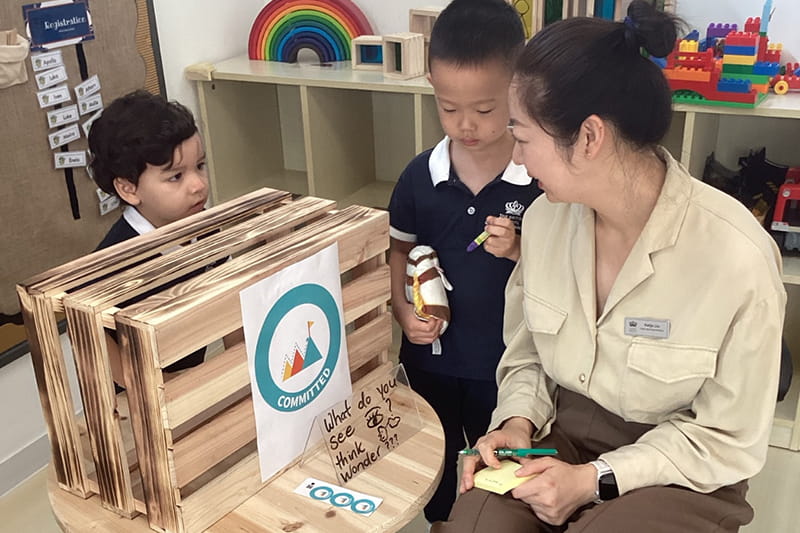
In Nursery, young children are naturally curious. Thinking routines like See, Think, Wonder help channel this curiosity into early thinking and communication skills. This simple routine encourages children to look closely, ask questions, and share ideas. Thes are skills that build strong foundations for later learning.
In the classroom, on the playground, in transitions, and, well everywhere, we use See, Think, Wonder during story times, sensory play, nature exploration, and when exploring new materials.
- See invites children to observe carefully: “What do you notice?”
- Think encourages them to make connections: “What do you think is happening?”
- Wonder helps them explore curiosity: “What are you wondering about?”
Using this structure supports language development, critical thinking, confidence in expressing ideas, and the ability to listen to different perspectives. It also helps children slow down and make sense of the world around them. All valuable as we prepare them for their progression to Primary and Secondary schools.

What can parents do to help?
Families can easily bring See, Think, Wonder into everyday moments:
- During a walk: Pause to look at a bug, a puddle, or a construction site.
Ask: “What do you see?” “What do you think is happening?” “What does it make you wonder (question)?” - While reading a book: Before opening the book, look at the front cover and ask your child what they think the story may be about and why? Before turning the pages, look at the pictures together and encourage your little one to share what they notice and what they think might happen next.
- Exploring objects at home: A new toy, a fruit (even the spoilt ones), or a household item can spark rich discussions. Encourage your child to describe what they see, make guesses, and ask questions.
- Help them find the answers: When they have a question about something, help them to find the answer, even if you already know it. For example, use the dictionary to find the meaning of a new word.

These small conversations build vocabulary, curiosity, and confidence. Most importantly, they show children that their ideas matter and that thinking is something we do together. By using See, Think, Wonder at home, parents strengthen what children are already practising in Nursery, helping them become thoughtful, engaged learners.
By Delisa McPherson
Nursery Butterfly Fish Class Teacher
Related news
News image ![Year 3 Become AI Explorers! | BSB Sanlitun - Year 3 Become AI Explorers]() Blog
Blog
 Blog
Blog Year 3 Become AI Explorers!
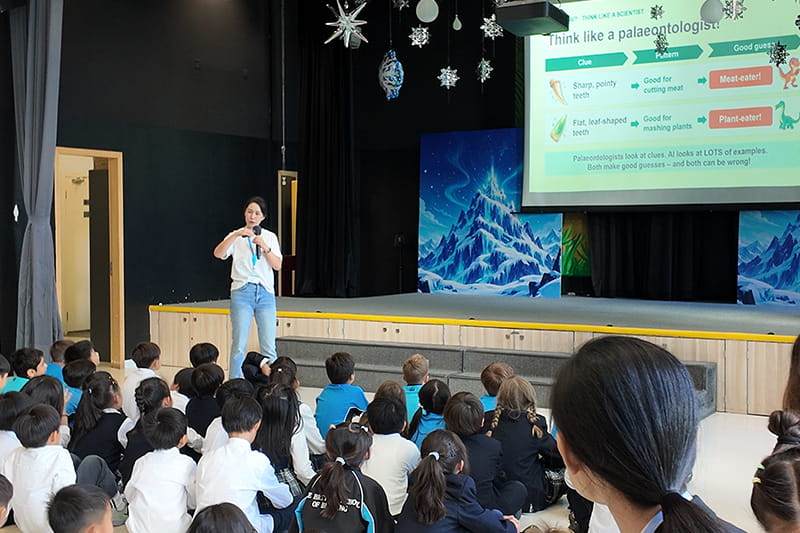
What is Artificial Intelligence, and how will it shape our future? Year 3 Badgers recently welcomed Amy, Que’s mum, who works at Microsoft, for an exciting, hands-on introduction to the world of AI.
News image ![EAL Update | BSB Sanlitun - EAL Update]() Blog
Blog
 Blog
Blog EAL Update
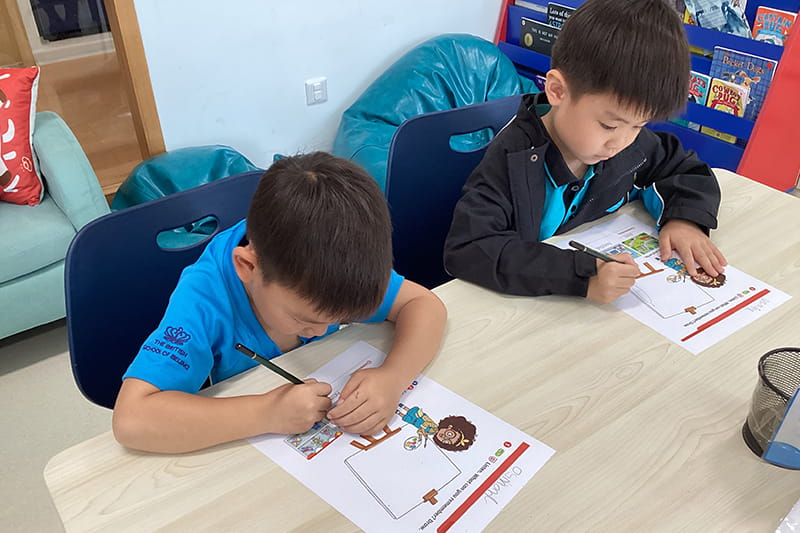
EAL students across Years 1–6 at BSB Sanlitun are exploring a range of exciting topics designed to develop their English language skills and build confidence in communication. Through engaging activities, interactive games and meaningful discussions, students will continue to strengthen their speaking, listening, reading and writing...
News image ![Caring, Growing and Celebrating Together | BSB Sanlitun - Caring Growing Celebrating]() Blog
Blog
 Blog
Blog Caring, Growing and Celebrating Together
What a lovely week we have had together in Pre-Nursery and Tadpoles! Our days have been filled with little smiles, happy moments, new discoveries and plenty of opportunities to learn about ourselves and each other. As we continued exploring feelings and emotions, we also began to bring the warmth and togetherness of the upcoming Mid-Autumn Festival into our learning...
News image ![A Flying Start to PE! | BSB Sanlitun - A Flying Start to PE]() Blog
Blog
 Blog
Blog A Flying Start to PE!
It feels like only yesterday that we welcomed everyone back to school, but somehow we are already five weeks into Term 1! It has been wonderful to see the students return with so much energy and enthusiasm. As a teacher, it is always amazing to see just how much children can grow over a short summer holiday – many of them seem to have come back noticeably taller!