
We use cookies to improve your online experiences. To learn more and choose your cookies options, please refer to our cookie policy.

09 February, 2026
The Juilliard-Inspired Creative Future
EARLY YEARS
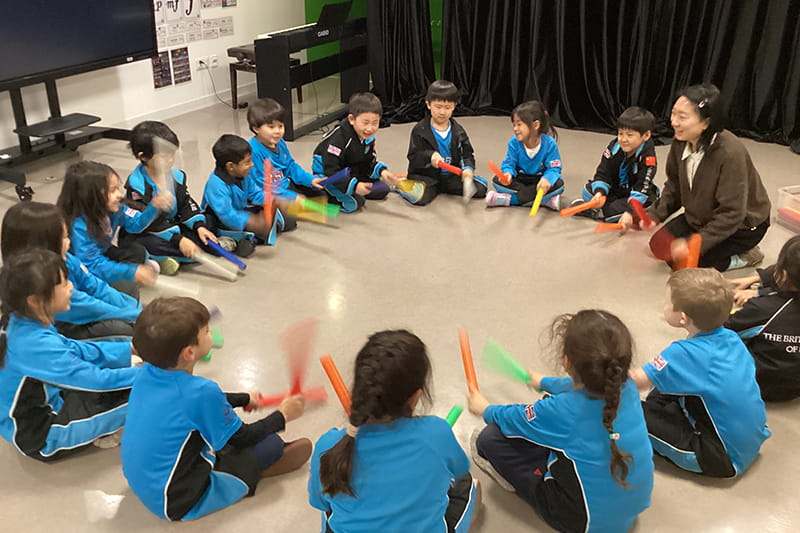
Our Early Years children have been joyfully exploring the connection between music and movement, guided by a playful lesson from the Juilliard Creative Classroom: “From Ears to Toes.”
Through this engaging experience, our youngest learners discovered that music can inspire movement in many ways. By listening carefully to a variety of sounds and songs, children learned to move different parts of their bodies - stretching, jumping, swaying, and wiggling from ears to toes. These joyful activities helped children understand how music and movement work together.
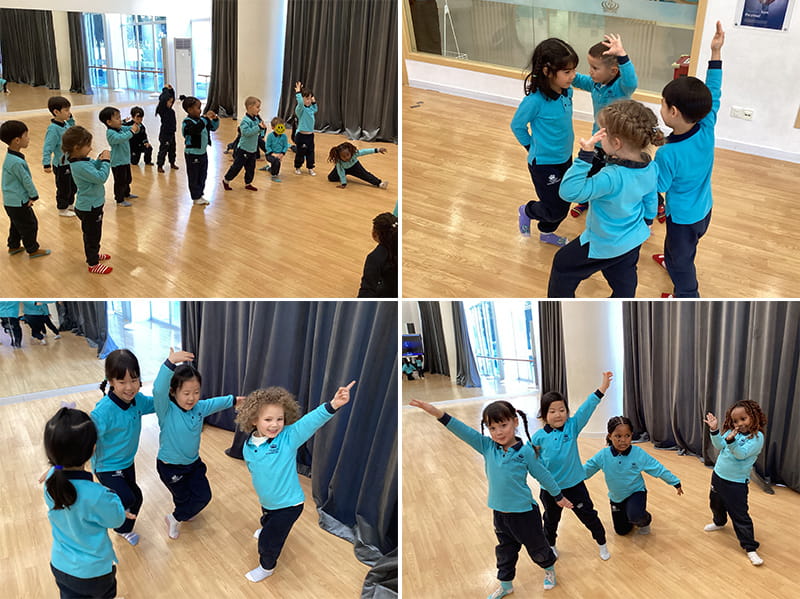
In the classroom, learning came to life through singing, listening, and imaginative movement. Children followed musical cues, copied simple actions, and created their own movements in response to what they heard. They explored fast and slow music, loud and soft sounds, and different moods, all while developing confidence and having fun.
This exploration does more than encourage movement; it supports important early learning skills. By listening, moving, and responding, students strengthened their coordination, body awareness, listening skills, and creative expression. It has been a delight to watch our Early Years children learn through play, music, and joyful movement.
YEAR 1
Our Year 1 students have been exploring the powerful connection between music and emotion, guided by a central question from the Juilliard Creative Classroom: “Following Musical Feelings.”
Through this engaging lesson, students discovered that music could express emotions without using words. They learned that elements such as tempo, dynamics, rhythm, and melody work together to create moods and feelings, helping listeners experience music in personal and meaningful ways.
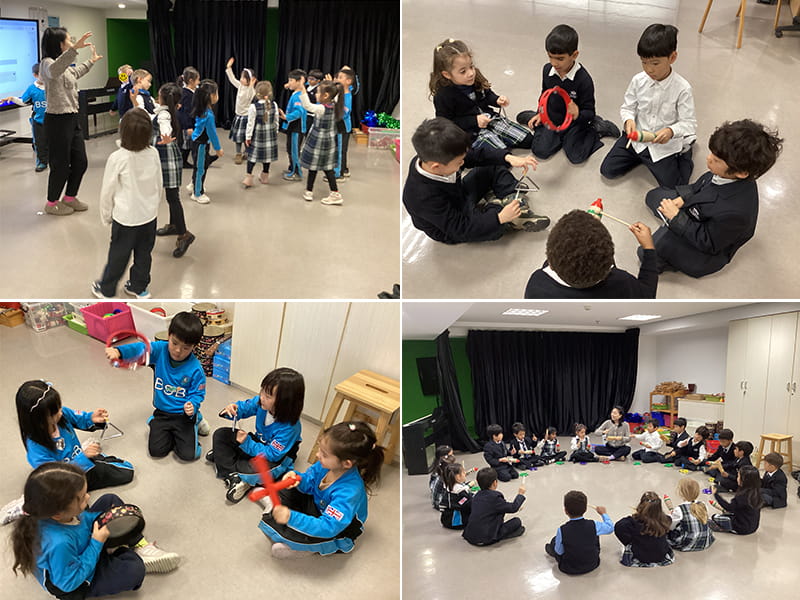
In the classroom, this learning came to life through active listening and creative exploration. Students became careful listeners, identifying the emotions they heard in a range of musical excerpts. They stepped into the role of creative responders, using movement, discussion, and visual expression to show how the music made them feel. Students also learned that everyone may experience music differently - and that these different responses are all valid and valuable.
This exploration goes beyond music appreciation; it supports important social and emotional learning skills. By listening closely, reflecting, and sharing their ideas, students strengthened their emotional awareness, empathy, and confidence. It has been a joy to watch them listen with curiosity, express themselves creatively, and connect through the universal language of music.
YEAR 2
Our Year 2 students have been stepping into the world of movement and expression, exploring a central question from the Juilliard Creative Classroom: "Drops and Pops".
Through this engaging unit, our young dancers have discovered that dancers are clever pattern creators! They have learned that levels - high and low positions - can be arranged into repeating sequences, making movement both fun to explore and pleasing to watch.
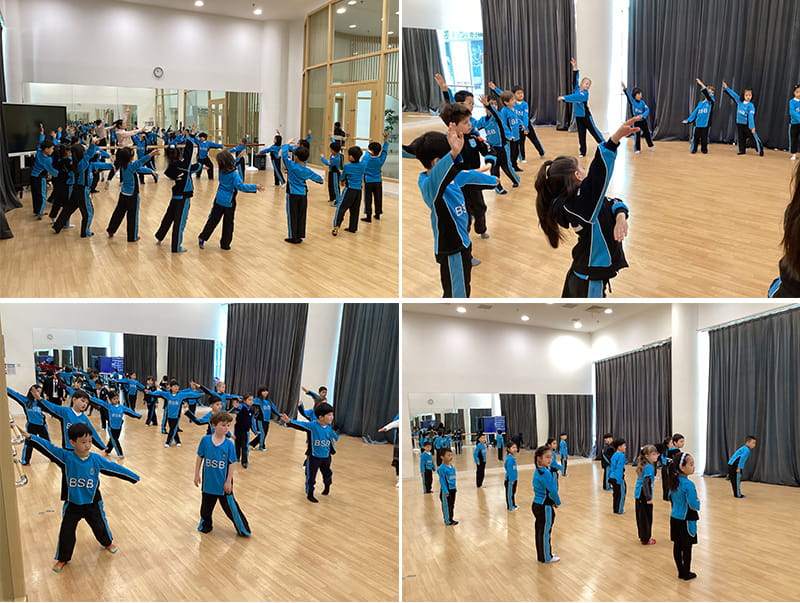
In the classroom, this has come to life in two exciting ways. First, our students have become level detectives, observing how professional dancers in Merce Cunningham's Ocean use “drops” and “pops” to build visual and rhythmic patterns. More importantly, they have stepped into the role of choreographers themselves, creating and performing their own “down-up” step patterns and even trying the classic triplet step.
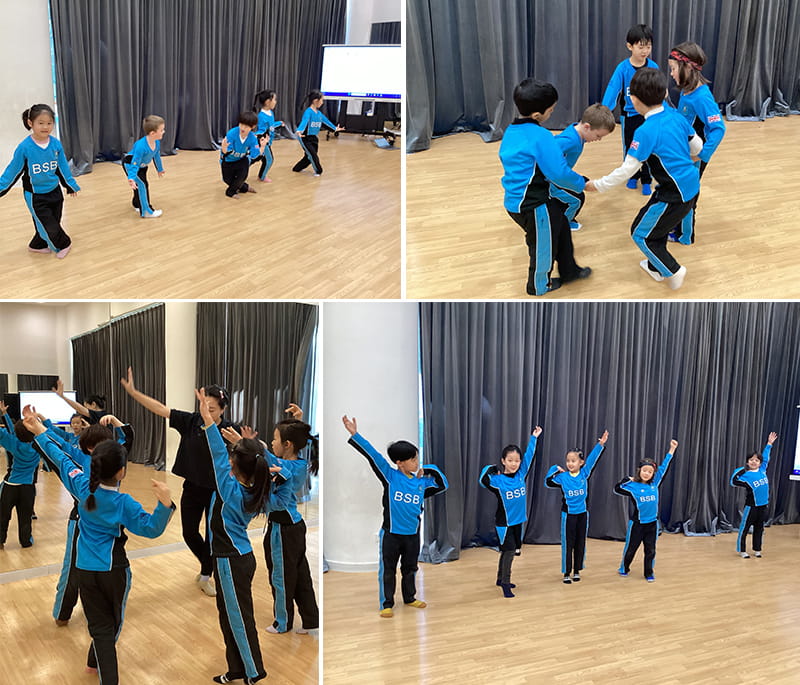
This exploration does more than teach movement skills; it develops fundamental cognitive and creative abilities. By observing, imitating, and inventing patterns through high and low levels, students strengthen their spatial awareness, sequencing skills, and understanding of composition in a playful and embodied way. It has been a joy to watch them collaborate, move with intention, and express their ideas through the language of dance.
YEAR 5
Our Year 5 students have been stepping into the world of creative choreography and observation, exploring a central question from the Juilliard Creative Classroom: "The Five Positions of the Swan".
Through this engaging unit, our young choreographers have discovered that movement can be built from just a few key ideas, like a story - it can be built from words! They learned how the five basic ballet positions - used for centuries - form the foundation of countless dances, and how a modern choreographer like Alexander Ekman can both honour and playfully reimagine these "building blocks."
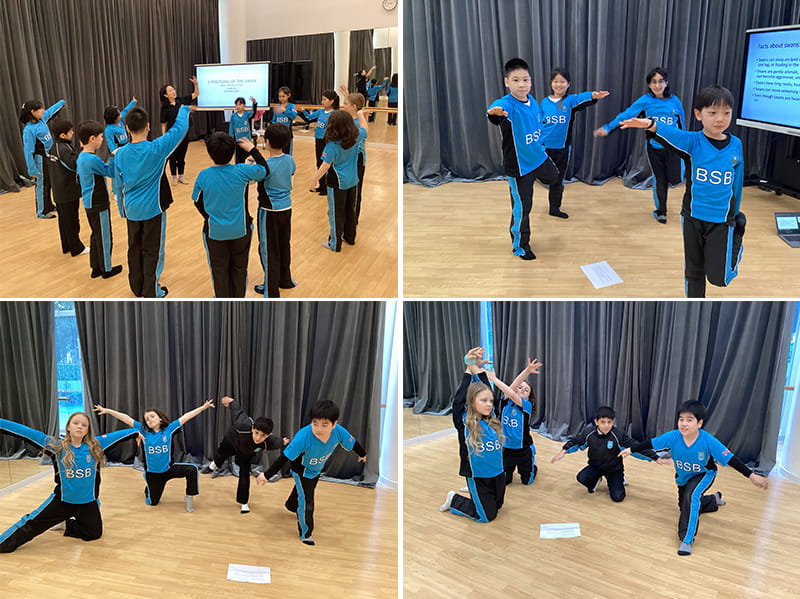
In the classroom, this has come to life in two exciting ways. First, our students became movement researchers, studying facts about swans and turning their observations into five original "swan positions" - each inspired by swan behaviour, from sleeping on one leg to flying high in the sky. More importantly, they stepped into the role of choreographers, using these positions to create movement sequences, develop transitions, and even coach one another to polish their group performances.
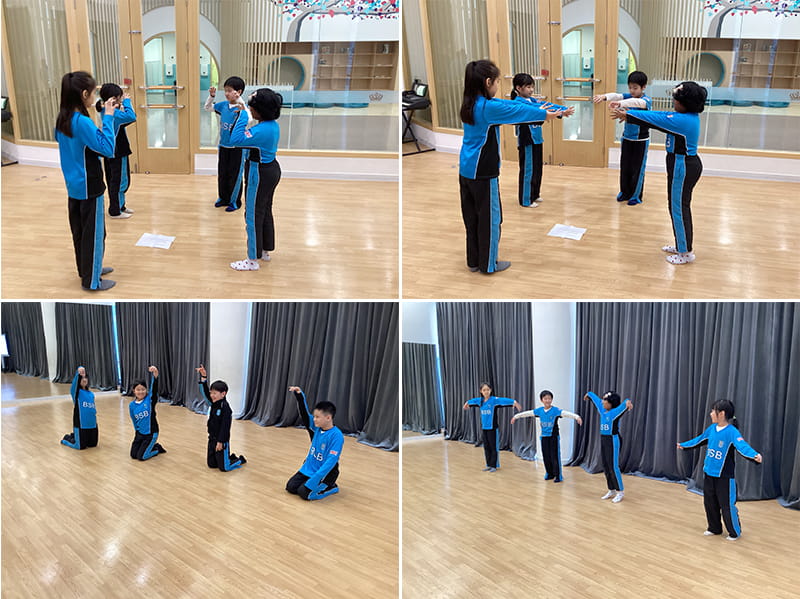
This exploration does more than teach dance composition; it develops observation, collaboration, and expressive skills. By researching, embodying, and sequencing movement, students deepen their understanding of how art is made - and how even a playful idea can become the start of something meaningful. It has been a pleasure to watch them think like artists, work like directors, and create with curiosity and joy.
By Alice Fei
Performing Arts Teacher
Discover how young minds explore their creativity through our exclusive collaboration with Juilliard.
+86 10 8531 1999
sltadmissions@bsbsanlitun.com
Related news
News image ![Year 3 Become AI Explorers! | BSB Sanlitun - Year 3 Become AI Explorers]() Blog
Blog
 Blog
Blog Year 3 Become AI Explorers!
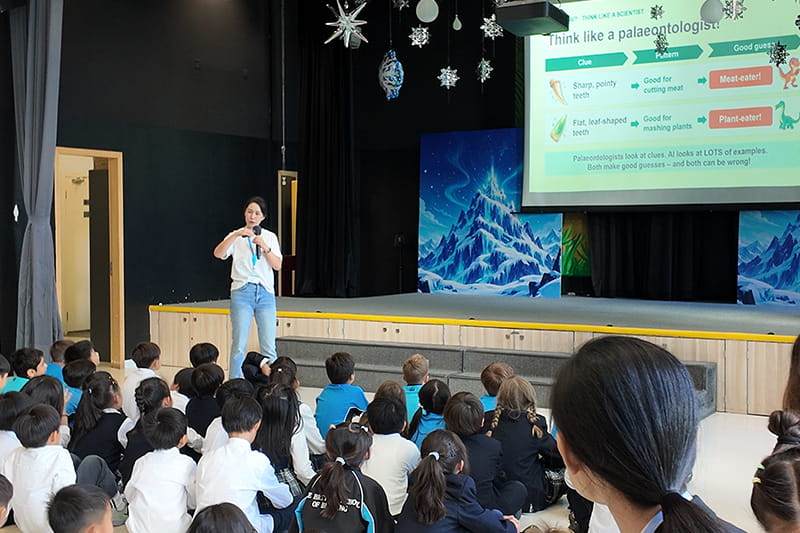
What is Artificial Intelligence, and how will it shape our future? Year 3 Badgers recently welcomed Amy, Que’s mum, who works at Microsoft, for an exciting, hands-on introduction to the world of AI.
News image ![EAL Update | BSB Sanlitun - EAL Update]() Blog
Blog
 Blog
Blog EAL Update
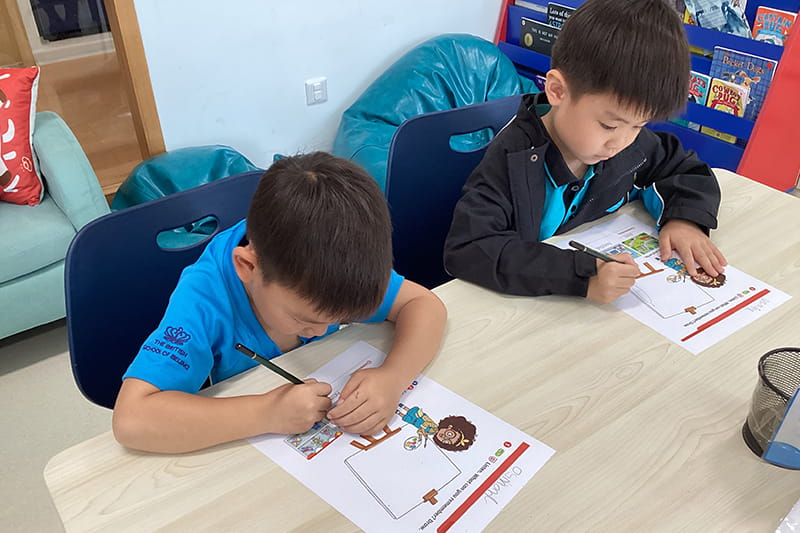
EAL students across Years 1–6 at BSB Sanlitun are exploring a range of exciting topics designed to develop their English language skills and build confidence in communication. Through engaging activities, interactive games and meaningful discussions, students will continue to strengthen their speaking, listening, reading and writing...
News image ![Caring, Growing and Celebrating Together | BSB Sanlitun - Caring Growing Celebrating]() Blog
Blog
 Blog
Blog Caring, Growing and Celebrating Together
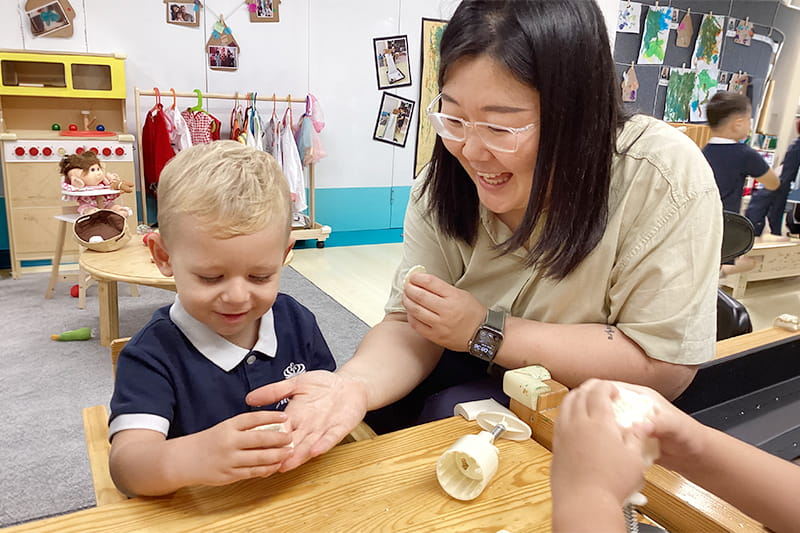
What a lovely week we have had together in Pre-Nursery and Tadpoles! Our days have been filled with little smiles, happy moments, new discoveries and plenty of opportunities to learn about ourselves and each other. As we continued exploring feelings and emotions, we also began to bring the warmth and togetherness of the upcoming Mid-Autumn Festival into our learning...
News image ![A Flying Start to PE! | BSB Sanlitun - A Flying Start to PE]() Blog
Blog
 Blog
Blog A Flying Start to PE!
It feels like only yesterday that we welcomed everyone back to school, but somehow we are already five weeks into Term 1! It has been wonderful to see the students return with so much energy and enthusiasm. As a teacher, it is always amazing to see just how much children can grow over a short summer holiday – many of them seem to have come back noticeably taller!