



We use cookies to improve your online experiences. To learn more and choose your cookies options, please refer to our cookie policy.
30 March, 2026
What effective learning really looks like in practice

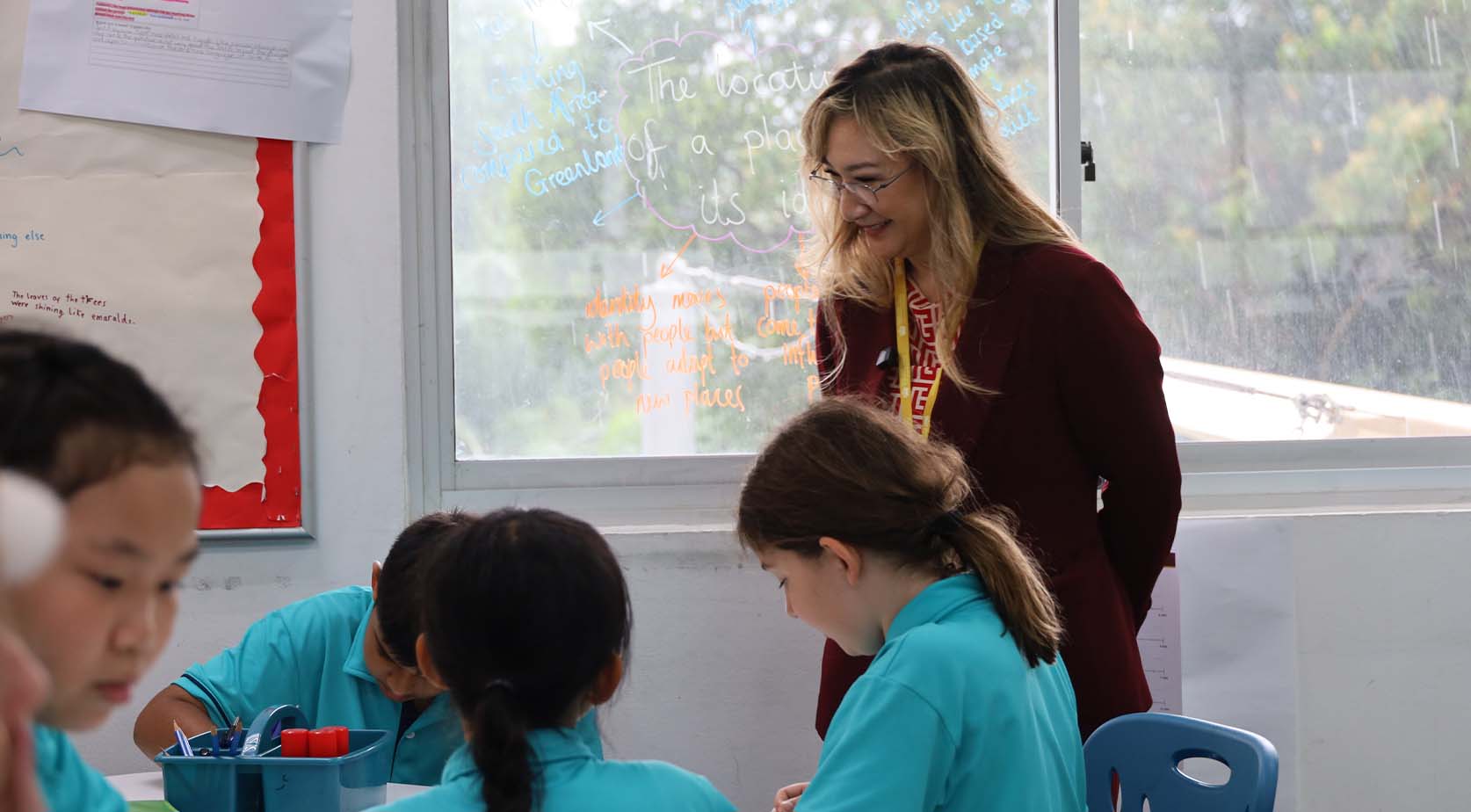
Classrooms are dynamic environments shaped by inquiry and thinking. During a single lesson, students shift between listening, questioning, discussing, and applying ideas as they explore key concepts.
Teachers, in turn, move flexibly between explanation, questioning, and feedback to support deep understanding and meaningful transfer of skills and learning.
At Dover Court International School (DCIS), students are not only engaged in tasks, but are supported to think deeply, explain their reasoning, and make meaningful connections in their learning.
Students as active participants, not passive listeners
In a learner-centred classroom, students are not simply receiving information; they are active participants in co-creating it.
Teachers at Dover Court work closely alongside students rather than delivering lessons from a distance. You will often see students discussing ideas, testing their understanding with peers, and asking questions that go beyond the surface of the topic.
This kind of student-centred learning creates a more purposeful classroom learning environment. Students are encouraged to contribute, not just complete tasks. They explain their thinking, listen to others, and refine their ideas through discussion and debate.
As a result, learning becomes something students actively build, rather than something they passively receive.
Helping students think, not just remember
Effective learning goes beyond recalling facts. It involves understanding ideas well enough to use them in new and different situations.
At Dover Court, lessons are designed to help students explore concepts, not just memorise content. Teachers guide students to look for patterns, make connections, and consider different perspectives.
A key part of this is metacognition, which helps students think about their own thinking. Across Nord Anglia schools, this is a shared focus, supporting students to plan how they approach a task, review their understanding, and reflect on how they can improve.
In the classroom, this is supported through structured thinking routines. These are structured strategies that help make students’ thinking explicit - through talk, writing, or reflection. Their purpose is to help learners explain their reasoning, ask questions, and build understanding.
For example, students might be asked:
- What strategy are you using here?
- What do you notice?
- What do you think is happening?
- What makes you say that?
- How do you know this approach is working?
Or they may discuss ideas in pairs before sharing with the class. These routines may seem straightforward, but they play an important role. They encourage every student to think carefully, rather than wait for the “right answer”.
Over time, students become more confident explaining their reasoning and more comfortable exploring complex ideas.
Making understanding visible in the classroom
In effective learning environments, understanding is not hidden. Teachers create regular opportunities for students to show what they know and how they are thinking.
This might involve:
- explaining an idea to a partner
- presenting different viewpoints
- applying knowledge to a real-world situation
Students are encouraged to express their learning in different ways, recognising that individuals think, process, and communicate differently.
Teachers use open-ended questions to explore how students are thinking. Instead of asking for a quick answer, they ask students to explain their reasoning or consider alternative possibilities. This helps teachers gauge understanding and supports students in developing confidence in articulating their ideas.
Alongside these, they also ask deeper conceptual questions to support students in making connections, identifying patterns, and building new understanding from what they already know.
Checking that learning is secure
Strong learning depends on careful monitoring of progress, and on recognising that each student learns differently.
Teachers at Dover Court use a range of formative assessment strategies during lessons to understand how well each student is learning, and to respond to individual needs in real time. This includes listening to discussions, reviewing student work, and asking questions that probe deeper understanding.
This personalised approach is particularly important in an inclusive school environment. Teachers adapt their level of challenge, questioning, and support, so that every student can access the learning and continue to make progress.
Students are often encouraged to connect new learning to what they already know, or to apply it in a different context. This helps teachers see whether understanding is secure and transferable, and appropriate to each student’s stage of learning.
When students can explain their learning to others, take it further independently, or apply it in new situations, it provides clear evidence that learning is deep and not superficial.
Alongside this, standardised assessments provide additional checkpoints, giving parents a clear view of progress against UK and international benchmarks.
Learning that builds over time
A single lesson does not define the quality of education. What matters is whether learning builds consistently over time.
In a learner-centred classroom, students develop the habits and skills needed to think independently, engage with challenging ideas, and take ownership of their learning. Teaching approaches, such as structured thinking routines and active discussion, are used consistently so that students know how to approach new learning with curiosity and wonder.
At Dover Court International School, this consistency ensures that learning is not only engaging in the moment but also leads to lasting understanding and strong academic progress.
Parents who would like to see how these approaches work in practice are always welcome to speak with the academic team and explore how learning is designed and supported across the school.
Related news
News image ![How Dover Court Develops Leadership, Initiative and Human Skills - How Student Voice and Leadership Come to Life at Dover Court]() Blog | Art Drama and Music | Academic
Blog | Art Drama and Music | Academic
 Blog | Art Drama and Music | Academic
 How Student Voice and Leadership Come to Life at Dover Court
What happens when students are empowered to turn ideas into reality? Discover how Year 9 student Daksh developed leadership, communication and problem-solving skills through a student-led initiative, and how experiences like these help young people develop the human skills needed for the future.
News image ![Why Struggle and Joy Belong Together in Maths | Dover Court International School Singapore - Why Struggle and Joy Belong Together in Maths]() Blog | Academic | Parent Guides
Blog | Academic | Parent Guides
 Blog | Academic | Parent Guides
 Why Struggle and Joy Belong Together in Maths: Reflections from a Parent Workshop
How can we help children develop confidence and enjoyment in mathematics? Following a parent workshop at Dover Court International School, internationally recognised mathematics educator Dr Jennifer Chang Wathall explores the relationship between challenge, resilience and joyful learning.
News image ![Student Leadership at Dover Court International School Singapore | Meet Our 2026-27 Head and Deputy Head Students - Student Leadership at Dover Court Meet Our Head and Deputy Head Students for 2026-27]() News
News
 News
News Student Leadership at Dover Court: Meet Our Head and Deputy Head Students for 2026-27
Meet our Head and Deputy Head Students for 2026-27 and learn how leadership opportunities at Dover Court help students develop confidence, responsibility and a strong sense of community. From Primary School leadership opportunities to student-led initiatives and global experiences, leadership is nurtured at every stage of the Dover Court journey.
News image ![Dover Court International School Welcomes New Principal Richard Vaughan - Dover Court International School Welcomes New Principal Richard Vaughan]() News
News
 News
News Dover Court International School Welcomes New Principal Richard Vaughan
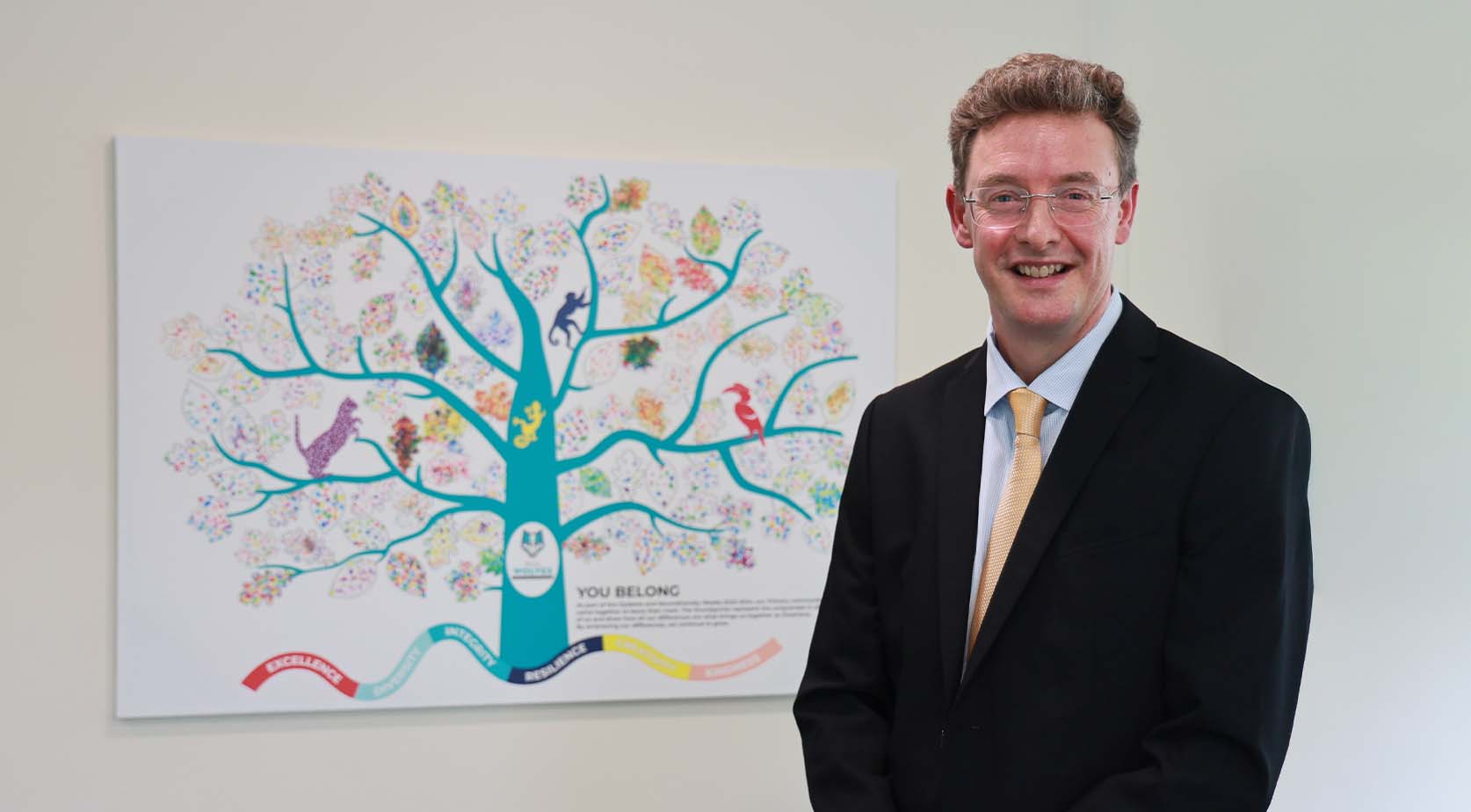
Dover Court International School is delighted to welcome Richard Vaughan as Principal, having joined the school at the start of the 2026-27 academic year. Bringing more than 25 years of educational leadership experience across the UK and internationally, Mr Vaughan joins Dover Court with a strong track record of fostering academic excellence, inclusive education and community-building.


