



We use cookies to improve your online experiences. To learn more and choose your cookies options, please refer to our cookie policy.
19 November, 2026
How Can Play Support Your Child’s Communication Development?
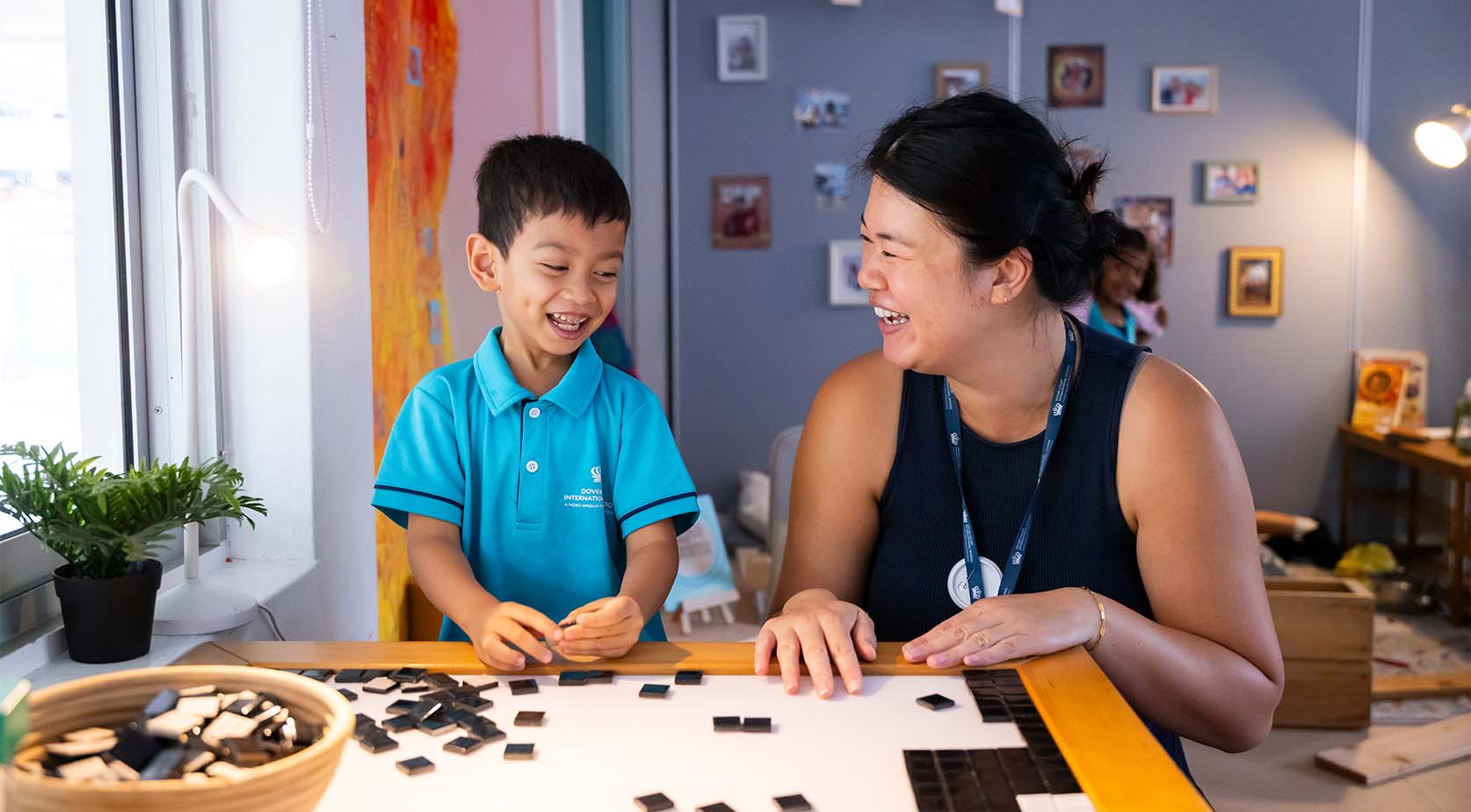
Play is an important part of how children learn to communicate, giving them opportunities to build vocabulary, take turns and express themselves in different ways.
Tue Ngyuen, Speech and Language Therapist at Dover Court International School, shares six simple strategies parents can use during everyday play to encourage their child’s communication development.
Why is play important for communication development?
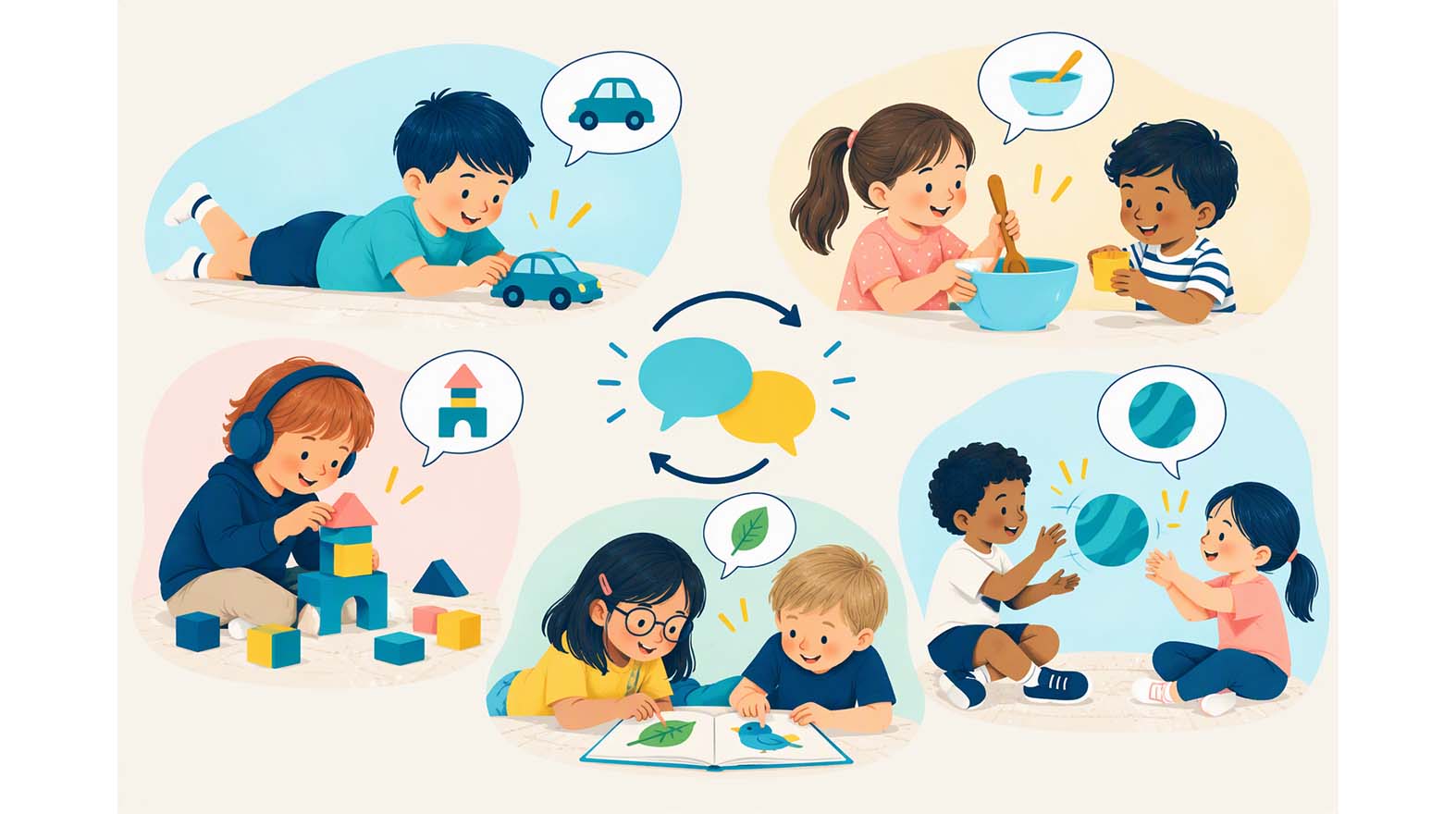
Play is one of the most natural contexts in which children learn to communicate. Before children combine words into sentences, they are learning the back-and-forth rhythm of conversation, the connection between objects and language, and the pleasure of shared interaction through play. There is a positive relationship between pretend play and language acquisition.
Pretend play is connected to children’s growing vocabulary, sentence structure and use of language across social situations. Pretend play, for example, often mirrors real life, giving children a natural, repeatable script to follow. Cooking a meal might mean gathering the ingredients, mixing them, serving the food, and then clearing up and putting everything away. That same sequencing helps children make sense of social situations.
Play is also built on back-and-forth. The turn-taking children practise during play drives conversations, and it has been shown to predict vocabulary growth over time. Within that back-and-forth, language builds gradually: a single word becomes a short phrase, a phrase becomes a full sentence, and sentences eventually become the narrative and conversational skills children need to tell a story or hold a discussion.
Communication during play also includes gestures, pointing and facial expressions. For children who use Augmentative and Alternative Communication (AAC), an adult modelling language on the device alongside talking during play has been shown to support both understanding and expression.
Above all, play supports vocabulary growth in two important ways:
- Adults can model language in context, talking about what the child is seeing and doing in the moment.
- Children can use that language themselves in a natural and enjoyable setting, rather than an instructional one.
Six simple shifts that can make a big difference
1. Follow their lead
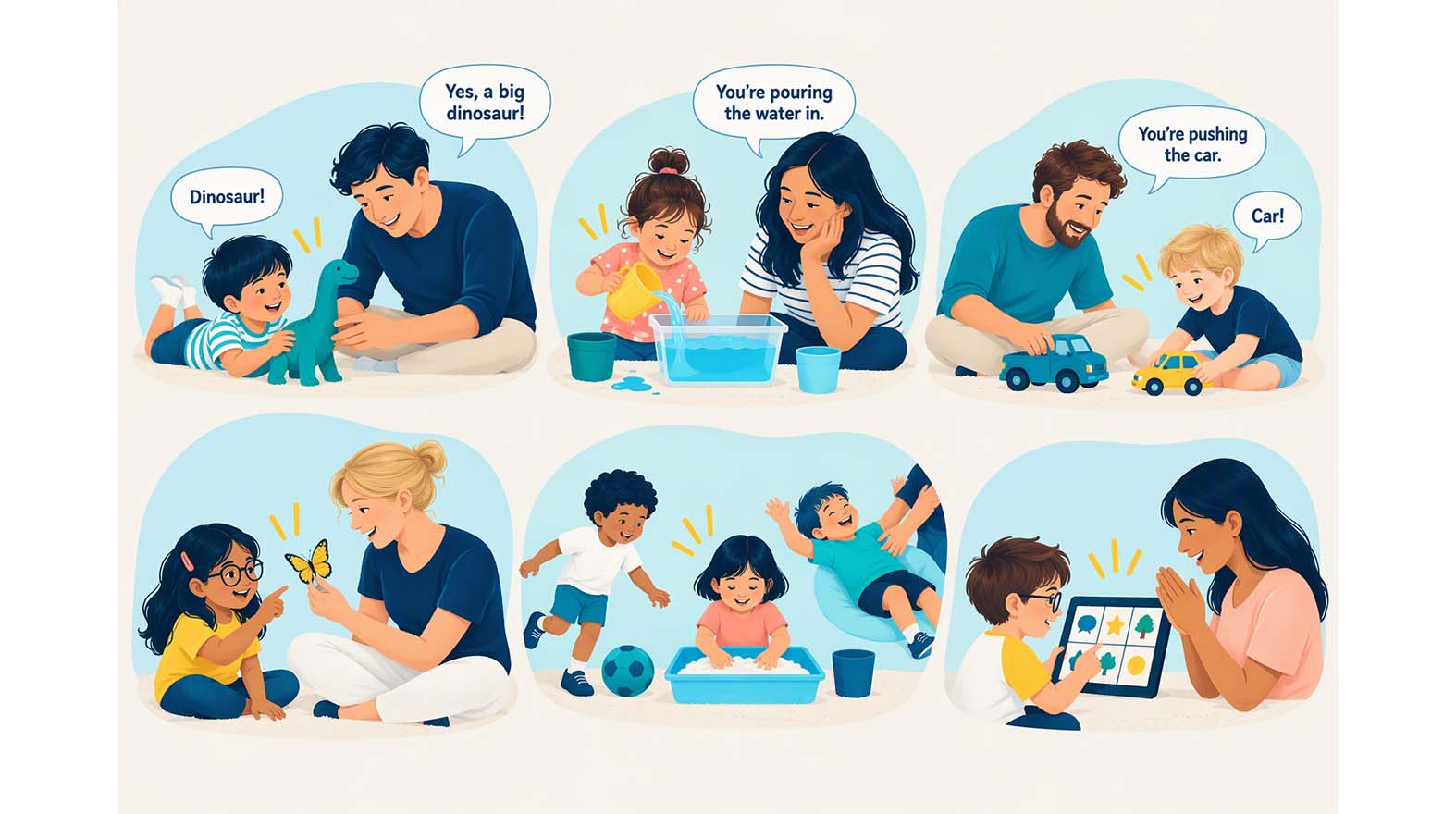
Join in with whatever your child is already interested in, rather than steering them towards something else. When you follow instead of direct, language connects to what they actually care about in that moment, which is when it sticks.
This is Hanen’s OWL strategy:
- Observe what they are focused on.
- Wait a few extra seconds before jumping in.
- Listen to what they are communicating, whether that is a word, a sound, a point or a look.
2. Comment more, ask less
It can feel natural to ask lots of questions during play, such as “What’s that?” or “What colour is it?” However, a steady stream of questions can put pressure on a child to perform rather than communicate.
Commenting on what your child is doing, such as “You’re pouring the water in”, models language without demanding a response. This keeps the interaction relaxed and child-led. Comments model language without asking for anything back, allowing your child to remain in the driver’s seat. This is Hanen’s “Comment, Don’t Ask” strategy.
3. Add a little more
When your child communicates using a word, sign, gesture or AAC selection, build on their communication rather than asking them to repeat it back.
If they say “car”, you might say, “Yes, a fast car!” If they push a truck and vocalise, you could add, “Go, go fast.”
This is Hanen’s “Extend and Expand” strategy. Studies of parent-implemented interventions have found that increases in parents’ use of these expansions are linked to measurable gains in children’s expressive language.
4. Create opportunities for shared attention
Shared attention is when two people focus on the same thing at the same time. It is one of the building blocks of communication and is closely linked to how gesture and language develop together.
For some children, shared attention can mean eye contact and pointing. For others, it might mean sitting close together, noticing the same object or sharing a focus without making eye contact. All of these interactions are valid, and Hanen strategies are designed to work with however your child naturally connects.
5. Recognise the value of movement, sensory and repetitive play
Much of the research on play and language has focused on pretend play, such as dolls, kitchens and dressing up, which shows a strong and consistent link to vocabulary and storytelling.
Nevertheless, all types of play can create opportunities for communication. Movement games, sensory play and repetitive routines are predictable and are often what a child already loves. Examples might include rolling a ball back and forth or repeating the same tickling routine.
These activities give children natural opportunities to anticipate what is coming and communicate about it. For some children, this may feel easier than pretend play.
6. Remember that every communication method counts
Gestures, pointing, visuals, signs and AAC are all ways to communicate, in addition to oral language.
Research shows that gesture use during play is closely tied to later language growth. For children who use AAC, hearing an adult model language on the device alongside talking helps to build both understanding and expression.
The strategies above work in the same way across all of these communication methods: comment, expand and follow your child’s lead.
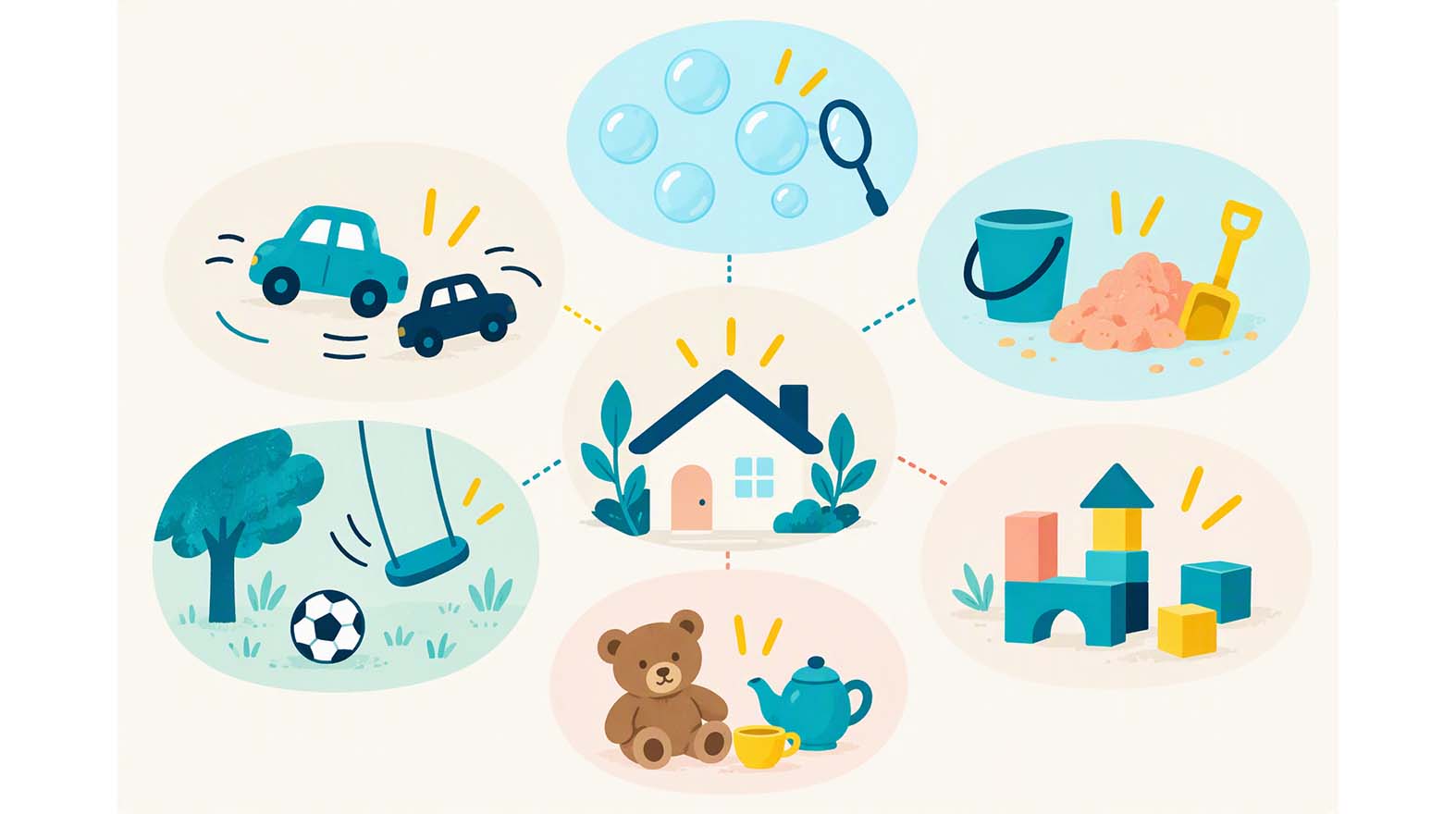
Communication-building activities to try at home
These strategies do not require specialist toys or additional activities. They can be incorporated into the play your child already enjoys.
Bubbles
Blow a few bubbles and pause before blowing more. Waiting provides a cue for your child to ask, reach or make a sound for “more”.
Comment on what you see, such as “Big bubble!” or “Pop!”, rather than asking, “What am I doing?” If your child gestures, vocalises or uses AAC to request more, follow their lead immediately by blowing again.
Cars
Get down on the floor and follow whatever your child is doing with the cars, even if they are lining them up or crashing them repeatedly.
Narrate simply as you go, using words such as “go”, “fast”, “crash” and “stuck”, rather than asking, “What colour is the car?” If they say or gesture “go”, expand it slightly: “Yes, go fast!”
Repetitive car play is a low-pressure opportunity to practise the same few words within a familiar interaction.
Sensory play
Water, sand, playdough and shaving foam can all provide opportunities for communication. Let your child lead the exploration without asking them to use the materials in a particular way.
Comment on what is happening, such as “It’s squishy” or “Pouring it out”, and pause after each comment to give your child space to respond in whatever way they can.
Sensory play can be particularly beneficial for children with social communication differences who may find eye contact effortful, as shared attention can happen through touch and shared activity instead.
Blocks and construction
Build alongside your child rather than directing the structure. Take turns adding pieces and narrate your own turn with simple phrases such as “my turn” or “on top”, so they see the back-and-forth modelled.
When your child says or shows you a word, such as “tower” or “fall down”, expand it slightly by saying, “Yes, a big tower!” rather than asking them to repeat it.
Dolls and pretend play
Follow whatever scenario your child sets up, such as feeding a doll, putting it to bed or making pretend phone calls.
Comment on the story as it unfolds with phrases such as “Teddy’s hungry” or “Night night”, instead of consistently asking questions such as “What’s the doll doing?”
Pretend play is where a lot of new vocabulary and storytelling language naturally arises, so allow the scenario to continue rather than redirecting it.
Outdoor and movement play
Follow your child’s pace and interest, whether they are running, swinging or stopping to examine a leaf.
Use gestures and simple words together, such as “up”, “go” and “stop”, particularly with children who are at the beginning of their communication development.
Predictable movement games, including chasing, swinging and “ready, set, go”, are particularly helpful for building anticipation and shared excitement, which naturally invites communication.
Supporting communication through everyday moments
These approaches are at the heart of the Hanen Centre’s It Takes Two to Talk® programme, which uses evidence-based strategies designed to fit into the everyday play families are already doing, rather than adding another activity to their to-do list. Small changes in how adults join, pause, comment and respond can create more space for children to communicate.
References
1. Kalkusch, I., Jaggy, A.-K., Burkhardt Bossi, C., Weiss, B., Sticca, F., & Perren, S. (2021). Promoting social pretend play in preschool age: Is providing roleplay material enough? Early Education and Development, 32(8), 1136–1152.
2. Jaggy, A.-K., Kalkusch, I., Burkhardt Bossi, C., Weiss, B., Sticca, F., & Perren, S. (2023). The impact of social pretend play on preschoolers' social development: Results of an experimental study. Early Childhood Research Quarterly, 64, 13–25.
3. Donnelly, S., & Kidd, E. (2021). The longitudinal relationship between conversational turn-taking and vocabulary growth in early language development. Child Development, 92(2), 609–625.
4. Suttora, C., Zuccarini, M., Aceti, A., Corvaglia, L., Guarini, A., & Sansavini, A. (2021). The effects of a parent-implemented language intervention on late-talkers' expressive skills: The mediational role of parental speech contingency and dialogic reading abilities. Frontiers in Psychology, 12, Article 723366.
5. Hà, T. A. (2022). Pretend play and early language development—relationships and impacts: A comprehensive literature review. Journal of Education, 202(1), 122–130.
6. Salo, V. C., Rowe, M. L., & Reeb-Sutherland, B. C. (2018). Exploring infant gesture and joint attention as related constructs and as predictors of later language. Infancy, 23(3), 432–452.
7. O'Neill, T., Light, J., & Pope, L. (2018). Effects of interventions that include aided augmentative and alternative communication input on the communication of individuals with complex communication needs: A meta-analysis. Journal of Speech, Language, and Hearing Research, 61(7), 1743–1765.
8. Suarez-Rivera, C., Linn, E., & Tamis-LeMonda, C. S. (2022). From play to language: Infants' actions on objects cascade to word learning. Language Learning, 72(4), 1092–1127.
9. Wengman, R., et al. (2025). Developmental relationships between early vocabulary acquisition, joint attention and parental supportive behaviors. Infancy.
10. Quinn, S., Donnelly, S., & Kidd, E. (2018). The relationship between symbolic play and language acquisition: A meta-analytic review. Developmental Review, 49, 121–135.
11. Fong, N. W. Y., Ho, S. K. Y., So, B. J. W., & Lian, W. B. (2012). Evaluation of the Hanen It Takes Two to Talk intervention programme. Proceedings of Singapore Healthcare, 21(4), 259–265.
Related news
News image ![How to Prepare Your Child for an AI-Powered Future | Dover Court International School Singapore - How to Prepare Your Child for an AI-Powered World]() Blog | Academic | Parent Guides
 Blog | Academic | Parent Guides
How to Prepare Your Child for an AI-Powered World
How can parents prepare children for a future shaped by artificial intelligence? Discover why critical thinking, curiosity, confidence and human connection remain essential, and how Dover Court International School helps students develop them.
News image ![Why Struggle and Joy Belong Together in Maths | Dover Court International School Singapore - Why Struggle and Joy Belong Together in Maths]() Blog | Academic | Parent Guides
 Blog | Academic | Parent Guides
Why Struggle and Joy Belong Together in Maths: Reflections from a Parent Workshop
How can we help children develop confidence and enjoyment in mathematics? Following a parent workshop at Dover Court International School, internationally recognised mathematics educator Dr Jennifer Chang Wathall explores the relationship between challenge, resilience and joyful learning.
News image ![How to Get the Most Out of a University Fair | DCIS - how-to-get-the-most-out-of-a-university-fair]() Blog | Parent Guides | Academic
 Blog | Parent Guides | Academic
How to Get the Most Out of a University Fair: A Guide for Students and Parents
Thinking about university but not sure where to start? DCIS Careers and Higher Education Counsellors Hani Rahman and Andrew O'Reilly share practical advice on how students and parents can make the most of university fairs and explore future study options with confidence.
News image ![Co-Regulation in Children | Supporting Emotional Regulation | Dover Court Singapore - co-regulation-children-emotional-regulation-guide]() Blog | Parent Guides
 Blog | Parent Guides
Co-Regulation: A Practical Guide to Supporting Overwhelmed Nervous Systems
Discover how co-regulation helps children manage overwhelming emotions and build lifelong self-regulation skills. In this expert guide, Dover Court Occupational Therapist Rebecca Murray shares practical strategies, supportive language, and tools to help parents respond with confidence and connection at home.


