




We use cookies to improve your online experiences. To learn more and choose your cookies options, please refer to our cookie policy.
23 June, 2026
Co-Regulation: A Practical Guide to Supporting Overwhelmed Nervous Systems
Supporting children’s emotional wellbeing is at the heart of both learning and overall wellbeing. At Dover Court International School, we understand that when children feel safe, connected, and understood, they are better able to thrive – academically, socially, and emotionally.
In this practical guide, Rebecca Murray, Occupational Therapist at Dover Court, explores the concept of co-regulation and its role in supporting children manage overwhelming emotions while fostering awareness and confidence around skills that are meaningful in everyday life. Whether at home or in school, these insights offer valuable strategies for parents and caregivers navigating everyday challenges.
Written by Rebecca Murray, Occupational Therapist at Dover Court International School
Co-regulation is never about suppressing emotions. It is about providing the right amount of support and connection to help a child feel safe, understood, and supported through their experience.
Did you know?
The Pre Frontal Cortex (front part of the brain’s frontal lobe) continues to develop and mature until a person’s mid-20s. The PFC is responsible for executive functions, including emotional control/ regulation.
Dysregulated Nervous Systems: Why Does It Happen?
Dysregulation does not usually come from an isolated incident; stressors often build up quietly in the background until a child’s nervous system becomes overwhelmed. Examples can include:
- Changes in routines
- Increased task demands
- Anxiety around social demands
- Trusted friends or adults leaving
- Fear of rejection or failure
- “When I did this before, X happened...”
- Sensory preferences or needs have not been met: too much or not enough input
When considering a regulated vs dysregulated nervous system, the Spoon Theory offers a helpful perspective. This metaphor suggests that each person begins the day with a certain number of ‘spoons’, representing the energy available for learning, social interactions, sensory experiences and managing emotions. Throughout the day, different demands use up spoons, while supportive experiences can help replenish them. When a child has fewer spoons available, a change, challenge or unexpected event may feel much harder to manage. Viewing dysregulation through this lens can help us respond with understanding and support, focusing on helping a child recharge rather than simply expecting them to try harder.
Co-Regulation: What Can It Look Like?
When we experience overwhelm, we often need someone to sit alongside our experience rather than trying to immediately change or fix it.
The Match-Mirror-Move framework identifies effective co-regulation as an adult being truly present. This approach creates a safe and authentic atmosphere. Developed by Kim Barthel, this framework helps us understand how we can support children when their nervous systems are overwhelmed.
Match (Feel)
This first stage of Kim’s framework involves noticing the child’s words, body state, and energy level, and meeting them where they are. By doing this, we show the child that we are present with them and available to help.
Mirror (Act)
“I see you.” “I understand.” To mirror means to reflect the experience the child is having through your tone of voice, body language, and presence. This stage demonstrates attunement and connection, without judgement or expectation.
Move (Shift)
The “Move” stage is not about forcing calm or compliance. It is about providing gentle invitations to shift, while respecting the child’s readiness and autonomy. The shift may be in their perspective, level of arousal, regulation, sense of safety, or whatever they are experiencing that is creating challenge in that moment.
What can we say or offer that will help?
Language to support co-regulation:
- “I can see this is hard. I’m here.”
- “Hands are for helping.”
- “You can choose A or B.”
- “When you’re ready, we’ll try again.”
- “Let’s fix it together.”
- “I can see you are upset. I am here.”
- “This feels big for you right now.”
- “Let’s slow down together.”
- “What will help your body right now?”
- “First we are doing X, then we will do Y.”
- “It’s okay to need help.”
- “You can show me or tell me; both are okay.”
- “What’s happening in your body?”
- “Where are you feeling this?”
When it is appropriate to use language, the examples above can be helpful. Sometimes, however, a child may need our calm presence more than our words. If you are unable to access supportive language in the moment, saying less is often better than saying something that may unintentionally dismiss or escalate the child’s experience. Phrases such as, “Stop crying”, “Calm down”, “Use your words”, “It’s not a big problem”, “You know this already” increase feelings of shame, disconnection and distress.
Tools that may support during co-regulation:
- Deep pressure
- Linear swinging
- Familiar toys or tools
- Light and sound adjustments
- Sensory play
- Familiar scripts
- Time with a trusted adult
- Time outdoors
A regulated nervous system looks different for everyone. One child may be quiet and moving their body, while another may be humming and sitting still. There is no one size fits all when thinking about regulation.
Remember, sometimes co-regulating can feel impossible, and it may seem as though nothing you are saying or doing is helping; this does not mean you have failed. Nervous systems are complex, and regulation is not linear.
Just as children benefit from trusted adults to co-regulate with, adults do too. Finding strategies, relationships, and spaces that support our own regulation is equally important as educators and parents.
And remember, connection before correction & reflection, always.
Co-regulation is a powerful, compassionate approach that strengthens relationships while helping children build emotional resilience. By staying present, responsive, and attuned, we give children the foundation they need to eventually regulate independently.
At Dover Court International School, we are committed to nurturing the whole child – supporting not just academic achievement, but emotional wellbeing and development. By working together as educators and families, we can create environments where every child feels safe, understood, and ready to thrive.
References / Resources
- https://www.kimbarthel.ca/reflections/match-mirror-move-heidi
- Nikki Smit Instagram (valuable resource Nikki Smit Waves of Regulation toolkit)
- Dover Court - Language That Empowers
- Dover Court - Supporting Regulation at Home
- https://www.autismlevelup.com/#tools
- https://www.rcot.co.uk/latest-news/spoon-theory
Related news
News image ![Why Struggle and Joy Belong Together in Maths | Dover Court International School Singapore - Why Struggle and Joy Belong Together in Maths]() Blog | Academic | Parent Guides
Blog | Academic | Parent Guides
 Blog | Academic | Parent Guides
 Why Struggle and Joy Belong Together in Maths: Reflections from a Parent Workshop
How can we help children develop confidence and enjoyment in mathematics? Following a parent workshop at Dover Court International School, internationally recognised mathematics educator Dr Jennifer Chang Wathall explores the relationship between challenge, resilience and joyful learning.
News image ![How to Get the Most Out of a University Fair | DCIS - how-to-get-the-most-out-of-a-university-fair]() Blog | Parent Guides | Academic
Blog | Parent Guides | Academic
 Blog | Parent Guides | Academic
 How to Get the Most Out of a University Fair: A Guide for Students and Parents
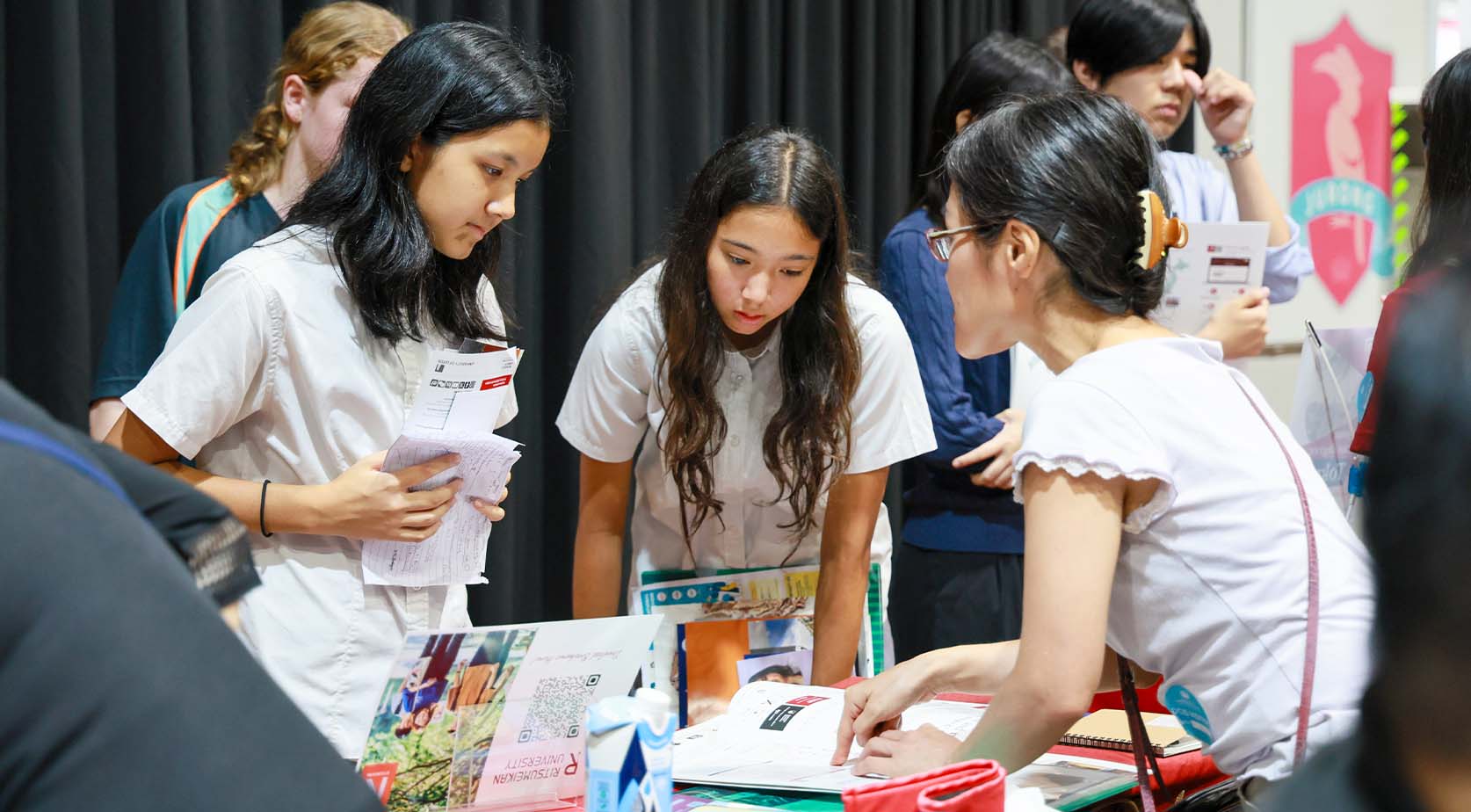
Thinking about university but not sure where to start? DCIS Careers and Higher Education Counsellors Hani Rahman and Andrew O'Reilly share practical advice on how students and parents can make the most of university fairs and explore future study options with confidence.


