



We use cookies to improve your online experiences. To learn more and choose your cookies options, please refer to our cookie policy.

24 April, 2026
The NAIS Sixth Form Choice Series - A Level

Choosing Depth: Is A Level Study the Right Fit for Your Child?
There comes a point, often during Year 10 or 11, when conversations at home begin to shift.
They move from “How was school?” to something more reflective.
“What subjects are you enjoying most?”
“What might you want to study one day?”
“Do you have a sense of where your strengths lie?”
The transition into Sixth Form is one of the first times education feels truly personal. For the first time, students are not simply progressing to the next stage — they are choosing a direction.
With that choice often comes uncertainty.
If your child is approaching Years 12 and 13, you may be wondering whether A Levels are the right pathway. What do they really involve? Who do they suit? And how can you tell if they are the right fit?
What A Levels Really Mean
A Levels are a two-year qualification recognised by universities around the world. More importantly, they represent focus.
Students typically choose three subjects, and commit to studying them in significant depth. Instead of continuing across six or more areas of study, their focus becomes more concentrated. Over time, this builds fluency, confidence and a genuine sense of mastery.
For some young people, this feels liberating. They are no longer dividing their attention across many disciplines, but instead investing more fully in the subjects that feel most natural, most engaging or most aligned with their future aspirations.
A Levels provide the space for sustained thinking, precision and depth of understanding.
For the right learner, that depth is not limiting — it is empowering.
Who Tends to Thrive in the A Level Pathway?
There is no perfect formula. Every student is different. But certain patterns often emerge.
Students who are beginning to understand their academic strengths
Some students reach the end of Year 11 with a growing sense of clarity. They may not know their exact university course, but they know which subjects feel intuitive and engaging.
You might hear:
“I really enjoy Chemistry.”
“History just makes sense to me.”
“Maths is definitely my strongest subject.”
When a student has that emerging clarity, A Levels allow them to build on it. Instead of maintaining breadth, they deepen expertise. Confidence grows as their learning becomes more concentrated and purposeful.
Students who prefer depth over variety
Some learners enjoy focusing their attention more narrowly. They are comfortable spending longer on fewer subjects and value the opportunity to build confidence and understanding over time.
A Levels support this approach by allowing students to concentrate on three subjects in depth. This can be particularly advantageous for those who have begun to identify a potential university pathway or subject specialism.
Students considering more defined degree pathways
A Levels align particularly well with university courses that require specific subject preparation — such as Engineering, Medicine, Economics, Law, Sciences and many Humanities disciplines.
Because students specialise, subject choices can be carefully aligned with university entrance requirements. For young people who already have a general direction in mind, this creates purpose and momentum.
A Levels at NAIS Hong Kong
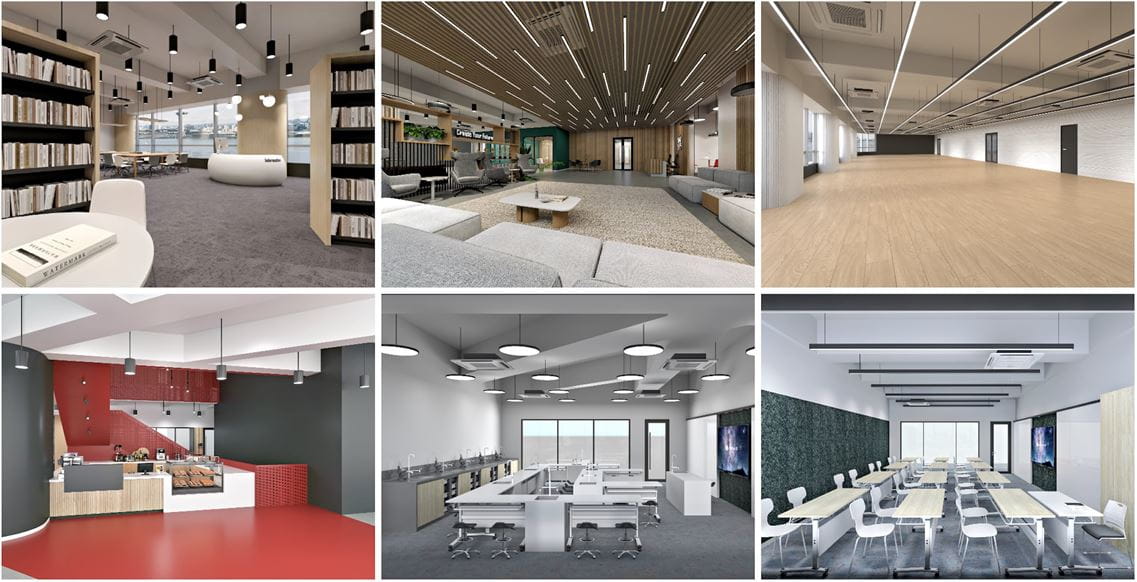
The qualification itself is only one part of the experience. The environment in which students study matters just as much. At the new NAIS Hong Kong Sixth Form Centre in Hung Hom, the experience has been designed specifically for Years 12 and 13. The atmosphere reflects the transition students are making — from school learners to young adults preparing for university.
Students benefit from specialist teaching spaces, quiet study areas, seminar rooms and areas designed for independent work. Their weekly timetable balances structured lessons with protected time for reading, research and consolidation — mirroring the rhythms of university life.
Alongside academic depth, students are supported by dedicated Sixth Form teachers, on-site university and careers guidance, and a pastoral team focused on the wellbeing of older learners.
The aim is not simply examination success. It is the development of confident, capable young adults ready for their next step.
When Another Pathway May Be Better
It is equally important to acknowledge that A Levels are not the ideal pathway for every student. Some learners thrive when they can study a broader range of subjects. Others prefer interdisciplinary learning or benefit from a higher proportion of coursework and varied assessment.
At NAIS Hong Kong, we also offer the IB Diploma Programme and BTEC Pathways for precisely these reasons. All three pathways are offered intentionally, not competitively.
The question is not which is better. It is where your child will flourish.
A Question to Guide Your Thinking
As you reflect on the move into Sixth Form, consider this:
Does your child feel energised when they can specialise and go deeper into fewer subjects?
Or do they feel more confident when they can explore broadly and connect ideas across disciplines?
Or do they respond best to a style of learning that is applied, coursework-based and linked to a specific industry?
If your child is ready to focus, to build expertise and to develop confidence through depth, A Levels may provide the clarity and structure they need at this important stage.
Choosing well matters. And it is a decision best made thoughtfully, with your child at the centre of it.
Related news
News image ![Match Reports and Sports Update 12 Oct 2026 - Match Reports and Sports Update 12 Oct 2026]() News
News
 News
News Match Reports and Sports Update 12 Oct 2026
This week saw the exciting start of our Primary Inter-House Long Distance Swim, with students already making a fantastic splash for their Houses! Every length swum is helping Houses climb the leaderboard while demonstrating incredible determination, resilience, and teamwork.
News image ![Secondary Campus Weekly Update 12 Oct 2026 - Secondary Campus Weekly Update 12 Oct 2026]() News
News
 News
News Secondary Campus Weekly Update 12 Oct 2026
As we approach the half-term break, there is plenty to look forward to in the weeks ahead. Our new Parent-Teacher Conference format will provide greater flexibility for families, our Young Musician of the Year competition continues to showcase the talent and dedication of our students, and preparations are well underway for what promises to be a memorable Halloween Spectacular.
News image ![Early Years Campus Weekly Update 12 Oct 2026 - Early Years Campus Weekly Update 12 Oct 2026]() News
News
 News
News Early Years Campus Weekly Update 12 Oct 2026
It has been another wonderful week of learning, collaboration, and community spirit across our Sai Kung campus.
News image ![Sixth Form Centre Weekly Update 12 Oct 2026 - Sixth Form Centre Weekly Update 12 Oct 2026]() News
News
 News
News Sixth Form Centre Weekly Update 12 Oct 2026
As we approach the half-term break, it is a fitting moment to reflect on the first two months in our new Sixth Form Centre. It has been a privilege to witness the enthusiasm, commitment and ambition of our students across the IBDP, A Level and BTEC pathways.


