


We use cookies to improve your online experiences. To learn more and choose your cookies options, please refer to our cookie policy.

30 April, 2026
The NAIS Sixth Form Choice Series - IB Diploma
Choosing Breadth: Is the IB Diploma the Right Fit for Your Child?
There may be a moment when conversations at home begin to shift.They move from “How was school today?” to something more reflective:
“Which subjects does your child genuinely enjoy?”
“Do they light up when they can connect ideas across different areas?”
“Are they the kind of learner who thrives on variety, not just depth?”
The move into Sixth Form is one of the first times education becomes truly personal. It is no longer simply about progression; it is about choosing a pathway that reflects who a student is becoming.
For some families, that choice naturally leads to an important question: is the IB Diploma Programme the right fit?
If your child is approaching Years 12 and 13, you may be wondering what the IB really involves, who it suits best, and how to tell whether it will bring out the very best in your child.
What the IB Diploma Really Means
The International Baccalaureate Diploma Programme (IBDP) is a two-year qualification recognised by universities worldwide. More than this, it is built around a distinctive educational philosophy.Where some pathways encourage early specialisation, the IB also asks students to retain breadth.
Students study six subjects drawn from different disciplines:
• Group 1: Studies in Language and Literature
• Group 2: Language Acquisition
• Group 3: Individuals and Societies
• Group 4: Sciences
• Group 5: Mathematics
• Group 6: The Arts
Three subjects are taken at Higher Level (HL), allowing for greater depth and additional teaching time, while three are studied at Standard Level (SL) to maintain breadth.
Alongside these subjects, students complete three core components:
• Theory of Knowledge (TOK), which explores how we know what we know
• The Extended Essay (EE), a 4,000-word independent research project
• Creativity, Activity, Service (CAS), which takes learning beyond the classroom
For the right student, this breadth is precisely where they flourish.
Who Tends to Thrive in the IB Pathway?
Every child is different. That said, certain characteristics often emerge among students who thrive in the IB.Students who are natural all-rounders
Some young people prefer not to be confined to a narrow set of subjects. They enjoy literature as much as biology and can move from a history essay to a mathematics problem without feeling overstretched.
You might hear comments such as:
“I really enjoy English, but I don’t want to drop science.”
“I’m interested in how things work—people, societies, systems.”
“Why should I have to choose between art and economics?”
When a student is energised by keeping multiple interests alive, the IB provides a framework that respects and supports that preference.
Students who think across boundaries
Some learners are not satisfied with single-subject answers. They want to explore how ideas connect and how scientific developments influence political decisions or how language shapes identity.
The IB’s core components, particularly TOK and the Extended Essay, actively reward this kind of interdisciplinary thinking. These students often discover a genuine enjoyment of research, reflection and the challenge of answering complex questions.
Students motivated by a broader educational experience
For some, Sixth Form is not only about university preparation, it is also about personal growth.
CAS encourages students to step beyond academic comfort zones to design and implement community projects, leading initiatives and serving others. Students who value empathy, resilience and leadership alongside academic success often find the IB deeply rewarding.
Students wishing to keep university options open internationally
Because the IB is recognised globally, it is particularly well suited to students considering universities in the UK, the US, Asia and beyond. A subject combination spanning humanities, sciences and languages can keep options open without narrowing future possibilities.
The IB at NAIS Hong Kong
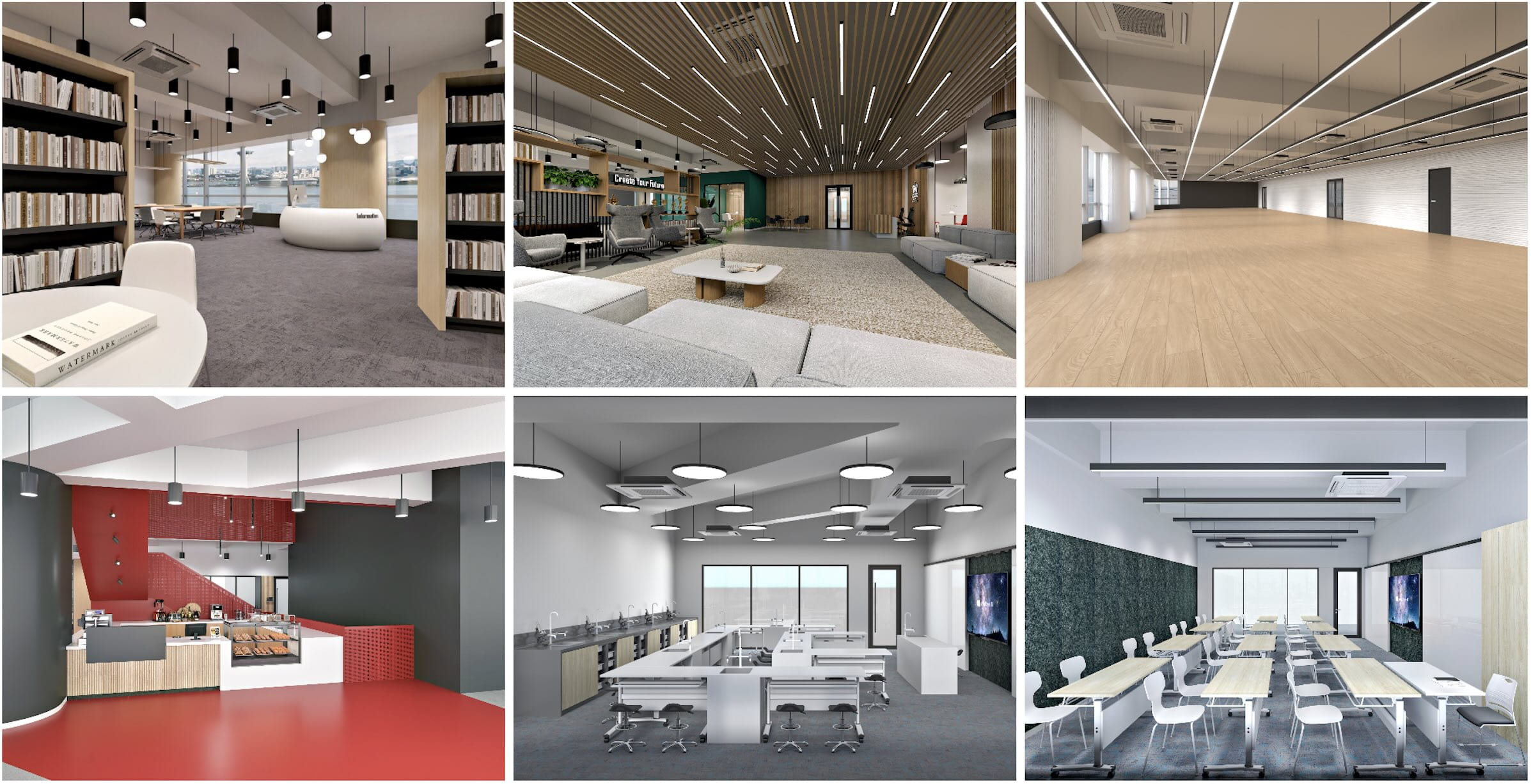
The programme itself is only part of the picture. The environment in which students study matters just as much.At the new NAIS Hong Kong Sixth Form Centre in Hung Hom, IB students benefit from specialist teaching spaces, quiet study areas, and an environment designed specifically for the demands of the programme, where sustained research, reflection and collaboration are central.
Our IB teachers know their students well. Small class sizes ensure that a student finding Higher Level Mathematics challenging receives timely support, while another showing a keen interest in philosophy through TOK is offered additional reading and intellectual stretch. Every student is known, supported and guided as an individual.
The CAS programme is woven into the city around us. Hong Kong itself becomes a learning environment. Recent projects have included:
• Working with NGOs to support families
• Collaborating with eco-focused start-ups on sustainability campaigns
• Creating intergenerational music programmes for elderly care centres
• Leading weekly STEAM workshops for primary pupils in community centres
These are not simply extracurricular activities. They are meaningful experiences that build confidence, initiative and genuine empathy, and develop qualities that shape the personal narratives students later share in university applications.
Our university counsellors work closely with IB students to help them articulate this journey. Increasingly, admissions teams seek applicants who demonstrate independence, intellectual curiosity and a commitment to wider community impact.
When Another Pathway May Be Better
It is equally important to acknowledge that the IB is not the ideal choice for every student.Some feel constrained by the requirement to maintain breadth across six subjects. Others have already identified a clear academic passion and would prefer to focus their energy on three subjects in greater depth. For some, the balance of ongoing coursework, core components and final examinations can feel demanding in a way that does not suit their learning style.
At NAIS Hong Kong, we also offer A Levels and BTEC pathways for precisely these reasons. All three pathways are offered intentionally, not competitively.
The question is not which is better. It is where your child will flourish.
A Question to Guide Your Thinking
As you reflect on the transition into Sixth Form, consider this:Does your child feel energised when they can explore broadly, connect ideas across disciplines, and contribute meaningfully to their community?
Or do they feel energised when they can specialise and go deeper into fewer subjects?
Or do they respond best to a style of learning that is applied, coursework-based and linked to a specific industry?
If your child is motivated by breadth, balance and the opportunity to grow as both a critical thinker and a person, the IB Diploma may offer the structure and richness they are seeking at this pivotal stage.
Choosing well matters. And it is a decision best made thoughtfully, with your child at the centre of it.
Related news
News image ![Primary Campus Weekly Update 7 Sep 2026 - Primary Campus Weekly Update 7 Sep 2026]() News
News
 News
News Primary Campus Weekly Update 7 Sep 2026
We would like to thank all parents who attended our Parent-Teacher Meetings last week. It was wonderful to see so many families engaging with teachers, both in person and virtually, to discuss their children's progress and experiences at the start of the academic year.
News image ![Early Years Campus Weekly Update 7 Sep 2026 - Early Years Campus Weekly Update 7 Sep 2026]() News
News
 News
News Early Years Campus Weekly Update 7 Sep 2026
One of the greatest joys of the start of a new school year is getting to know our children as individuals: their personalities, strengths, ideas and, perhaps most importantly, their interests.
News image ![Sixth Form Centre Weekly Update 7 Sep 2026 - Sixth Form Centre Weekly Update 7 Sep 2026]() News
News
 News
News Sixth Form Centre Weekly Update 7 Sep 2026
As we enter our fourth week at the new Hung Hom Campus, the sense of excitement, ambition and purpose across our Sixth Form community continues to grow.
News image ![Secondary Campus Weekly Update 7 Sep 2026 - Secondary Campus Weekly Update 7 Sep 2026]() News
News
 News
News Secondary Campus Weekly Update 7 Sep 2026
It has been another fantastic week for our students as we welcomed our Regional Managing Director, Stuart White, to the school. House Spirit was in full swing throughout the week, and Stuart was highly impressed by the enthusiasm, confidence and engagement of our brilliant students.


