Each year group approached the scientific process at an age-appropriate level whilst engaging with the fundamental question that drives all scientific inquiry: How can we test this to find out?
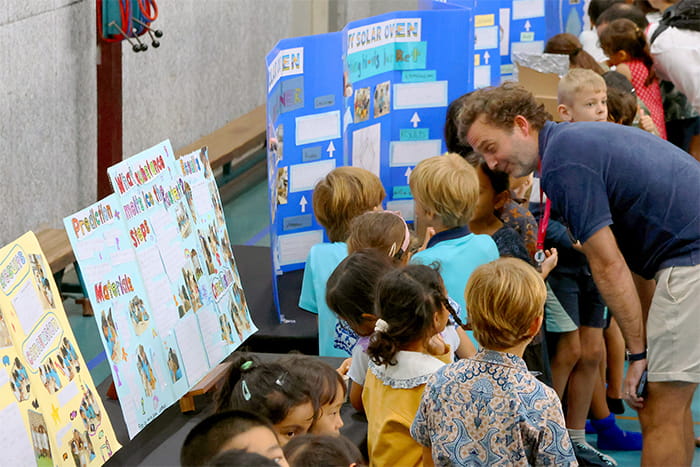
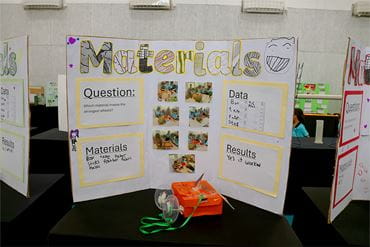
Year 1: Waterproof Materials Investigation
Year 1 students explored different materials to determine which ones were waterproof. They made predictions before carrying out their tests, learning to think like scientists before gathering evidence.
Students then applied their findings to solve a real problem by designing and building an umbrella to keep Incy Wincy Spider dry. This challenge required them to use scientific knowledge to create a practical solution.
To complete their investigation, students created scientific diagrams with labelled designs. They learned how scientists communicate their work through visual representations alongside written explanations. This combination of investigation, application and communication gave Year 1 students a complete experience of the scientific process.

Year 2: Properties of Matter
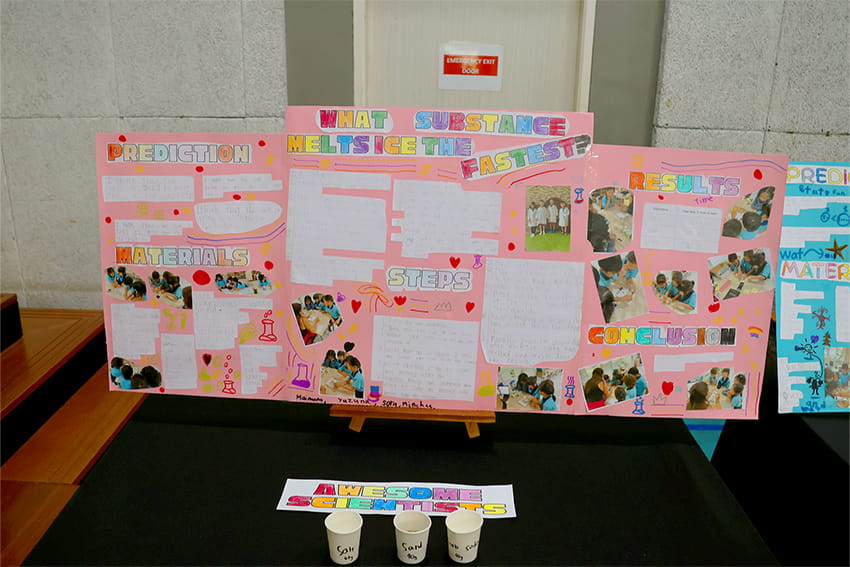
Year 2 students conducted two investigations exploring how different substances behave.
One investigation asked what substance can melt an ice cube fastest. Students chose three substances from salt, sand, bicarbonate soda, sugar and flour. Before testing, they discussed what makes a fair test. They ensured all ice cubes were the same size, placed them into cups at the same time and kept everything in identical temperature conditions. This understanding of controlled variables forms the foundation for all future scientific thinking.
The second investigation was a liquid race. Students tested which liquid moved fastest when poured: ketchup, honey, water, soap or shampoo. They predicted outcomes, conducted the experiment and evaluated their results. The dramatic differences between how water and honey flowed made the concept of viscosity visible and memorable for young learners.
Year 3: Friction and Motion
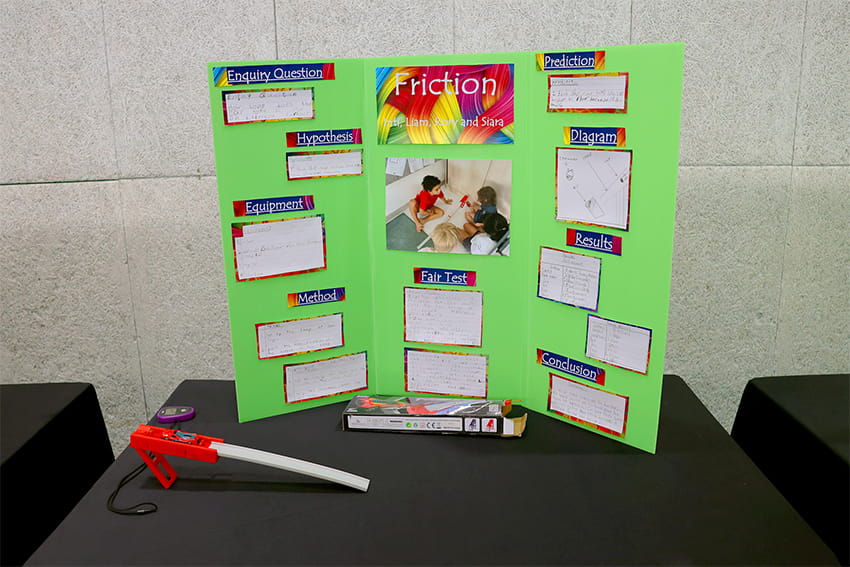
One Year 3 class investigated friction by releasing cars down ramps onto different materials. This hands-on experiment allowed them to observe a fundamental physics concept in action. Students discovered that smoother materials like tinfoil produced less friction than rough surfaces like felt. They could see and measure the difference in how far and fast the cars travelled on each surface. Through careful observation and recording, students learned that friction isn't just an abstract concept from textbooks but a real force they can observe, measure and understand through experimentation.
The other Year 3 class explored solar energy by creating DIY solar ovens. Students designed ovens with black interiors to absorb heat and painted plates black to ensure maximum heat absorption. They placed s'mores inside on the plate (marshmallows and chocolate in a cracker sandwich) and sealed the box with cling film to trap heat. The variable was the reflective surface on the inside of the lid. Groups tested different materials including aluminium foil, black bin liner, hi-vis jacket material, shiny transparent coloured paper and shiny reflective tape. This investigation taught students about heat absorption, reflection and how scientists control variables to test hypotheses.
Year 4: Water and Energy
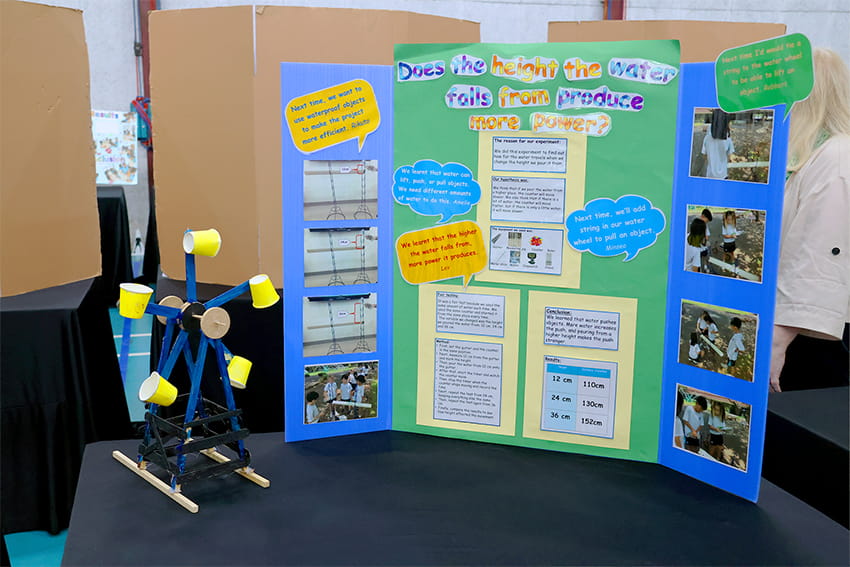
Year 4 students explored water as a source of power through three connected investigations.
First, they investigated water resistance by timing how fast different shapes of the same mass dropped to the bottom of a tank. This experiment made the abstract concept of resistance concrete and measurable.
Next, they used gutters to test force. Students discovered that increasing the height and volume of water pushed counters much further. They could see and measure the relationship between water properties and the force created.
Finally, students learned how moving water can lift and pull objects to create energy. Through predicting outcomes and conducting fair tests, they saw exactly how water functions as a source of power. This progression of experiments built understanding systematically whilst reinforcing scientific method principles.
Year 5: Partner Investigations
Year 5 students worked in pairs to develop guiding questions and conduct complete scientific investigations. The questions they generated demonstrated curiosity across multiple scientific domains.
Some pairs explored carbonation and chemical reactions: Which soda drink will inflate a balloon the fastest? Will Coke shoot higher using mentos or baking soda? Does the amount of vinegar affect the height of a chemical reaction?
Others investigated biological questions: Does the size of an insect affect how long it takes to die in a Venus flytrap? Which liquid is best to grow bamboo from seed? Does seaweed turn water blue?
Physical science investigations included: Which material will a marble travel the fastest on? Which magnet will attract a paperclip from the greatest distance? One innovative pair asked whether they could use food to generate electricity.
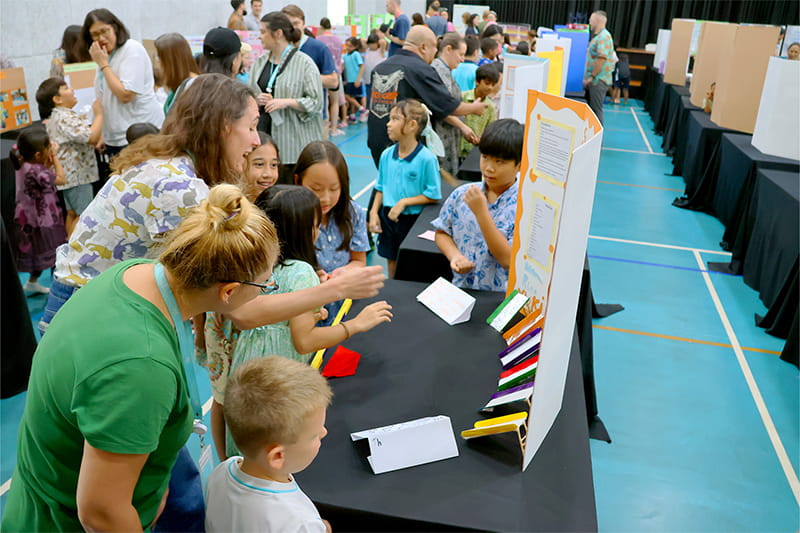
Students conducted their experiments in class, recorded results and conclusions and presented findings on display boards. Working in pairs taught them to collaborate on scientific thinking and share responsibility for accurate data collection.
Year 6: Independent Scientific Research
Year 6 students took full ownership of the scientific process. Each student chose their own topic of interest and created a complete scientific investigation around it.
They began by stating a clear question. They researched what scientists already know about their topic. They articulated a hypothesis predicting what they thought would happen. They designed and implemented fair tests to gather data. Finally, they communicated their results through display boards at the Science Fair.
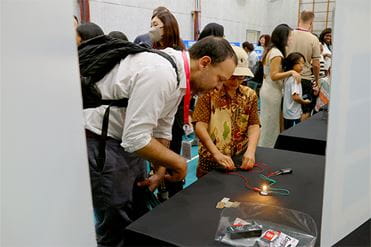
The range of topics reflected students' diverse interests. Some investigated botany, exploring how plants respond to different conditions. Others delved into chemistry, testing reactions between various substances. Several students explored electricity, investigating circuits and conductivity. Consumer science questions examined everyday products and their properties.
This independent approach embodied our commitment to personalised learning. Students pursued questions that genuinely interested them, making the scientific process meaningful and engaging rather than a checkbox exercise.

A Community Celebration of Science
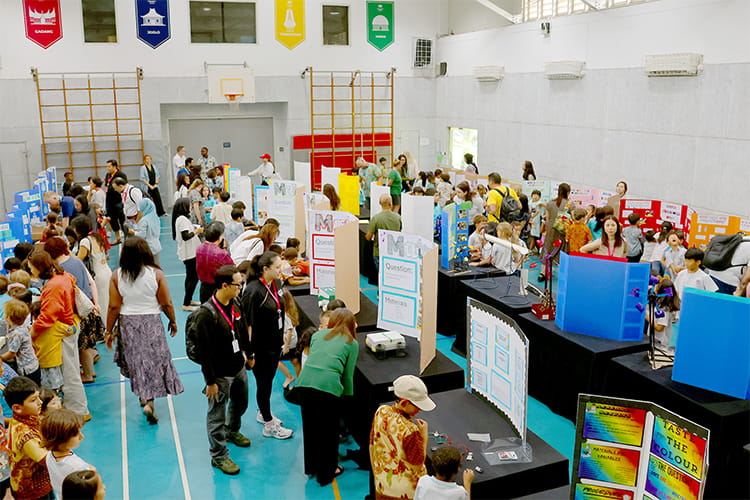
The Science Fair brought the entire school community together to celebrate student learning. Display boards filled common areas, showing the breadth and depth of scientific thinking happening across year groups.
Students explained their investigations to visitors, practising the communication skills that scientists use when sharing findings with others. They answered questions about their methods, discussed unexpected results and reflected on what they learned through the process.
Parents visiting the Science Fair saw evidence of genuine scientific thinking. These weren't worksheets or memorised facts. They were real investigations where students asked questions, tested ideas and drew conclusions based on evidence.
The Heart of STEAM Education
The Science Fair represented what we believe about learning at Nord Anglia School Jakarta. Students should engage with real problems and questions. They should experience the satisfaction of discovering answers through their own efforts. They should develop skills and mindsets that serve them throughout their education and lives.
Our education driven by values was evident throughout the Science Fair. Students demonstrated curiosity by asking interesting questions. They showed resilience when experiments didn't produce expected results. They practised collaboration when working with partners. They built respect by conducting fair tests and reporting honest findings.
STEAM Week ended with students feeling like real scientists and engineers. They had asked questions, solved problems, built things and discovered new knowledge. Most importantly, they experienced the joy of learning through doing.
The investigations displayed at the Science Fair will be dismantled and the display boards will come down. However, the scientific thinking students developed during STEAM Week will stay with them, shaping how they approach problems and questions for years to come.