


We use cookies to improve your online experiences. To learn more and choose your cookies options, please refer to our cookie policy.
October 06, 2026
What is an IB Continuum School? Understanding the Benefits from Early Childhood Through High School
Choosing the right school means thinking about more than what a student will learn in the classroom. Families also want to know how their child will grow, develop new skills, and prepare for the opportunities and challenges that come with each stage of their education.
The International Baccalaureate (IB) offers an approach to learning that focuses on developing students academically, personally, and socially. Rather than focusing only on subject knowledge, IB education encourages curiosity, critical thinking, independence, and an understanding of different perspectives.
At Windermere Preparatory School, these values are an important part of our educational approach. As we continue working toward becoming an authorized IB continuum school, we are building on our existing IB Diploma Program and progressing toward bringing the IB approach to more stages of a student's educational journey.
What is an IB Continuum School?
An IB continuum school offers at least three of the four core International Baccalaureate programs that connect a student's education from the early years through high school: the Primary Years Program (PYP), Middle Years Program (MYP), Diploma Program (DP), and Career-related Program (CP).
Although the IB officially recognizes four programs, the combination of the PYP, MYP, and DP is the most common configuration for an IB continuum school to seamlessly educate students from ages 3 through 19.
Each program is designed for a different age group, but they share a common approach to learning. Students are encouraged to ask questions, explore ideas, make connections between subjects, and think about how their learning relates to the world around them.
The IB also places importance on developing the whole student. Through the IB Learner Profile, students work toward becoming knowledgeable, open-minded, reflective, principled, and caring individuals, among other qualities. These characteristics help students develop not only as learners but also as people who can contribute positively to their communities.
One of the key benefits of an IB education is that students continually build on the skills, knowledge, and values they develop throughout their academic journey. As they progress through each stage of their education, they deepen their understanding, embrace new challenges, and take greater ownership of their learning.
The Three IB Programs and How They Connect
Although each IB program has its own focus, they are designed around shared educational principles. Together, they provide opportunities for students to develop the knowledge, skills, and confidence they need as they progress through school.
Primary Years Program (PYP)
Designed for students ages 3 through 12, the Primary Years Program focuses on encouraging curiosity and helping younger students develop a strong foundation for learning. Instead of simply memorizing information, students are encouraged to ask questions, investigate topics, and explore ideas through inquiry-based learning.
At this stage, students begin developing important skills such as communication, collaboration, and problem-solving. They also learn to make connections between what they discover in the classroom and their experiences outside of it.
By encouraging students to explore their interests and ask questions, the PYP helps establish a positive relationship with learning that continues as kids grow older.
Middle Years Program (MYP)
As students enter their middle school years and progress into high school, the Middle Years Program builds on the foundations of the PYP by encouraging them to think more critically and understand how different areas of knowledge connect.
For students ages 11 through 16, the MYP allows learners to explore a range of subjects while applying their knowledge to real-world situations. They are encouraged to consider different perspectives, investigate problems, and develop their own ideas rather than relying only on memorized information.
The MYP also supports students in becoming more independent and reflective learners. As academic expectations increase, they have opportunities to strengthen their research, communication, and organizational skills while learning to take greater responsibility for their progress.
Diploma Program (DP)
The Diploma Program is designed for students ages 16 through 19 in their final years of high school and provides a challenging academic experience that helps prepare them for university and beyond.
Students study a range of subjects in greater depth while developing the ability to manage their time, conduct research, evaluate information, and communicate their ideas effectively. The program also includes the Extended Essay, Theory of Knowledge, and Creativity, Activity, Service (CAS), which encourages students to explore independent research, reflect on how knowledge is developed, and engage in meaningful experiences beyond the classroom.
These opportunities help students develop skills that are valuable both in higher education and in their future careers. They also encourage students to look beyond individual subjects and consider how their knowledge can be applied to real-world challenges.
When these programs are connected across a student's education, the skills developed in the early years can continue to grow through middle school and high school, preparing students for increasingly complex academic and personal challenges.
Learn more:
How the IB Diploma Program prepares students for top universities
The Benefits of an IB Education for Students and Families
One of the key benefits of an IB education is its focus on how students learn, not just what they learn. Academic knowledge remains important, but students are also encouraged to develop the skills that help them use that knowledge thoughtfully and independently.
Developing independent and critical thinkers
IB students are encouraged to question information, consider different points of view, and form their own conclusions. These skills help them become more confident in their thinking and better prepared to approach unfamiliar problems.
Building communication and collaboration skills
Through discussions, group projects, research, and presentations, students learn how to express their ideas clearly and work effectively with others. These experiences can help them become more confident communicators while learning to listen to and respect different perspectives.
Encouraging global awareness
Understanding the world beyond the classroom is another important part of the IB approach. Students have opportunities to explore different cultures, consider global issues, and recognize how their own experiences and perspectives relate to those of others. This can help them develop a broader understanding of the world and their place within it.
Preparing students for future challenges
As students progress through the IB programs, they develop skills in research, time management, reflection, and independent learning. These abilities can support the transition to college, where students are expected to manage more of their own learning and take greater responsibility for their work.
Supporting growth at every stage
A connected educational experience can help students build confidence as they move from one stage of school to the next. When curiosity, reflection, and independent thinking are encouraged throughout their education, students have more opportunities to strengthen these skills over time.
For families, this means looking at education as a long-term journey. The goal is not only to help students succeed in their current classes, but also to prepare them for the learning, relationships, and decisions they will encounter in the future.
Related resource:
IB vs. AP: What's the Difference and Which Is Better for College?
The IB Continuum at Windermere Preparatory School
At Windermere Preparatory School, we believe education should prepare students for opportunities both inside and outside the classroom. Our existing IB Diploma Program provides high school students with an internationally recognized academic pathway that encourages deeper learning, independent research, and a broader understanding of the world.
In 2024, Windermere Prep became a candidate school for the Primary Years Program and Middle Years Program, working toward full IB World School authorization. Through this work, we are focused on building an educational experience that encourages students to ask questions, make connections, think critically, and become more independent learners. We invite families to explore our academic programs and learn more about our IB journey.
Connect with our Admissions team to learn more about the Windermere Prep experience.
Related news
News image ![Aerial view of Windermere Preparatory School featuring 2027 Niche Best Schools recognition for Private High Schools, Private K-12 Schools, and Boarding Schools.]() News
 News
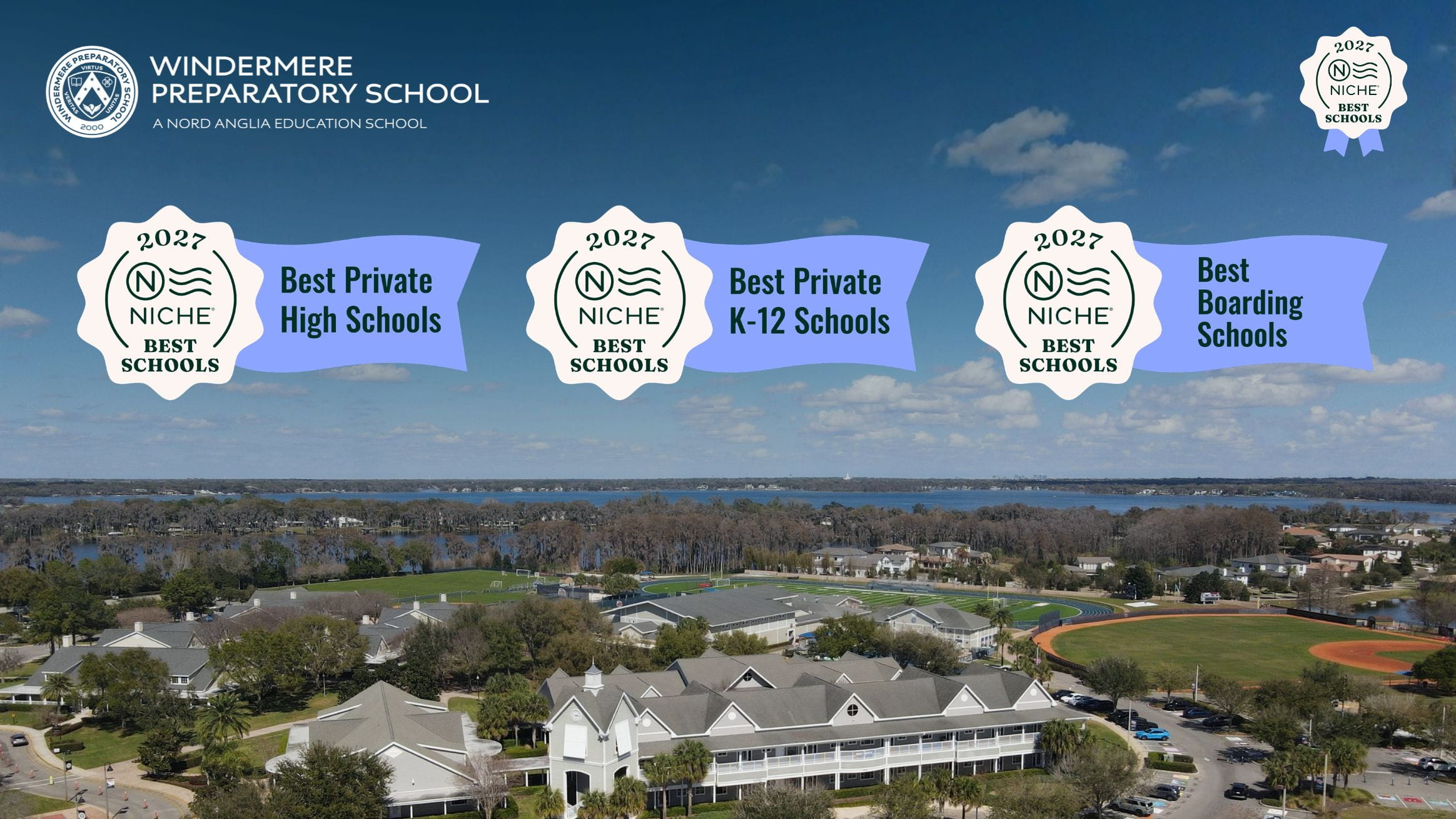
Windermere Prep Ranked #1 Best Private High School in Orange County in Niche 2027
Windermere Preparatory School maintains its #1 private school rankings in Orange County for the fourth consecutive year, with additional recognition among the top private and boarding schools nationwide.
News image ![Windermere Preparatory School boarding students walking together through the residential life community in Orlando, Florida.]() Blog
 Blog
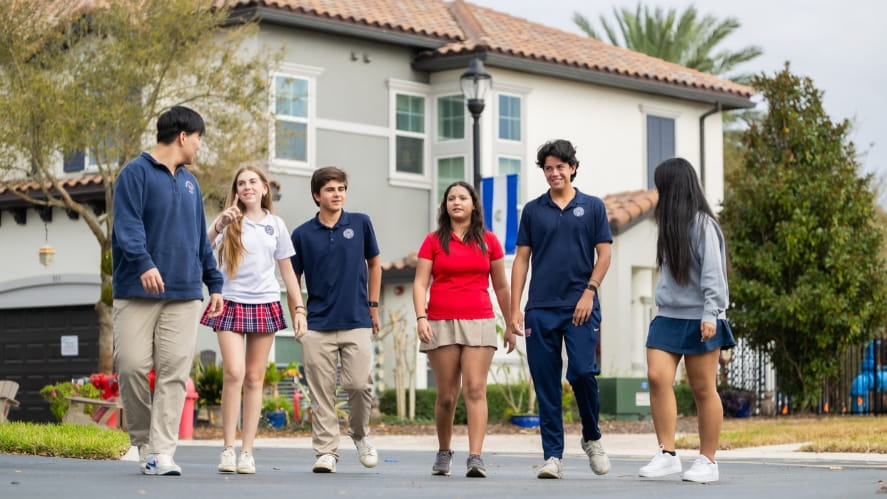
Why Choose a Boarding School in Florida? A Unique Educational Experience in Orlando
Discover the benefits of boarding school in Florida, where academic excellence, world-class opportunities, and vibrant student life come together in Orlando.