

14 April, 2026
Choosing a School: When Shared Values Matter as Much as Academic Results
Choosing a school goes beyond grades and facilities. This article explores why shared values, belonging and feeling truly known play a critical role in a child’s academic success, confidence and long-term development — and how these moments show up in everyday school life.

A PERSONALISED JOURNEY TO SUCCESS
At The British College of Brazil, we put students' best interests at the heart of everything we do. Contact our Admissions team today to discover how our teachers will tailor your child’s journey – preparing them for success, no matter what the future brings.
Enquire nowCarla Gomide still remembers the moment she knew something was wrong.
Her son had been at his previous school for just over a term. The results were strong, the facilities impressive. On paper, there was nothing to complain about. But every Sunday evening, he grew quiet. By Monday morning, he didn't want to get out of the car.
"Everything looked right from the outside," she says. "But he felt anxious and disconnected. We knew the environment wasn't right for him — or for us as a family."
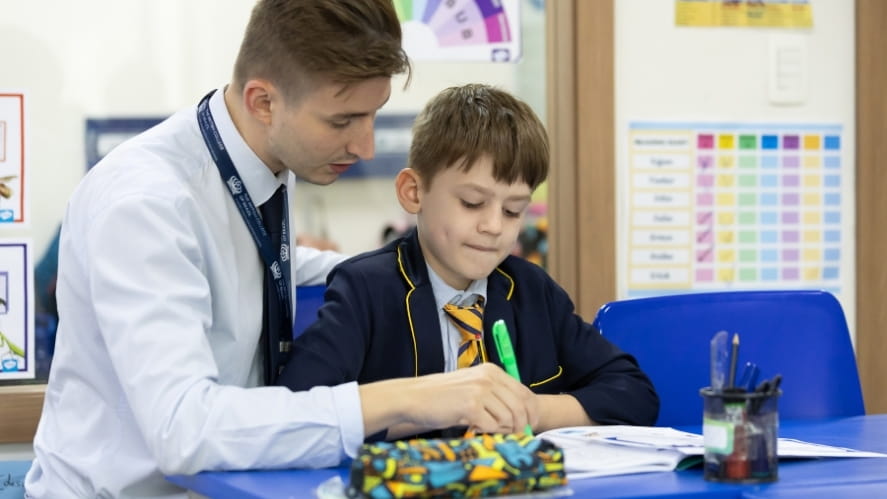
After joining BCB, things shifted. Not overnight, but steadily. "The difference was in how the school talked about him," Carla explains. "Not just his grades, but him. Who he was. What he was working on. That hadn't happened before."
Carla's experience is more common than many families expect — and it points to something important that exam tables and open evening brochures rarely capture.
Most parents sense this instinctively. When a school's values genuinely align with a family's own, children experience consistency rather than tension. The expectations at home and at school reinforce one another. Support feels real rather than procedural.
When that alignment is missing, children often carry the gap with them.
"When school and home are not aligned on how to approach social and personal development, as well as academic progress, children can feel pulled in different directions," says Paul McDaniel, BCB's Head of Primary. "That confusion doesn't stay at the classroom door, it follows them inside and can affect a child's achievement."
outside of school entirely — who notices, and what happens next?
At BCB, these moments are not left to chance. When a Year 7 student recently froze during a class presentation, her teacher paused, quietly reframed the moment as practice rather than performance, and asked the class to share something they themselves found difficult. The student tried again. She got through it. Small decisions like that send lasting messages to children about whether failure is something to hide or something to work through.
"We want students to aim high academically — but we also want them to feel known as individuals," says Ceris Flew, Head of Secondary. "When a student feels genuinely understood, they become far more willing to challenge themselves. Teachers who really know each child can support their personal and academic growth."
Children who develop these qualities alongside academic skills tend to be better equipped for the pressures that come later — in sixth form, in university, in work and in life. They know how to handle feedback, recover from setbacks and advocate for themselves. These are not soft outcomes. They are, in many ways, the most durable ones.
•How does this school define success? Listen to whether the answer goes beyond grades.
•What happens when a child struggles — academically or emotionally? Who is responsible, and what does the process look like?
•How are mistakes treated? In the classroom and more broadly.
•How does the school communicate with families? Is it transactional, or does it feel like a genuine relationship?
•How does this place feel? Trust that instinct. It is usually picking up on something real.
Choosing a school is, at its heart, a values decision. It shapes not just what a child learns, but how they feel about learning — and about themselves. For many families, the moment it becomes clear is not when they review the results, but when they walk in the corridors, sit in in a class or simply watch how the adults speak to the children.
If you are exploring schools and would like to see how values shape everyday life at BCB, we would love to welcome you to campus. Book a school tour or speak with our admissions team — we are happy to answer any questions, however small.
Her son had been at his previous school for just over a term. The results were strong, the facilities impressive. On paper, there was nothing to complain about. But every Sunday evening, he grew quiet. By Monday morning, he didn't want to get out of the car.
"Everything looked right from the outside," she says. "But he felt anxious and disconnected. We knew the environment wasn't right for him — or for us as a family."
After joining BCB, things shifted. Not overnight, but steadily. "The difference was in how the school talked about him," Carla explains. "Not just his grades, but him. Who he was. What he was working on. That hadn't happened before."
Carla's experience is more common than many families expect — and it points to something important that exam tables and open evening brochures rarely capture.
What the research tells us — and what families already sense
There is a consistent finding in education research: children learn best when they feel they belong. When students feel safe and understood, they are more engaged, more willing to take risks and more likely to succeed — not just academically, but in building the habits of mind that carry them through adult life.
Most parents sense this instinctively. When a school's values genuinely align with a family's own, children experience consistency rather than tension. The expectations at home and at school reinforce one another. Support feels real rather than procedural.
When that alignment is missing, children often carry the gap with them.
"When school and home are not aligned on how to approach social and personal development, as well as academic progress, children can feel pulled in different directions," says Paul McDaniel, BCB's Head of Primary. "That confusion doesn't stay at the classroom door, it follows them inside and can affect a child's achievement."
Values are visible in small moments
A school's values are rarely found in its mission statement. They show up in the small, unremarkable moments that make up a child's day.
How does a teacher respond when a student gets something wrong? Is effort recognised as well as achievement? When a child is struggling — with work, or with somethingoutside of school entirely — who notices, and what happens next?
At BCB, these moments are not left to chance. When a Year 7 student recently froze during a class presentation, her teacher paused, quietly reframed the moment as practice rather than performance, and asked the class to share something they themselves found difficult. The student tried again. She got through it. Small decisions like that send lasting messages to children about whether failure is something to hide or something to work through.
"We want students to aim high academically — but we also want them to feel known as individuals," says Ceris Flew, Head of Secondary. "When a student feels genuinely understood, they become far more willing to challenge themselves. Teachers who really know each child can support their personal and academic growth."
Why it matters over time
Confidence, resilience and independence don't arrive fully formed. They are built gradually, through repeated experiences of being challenged, supported and encouraged to try again.
Children who develop these qualities alongside academic skills tend to be better equipped for the pressures that come later — in sixth form, in university, in work and in life. They know how to handle feedback, recover from setbacks and advocate for themselves. These are not soft outcomes. They are, in many ways, the most durable ones.
Questions worth asking in your school search
Beyond rankings and facilities, the following questions often reveal more about a school than any prospectus:•How does this school define success? Listen to whether the answer goes beyond grades.
•What happens when a child struggles — academically or emotionally? Who is responsible, and what does the process look like?
•How are mistakes treated? In the classroom and more broadly.
•How does the school communicate with families? Is it transactional, or does it feel like a genuine relationship?
•How does this place feel? Trust that instinct. It is usually picking up on something real.
A decision about belonging
Choosing a school is, at its heart, a values decision. It shapes not just what a child learns, but how they feel about learning — and about themselves. For many families, the moment it becomes clear is not when they review the results, but when they walk in the corridors, sit in in a class or simply watch how the adults speak to the children.
If you are exploring schools and would like to see how values shape everyday life at BCB, we would love to welcome you to campus. Book a school tour or speak with our admissions team — we are happy to answer any questions, however small.
Related news
News image ![International Schools in São Paulo: 5 Questions to Ask | BCB - Choosing an International School]() Blog | Global Education | globaleducation
Blog | Global Education | globaleducation
.jpg?h=499&iar=0&w=887&rev=1be910b57b6d4c0ab806b10acefd323a&hash=1BED00FCB6185EB2C9A988F33FCD9D53) Blog | Global Education | globaleducation
Blog | Global Education | globaleducation Choosing an International School? 5 Questions to ask first
Five questions to help you find an international school where your child learns alongside the world, not just about it.
News image ![Why Teachers Still Matter in a Digital Classroom | BCB - Why teachers still matter in a technology-driven classroom]() Blog
Blog
 Blog
Blog Why your child’s teacher matters more than the technology in the classroom
Technology is changing how children learn, but the role of the educator remains essential. Discover why great teaching goes far beyond delivering information.