


28 September, 2026
Why your child’s teacher matters more than the technology in the classroom
A PERSONALISED JOURNEY TO SUCCESS
At The British College of Brazil, we put students' best interests at the heart of everything we do. Contact our Admissions team today to discover how our teachers will tailor your child’s journey – preparing them for success, no matter what the future brings.
Enquire nowTechnology can give a child an answer in seconds. A great educator helps them know what to do with it.
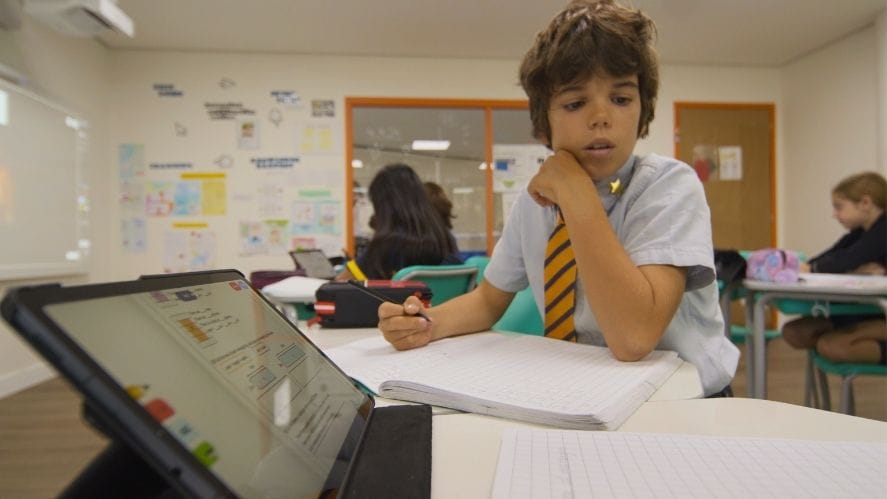
Children today have access to more information than any generation before them. They can watch a video to understand a difficult concept, explore a subject from almost anywhere in the world and use digital tools to create, research and solve problems.
And now, with AI becoming part of everyday life, that access is growing even faster.
So where does the teacher fit into all of this?
The answer may be more important than ever.
Information is everywhere. Understanding is different.
Having access to information does not necessarily mean knowing how to use it.
A child can find an answer online, but can they tell whether it is accurate? Can they explain why it is relevant? Can they connect it to something they already know, question it or look at it from another perspective?
These are not simply questions of access. They are questions of judgement.
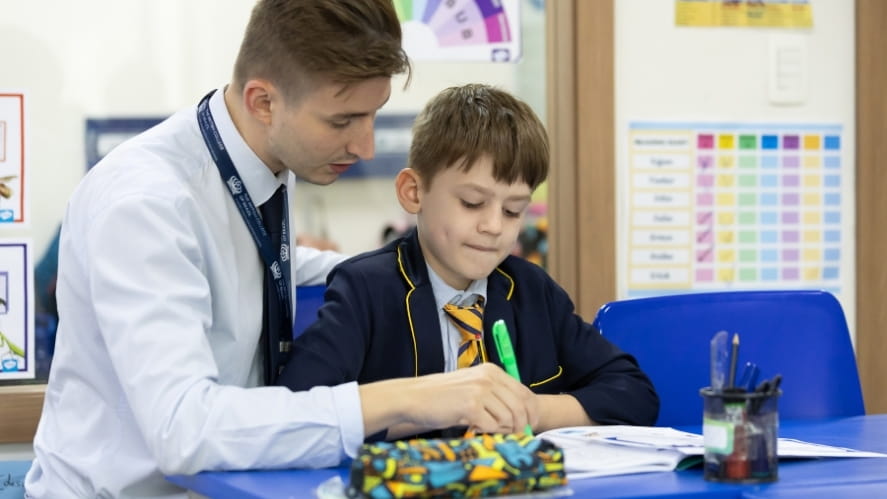
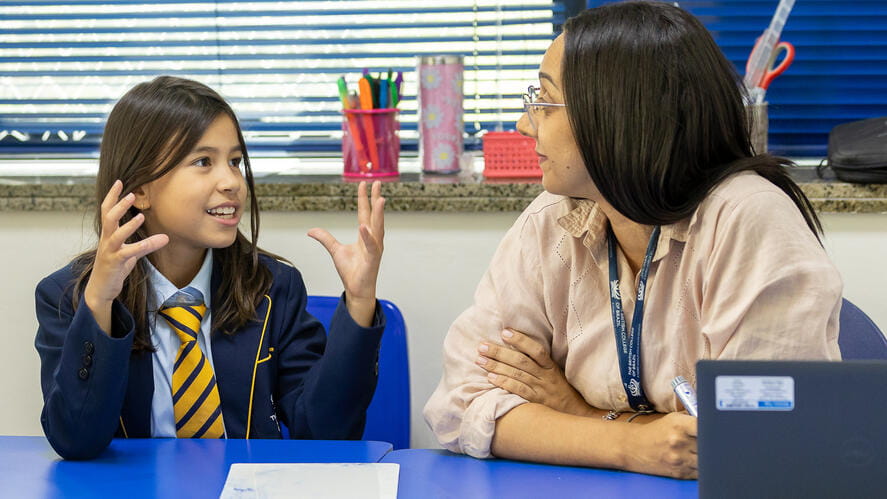
This is where a skilled educator makes a difference. Rather than simply delivering information, teachers help children make sense of it. They ask the next question, challenge an assumption, encourage a different approach and help a child understand not just what they have learned, but why it matters.
The best teachers know the learner, not just the subject
Good teaching starts with strong subject knowledge. But it does not end there.
Every child enters a classroom with a different set of experiences, interests, strengths and challenges. Two children can be working on the same concept and need completely different kinds of support.
One may need more time. Another may be ready for greater challenge. One may understand the idea but lack confidence in expressing it. Another may have an unexpected connection that opens up an entirely new way of thinking.
An educator who knows their students can recognise these differences and respond to them.
That is difficult to replace with a screen, a programme or an algorithm.
Technology can personalise tools. Teachers personalise learning.
Digital technology can be incredibly useful in education. It can provide access to resources, offer different ways to practise a skill and help students explore ideas beyond the classroom.
But the presence of technology does not automatically make learning more personal.
Personalised learning depends on knowing what a child needs next.
A teacher can notice when a student has mastered a concept and is ready to move further. They can recognise a misconception before it becomes a habit. They can see when a child is frustrated, when they are losing confidence or when they have become genuinely fascinated by an idea.
Technology can support these moments. The educator makes the human judgement behind them.
Some of the most important learning cannot be measured by a screen
Education is about knowledge, but it is also about what children do with that knowledge.
Can they listen to an idea they disagree with and respond thoughtfully? Can they work through a problem that does not have an immediate answer? Can they explain their thinking? Can they change their mind when the evidence tells them they should?
These skills develop through interaction, discussion, feedback and reflection.
They also develop through relationships.
A teacher who encourages a child to try again after getting something wrong is doing more than helping them complete an exercise. They are helping that child understand that difficulty is part of learning.
A teacher who asks, “What makes you think that?” is doing more than checking an answer. They are encouraging a child to examine their own thinking.
And sometimes, a teacher simply knows when a child needs to be challenged and when they need someone to believe in them.
The future of education is not technology or teachers. It is both.
The question is no longer whether technology belongs in education. It does.
The more interesting question is how we use it well.
The most effective classrooms are not those with the most technology. They are those where technology has a clear purpose and educators remain at the heart of the learning experience.
Because a tool can provide information. It can suggest ideas. It can help a student practise.
And perhaps that is why, even as technology continues to transform education, the relationship between a child and their teacher remains one of the most important parts of learning.
Related news
News image ![International Schools in São Paulo: 5 Questions to Ask | BCB - Choosing an International School]() Blog | Global Education | globaleducation
Blog | Global Education | globaleducation
.jpg?h=499&iar=0&w=887&rev=1be910b57b6d4c0ab806b10acefd323a&hash=1BED00FCB6185EB2C9A988F33FCD9D53) Blog | Global Education | globaleducation
Blog | Global Education | globaleducation Choosing an International School? 5 Questions to ask first
Five questions to help you find an international school where your child learns alongside the world, not just about it.
News image ![Beyond the Grades: Why Learning How to Learn Matters | BCB - Beyond the grades]() Blog
Blog
 Blog
Blog Beyond the grades: why learning how to learn matters
Good grades matter. But they are only part of the picture. Discover why knowing how to learn can be one of the most valuable things a child takes with them from school.
News image ![Image_The_British_College_Of_Brazil_2025_25839]() Blog
Blog
 Blog
Blog British vs American curriculum, which is right for your child?
British or American curriculum? Understand the differences that matter and discover what to consider when choosing an international school for your child.
News image ![Image_The_British_College_Of_Brazil_2025_24573]() Blog | Global Education | globaleducation
Blog | Global Education | globaleducation
 Blog | Global Education | globaleducation
 Choosing an International School in São Paulo, What Really Matters?
Choosing an international school is about more than studying in English. Discover what to consider when it comes to curriculum, teaching, wellbeing, global opportunities and your child’s future


