

21 September, 2026
Beyond the grades: why learning how to learn matters

A PERSONALISED JOURNEY TO SUCCESS
At The British College of Brazil, we put students' best interests at the heart of everything we do. Contact our Admissions team today to discover how our teachers will tailor your child’s journey – preparing them for success, no matter what the future brings.
Enquire nowThere is something reassuring about a good report card.
You see the grades, the comments, perhaps a few encouraging words from a teacher, and you have a fairly clear picture of how your child is doing at school.
But there is another part of learning that is harder to see on a report card.
How does your child approach something they have never seen before? How do they deal with a difficult question? Can they recognise when one approach is not working and try another?
These are the habits that start to matter more and more as children grow older, and they can have a lasting impact on how they approach learning far beyond school.
When there is no obvious answer
Much of school involves getting things right. There are facts to learn, problems to solve and assessments where children need to demonstrate what they know.
But some of the most valuable learning happens when there is no obvious route to the answer.
A child might need to look at a problem from a different angle, connect ideas from different subjects or work out which information is actually useful. They might make a wrong turn, realise it is not working and start again.
That process can be uncomfortable. It can also be where some of the most important learning happens.
At BCB, we want pupils to feel comfortable with that process. Creative and critical thinking are part of our approach, alongside a Growth Mindset that encourages children to see challenges and mistakes as part of learning.
The aim is not to make learning easier. It is to help children become more confident when learning is difficult.
Learning about yourself as a learner
As children become more independent, they also need to become more aware of how they learn.
Perhaps they concentrate better when they break a task into smaller parts. Perhaps talking through an idea helps them understand it. Maybe they need to step away from a problem and return to it later.
Learning these things about themselves takes time. It is part of becoming an independent learner.
At BCB, pupils are encouraged to take increasing ownership of their learning and to build the confidence and skills they need to become independent, lifelong learners.
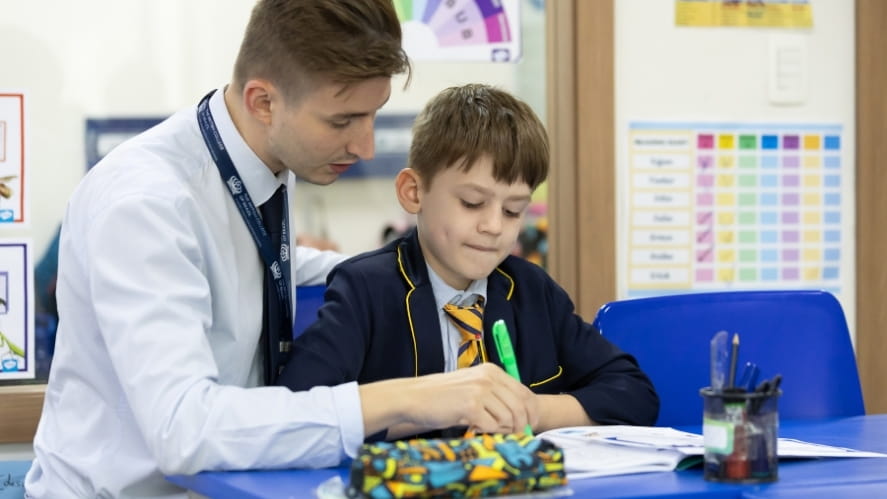
This is one of the reasons the relationship between teacher and pupil matters so much. Independence does not mean leaving children to work things out alone. It means giving them the support, guidance and confidence to gradually take more responsibility for the process themselves.
What does a mistake tell you?
There is a difference between a child who gets something wrong and a child who knows what to do next when they get something wrong.
That second skill takes practice.
A mistake can tell a child that they misunderstood something, chose the wrong strategy or need to look at a problem differently. When children learn to use that information, rather than simply feeling that they have failed, mistakes become part of the learning process.
This is where Growth Mindset can make a difference.
At BCB, pupils are encouraged to focus on progress and to persevere when something is challenging. They are also encouraged to recognise that there is rarely only one way to approach a difficult task.
For a child, that can be a powerful shift. Instead of thinking, I can't do this, they can begin to think, I haven't worked it out yet.
Where does curiosity fit in?
Academic achievement and curiosity should not be seen as opposites.
In fact, curiosity can be one of the things that keeps academic learning moving forward.
A child who wants to know why something works, whether there is another explanation or what might happen if they change something is doing more than completing a task. They are beginning to make connections and test their own thinking.
At BCB, curiosity sits alongside critical thinking within our approach to learning. We want pupils to ask questions, explore ideas and think carefully about what they encounter, rather than simply accepting the first answer they are given.
That matters because knowledge is only the beginning.
What children do with that knowledge is where things become interesting.
Independence does not mean learning alone
There is sometimes a misconception that independent learning means children working without help.
It does not.
A child becomes more independent when they know when to ask for help, how to use feedback and what they can try before someone gives them the answer.
That requires good teaching.
As children become more confident, the teacher can gradually step back from providing every answer and spend more time helping them think through the problem themselves.
Personalised learning plays an important role here. The right amount of support and challenge will not be the same for every child, and a school that understands this can help pupils take ownership at their own pace.
So, where do grades fit?
They still matter.
Academic results give children opportunities. They can reflect knowledge and understanding, show progress and play an important role in future university applications.
But a grade is a snapshot.
Knowing how to learn is something a child can carry with them.
It helps when they move into a more demanding year at school. It helps when they encounter a subject they find difficult. It helps when they arrive at university and suddenly have far more responsibility for organising their own learning.
And eventually, it matters well beyond education.
Because there will always be something new to learn.
A different way to look at academic success
The next time you look at your child's grades, it is worth looking beyond the numbers.
Is your child becoming more comfortable with challenge? Are they starting to recognise which strategies help them learn? Can they use feedback? Do they ask questions because they genuinely want to understand something, rather than simply because they need the answer?
These things may not appear neatly on a report card.
But they are part of academic success too.
Perhaps the most valuable thing a school can give a child is not the ability to get the right answer every time. It is the confidence and curiosity to keep looking when they do not know it yet.
Related news
News image ![Why Teachers Still Matter in a Digital Classroom | BCB - Why teachers still matter in a technology-driven classroom]() Blog
Blog
 Blog
Blog Why your child’s teacher matters more than the technology in the classroom
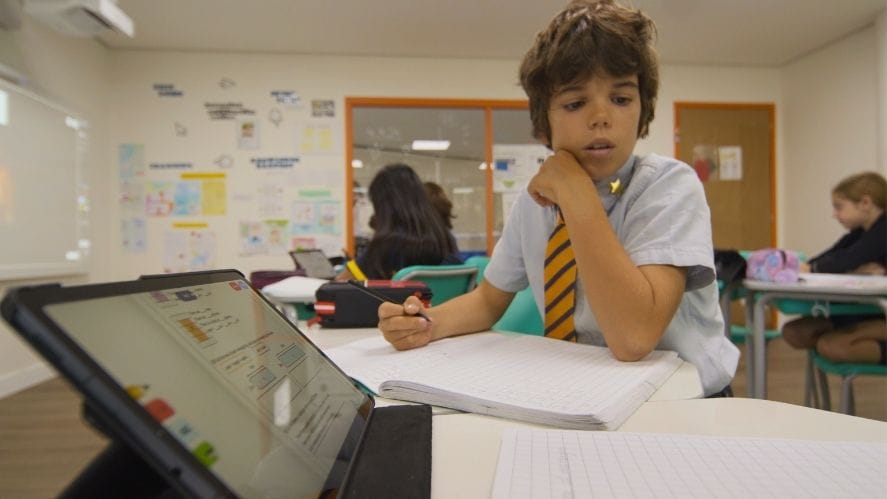
Technology is changing how children learn, but the role of the educator remains essential. Discover why great teaching goes far beyond delivering information.
News image ![Image_The_British_College_Of_Brazil_2025_25839]() Blog
Blog
 Blog
Blog British vs American curriculum, which is right for your child?
British or American curriculum? Understand the differences that matter and discover what to consider when choosing an international school for your child.
News image ![Image_The_British_College_Of_Brazil_2025_24573]() Blog | Global Education | globaleducation
Blog | Global Education | globaleducation
 Blog | Global Education | globaleducation
 Choosing an International School in São Paulo, What Really Matters?
Choosing an international school is about more than studying in English. Discover what to consider when it comes to curriculum, teaching, wellbeing, global opportunities and your child’s future