

We use cookies to improve your online experiences. To learn more and choose your cookies options, please refer to our cookie policy.

December 08, 2025
Creating Calm: The Power of Routines and Boundaries
A WORLD-CLASS EDUCATION
British International School of Boston gives your child just the right balance of support and challenge that they need to accelerate through their strengths. We welcome you to visit our campus to meet our talented teachers and see our world-class learning experiences firsthand.
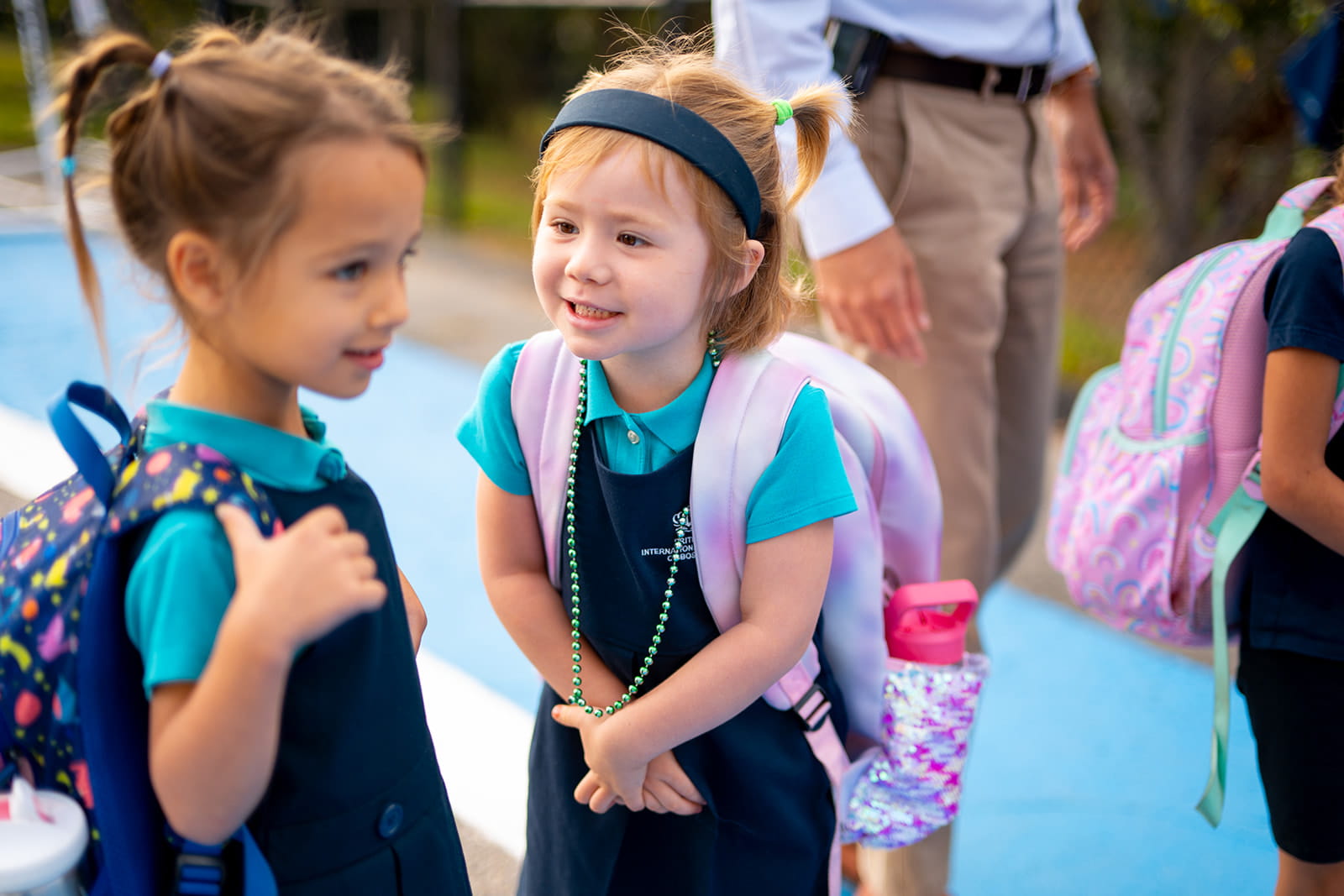
Inquire nowRoutines and boundaries are more than just daily schedules and rules; they are the foundation for a nurturing, structured, and empowering environment both at home and in school. When thoughtfully implemented, routines and boundaries foster independence, build relationships, and prepare children for life beyond the classroom.
Routines create a sense of security and predictability, which is essential for young children. They support Personal, Social, and Emotional Development (PSED), help children transition smoothly between activities, and encourage independence and confidence. When children know what to expect, they feel safe and are more likely to engage positively with their environment and peers.
Expectations guide behavior and help children understand what is acceptable. Using positive language, like saying “use walking feet” instead of “don’t run”, sets a constructive tone. When you are communicating your expectations to your child, they should be:
- Clear and Specific: Avoid abstract or vague phrases that may confuse your child. For example, “stop that.”
- Reasoned: Explain why a behavior is expected to help children internalize its importance. “We need our quiet voices in the Library because people are reading and trying to concentrate so we don’t want to disturb them.”
- Consistent: Reinforce expectations regularly to make them part of the child’s routine.
- Positively Reinforced: Celebrate successes with praise, stickers, or special activities.
- Modeled: Children learn best by example, show them the behavior you want to see.
- Reminded Gently: Simple cues like “Remember, we use walking feet” can be powerful and set children up for success.
Challenges embedding routines and expectations are inevitable, but they’re also opportunities for growth. Being consistent is key and sometimes we have to be firm.
Saying “no” to your child isn’t about control, it’s about creating a safe space for learning. Saying “yes” and giving in to children regularly for convenience can set children up for unrealistic expectations and doesn’t help in the longer term to successfully embed a routine or to conform around rules and expectations in school or the wider community.
“No” can be a powerful tool when used with empathy and intention. Here’s how to make it constructive:
- Offer Alternatives: Redirect behavior with positive options. “I can see you’ve got a lot of energy right now! Let’s not jump on the bed, how about we go outside?”
- Embrace Natural Consequences: Let children learn from the outcomes of their actions. If they step in a puddle and get wet socks, they need to understand that action led to that consequence. What can they do now? Can they go and get some new socks?
- Narrate the Situation: Help children understand what’s happening and why. For example, “I can see you’re finding it hard to wait, so why don’t we…”
Research shows that forming new habits can take, on average, 66 days. Consistency is key, but so is flexibility. As children grow, routines and expectations should evolve with them. It is important to reflect on what is working for you at home and adapt along with your child and their needs to set them up for success.
Related news
News image ![Girls Walking to School]() Blog | Advice and Guidance | LatestNews
Blog | Advice and Guidance | LatestNews
Blog | Advice and Guidance | LatestNews Creating Calm: The Power of Routines and Boundaries
Discover how simple routines and clear boundaries can transform your child’s confidence, independence, and overall well-being. This blog explores why predictable structures help children feel secure, how positive language and consistent expectations shape behavior, and why saying “no” with empathy is a powerful parenting tool. With practical strategies, real-life examples, and research-backed insights, it offers meaningful guidance for creating a calm, supportive environment at home and school. A must-read for any parent looking to build healthy habits and set their child up for long-term success.
News image ![2027 Niche Rankings Are in - 2027 Niche Rankings Are in]() Blog | Admissions | Homepage Featured Article | LatestNews | School News
Blog | Admissions | Homepage Featured Article | LatestNews | School News
 Blog | Admissions | Homepage Featured Article | LatestNews | School News
 British International School of Boston Earns Top Recognition in the 2027 Niche Rankings
With an A+ rating, #2 Best Private K-12 School in the Boston Area and Massachusetts ranking, BISB continues to be recognized as one of the top private educational destinations. These rankings reflect our commitment to academic excellence, global citizenship, and helping every student create their future.
News image ![Why a Diverse Extracurricular Program Helps Students Discover Who They Are - Importance of Diversified Extra Curriculars]() Blog | Advice and Guidance | Arts and Culture | Athletics | Student Success
Blog | Advice and Guidance | Arts and Culture | Athletics | Student Success
 Blog | Advice and Guidance | Arts and Culture | Athletics | Student Success
 Why a Diverse Extracurricular Program Helps Students Discover Who They Are
At British International School of Boston, learning goes beyond the classroom. Through clubs, arts, sports, STEAM, outdoor learning, languages, and Nord Anglia global opportunities, students are encouraged to try new things, discover their passions, and develop the confidence, creativity, and character they need to thrive.
News image ![Made the Switch? Here's how to Help Your Child Adjust to a New School - Adjusting to a New School]() Blog | Homepage Featured Article | Student Success | Advice and Guidance
Blog | Homepage Featured Article | Student Success | Advice and Guidance
 Blog | Homepage Featured Article | Student Success | Advice and Guidance
 Made the Switch? Here's how to Help Your Child Adjust to a New School
Made the switch? Starting at a new school can be both exciting and challenging for children and parents alike. Discover practical tips to help your child build confidence, make new friends, and settle into their new school community with ease.