Is Budapest a good place to raise children?
The cost of living in Budapest is significantly lower than in London, Paris, or Amsterdam. The city is compact and easy to navigate. Public transport is excellent, green spaces are plentiful, and the crime rate is low. Budapest consistently ranks highly in surveys of European cities for quality of life, safety, and family-friendliness. These conditions all help parents feel confident about letting their children explore their surroundings as they grow.
The expat community is large and well-connected. There are active parent networks, international clubs, sports programmes, and cultural organisations that make it straightforward to build a social life quickly, for both children and adults.
Where do expat families live in Budapest?
Budapest is divided into numbered districts, and a few stand out as particularly popular with international families.
The second, third and twelfth districts on the Buda side of the Danube River are consistently among the most sought after. They offer quieter streets, green hills, good parks, and easy access to many of the city's international schools. The pace of life is more relaxed than on the Pest side, and many families find it feels more like a neighbourhood than a city.
On the Pest side, the thirteenth district has become increasingly popular with expat families in recent years. It has seen significant development, offers modern apartments, and sits close to the city centre. The fifth, sixth, and seventh districts are more urban and central, and suit families who want to be in the heart of the city.
Proximity to your child's school is worth factoring into your decision early. Budapest traffic can be heavy during the morning school run, and a shorter commute makes a real difference to daily family life.
What are the school options in Budapest for expat children?
This is almost always the first question parents relocating to Budapest ask, and with good reason. Getting your child into the right school can help them adapt to their new home more quickly and confidently.
For expat families, the choice typically comes down to local Hungarian schools, bilingual schools or international schools.
Hungarian state schools are free and follow the National Core Curriculum, but lessons are taught entirely in Hungarian. For children who do not speak the language, this presents a significant daily challenge. It can work for families who are committed to long-term integration and language learning, but for most expat children – particularly older ones – the language barrier can add an extra level of difficulty to the experience of joining a new school.
International schools in Budapest offer instruction in the English language internationally recognised qualifications, and a school community built around the kind of diversity that makes expat children feel at home quickly. If your family is new to the Hungarian language and culture, an international school can offer your child support and understanding to make the transition easier.
How do I choose the right international school in Budapest?
There are several international schools in Budapest, and they vary in curriculum, size, ethos, and fees. Here is what to look at when making your decision.
Curriculum is the starting point. The most common options are the British, IB, American, or bilingual programmes. Each takes a slightly different approach to teaching, assessment, and university preparation.
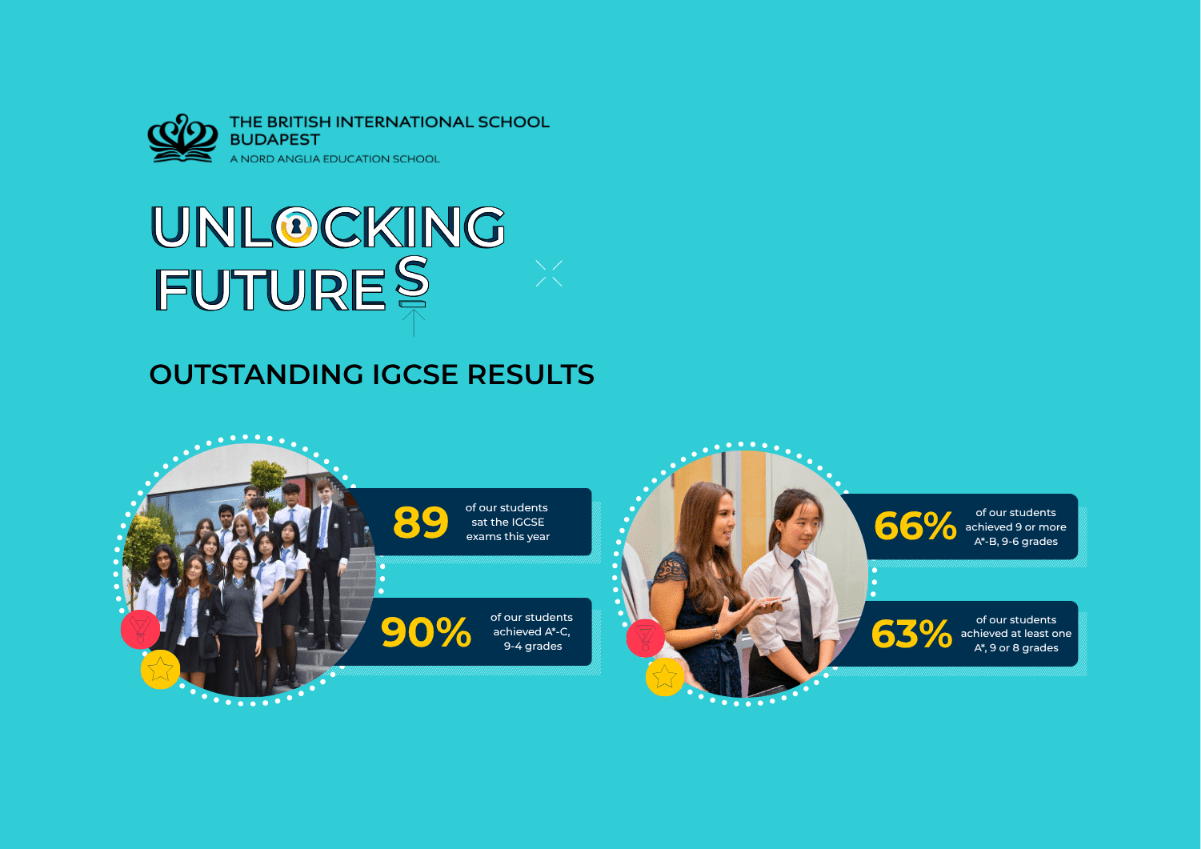
At The British International School Budapest (BISB), students follow the English National Curriculum from age 3 to 16 before moving into the International IB Diploma Programme for the last two years. This provides a seamless educational pathway from the early years until university.
Pastoral care matters enormously when your child is adjusting to a new country, a new language and new friendships. When you’re considering future schools, ask how they welcome new students, how they support children in developing language skills (English, Hungarian and additional languages), and what systems they have for identifying and addressing any special learning needs. Find out how they support children's wellbeing – emotionally, socially and physically.
Class sizes affect how well teachers can know and support individual children. Smaller classes will enable your child to receive more personalised attention and build stronger relationships.
Community is often underestimated. Does the school have a vibrant parent association, or a calendar of activities where families are welcome? Is the community diverse and inclusive? A school where your child quickly finds friends, and where you as a parent can connect with other families in a similar situation, will make the whole transition significantly smoother.
When should I start looking at schools in Budapest?
If you know you're relocating, it’s never too early to start looking at schools. The best international schools in Budapest fill up quickly, and popular year groups can have waiting lists. If you can, aim to begin the admissions process three to six months in advance of your move.
If your move is happening faster than that, rest assured that you are not alone. Contact schools directly and explain your situation. Many international schools in Budapest, including BISB, are experienced in supporting families who are relocating at short notice and will do their best to accommodate you.
What about the Hungarian language?
Your child does not need to speak Hungarian to thrive at an international school in Budapest. Lessons are in English, and day-to-day expat life in central Budapest is very manageable without Hungarian.
That said, even a basic knowledge of the language goes a long way with locals and helps children feel more connected to their new home.
We are here to help
At The British International School Budapest, we support families through every stage of the relocation process. From your first enquiry to your child's first day and settling in our community, our admissions team is here to answer your questions, help you understand your options, and make sure your family feels ready for life in Budapest.
Book a school tour today. Come and see the school, meet our team, and find out why so many families from over 70 nationalities choose BISB as the home for their children's education in Hungary.
Get in touch