Why knowing the answer is no longer enough
For most of the twentieth century, a significant part of education was about the transmission of knowledge. Teachers knew things. Students needed to learn them. The ability to retain and accurately recall information was a genuine advantage in almost every field.
That advantage has not disappeared entirely, but it has diminished. The information itself is now largely accessible to anyone with a phone and a few seconds to spare. What has become more valuable is the ability to know what to do with information, how to evaluate it, question it, connect it to other things, and apply it in situations that have no established answer.
This is not a comfortable shift for education systems built around measurable outcomes and standardised tests. But it is the direction the world is moving, and the schools that prepare children well for it are the ones that take curiosity seriously as a core educational value rather than a pleasant side effect.
The connection between curiosity and everything else that matters
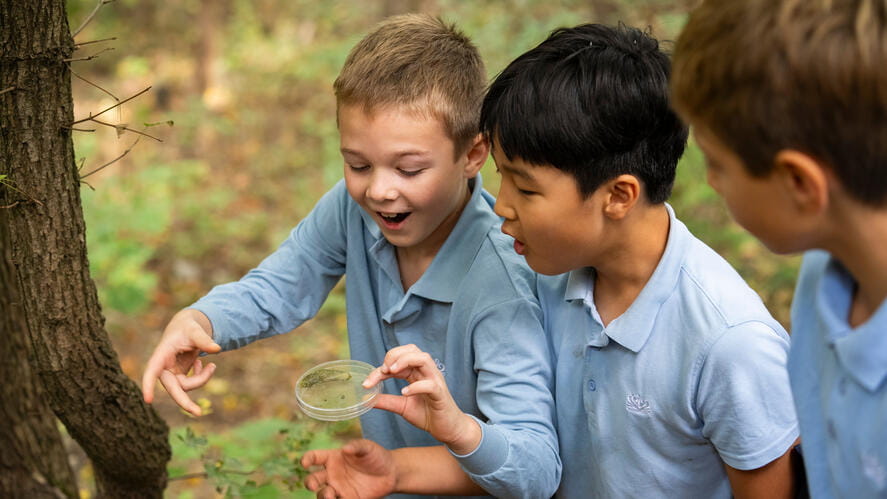
Curiosity is not a standalone skill. It is the thing that activates everything else. A curious child is more likely to persist when something is difficult, because they are genuinely interested in working it out. They are more likely to try an approach that might not work, because they are less afraid of being wrong. They are more likely to listen carefully to someone whose view differs from their own, because they are genuinely interested in how other people think.
Research in psychology and education consistently links curiosity with higher academic achievement, stronger problem-solving ability, greater resilience in the face of setbacks, and more positive relationships with peers and teachers. These outcomes are not coincidental. They follow naturally from a disposition that treats the world as something worth understanding rather than something to be endured.
Curiosity also has a particular relevance in a world where artificial intelligence is transforming how knowledge is accessed and applied. The tasks that AI performs most effectively are the ones with clear parameters and established answers. The tasks that require a curious, questioning, creative human mind are the ones where the parameters are unclear and the answers have not yet been written.
What happens to curiosity as children grow older?
One of the most consistent findings in educational research is that children's willingness to ask questions, take intellectual risks, and pursue ideas for their own sake tends to decrease as they move through formal schooling. The pressures of grades, peer comparison, and the expectation of correct answers combine to make questioning feel riskier than staying quiet.
This is not inevitable. But it requires deliberate effort from schools to counteract, and it is one of the reasons that how a school teaches matters as much as what it teaches.
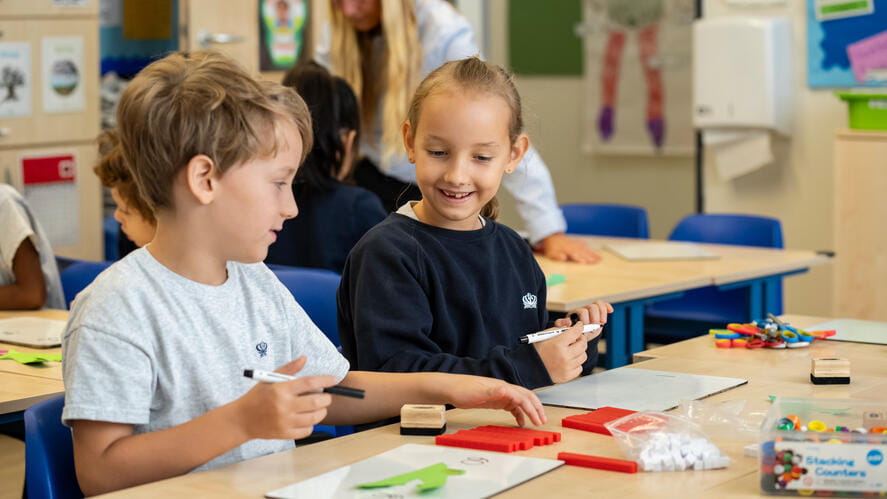
At The British International School Budapest, we work to protect curiosity as children develop by creating conditions in which questioning is genuinely valued. Through the British curriculum, our students are encouraged to analyse, evaluate and argue their own case rather than simply recall what they have been taught. Through STEAM, performing arts and co-curricular activities, they encounter real challenges with no single correct solution. Through collaborative projects and outdoor learning experiences, they discover that the most interesting problems are rarely the ones with easy answers.
We are also part of the Nord Anglia Education family, which means our students have access to partnerships with world-leading institutions including MIT and The Juilliard School. These are not add-ons. They are an expression of our belief that the most important education happens at the edges of what children already know, in the space between the question and the answer.
What this means for your child right now.
Curiosity is not something children either have or do not have. It is something that can be encouraged, extended and, if schools and parents are not careful, gradually extinguished. The child who still asks bold questions at fifteen is not simply lucky. They have been in environments that made those questions feel welcome.
The question worth asking as a parent is not whether your child's school prepares them for the next exam. It is whether it prepares them to keep asking why long after the exam is over. In a world that will require constant adaptation and lifelong learning, that capacity may be the most important thing a school can give them.