


We use cookies to improve your online experiences. To learn more and choose your cookies options, please refer to our cookie policy.

January 29, 2026
Why Play Matters in Year 1: The Power of Play Based Learning at BISC-LP
.png?h=720&iar=0&w=1280&rev=2320179e8a134c80a30f57aa0014926d&hash=C88687BFC84BE1EAFF593CD797B94013)
When you think back to your own childhood, what memories make you smile? Maybe you built an elaborate den out of chairs and blankets on a rainy afternoon, climbed trees imagining you were a superhero, or spent hours stacking blocks into the tallest tower you could manage. Whatever the moment, it likely has one thing in common: play.
Play isn’t just a treasured part of childhood; it is the foundation on which children begin to understand the world. While it may look simple from the outside, playful learning is rich, complex, and essential for healthy development. At BISC-LP, our Year 1 team has been re‑imagining our curriculum to ensure that play remains at the heart of learning, long after children leave the EYFS.
So why is play so important in Year 1?
.png?rev=f5f16d88f3df43fc9d87f28e1444d734&hash=AE8317297F4A50341FCDF44B28860796)
Practice, Rehearsal, and Mastery
As children turn five and six, there is often a rush to move them toward more “formal” styles of learning. However, this shift can come too soon. As Julie Fisher notes in Moving On to Key Stage 1, developmental changes between Reception and Year 1 are minimal, with significant cognitive shifts emerging closer to age seven.
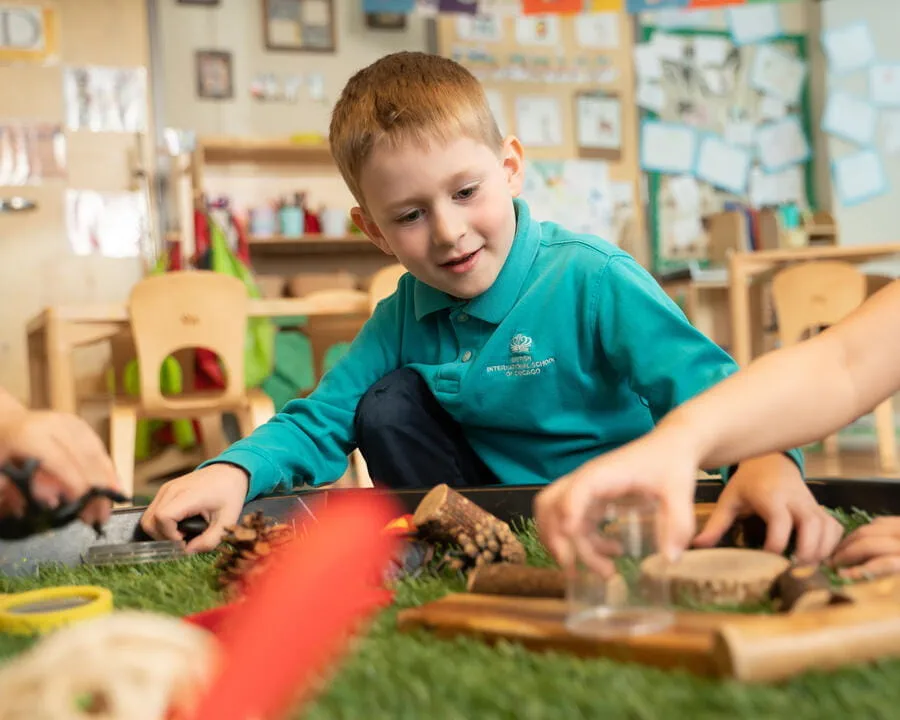
Year 1 children are still developing their long‑term memory, which means repetition in varied contexts is vital. Play naturally provides these opportunities. A concept like measurement can be explored by pouring water, building innovative constructions, or setting up a pretend store. Each playful experience strengthens understanding and helps embed new learning
Concrete Experiences Before Abstract Thinking
Year 1 children absorb information quickly, but they need hands‑on experiences to make sense of new ideas. Before a child can understand an abstract concept; like number, scale, or time; they must first feel it, see it, and manipulate it.
Play provides the physical, sensory experiences that help children build the mental images required for later, more abstract learning. Through tinkering, experimenting, and exploring, they develop deep, meaningful understanding that worksheets alone cannot offer.
Nurturing Language and Social Development
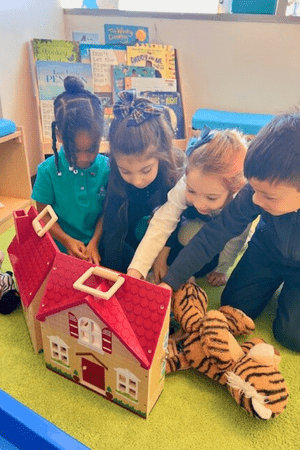
Play is the original classroom for communication. It helps children practice turn‑taking, negotiate roles, solve conflicts, and articulate emotions. These skills don’t suddenly appear after Reception; they continue to grow throughout early childhood.
By engaging in imaginative play, storytelling, and collaborative activities, children encounter far richer language than they would in a quiet, desk‑based environment. They build emotional vocabulary, learn how to express themselves, and begin to understand the perspectives of others; skills that benefit them for life
Creativity, Innovation, and Problem‑Solving
When children are given freedom to explore their ideas, remarkable things happen. In Year 1, we encourage pupils to become like Agent Innovation from the Goal Squad, independent thinkers who use classroom resources creatively and take ownership of their learning.
Play sparks curiosity. It encourages experimentation. It allows children to test theories, adapt strategies, and persevere through challenges. Often, their explorations lead them down learning paths that teachers could never have predicted, enriching multiple subject areas at once. This kind of open‑ended learning nurtures flexible thinkers, children who see themselves as curious, capable, and resilient.
Play Isn’t a Break From Learning. It Is Learning
At BISC-LP, we are proud to champion a curriculum where play remains a core part of Year 1. By keeping playful exploration at the center of teaching, we honor how children naturally learn while building strong foundations for academic and social success. Play isn’t a luxury. It is the engine that drives meaningful learning and it is why it is at the heart of our Year 1 curriculum.
Learn more about our approach to early primary education at BISC‑Lincoln Park!
Anny McVey
Year 1 Leader & Teacher
Related news
News image ![Year 3 Leader, Carla Williamson]() Blog | Featured | Global Education
Blog | Featured | Global Education
 Blog | Featured | Global Education
 The Importance of Self-Regulation in Children: A Foundation for Learning and Wellbeing
Discover how co-regulation, emotional awareness, and practical strategies support children in managing emotions and building resilience at BISC Lincoln Park.
News image ![Lowri Covello]() Blog | Featured
Blog | Featured
 Blog | Featured
 Meet the BISC-LP Student Community Directors: How BISC-LP Supports Student Wellbeing, Safety and Belonging
Meet the Student Community Directors at British International School of Chicago, Lincoln Park and learn how they support student wellbeing, positive behavior, safeguarding, and belonging across our school community.
News image ![Our Restorative Approach at BISC-LP - Our Restorative Approach at BISC-LP]() Blog | Featured
Blog | Featured
 Blog | Featured
 Building Character Through Connection: Our Restorative Approach at BISC-LP
Discover how BISC-LP's restorative approach to behavior helps students build character, strengthen relationships, and develop emotional intelligence through respect, connection, accountability, and restorative practices.
News image ![Make the most of Summer in Chicago - Summer Fun and Learning]() Blog | Featured
Blog | Featured
 Blog | Featured
 Summer Fun & Learning: Make the most of Summer in Chicago
In our latest teacher blog, Pre-Nursery Assistant Directors Alex Duryea and Caitlin Stevens explore Chicago’s top summer destinations while supporting your child’s growth through play, discovery, and hands-on learning.


