
We use cookies to improve your online experiences. To learn more and choose your cookies options, please refer to our cookie policy.

16 January, 2026
Then, Now and Next: Exploring the past to understand the present
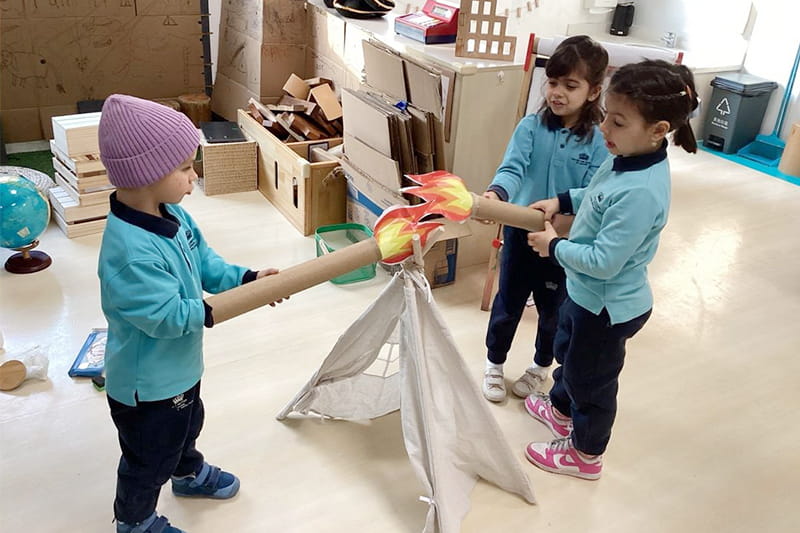
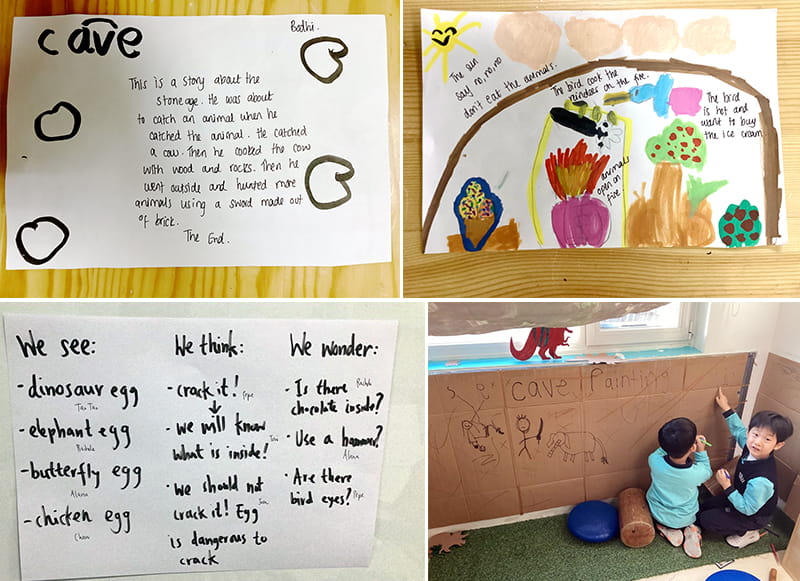
We have officially launched our new project, Then, Now and Next and the children have wasted no time diving into the past with curiosity, creativity and thoughtful questions.
In Reception, our exploration of the past began with real fossils. The children initially wondered whether fossils could only come from dinosaurs and guessed that only hard materials, such as bones, could become fossils. Their thinking quickly evolved when they discovered fish fossils and when Tai proudly brought in a plant fossil to share, sparking even deeper discussion.
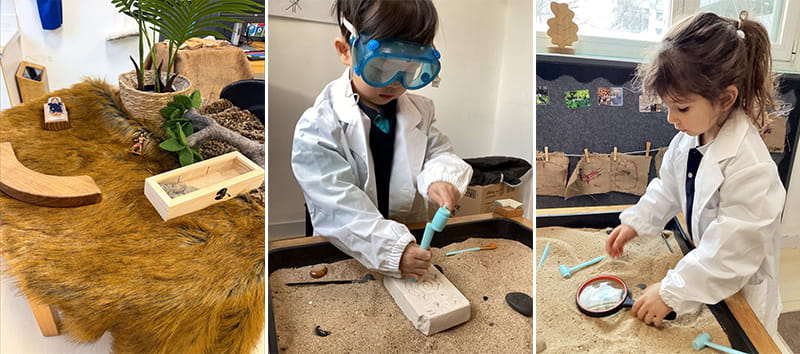
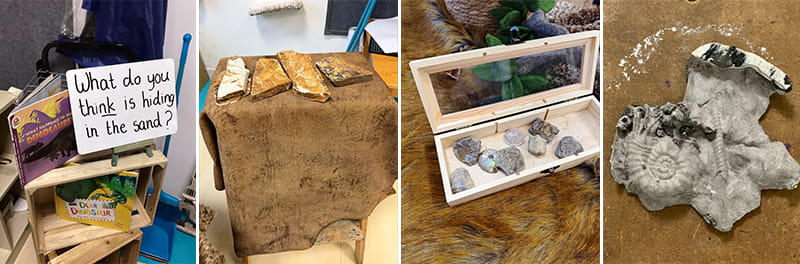
Inspired by this, the children became fossil-makers themselves in the Atelier. Using air-dry clay, they created impressions of sea creatures from long ago before carefully pouring in Plaster of Paris. When the plaster hardened and revealed the fine details of their impressions, the sense of amazement in the room was clear.
As our learning continued, two powerful questions emerged: Where do you find fossils (other than in museums)? and How do people know what prehistoric things looked like? One child suggested that perhaps Ms Nichole was thousands of years old and had seen prehistory herself! This led us to explore the work of paleontologists and how they uncover clues from fossils and remains buried deep in rocky and sandy areas. The children then applied this learning during their own careful excavations, using brushes and delicate tools.
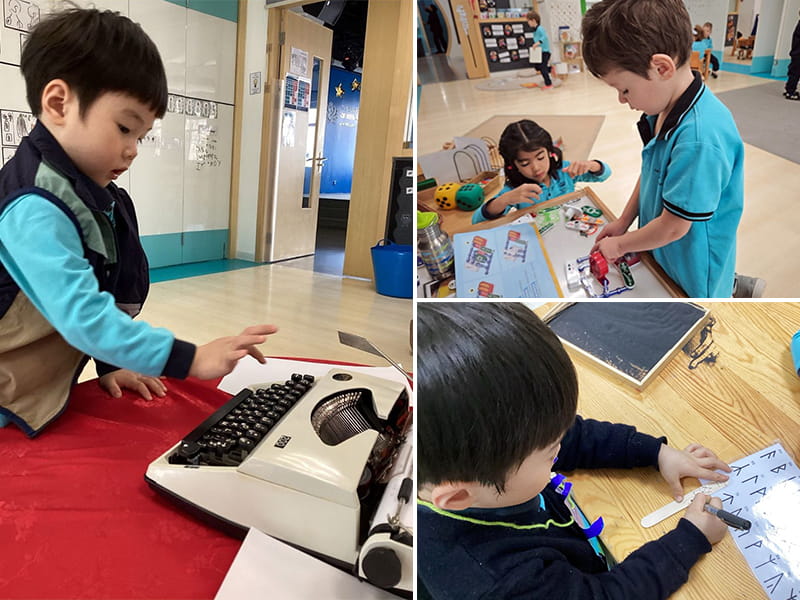
Across the classroom, the children have been making rich connections between the past and the present typing on a typewriter, performing puppet shows, experimenting with chalk and paint while writing on slates and wooden boards.
Alongside this, the children have been fascinated by how families lived and shared food in the past. They questioned how people ate together when food had to be hunted or gathered and discovered that mealtimes were often about survival, sharing and community - very different from today, yet still centred on togetherness.
These experiences are supporting the children’s understanding of how tools, food, communication and daily life have evolved over time. This is just the beginning of our journey through our project, as we continue to explore how the past shapes the present (and future) and how curiosity drives progress.
By Mumbi Mulenga
Reception Whales Class Teacher
Related news
News image ![Year 3 Become AI Explorers! | BSB Sanlitun - Year 3 Become AI Explorers]() Blog
Blog
 Blog
Blog Year 3 Become AI Explorers!
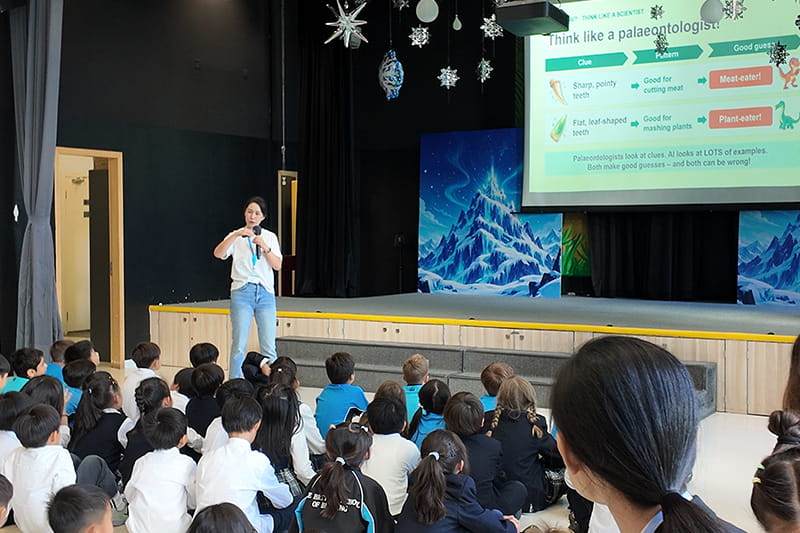
What is Artificial Intelligence, and how will it shape our future? Year 3 Badgers recently welcomed Amy, Que’s mum, who works at Microsoft, for an exciting, hands-on introduction to the world of AI.
News image ![EAL Update | BSB Sanlitun - EAL Update]() Blog
Blog
 Blog
Blog EAL Update
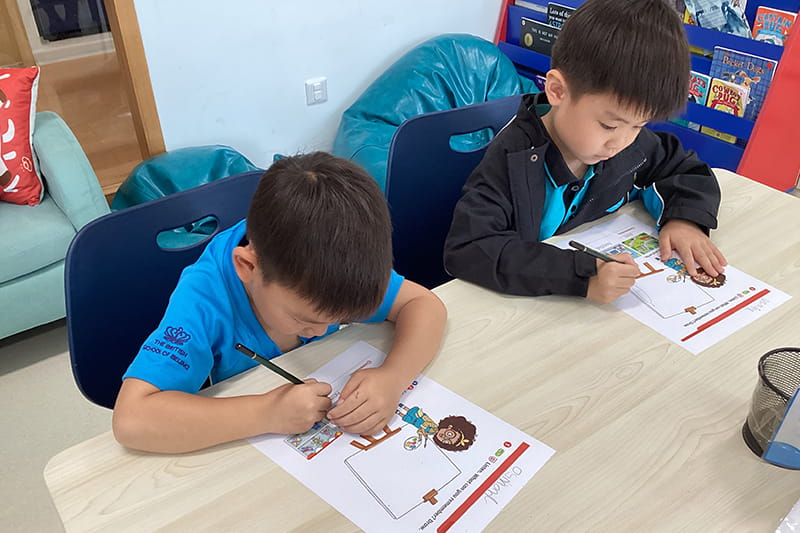
EAL students across Years 1–6 at BSB Sanlitun are exploring a range of exciting topics designed to develop their English language skills and build confidence in communication. Through engaging activities, interactive games and meaningful discussions, students will continue to strengthen their speaking, listening, reading and writing...
News image ![Caring, Growing and Celebrating Together | BSB Sanlitun - Caring Growing Celebrating]() Blog
Blog
 Blog
Blog Caring, Growing and Celebrating Together
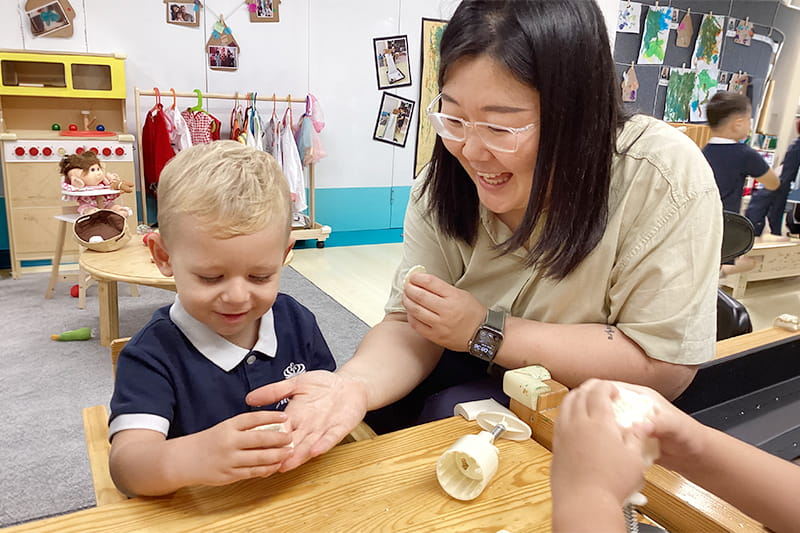
What a lovely week we have had together in Pre-Nursery and Tadpoles! Our days have been filled with little smiles, happy moments, new discoveries and plenty of opportunities to learn about ourselves and each other. As we continued exploring feelings and emotions, we also began to bring the warmth and togetherness of the upcoming Mid-Autumn Festival into our learning...
News image ![A Flying Start to PE! | BSB Sanlitun - A Flying Start to PE]() Blog
Blog
 Blog
Blog A Flying Start to PE!
It feels like only yesterday that we welcomed everyone back to school, but somehow we are already five weeks into Term 1! It has been wonderful to see the students return with so much energy and enthusiasm. As a teacher, it is always amazing to see just how much children can grow over a short summer holiday – many of them seem to have come back noticeably taller!