

Water play is an essential part of early childhood development, giving children opportunities to have fun while exploring the world around them. Through simple activities such as measuring and pouring water, placing objects in water and observing how it flows, children can develop their senses, strengthen physical skills and begin building scientific thinking. So, what are the key benefits of water play for children and which activities can parents and teachers introduce?

11 November, 2026
6 unbelievable benefits when young children play with water

TABLE OF CONTENTS
Benefits of Water Play for Children
Through water play, children can:
Social Development
- Play alongside others.
- Feel secure with a familiar adult nearby, giving them the confidence to explore new environments and gradually develop independence.
- Take part in collaborative play with a familiar adult.
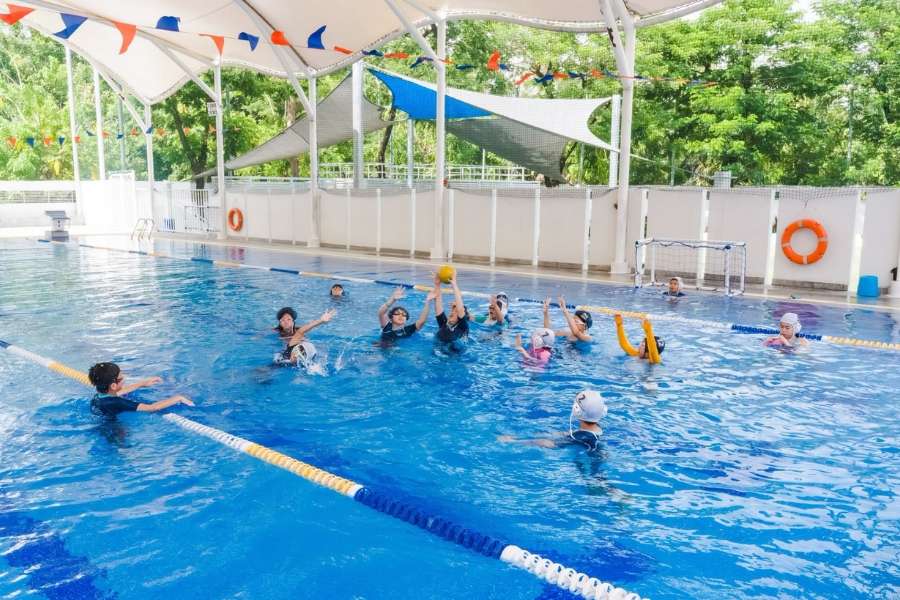
Children develop social skills through water activities with friends, learning to interact, cooperate and share the enjoyment of playing together (Source: BVIS Ho Chi Minh City)
Early Mathematics and Science Development
- Enjoy filling and emptying containers with water.
- Begin exploring quantities through measuring and pouring, including concepts such as “more” and “less”.
- Observe how water moves and explore how it interacts with different objects and materials.
Language and Early Literacy Development
- Use gestures, sounds and simple words to express needs, feelings and responses during play.
- Understand and respond to simple instructions from adults while playing.
- Become familiar with water-related vocabulary such as “wet”, “dry”, “pour” and “flow” through stories, rhymes and hands-on activities.
Sensory and Physical Development
- Use the thumb and fingers to grasp and manipulate small objects.
- Explore different textures by making marks in wet sand, glue and paint.
- Develop greater body control when bending, reaching or changing position to grab toys.
Emotional Development
- Relax through the soothing sounds and cool sensation of water.
- Develop curiosity and take the initiative to explore unfamiliar objects and experiences.
- Experience excitement and enjoyment while experimenting with different water activities.
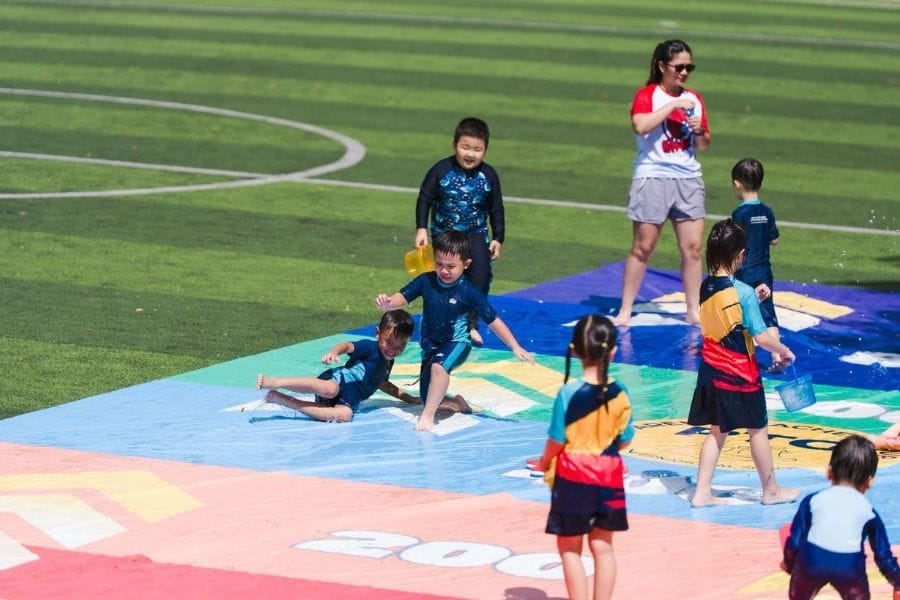
Children enthusiastically take part in water play and enjoy sharing the experience with their friends (Source: BVIS Ho Chi Minh City)
Creativity and Visual Awareness
- Experiment with shapes, colours and mark-making.
- Strengthen observation skills and visual attention by watching flowing water, ripples, reflections and objects moving through the water.
>> Read more:
- What Are Life Skills? The Role of Life Skills Education in Child Development
- Soft Skills: 8 Essential Soft Skills and Their Importance for Students
- What are communication skills? 7 Effective Ways to Improve Children's Communication Skills
How Parents can Support Children during Water Play
Questions and Prompts for Water Play
Rather than continually telling children what to do, parents can use open-ended questions and simple prompts to encourage observation, experimentation and discovery.
- “Try stirring the water to make a whirlpool.”
- “Can you fill the bottle with water?”
- “What do you think will happen if you pour the water out?”
- “Which objects do you think will float, and which will sink?”
- “Can you see any bubbles in the water?”
- “Can you make ripples on the surface of the water?”
- “Try moving the water with your hands. What changes can you see?”
Encouragement and Praise During Exploration
Parents should recognise children’s effort, curiosity and willingness to explore rather than praising only the final result.
- “I like the way you tried that.”
- “You found a new way to do it all by yourself.”
- “You’re looking very carefully.”
- “You shared the toys with your friend. That was thoughtful.”
- “Why don’t you try again and see what happens?”
Safe Water-Play Resources for the Home
Parents can use familiar household items to create simple opportunities for exploration:
- Plastic cups, jugs and pouring containers
- Age-appropriate plastic buckets or basins
- Plastic funnels and age-appropriate plastic bottles
- Clean sponges for absorbing, squeezing and releasing water
- Small watering cans
- Age-appropriate spoons or stirring utensils
- Paintbrushes for painting with water on suitable surfaces
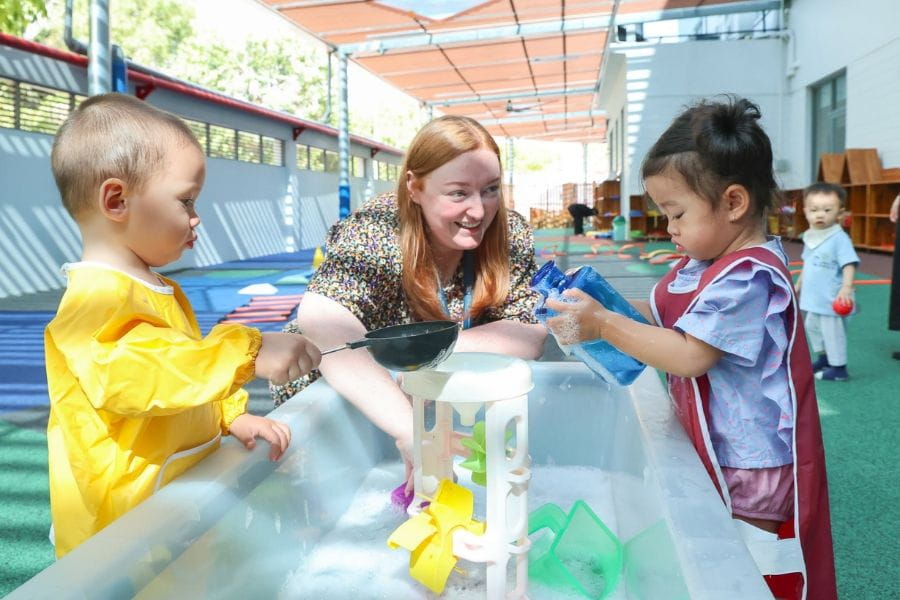
Children explore water using familiar resources such as cups, pouring jugs and funnels under the guidance of their teacher (Source: BVIS Ho Chi Minh City)
>> Discover more:
- Development of Babies and Toddlers - From One to Two years
- Development of Babies and Toddlers - Factors Affecting Your Child's Development
Popular Water-Play Activities for Children
Parents can try the following water-play activities to support children’s sensory development, physical skills and thinking:
- Measuring and pouring: Provide cups, jugs or funnels so children can transfer water between different containers.
- Floating and sinking experiment: Invite children to place safe objects in water and observe which ones float and which ones sink.
- Creating bubbles and ripples: Encourage children to stir the water gently or pat its surface and observe what changes.
- Sponge play: Let children dip, squeeze and wring out sponges as they explore how water can be absorbed and released.
- Painting with water: Give children paintbrushes to paint with water on a suitable surface and observe what happens as the water dries.
>> Read more:
- The importance of play in child development
- Top 5 Essential Life Skills for Children to Build Confidence and Independence
Water-Play Safety Precautions
Water play offers many valuable learning opportunities, but children’s safety must always come first. Parents and teachers should take the following precautions to ensure activities are suitable for young children:
- Continuous, hands-on supervision: Always remain within immediate reach, maintain full attention and be ready to intervene. Children must never be left to play with water alone, even in a shallow basin, paddling pool or bath.
- A safe play area: Choose a flat, stable surface, minimise slipping hazards and remove sharp objects or small items that could present a choking risk.
- Clean water and age-appropriate resources: Use clean water and select resources that are easy to wash, free from sharp edges and suitable for the child’s age and stage of development.
- Activities suited to each child’s abilities: Younger children can begin by touching the water or scooping it with a large cup. Older children can take part in activities involving observation, prediction and experimentation.
- Cleaning after play: Empty all containers, clean the resources and dry the play area thoroughly to reduce the risk of slips and falls.
Importantly, no depth of water is completely safe when a child is left without adult supervision. The continuous presence and full attention of a responsible adult are essential to reducing the risk of drowning.
>> Read more:
- What is Early Years Education? What Do Children Learn in an International Early Years Programme?
- AI in education: Practical applications of AI in teaching and learning
Water play is not only enjoyable but also supports children’s sensory development, physical skills and natural curiosity as they explore the world around them. Through simple, playful activities, parents can take an active role in their child’s learning, helping to develop thinking skills and build confidence from an early age.
At BVIS Ho Chi Minh City, hands-on play combined with STEAM education gives children opportunities to investigate the properties of water, conduct simple experiments and begin developing scientific thinking. Parents are welcome to contact the school to learn more about our educational programmes and the enriching experiences designed for each stage of a child’s development.
- Campus address: 44–46 Street No. 1, Binh Hung Residential Area, Binh Chanh District, Ho Chi Minh City.
- Opening hours: Monday - Friday (8:00 AM – 5:00 PM)
- Hotline:
- Primary: +84 (28) 3758 0709 ext. 111
- Secondary: +84 (28) 3758 0717 ext. 211
- Email: admissions@bvisvietnam.com
Discover more about BVIS:
Related news
News image ![6 unbelievable benefits when young children play with water - 6-unbelievable-benefits-when-young-children-play-with-water]() Blog | Primary
Blog | Primary 6 unbelievable benefits when young children play with water
Water play is a fun and valuable learning experience that supports children’s physical, sensory and social development. Discover six key benefits of water play and a range of engaging activities for children to enjoy.
News image ![BVIS enhances Primary Curriculum with 60% English and strong focus on Creative Arts - BVIS enhances Primary Curriculum with 60 English and strong focus on Creative Arts]() News | Primary
 News | Primary
BVIS enhances Primary Curriculum with 60% English and strong focus on Creative Arts
Explore the international Primary curriculum based on the National Curriculum of England at BVIS, where 60% of learning time is delivered in English, combining academic excellence with holistic creative development for students.


