



We use cookies to improve your online experiences. To learn more and choose your cookies options, please refer to our cookie policy.
27 February, 2026
How student progress monitoring works alongside tests and exams in international schools

Many parents equate academic rigour with tests and examination results. Formal assessments matter. They provide benchmarks and confirm standards. But strong student progress monitoring in international schools does not begin and end with exams.
For families researching international schools in Ho Chi Minh City, understanding how progress is tracked between exam periods is often just as important.
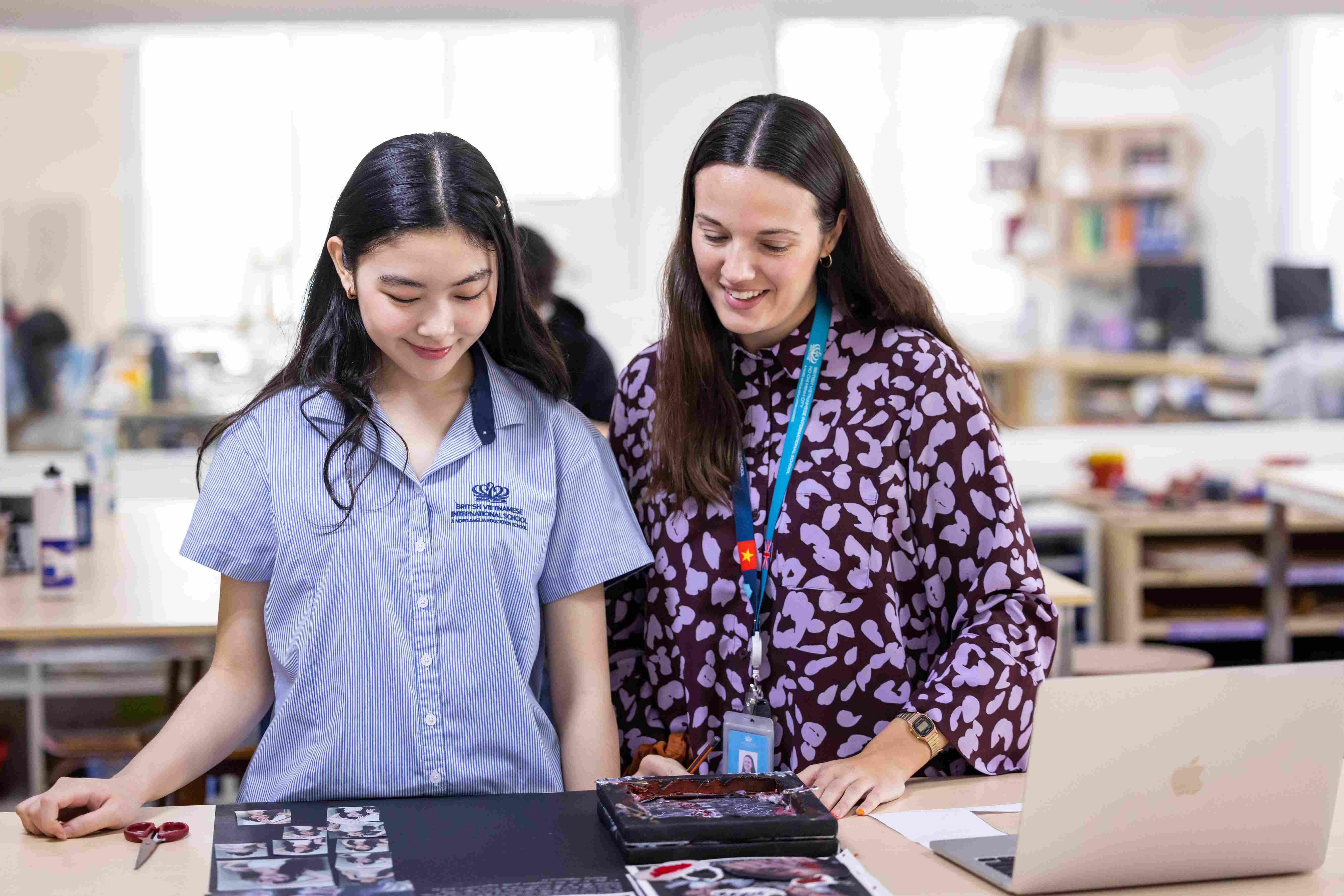
At the British Vietnamese International School Ho Chi Minh City (BVIS HCMC), student progress monitoring happens daily, not just at reporting points.
Deirdre Grimshaw, Principal, explains that teachers are constantly gathering evidence of learning in structured but practical ways.
What teachers look for during lessons
“Observation and marking in lessons are central,” she says. “We use formative assessment regularly, alongside smaller summative checks.”
Teachers assess students’ understanding through questioning, written work, peer discussion, and structured tasks. They use clear rubrics so both students and teachers understand what strong performance looks like.
In practice, this means performance assessment and flexible adjustments are ongoing. A teacher may adjust a lesson immediately if students show misunderstanding. If students demonstrate strong grasp, the level of challenge increases.
This constant adjustment supports student progression over time, even before formal exams confirm academic outcomes.
How learning behaviours signal progress
Student progress monitoring is not limited to marks. Teachers also look at how students approach learning.
Mr Bate, Head of Secondary, notes that reflection plays an important role. Students who can explain their thinking, evaluate their work, or respond thoughtfully to feedback are showing growth in understanding.
The ability to self assess and engage with peer feedback contributes to a fuller picture of student learning assessment. Active participation in lessons, clarity of work linked to learning objectives, and sustained effort during challenging tasks all provide insight into how students are developing.
“All of this sits alongside test scores,” he explains. “Sometimes progress is not immediately visible in a single set of results, but we can see improvement in how a student is learning.”
This does not replace formal assessment. It strengthens it. Exams confirm attainment. Continuous feedback helps build it.
Balancing formal assessment with continuous feedback
Formal written reports, parent meetings, and scheduled assessment points remain important. They provide accountability and transparency. However, monitoring student progress effectively requires regular communication, not only end of term summaries.
At the British Vietnamese International School Ho Chi Minh City, teachers share progress through formal reports, face to face meetings, and additional discussions when needed. Parents can request meetings to understand their child’s progress in greater detail.
This structure ensures that student progress monitoring is visible to families. Transparency is built through scheduled conversations, clear marking, and consistent communication.
When teachers gather evidence daily and report clearly over time, families gain a more accurate understanding of their child’s development.
Looking beyond single data points
Tests and exams provide important confirmation of standards but they are part of a broader picture.Strong international school teaching depends on the ability to assess students’ progress in multiple ways, using both structured performance assessment and daily professional judgement. Over time, this creates a clearer trajectory of student progression rather than isolated snapshots.
At the British Vietnamese International School Ho Chi Minh City, student progress monitoring combines formal assessment with continuous feedback and professional oversight. This balance supports academic rigour while ensuring that no student’s development depends on a single result.
If you would like to understand more about how evidence of learning is shared, explore our curriculum and assessment pages where we make student progression transparent and measurable.
Related news
News image ![Top 8 International Kindergartens in District 7 Chosen by Parents - truong mam non quoc te quan 7]() Blog | Educational Insights
Blog | Educational Insights
 Blog | Educational Insights
 Top 8 International Kindergartens in District 7 Trusted by Families
Discover the top 8 International Kindergartens in District 7 for the 2026–2027 academic year, including British Vietnamese International School (BVIS HCMC), Kindy City, Mini Minds Preschool, Kid’s Club and more.
News image ![How to Study Abroad: Essential Steps, Requirements and Destinations - muon di du hoc bat dau tu dau]() Blog | Educational Insights
Blog | Educational Insights
 Blog | Educational Insights
 How to study abroad: A step-by-step guide & Tips for studying aboard
Wondering how to study abroad? Discover the key preparation steps, admission requirements and top study destinations to help students plan a successful international education journey.


