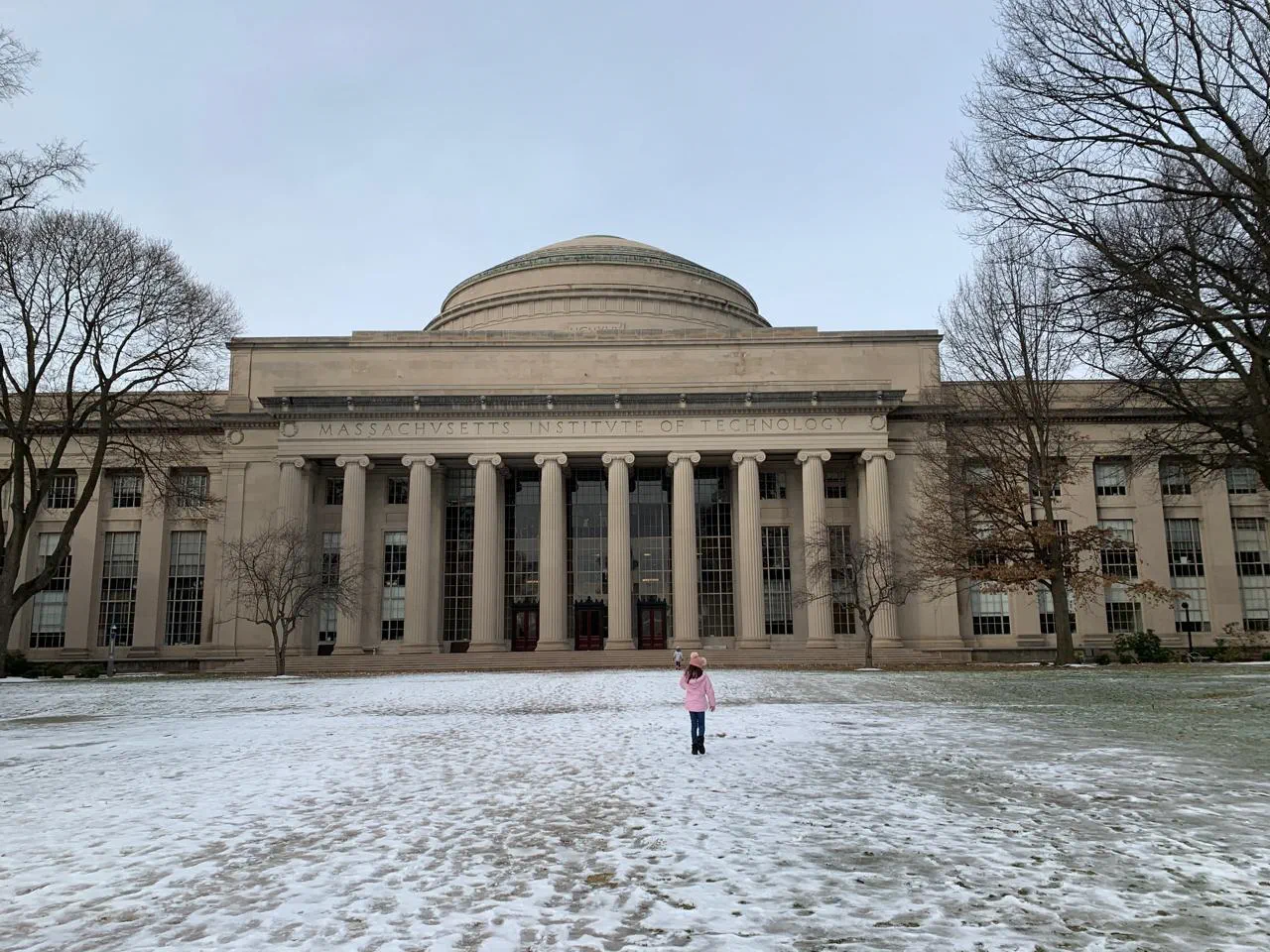
When I was ten years old, I told my parents I wanted to go to MIT. I didn't fully know what that meant yet, but I just knew I wanted to be somewhere where ideas became real. My parents could have smiled and changed the subject. Instead, they listened, and they took me to Boston to walk the campus I had only imagined. I left with a promise to myself: one day, I would come back.
This November, I am keeping that promise. And instead of coming alone, I'm bringing my community's story with me.
I grew up around plantain farms because my dad has worked in the agricultural sector his whole life, which means I have, too. Because of that, I have seen the work behind the food on our tables. I've watched workers carry out intense physical labor for hours under the strong Costa Rican heat. In those conditions, a worker can lose up to 10 liters of fluid in a day, along with essential nutrients like potassium, magnesium, and calcium. Most workers don't have easy access to the nutritious food or drinks they need to recover.
Therefore, this is not only a health issue; it’s an equity issue as well. The people who sustain our food systems are often the least protected by them. And with the rapid increase in climate change, the risks only grow. When I applied to the MIT Student Trip, I didn't want to present a problem I had only read about. I wanted the judges to understand that this is a problem I have seen with my own eyes.
My proposal, From Waste to Wellness, is a nutrient-rich hydration drink made from plantain stems, the part of the plant that is usually composted or discarded. Through a cold-press process that preserves its nutrients, the stem becomes a drink designed to rehydrate, replenish electrolytes, and restore energy.
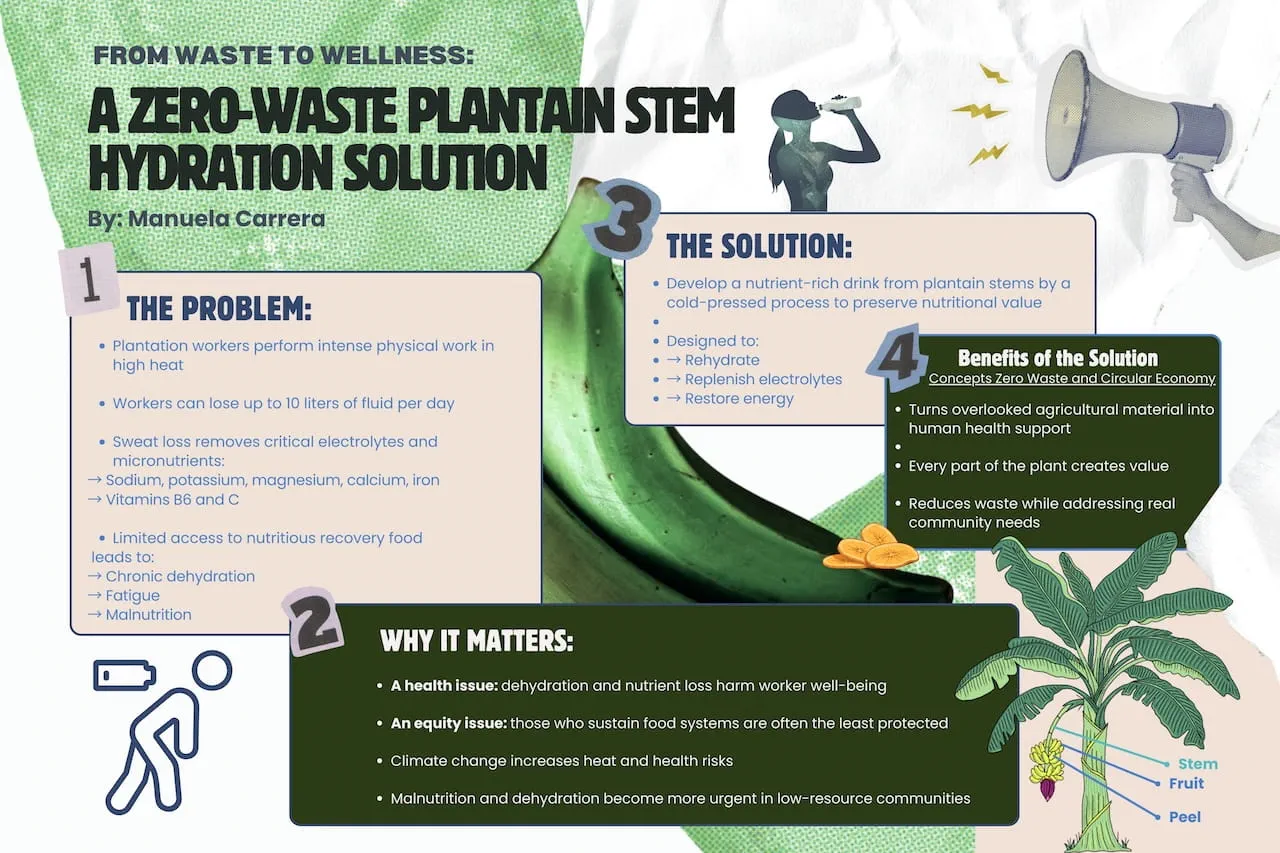
The idea is rooted in the principles of zero waste and the circular economy. In a linear system, we take, use, and throw away. In a circular one, nothing is truly waste. Through my solution, every part of the plant creates value. With today’s technology, the plantain peel can be turned into vegan leather, the fruit feeds communities, and the stem holds the potential to solve a real problem.
This way of thinking didn't come out of nowhere. At Country Day School, zero waste is part of who we are, and our campus is proudly "On the Road to Zero Waste." As president of our student-led Zero Waste Club, I work alongside the directors of Zero Waste Costa Rica to reduce our campus's waste.
At its heart, this project is about giving back. The workers who harvest our food make sure that we never go hungry. Every meal we share carries their effort. Caring for them isn't charity; it's gratitude in action. We have resources, knowledge, and opportunities they may not have, and I believe that comes with responsibility. Nutrition and food access should be a universal right, not a privilege determined by where you work or where you were born.
I am truly honored to be part of the MIT Student Trip, and I can't wait to see what lies ahead.
To every CDS student: explore what makes you curious. Raise your hand, reach out, and say yes to the opportunities our school puts in front of you. You never know which one will lead you to the person you want to become and the change you want to bring to the world around you.
This blog is part of our A Student’s View series, where our students share their voices, ideas, and experiences. Discover how one Country Day School student is taking a community challenge she has witnessed firsthand and turning it into an innovative solution focused on hydration, sustainability, and equity. From her connection to Costa Rica’s agricultural communities to her journey to MIT, this story is a powerful example of how curiosity, purpose, and real-world learning can inspire students to create meaningful change.