
By Carla Hyland, Deputy Head of Secondary – Curriculum & Learning
From classroom discussion and critical thinking to IB assessments, LAMDA and public speaking, purposeful talk is an important part of how students at Dover Court International School deepen their understanding and demonstrate what they know.
Being able to explain an idea clearly is also a test of how well you understand it. At Dover Court, students are regularly challenged to articulate their thinking, question assumptions, listen to different perspectives and defend their conclusions. These are sometimes described collectively as “oracy”, but they are also fundamental academic skills: skills that support deeper learning now and increasingly demanding assessments as students progress through school.
“Oracy” is enjoying a moment in the spotlight. Across UK education news and LinkedIn discussions, the importance of speaking and listening is attracting renewed attention. Recent announcements about giving oracy greater prominence in England’s curriculum have added momentum to the conversation.
At Dover Court International School, we welcome this recognition. While the terminology may feel newly prominent, the practice behind it has been part of our approach for years. Helping students articulate ideas, listen thoughtfully and communicate with confidence has long been central to learning across our curriculum.
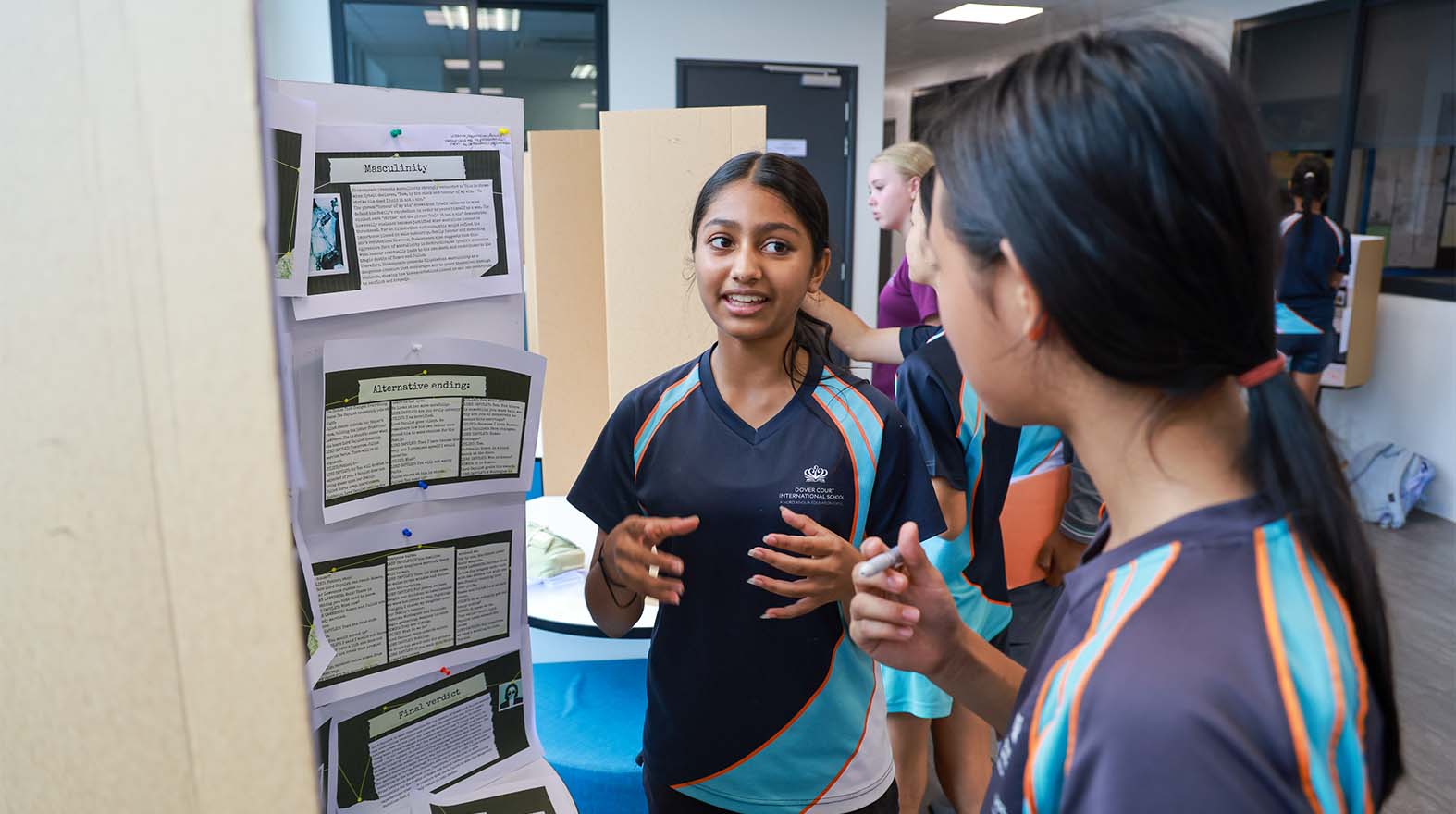
How Oracy Supports Deeper Learning
Oracy encompasses how we express ourselves and how we engage with others. It involves organising ideas, choosing language carefully, asking purposeful questions and responding to different perspectives. Effective communication also requires attentive listening and the ability to adapt to an audience.
These skills develop through practice. Each time students explain their reasoning, contribute to a discussion or respond to a challenging question, they have an opportunity to strengthen both their communication and their understanding.
Explaining an idea aloud can reveal where thinking is secure and where it needs further work. Listening to someone else’s explanation can introduce a new perspective. Talk therefore helps students develop their thinking as well as share it.
How Speaking and Listening Develop Critical Thinking
At Dover Court, students encounter these opportunities throughout their learning. Presentations require them to research, select and organise information, then consider how to communicate it clearly to an audience. Debates challenge them to construct arguments, evaluate evidence and respond respectfully when others disagree. These skills are embedded across the curriculum through the implementation of our ‘Thinking Routines’, evidence-informed pedagogy that is at the heart of developing student metacognition.
Enquiry projects bring these skills together. Students formulate questions, discuss possibilities, collaborate and present their findings. The conversations along the way are as valuable as the final presentation: negotiating responsibilities, questioning assumptions and explaining decisions all require purposeful communication.
As students progress, these foundations support increasingly demanding tasks. In IB English, the Individual Oral (IO) requires students to deliver a focused analysis of literary works, exploring a global issue and responding to their teacher’s questions. It draws on skills developed over many years: close reading, critical thinking, structuring an argument and expressing ideas precisely.
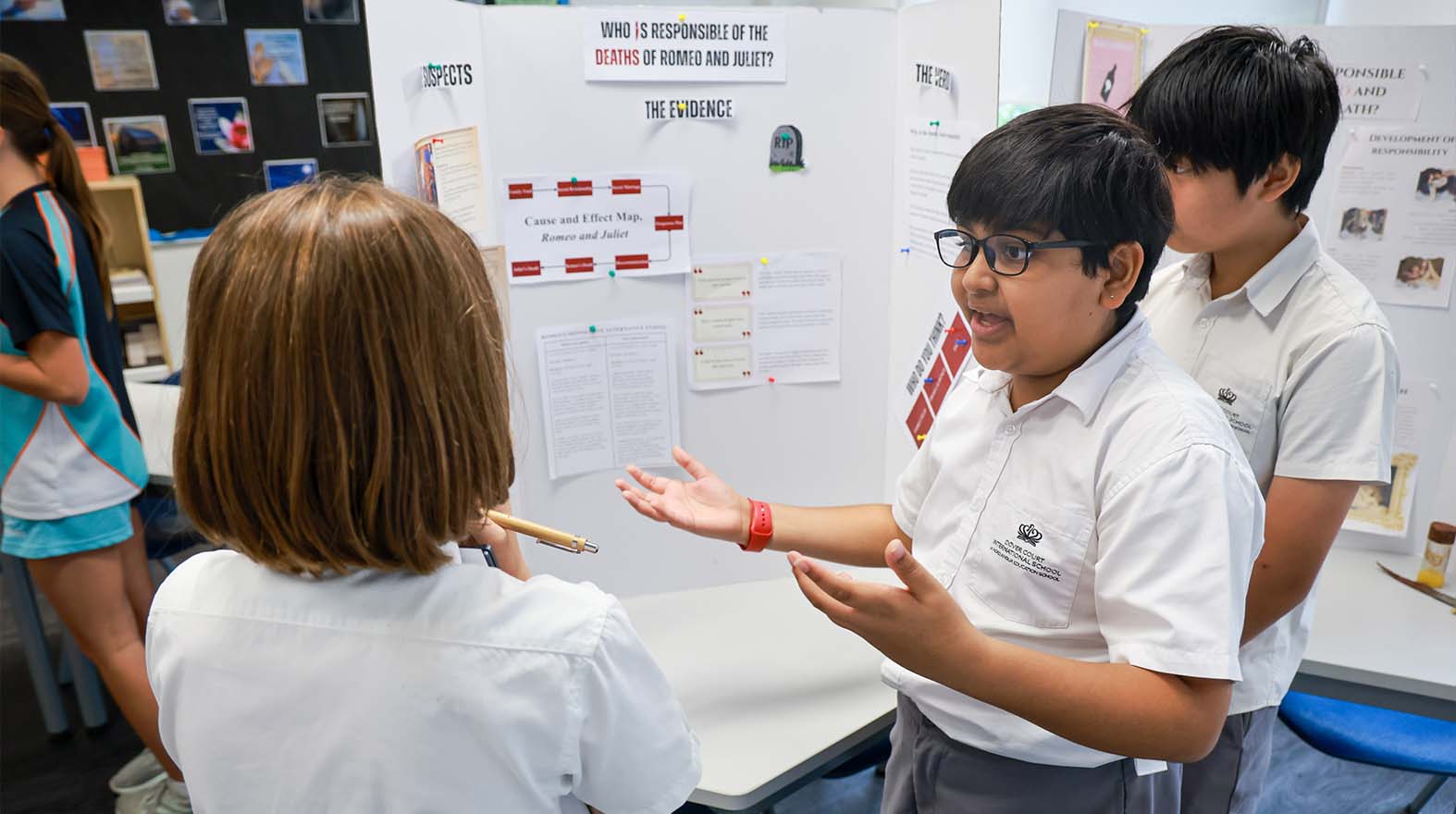
Putting Academic Skills Into Practice
Competitions such as ARTiculation Prize in Singapore provide another valuable opportunity. Preparing to speak about a work of art requires students to develop a personal response, support their interpretation and engage an audience. Such experiences encourage intellectual curiosity alongside confidence in public speaking, and our Dover Court students have shown consistent success in their participation for the past few years.
Our LAMDA provision is also an established and successful part of this work. Through preparation, rehearsal and performance, students develop clarity, expression and an awareness of how voice and physical presence shape communication. The process encourages perseverance and helps students become more comfortable speaking in front of others.
The value extends well beyond a performance or examination. Students can draw on these skills when discussing their interests at a university admissions interview, delivering a presentation, contributing to a workplace meeting or explaining a proposal to colleagues.
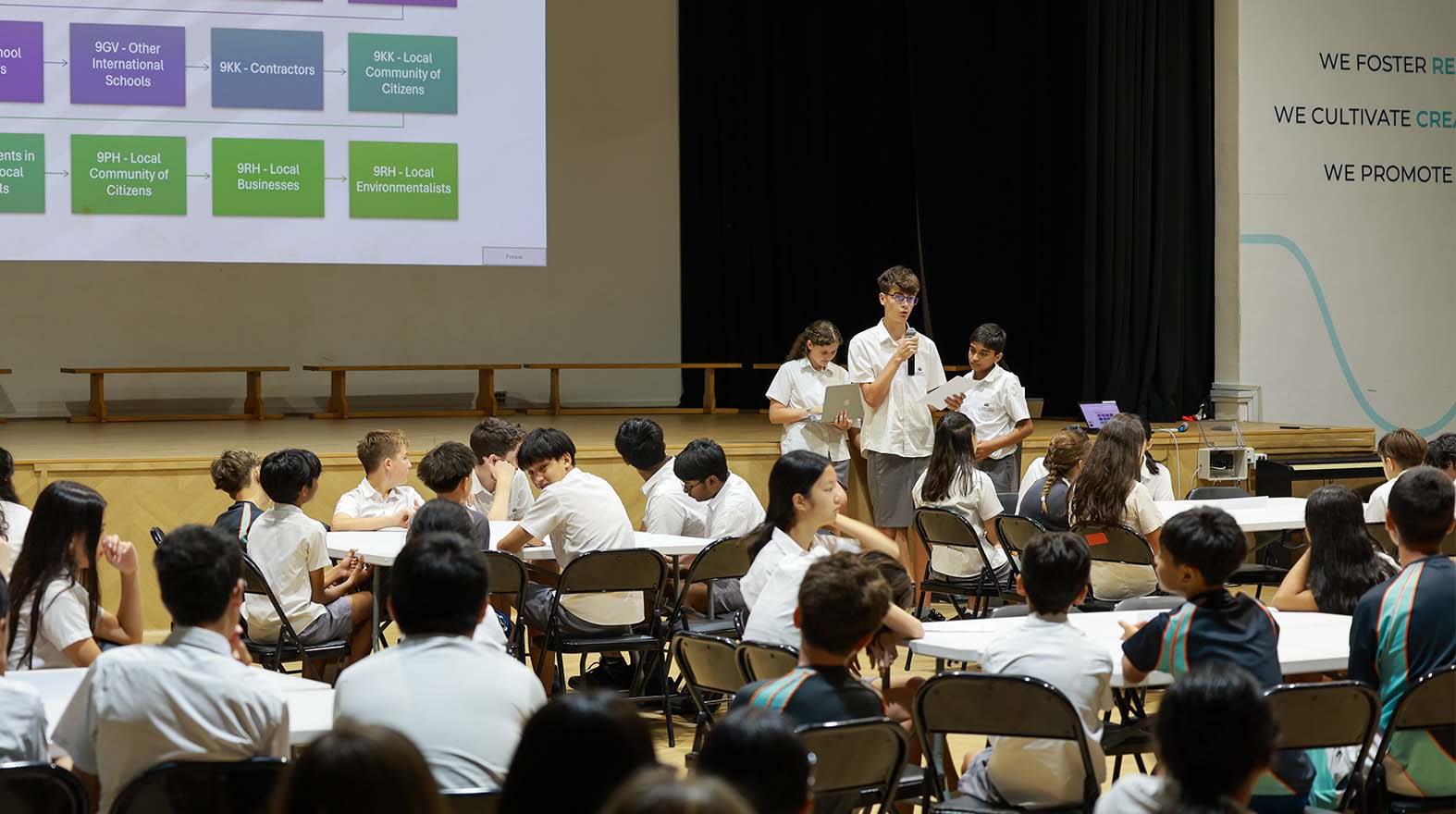
High Expectations, With the Support to Succeed
As an inclusive school, we recognise that confidence develops differently for every learner. Some students are ready to address a large audience; others benefit from rehearsing with a partner, using prompts or having additional thinking time. Our responsibility is to provide appropriate support and meaningful opportunities for each student to participate.
We want students to know that their ideas deserve to be heard, and that other people’s ideas deserve careful consideration.
The current attention on oracy offers a welcome opportunity to celebrate this work and continue strengthening it. At Dover Court, the commitment is longstanding: helping young people find their voice, use it thoughtfully and listen with equal care.