The World Economic Forum’s Future of Jobs Report 2025 highlights key trends shaping the global workforce. Among the top ten fastest growing skills expected by 2030 are:
- Technological literacy
- Resilience, flexibility, and agility
Curiosity and lifelong learning - Leadership and social influence
- Analytical thinking
- Environmental stewardship
Across every stage of learning at LCIS, our teaching and guidance intentionally develop these skills, ensuring our students are prepared to excel – whatever the future brings.
Building Foundations in Early Years
Our youngest learners begin developing future ready skills through purposeful play. In our Early Years classrooms, children are encouraged to explore, ask questions, and engage in hands on, play based learning that strengthens flexible thinking and curiosity.
Sensory exploration plays a key role. Children investigate textures such as sand, rice, water, fabrics, pasta, and flour, discovering for themselves how materials behave when poured, mixed, moulded, or contained. These experiences stimulate the senses while developing problem solving skills, creativity, fine motor control, and early critical thinking. Learning to experiment, adapt, and apply skills in new ways is vital in an age where automation and artificial intelligence are transforming how we live and work.
Core Competencies and Curiosity in Primary
In Primary School, students build strong foundations in literacy, numeracy, and digital fluency while learning how these disciplines connect to real world challenges. Through enquiry based learning, they develop analytical thinking, reasoning, and transferable problem solving skills that support future learning in any context.
In mathematics, students tackle complex problems by breaking them into manageable parts, identifying patterns and connections, and refining their understanding of number operations, geometry, measure, and space. In History and Geography, children learn to evaluate sources, understand different perspectives, and analyse cause and consequence as they explore topics such as:
- Ancient Rome and Ancient Greece
- How people used to live
- Significant people of the past
- Temples, Tombs and Treasures
- Active Planet
Our older Primary students increasingly work collaboratively on research and investigative projects. With a strong global dimension embedded in the curriculum, they develop international mindedness while learning to think critically, communicate clearly, and propose creative solutions to shared challenges.
LCIS’s carefully curated blend of the English National Curriculum and the International Primary Curriculum (IPC) is underpinned by personal learning goals that closely align with the World Economic Forum’s future skill priorities. Our students are encouraged to see themselves as adaptable, resilient thinkers who are communicators, collaborators, ethical decision makers, and empathetic global citizens.
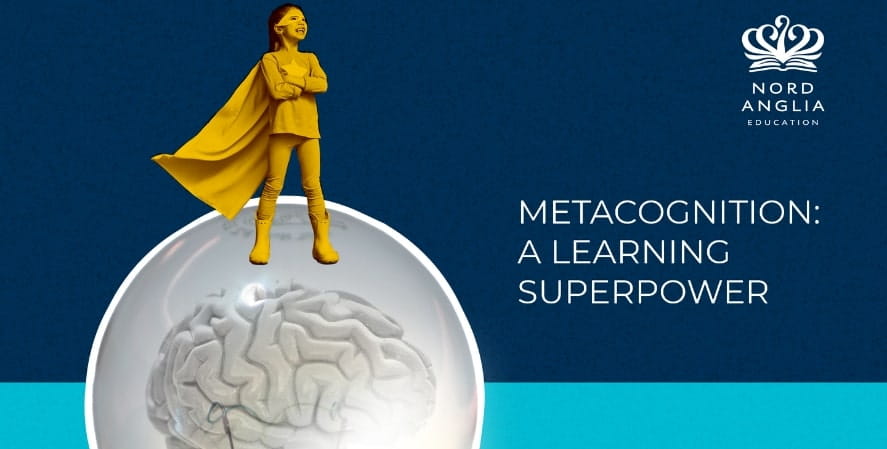
More than this, LCIS is actively engaged in Nord Anglia Education’s Metacognition Project, helping students learn how to think about their own thinking. By explicitly teaching targeted thinking strategies, students learn to approach challenges with greater awareness, confidence, and effectiveness – learning to think wider, deeper, and more purposefully.
Real World Application Through Interdisciplinary Learning
As students progress toward their IGCSE examinations, they refine their ability to transfer knowledge and skills to new and unfamiliar situations. Interdisciplinary learning plays a central role at LCIS, encouraging students to draw meaningful connections between subjects and real world issues.
Technology and digital literacy are embedded throughout the curriculum. Students become discerning consumers of information as well as confident creators in the digital space. Through a strong focus on STEAM, coding projects, research tasks, entrepreneurship challenges, and dedicated Transfer Days, students combine learning from multiple subjects to design and present solutions to authentic challenges. These experiences equip them with firsthand practice in applying knowledge dynamically and creatively.
Global Thinkers in the IB Diploma Programme
In the final phase of learning, the International Baccalaureate (IB) Diploma Programme nurtures independent thinking, intellectual curiosity, and global awareness. Students deepen their understanding of complex global issues while developing a strong sense of purpose and ambition as they prepare for life beyond school.
The World Economic Forum predicts that many of the fastest growing careers will require professionals who can merge expertise across disciplines. Through extended essays, Theory of Knowledge discussions, and cross subject collaboration, LCIS students acquire precisely this flexibility. By graduation, they leave not only with strong academic foundations, but with the confidence and adaptability to apply their learning creatively across varied contexts.
Creativity and Emotional Intelligence Through the Arts
At LCIS, we firmly believe that a future ready education extends beyond traditional academics. Music and the arts are integral to our curriculum, supporting creativity, emotional intelligence, and innovation. Research consistently shows that studying music enhances cognitive performance, problem solving abilities, and emotional awareness.
A recent Nord Anglia Education article explores the transformative power of music education, noting how it connects individuals across cultures and experiences. As the article explains, “Whether you’re a passionate listener or a dedicated musician, the study of music offers profound insights and benefits that resonate throughout life.”
This message is echoed in an MIT Curiosity Correspondent video released in February 2025, filmed during a visit by MIT to LCIS as part of Nord Anglia Education’s collaboration with the Boston based university. Our students posed thoughtful questions about the purpose of music and received responses from leading MIT thinkers. Jessica Shand, MIT Media Arts and Sciences alumna, reflected: “It feels like the purpose of music is to bring people together and to remind us of a sense of community.”
Connectedness: A Skill for the Future
Connectedness is the thread that runs through all aspects of education at LCIS – from cross disciplinary thinking and global perspectives, to collaboration, empathy, and emotional intelligence. Being open to new ideas, adaptable to change, and respectful of diverse ways of thinking is essential in the future workforce.
At La Côte International School, our goal is to ensure students not only learn what to think, but how to think, feel, and connect. These human skills – curiosity, adaptability, creativity, and collaboration – will remain the most powerful tools our students carry into the future. Learn more about approach.
If you’re looking for an education that goes beyond academics and prepares your child with the skills AI can’t replicate, we invite you to learn more about our school.