The NAIS Sixth Form Choice Series
Choosing Depth: Is A Level Study the Right Fit for Your Child?
There comes a point, often during Year 10 or 11, when conversations at home begin to shift.
They move from “How was school?” to something more reflective.
“What subjects are you enjoying most?”
“What might you want to study one day?”
“Do you have a sense of where your strengths lie?”
The transition into Sixth Form is one of the first times education feels truly personal. For the first time, students are not simply progressing to the next stage — they are choosing a direction. With that choice often comes uncertainty.
If your child is approaching Years 12 and 13, you may be wondering whether A Levels are the right pathway. What do they really involve? Who do they suit? And how can you tell if they are the right fit?
What A Levels Really Mean
A Levels are a two-year qualification recognised by universities around the world. More importantly, they represent focus.
Students typically choose three subjects, and commit to studying them in significant depth. Instead of continuing with six or more areas of study, their focus becomes concentrated. Over time, this creates fluency, confidence and genuine subject mastery.
For some young people, this feels liberating. They are no longer dividing their attention across many disciplines. They are able to invest fully in the subjects that feel most natural, most interesting or most aligned with their future aspirations.
By concentrating on three subjects, A Levels enable students to develop substantial subject-specific depth and expertise.
For the right learner, that depth is not limiting — it is empowering.
Who Tends to Thrive in the A Level Pathway?
There is no perfect formula. Every student is different. But certain patterns often emerge.
Students who are beginning to understand their academic strengths
Some students reach the end of Year 11 with a growing sense of clarity. They may not know their exact university course, but they know which subjects feel intuitive and engaging.
You might hear:
“I really enjoy Chemistry.”
“History just makes sense to me.”
“Maths is definitely my strongest subject.”
When a student has that emerging clarity, A Levels allow them to build on it. Instead of maintaining breadth, they deepen expertise.
Students who prefer depth over variety
Some learners enjoy going further. They want to understand not just the content, but the reasoning behind it. They are comfortable spending longer on fewer subjects. They appreciate structure and intellectual challenge.
A Levels support this kind of learner. Over two years, knowledge builds steadily. Analytical skills sharpen. Students learn to think with increasing independence and sophistication.
Students who work well towards clearly defined goals
A Levels are primarily assessed through examinations at the end of Year 13.
For some students, this structure is reassuring. Expectations are clear. The academic destination is visible. Progress can be tracked and refined over time.
This pathway suits students who remain calm under timed conditions, who respond well to long-term focus, and who are motivated by working towards a significant final goal.
Students considering more defined degree pathways
A Levels align particularly well with university courses that require specific subject preparation — such as Engineering, Medicine, Economics, Law, Sciences and many Humanities disciplines. Because students specialise, subject choices can be carefully aligned with university entrance requirements. For young people who already have a general direction in mind, this creates purpose and momentum.
A Levels at NAIS Hong Kong
The qualification itself is only one part of the experience. The environment in which students study matters just as much.
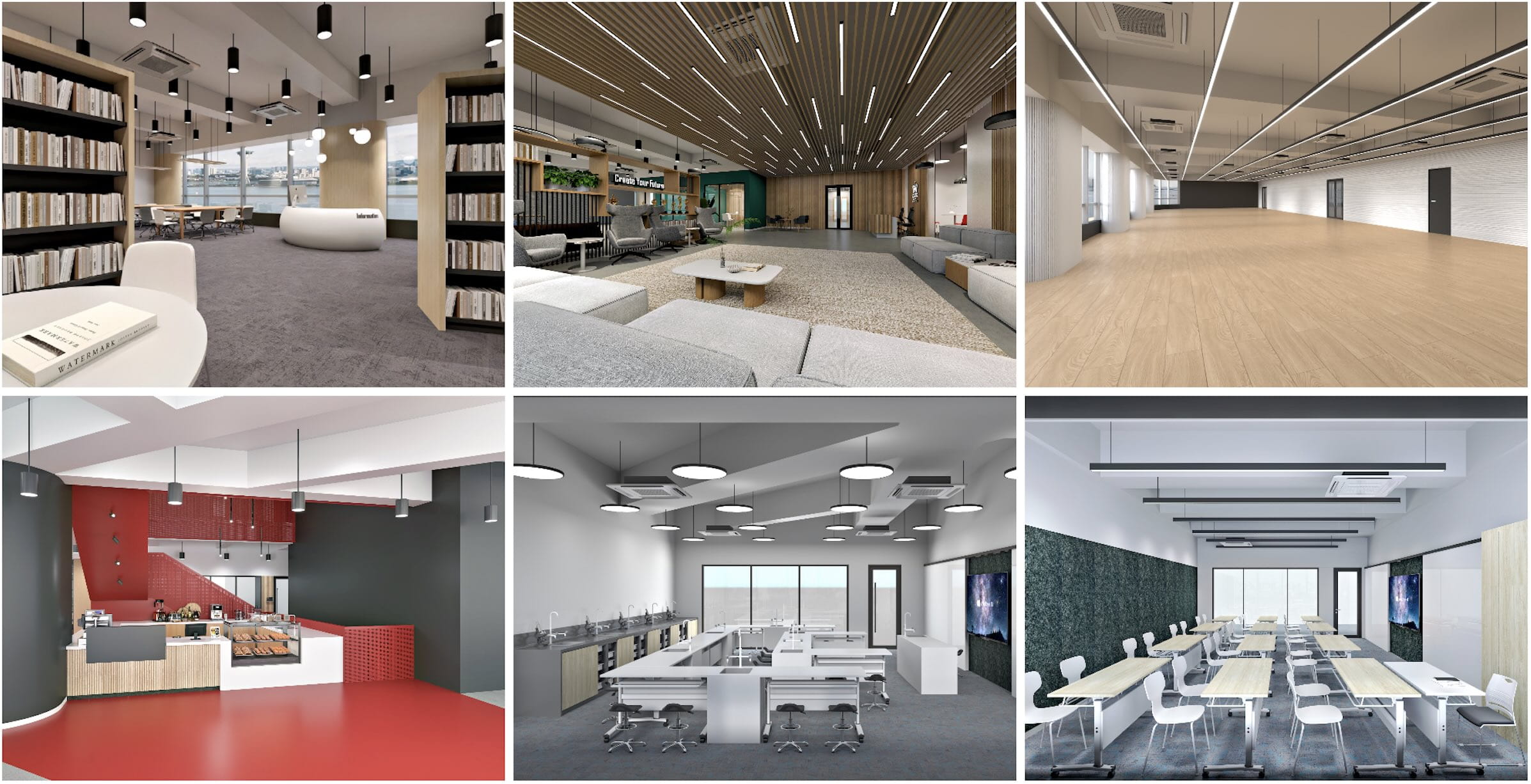
At the new NAIS Hong Kong Sixth Form Centre in Hung Hom, the experience has been designed specifically for Years 12 and 13. The atmosphere reflects the transition students are making — from school learners to young adults preparing for university.
Students benefit from specialist teaching spaces, quiet study areas, seminar rooms and areas designed for independent work. Their weekly timetable balances structured lessons with protected time for reading, research and consolidation — mirroring the rhythms of university life.
Alongside academic depth, students are supported by dedicated Sixth Form teachers, on-site university and careers guidance, and a pastoral team focused on the wellbeing of older learners. The aim is not simply examination success. It is the development of confident, capable young adults ready for their next step.
When Another Pathway May Be Better It is equally important to acknowledge that A Levels are not the ideal pathway for every student.
Some learners thrive when they can study a broader range of subjects. Others prefer interdisciplinary learning or benefit from a higher proportion of coursework and varied assessment.
At NAIS Hong Kong, we also offer the IB Diploma and BTEC Pathways for precisely these reasons. All three pathways are offered intentionally, not competitively.
The question is not which is better. It is where your child will flourish.
A Question to Guide Your Thinking
As you reflect on the move into Sixth Form, consider this:
Does your child feel energised when they can specialise and go deeper into fewer subjects?
Or do they feel more confident when they can explore broadly and connect ideas across disciplines?
Or do they feel more motivated when taking a hands‑on, practice‑based approach to learning?
If your child is ready to focus, to build expertise and to develop confidence through depth, A Levels may provide the clarity and structure they need at this important stage.
Choosing well matters. And it is a decision best made thoughtfully, with your child at the centre of it.