.png?h=48&iar=0&w=233&rev=48be0e4e096845f48547850b335e51de&hash=C13D6F4889A0A50528B9E85C304F1EB5)
.png?h=48&iar=0&w=213&rev=f7cf81b2a83744e2ac2843364cfedd35&hash=1865B09BD250CAE4C2EA44E1B4D49B0D)
June 18, 2026
Teaching the Skills AI Can’t Replace: Can Your Child Tell When AI Is Wrong?


Your child asks ChatGPT to help with their homework.
Seconds later, the answer appears. It’s confident, detailed, and very convincing.
But will your child know whether it’s actually true?
Artificial intelligence is rapidly changing how children learn, research, and complete schoolwork. They’re growing up in a world where information appears instantly, often generated by AI tools that sound authoritative and polished, even when they’re inaccurate or incomplete.
For parents, this raises an important question:
How do you prepare your child for a world where answers are everywhere, but good judgement matters more than ever?
The answer can’t simply be teaching children how to use AI. The real advantage lies in developing skills that AI can never replace, especially critical thinking.Critical thinking helps students pause before accepting information, question where it came from and evaluate whether it should be trusted. At Nord Anglia Education, we believe that ability may become one of the most valuable skills your child can develop in the age of AI.
Why Critical Thinking Matters More Than Ever
Critical thinking “is the means by which we make sense of the world,” says Dr Kate Erricker, Group Head of Education Research and Global Partnerships at Nord Anglia Education.
“With the rise of AI, it’s more important than ever. We can’t take the information we read or images we see at face value. We need to understand how they were created, and for what purpose.”
Children today are surrounded by information. Social media posts, online articles, videos, and increasingly, AI-generated text and images.
Critical thinking gives them the tools to pause and ask the right questions:
- Is this information reliable?
- Who created it?
- What evidence supports it?
These questions matter not only in school, but throughout life.
Employers are already recognizing this shift. When the CEO of JPMorgan Chase was asked what skill might best protect workers from being replaced by AI, his answer was clear.
“My advice to people would be critical thinking,” said Jamie Dimon.
The World Economic Forum’s Future of Jobs Report 2025 echoes this view, identifying analytical thinking as the most important core skill employers want from young people.
In other words, the future will reward people who know how to question the information they receive.
The Good News: Critical Thinking Can Be Taught
Many parents assume critical thinking develops naturally as children grow older. Ground-breaking research suggests something more encouraging.
Studies conducted by Nord Anglia Education and Boston College show that when students are encouraged to reflect on how they think, their ability to analyze information, challenge assumptions and make thoughtful decisions improves significantly.
When these approaches were embedded in classroom practice across Nord Anglia schools, students’ critical thinking skills increased by more than 21%.
Like reading or mathematics, critical thinking is a skill that develops through practice. Nord Anglia schools, including The Village School, play a vital role in shaping those habits early and consistently.
What Critical Thinking Looks Like in the Classroom
For many parents, “critical thinking” can sound abstract. In classrooms, it often begins with curiosity.
At International College Spain in Madrid, a Nord Anglia school, literature lessons invite students to step into a character’s perspective. They explore motivations, alternatives and consequences.
“Why did they act one way rather than another?” explains Assistant Head of Secondary Jennifer Barnett. “You really start to dig down into it.”
Science lessons encourage similar habits. Students might conduct experiments and then write a press release explaining their findings.
“They have to think about their audience, justify what information to release and predict how society might react,” Barnett says.
These experiences teach students that knowledge isn’t just about arriving at the right answer, but understanding how information is interpreted, challenged and communicated.
Slowing Down in a Fast-Moving World
One of the greatest challenges students face today is speed.
AI tools generate answers in seconds. Online opinions spread instantly.
Critical thinking demands the opposite. It requires slowing down.
Flossie Chua, a Principal Investigator at Project Zero within Harvard University’s Graduate School of Education, works with Nord Anglia schools to introduce simple “thinking routines” that help students do exactly that.
One example is See, Think, Wonder. Instead of jumping to conclusions, students observe carefully, reflect and ask questions.
Even young children practice these habits. A teacher might point to a tree and ask, “Where did all the leaves go?”
The answers vary, hypotheses form and reasoning is tested.
These moments build the habits that shape how students think for life.
Using AI Responsibly in the Classroom
At The Village School, we recognize that artificial intelligence is a powerful and rapidly evolving tool. Used thoughtfully, it can support learning, spark curiosity, and encourage deeper thinking. Used carelessly, it can undermine learning and academic integrity.
That is why The Village School has established a clear and purposeful AI usage policy.
Students are not permitted to use AI tools for submitted coursework unless explicit permission is given by the teacher. However, AI tools may be used for studying, brainstorming, or exploratory learning when appropriate and approved.
When AI use is permitted, students are expected to:
• Use the tool responsibly and ethically
• Think critically about the accuracy and limitations of the output
• Properly cite the AI tool, including the prompt used and the results generated
Any AI-generated content submitted without permission or proper citation is treated as plagiarism and considered an act of academic dishonesty.
This approach reinforces an essential lesson: AI does not replace thinking. It demands it.
Students are guided not just to ask AI for answers, but to evaluate those answers, challenge them, and decide whether they are useful, accurate and appropriate.
Preparing Students for an AI-Shaped Future
AI will continue to transform how children learn and how the world works.
At The Village School, we do not shy away from that reality. We engage with it deliberately, thoughtfully, and responsibly.
By combining clear expectations for AI use with a strong emphasis on critical thinking, ethical judgement and academic integrity, we ensure students are not dependent on technology, but empowered by it.
Because in the age of AI, success will not belong to those who simply know the answers.
It will belong to those who know how to think.
And those skills will always matter.
Related news
News image ![Lower School Line]() News
News
 News
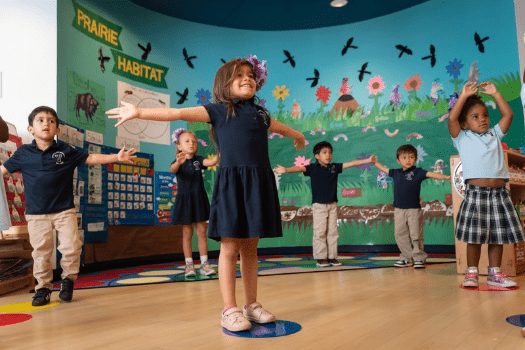
News The Village School Ranked #2 Private K–12 School in Texas by Niche
The Village School ranks #2 Best Private K–12 School in Texas and #1 Most Diverse Private K-12 Schools in Niche’s 2027 rankings.
News image ![Finding the Right School Fit - Finding the Right School Fit]() Blog
Blog
 Blog
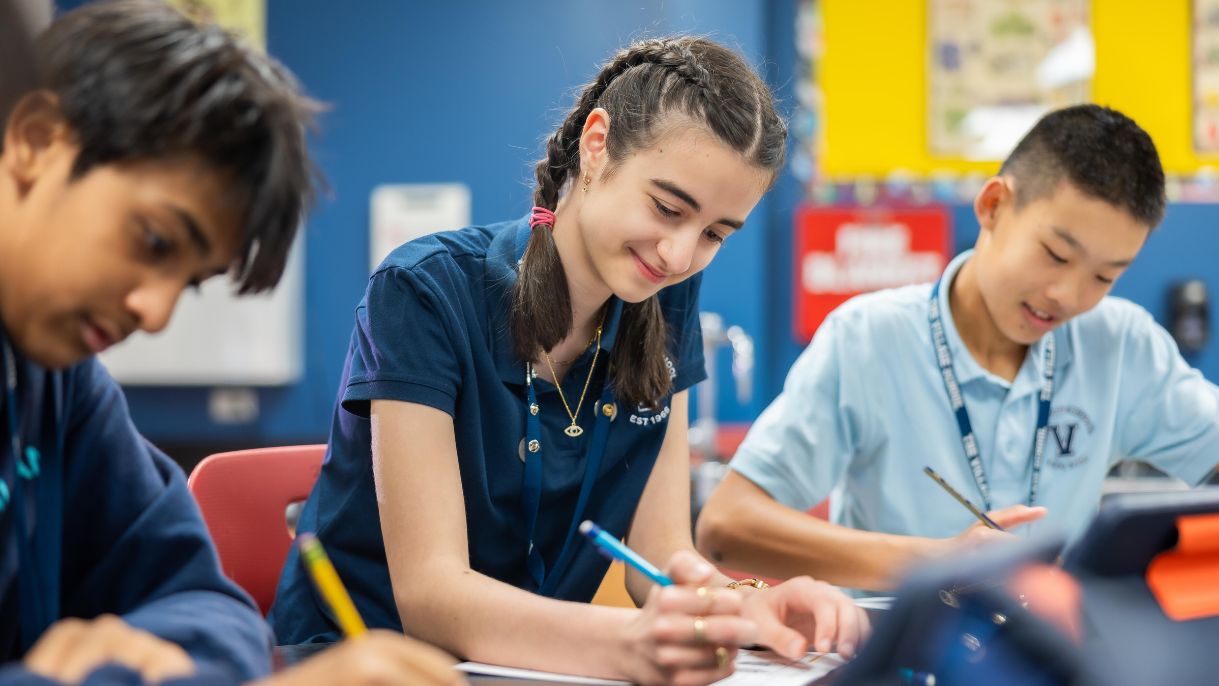
Blog Finding the Right School Fit: What Families Should Look For
Finding the right school is about more than academics. Learn what sets The Village School apart and why families from around the world choose it for their child's educational journey.
News image ![Moving to Houston - Moving to Houston]() Blog
Blog
 Blog
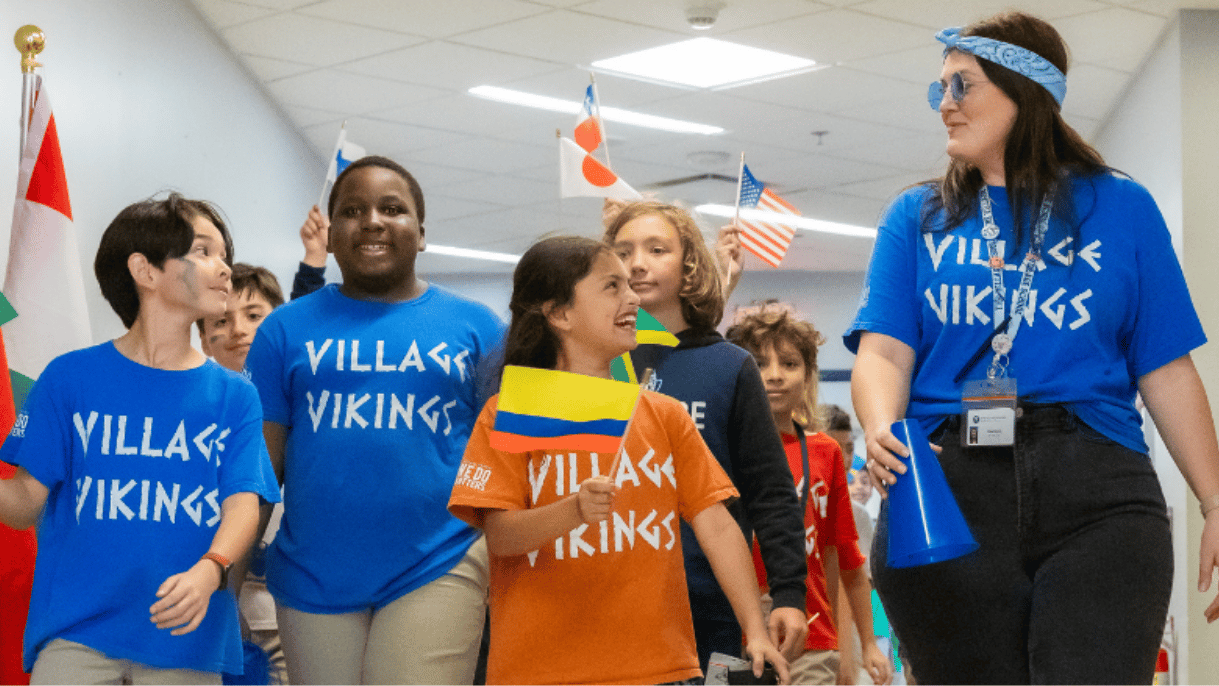
Blog Moving to Houston: A Guide for International Families
Known for its diversity, economic strength and welcoming culture, Houston continues to attract families from around the world looking for both stability and possibility.
News image ![Village School High School Girls Basketball]() Blog
Blog
 Blog
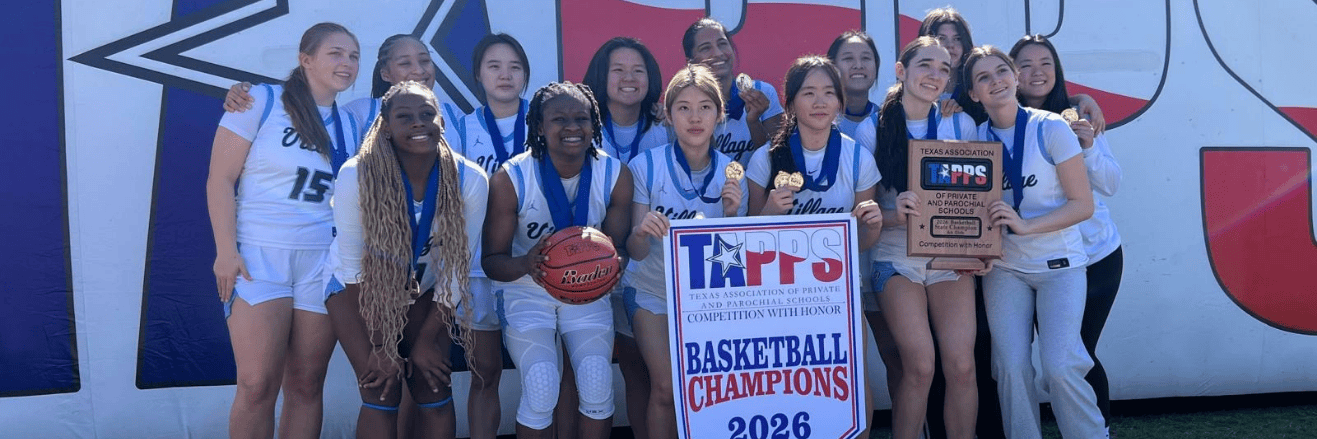
Blog The Power of 1–12: How Lifers Helped Lead a State Championship
As lifelong Vikings who began their journey at The Village School in elementary school, Brynn and Imogen are living examples of the power of a Grade 1–12 education. Their recent TAPPS 6A state championship is not just a testament to their talent, but to the consistency, community and culture they experienced throughout their time at Village.

.svg?rev=9fe0e392449346898bfb5359a1712c74&hash=0CFEC6C43B078E93E0FF4FFFF79FD684)

.svg?rev=c1fad1a5d67c42c181bab95cecd7c167&hash=7818833ACDD57A69E399597406805939)

