


Soft Skills: 8 Essential Soft Skills and Their Importance for Students

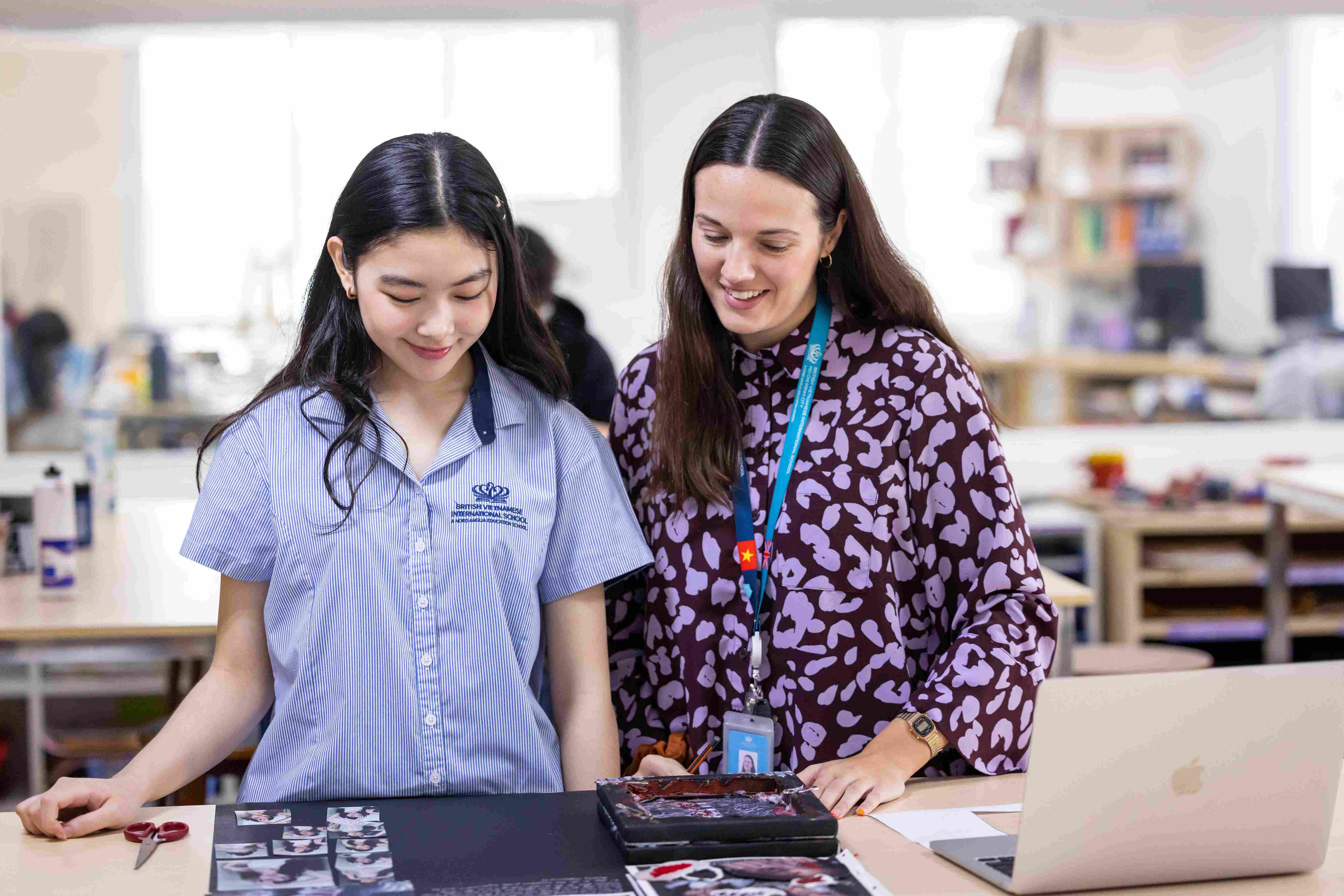
What Are Soft Skills?
Soft skills are the personal, interpersonal and self-management abilities that help individuals communicate, collaborate, manage themselves and adapt to change in learning, work and everyday life. Important soft skills include communication, teamwork, time management, problem-solving, critical thinking, adaptability, emotional management and digital literacy. In the age of AI, technological competence and a commitment to lifelong learning are also becoming increasingly essential, helping students prepare for the demands of an ever-changing future.
>> Read more:
- What Are Life Skills? The Role of Life Skills Education in Child Development
- What Are Communication Skills? 7 Effective Ways to Help Children Communicate with Confidence
Why Are Soft Skills Important in the Age of AI?
The rapid growth of AI and digital technologies is transforming how students access information and acquire knowledge. However, using technology effectively requires more than digital skills alone. Students also need independent thinking, the ability to evaluate information critically and the confidence to apply knowledge in real-world situations.
In this context, soft skills play an increasingly important role:
- Supporting effective learning: Students who can manage their time, communicate clearly and work collaboratively are often more proactive when completing assignments and projects.
- Developing problem-solving abilities: Rather than relying on a single answer, students learn how to analyse situations, evaluate different options and make informed decisions.
- Building adaptability: As technology and learning environments continue to evolve, students need the confidence to learn new skills and adjust their approach when required.
- Strengthening positive relationships: Communication, collaboration and emotional management help students interact more effectively with teachers, peers and the wider community.
- Preparing for future success: As students progress to university and beyond, they will need to combine academic knowledge with communication, teamwork, self-management and problem-solving skills.
>> Learn more: AI in education: Practical applications of AI in teaching and learning
8 Essential Soft Skills for Students' All-Round Development
Every soft skill contributes differently to a student's learning journey and personal development. Below are eight essential soft skills that students should begin developing from an early age.
1. Communications Skills
Communication skills involve expressing ideas, information and emotions clearly while also listening actively and responding appropriately to others.
For students, effective communication goes far beyond speaking confidently. It also involves asking questions when clarification is needed, presenting ideas with evidence, listening respectfully to different viewpoints and adapting communication styles to suit different situations. Through presentations, group discussions, debates and collaborative activities, students gradually build the confidence to express themselves clearly and effectively.
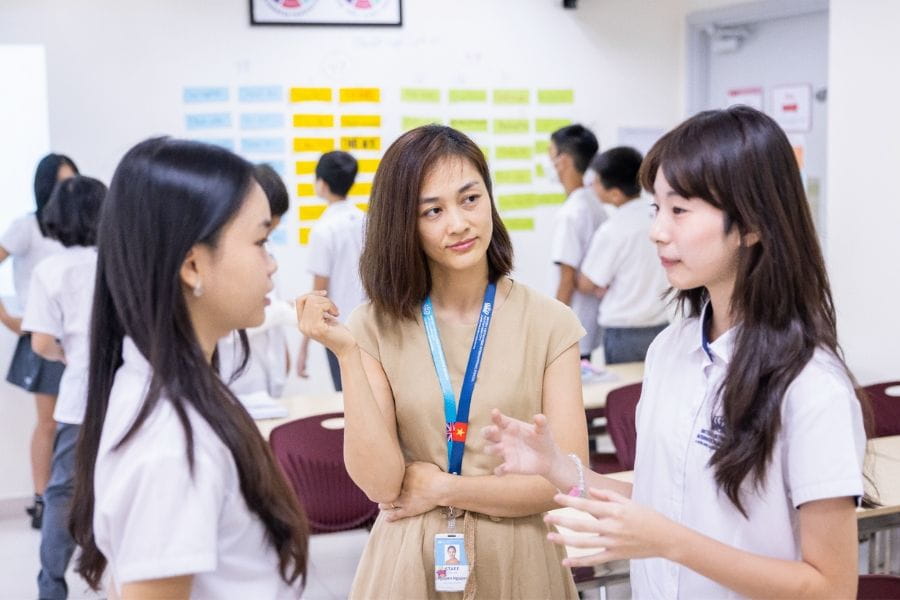
BVIS students develop communication skills through discussion and idea-sharing, learning how to express their viewpoints clearly while listening to different perspectives (Source: BVIS HCMC)
2. Problem-Solving Skills
Throughout their education and everyday lives, students regularly encounter challenges that do not have a single correct answer. Problem-solving skills help them identify issues, understand underlying causes, evaluate possible solutions and select an appropriate course of action.
For example, when a group project falls behind schedule, students can work together to identify the causes, redistribute responsibilities and adjust their plan, rather than relying entirely on teacher intervention. These experiences help students develop analytical thinking and decision-making skills that will benefit them throughout their lives.
3. Independence Skills
Independence is the ability to take initiative, complete age-appropriate responsibilities and take ownership of personal choices and actions.
For students, independence can begin with simple habits such as preparing school materials, completing assignments on time, researching information independently before seeking support and setting personal learning goals. The objective is not for students to solve every challenge alone, but rather to provide opportunities to take initiative, learn from mistakes and gradually reduce unnecessary dependence on adults.
4. Digital Literacy Skills
Technology has become an integral part of modern learning. As a result, students need more than simply the ability to use digital devices. They also need to develop strong digital literacy skills.
Students should learn how to search for and evaluate information, select appropriate digital tools, protect personal data and understand the responsible use of AI technologies. Rather than simply copying responses generated by AI tools, students can use technology to gather ideas, verify information, evaluate different perspectives and construct answers using their own critical thinking.
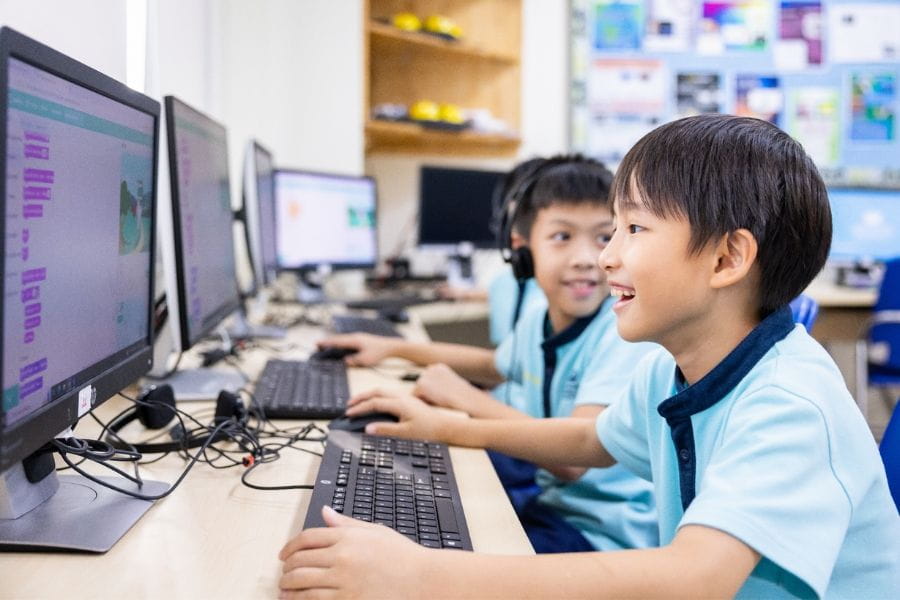
Students actively use technology to explore knowledge and enhance their learning experiences (Source: BVIS HCMC)
>> Read more: Top 5 Essential Life Skills for Children to Build Confidence and Independence
5. Emotional Management Skills
Managing emotions does not mean eliminating negative feelings. Instead, it involves recognising emotions, understanding their causes and responding appropriately.
When faced with disappointing results, disagreements with friends or the pressure of a presentation, students may experience frustration, anxiety or disappointment. Learning to recognise and manage these emotions helps them respond more thoughtfully and calmly. Over time, emotional management supports self-awareness, resilience and the development of positive relationships.
6. Teamwork and Collaboration Skills
Teamwork is the ability to work effectively with others towards a shared goal.
Within a team, students learn how to listen, contribute ideas, share responsibilities, respect different perspectives and fulfil their individual roles. They also learn how to manage disagreements constructively rather than avoiding them or imposing their own opinions. Group projects and collaborative activities provide valuable opportunities to practise these skills in authentic situations.
7. Time Management Skills
As academic responsibilities, extracurricular commitments and personal responsibilities increase, students need to develop effective time management skills.
This includes prioritising tasks, breaking larger projects into manageable steps, setting deadlines and maintaining focus. Rather than leaving work until the last minute, students can learn to plan their time across a week and allocate sufficient time to each responsibility. Developing strong time management habits from an early age also helps foster responsibility, organisation and independent learning.
8. Adaptability Skills
Adaptability is the ability to adjust thoughts and actions when circumstances change. This skill becomes particularly important when students move between year groups, encounter unfamiliar learning environments or adapt to new technologies and approaches to learning.
Adaptable students do not necessarily feel comfortable with every change. More importantly, they learn to observe situations, seek support when needed and explore new approaches rather than giving up when faced with uncertainty. In a world that continues to evolve through technological innovation and changing ways of working, adaptability provides an important foundation for lifelong growth and future success.
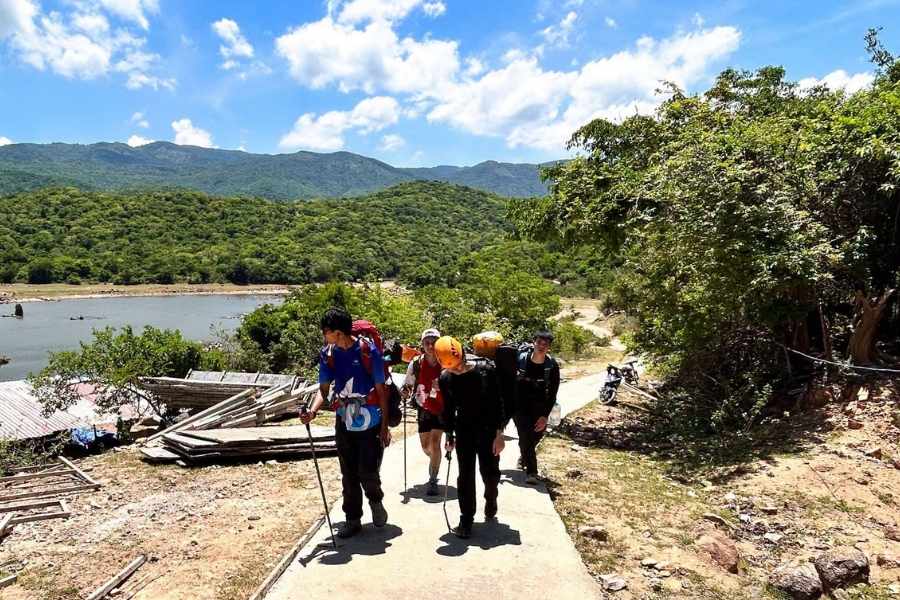
BVIS students develop adaptability through real-world challenges beyond the classroom (Source: BVIS HCMC)
>> Read more: Five Benefits of Residential Trips and Field Trip for BVIS HCMC Students
How Can Students Develop Soft Skills?
Soft skills can be developed through a wide range of meaningful learning experiences, including:
- Participating in extracurricular activities: Sports clubs, performing arts, academic societies and community initiatives help students discover their interests while developing confidence, responsibility and the ability to work effectively with others.
- Learning through projects and teamwork: When students work together to plan, allocate responsibilities and overcome challenges, they develop collaboration, leadership, time management and problem-solving skills.
- Developing presentation and debating skills: Actively sharing ideas in class, participating in competitions or joining debating clubs helps students strengthen critical thinking, reasoning skills and confidence when speaking in front of an audience.
- Building digital literacy: Becoming familiar with productivity and organisational tools (such as Trello and Notion), learning how to search for and evaluate online information, and developing an understanding of digital safety and responsibility all help students become more effective learners in the digital age.
- Reflecting on experiences: Taking time to consider what went well, the challenges encountered and the lessons learned helps students turn experiences into lasting skills and personal growth.
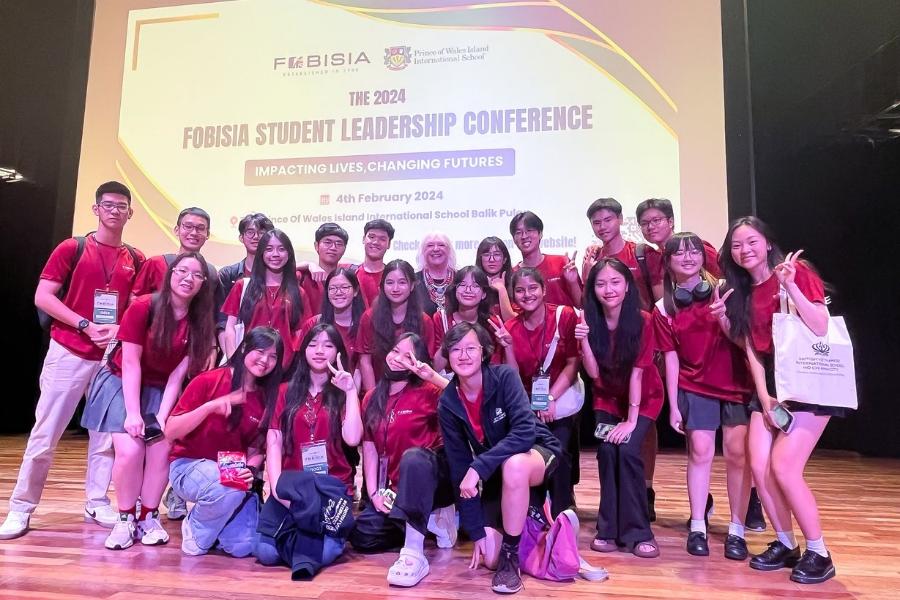
BVIS students participate in the FOBISIA Student Leadership Conference, expanding opportunities to exchange ideas, gain new perspectives and build confidence in an international environment (Source: BVIS HCMC)
>> Explore BVIS student achievements:
- BVIS students shine at the Young Musicians Showcase 2025
- BVIS HCMC Shines at the FOBISIA Primary Mathematics Competition 2025
- BVIS HCMC Sports Success at the 2026 City Championships
How Does BVIS Ho Chi Minh City Help Students Develop Soft Skills?
At British Vietnamese International School (BVIS) Ho Chi Minh City, soft skills are nurtured throughout every stage of a student's learning journey. From interdisciplinary projects and extracurricular activities to an international learning environment and a strong focus on digital learning, students are given meaningful opportunities to apply communication, collaboration, leadership, critical thinking and problem-solving skills in authentic contexts.
Project-Based Learning Develops Collaboration and Problem-Solving Skills
At BVIS, students regularly participate in projects, group activities and presentations. In Primary, the International Primary Curriculum (IPC) encourages students to make connections across different subjects, ask questions, explore ideas and take responsibility for finding solutions.
Through Project-Based Learning, students not only acquire knowledge but also learn how to collaborate, exchange ideas, think critically and solve real-world challenges.
>> Explore: What Is Personalised Learning? Benefits of a Personalised Approach to Education
Developing Leadership and Teamwork Through Extracurricular Activities
Beyond the classroom, students can participate in the Student Leadership Programme, inter-school competitions, clubs and a wide range of enrichment activities. These experiences provide valuable opportunities to practise teamwork, collaboration and leadership in authentic situations.
By taking on responsibilities, organising events and working alongside their peers, students gradually learn how to present ideas, listen to others and make positive contributions to their community.
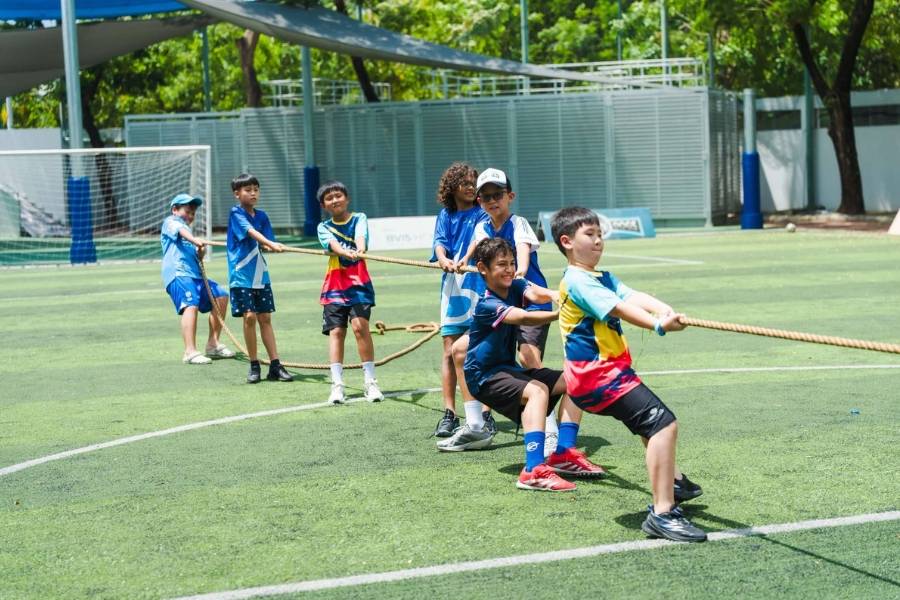
Team sports at BVIS provide opportunities for students to work together, support one another and celebrate success as a team (Source: BVIS HCMC)
Building Confidence in a Bilingual International Learning Environment
The bilingual international learning environment at BVIS enables students to use both English and Vietnamese naturally throughout their academic journey and daily school life. The proportion of English-language instruction increases progressively throughout the school journey, from 60% in Primary to 93% by the end of Secondary, helping students steadily develop language proficiency, academic thinking and confidence when communicating in international settings.
Through assemblies, performances, presentations and student-led events, students have opportunities to share ideas, exchange perspectives and communicate with a variety of audiences. These experiences help strengthen communication skills, self-expression and confidence in both English and Vietnamese.
>> Read more: The Benefits of Bilingual Education
Encouraging Innovation and the Effective Use of Technology
Alongside communication and collaboration skills, students are encouraged to use technology as a tool for learning, exploration and creativity. Through digital learning, as well as activities related to artificial intelligence (AI), coding and STEAM education, students have opportunities to explore emerging technologies, apply knowledge in meaningful contexts and develop innovative approaches to problem-solving.
The combination of academic learning, soft skills and real-world experiences helps students gradually build the foundations to become confident, independent learners who are ready to adapt to future change.
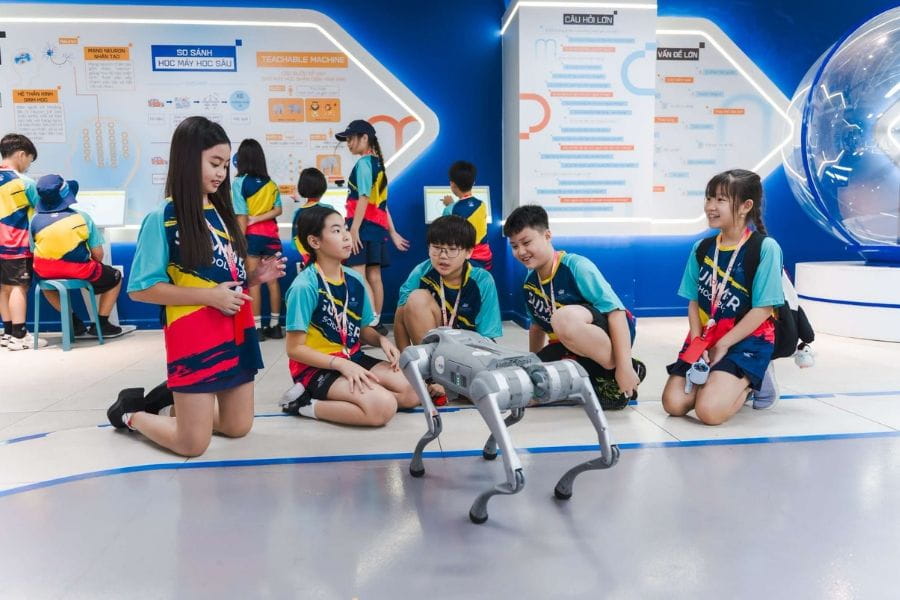
BVIS students explore AI and robotics through hands-on experiences, inspiring innovative thinking and practical applications of technology in learning (Source: BVIS HCMC)
Frequently Asked Questions About Soft Skills
1. Which Soft Skills Are Most Important for Students?
There is no single most important soft skill, as these skills work together and complement one another. However, problem-solving and communication are often considered two of the most fundamental skills. When students can think independently, overcome challenges and communicate their ideas effectively, developing other soft skills often becomes much easier.
2. At What Age Should Students Begin Developing Soft Skills?
Soft skills can begin developing from the early years through age-appropriate activities such as communication, play, social interaction, completing simple responsibilities and learning to recognise emotions. As children grow older, increasingly complex experiences can help further strengthen these skills.
3. How Can Parents Identify Gaps in Their Child's Soft Skills?
Parents can observe how their child responds in different situations, such as working in a team, managing schoolwork, communicating with others or adapting to change. A challenge in one isolated situation is not necessarily evidence of a missing skill. Consistent observation over time, combined with regular communication with teachers, can provide a clearer understanding of the areas where a child may benefit from additional support.
4. How Do Extracurricular Activities Support Soft Skill Development?
Extracurricular activities place students in situations that require communication, collaboration, responsibility and real-world problem-solving. Depending on the activity, students may develop teamwork, leadership, time management, communication or adaptability skills.
5. Are Soft Skills Important for University Applications?
Yes. In addition to academic results and institution-specific admissions requirements, many university applications also consider extracurricular involvement, personal projects, community contributions and a student's ability to demonstrate their experiences and achievements.
These experiences help admissions teams gain a deeper understanding of each applicant's interests, motivation, personal values and potential for future success. Through these activities, students also have opportunities to develop essential soft skills such as communication, collaboration, leadership, time management and critical thinking. These capabilities not only strengthen university applications but also help students adapt successfully to the greater independence and challenges of higher education.
>> Read more:
- How to write an impressive personal statement for university?
- How to study abroad: A step-by-step guide & Tips for studying aboard
Soft skills equip students not only to learn effectively but also to communicate, collaborate, adapt and respond confidently to life's challenges. As learning environments and the wider world continue to evolve, these skills are becoming increasingly important, enabling students to apply their knowledge effectively and realise their full potential.
At British Vietnamese International School (BVIS) Ho Chi Minh City, soft skills are developed through everyday experiences, from classroom learning and collaborative projects to extracurricular activities. Parents are warmly invited to visit the school and experience first-hand how BVIS supports students' all-round development, preparing them for future opportunities and success.
- Campus address: 44–46 Street No. 1, Binh Hung Residential Area, Binh Chanh District, Ho Chi Minh City.
- Opening hours: Monday - Friday (8:00 AM – 5:00 PM)
- Hotline:
- Primary: +84 (28) 3758 0709 ext. 111
- Secondary: +84 (28) 3758 0717 ext. 211
- Email: admissions@bvisvietnam.com
Related news
Blog | Educational Insights  Blog | Educational Insights
 Blog | Educational Insights
 Blog | Educational Insights


