

Where is the best place to study A Levels? Many parents ask this question when they first begin exploring A Level options. In Vietnam, students can study A Levels at international schools or A Level preparation centres. To choose the right environment, parents need to consider factors such as teaching quality, the learning pathway, academic outcomes and university plans. This article from BVIS HCMC helps families better understand their options before choosing the right school.

18 September, 2026
Where to Study A Levels in Vietnam? How to Choose the Right School for Your Child

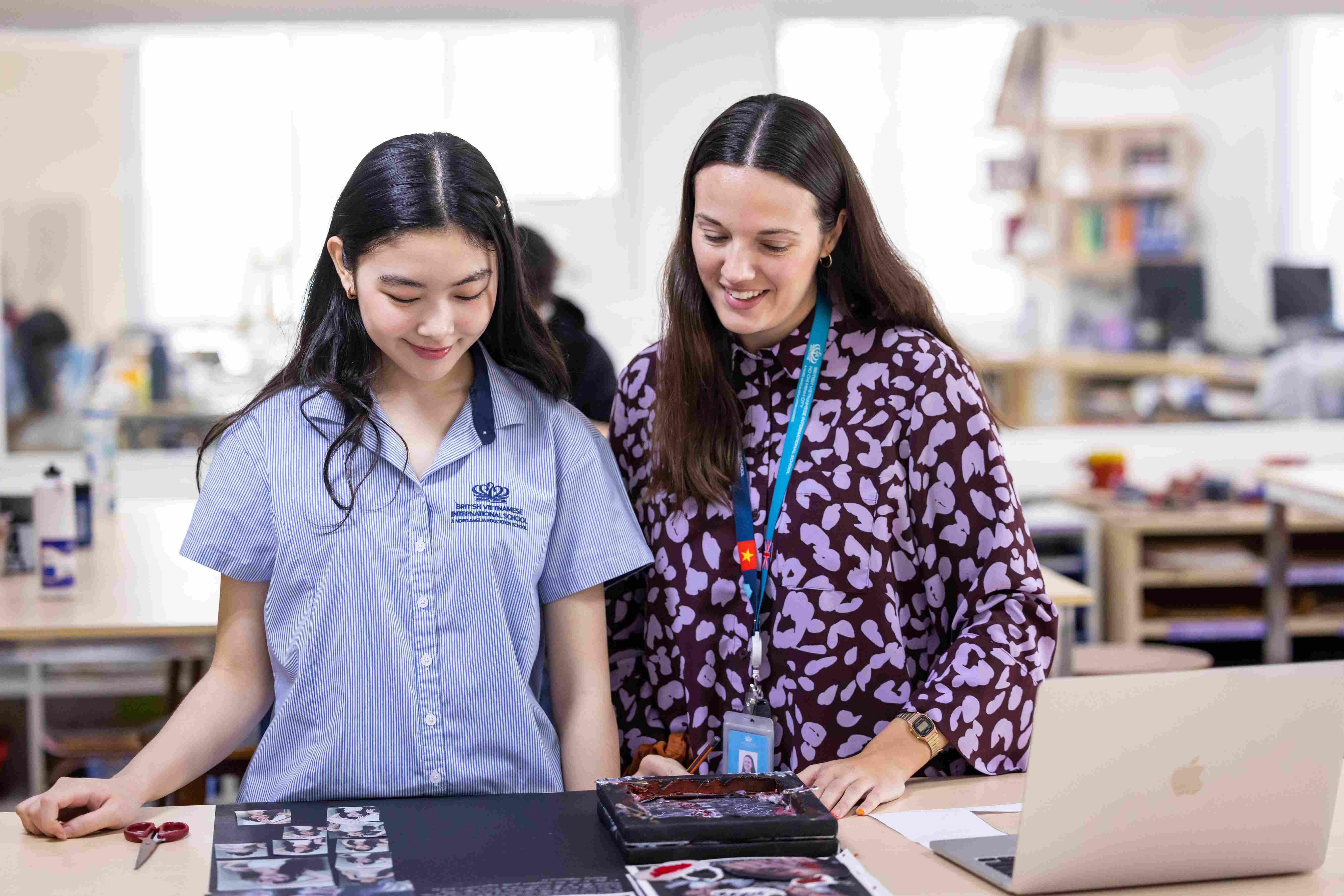
TABLE OF CONTENTS
Where is the best place to study A Levels?
A Levels (Advanced Level) is part of the British education system and is widely recognised worldwide. It is often regarded as a "golden ticket" that can help students gain admission to leading universities around the world. Below are some of the most common options.
International schools offering A Levels in Vietnam
At many international schools, A Levels is typically delivered over the final two years of secondary education. It allows students to develop in-depth knowledge in their strongest subjects while developing critical thinking and academic skills needed for the next stage of education. Alongside classroom learning, students may also have opportunities to take part in extracurricular activities, practical projects and university counselling within a holistic educational environment.

At BVIS HCMC, the A Level programme equips students with in-depth subject knowledge, advanced academic skills and the confidence to succeed at leading universities around the world (Source: BVIS HCMC)
Some international schools offering A Levels in Ho Chi Minh City include British Vietnamese International School (BVIS HCMC), ABC International School (ABCIS) and Vietnam Australia International School (VAS). When choosing a school, parents should consider factors such as the curriculum, teaching staff, A Level results, university guidance and the overall learning environment.
>> Explore more:
- Top 10 Best International Schools in Ho Chi Minh City 2026
- Top 8 International Schools in District 7 in 2026 – Quick comparison
A Level preparation centres
A Level preparation centres can be a suitable option for students who already have a solid academic foundation and only need to supplement their knowledge, strengthen their skills or prepare for A Level examinations. Compared with international schools, these centres tend to focus more specifically on subject content and examination techniques. This can be a flexible option for students who want to study an additional subject, prepare for an examination or receive support in a particular area.
However, parents should carefully review the curriculum, teachers' experience, learning materials and assessment methods before enrolling. If the goal is to pursue A Levels as a long-term educational pathway, an A Level preparation centre may not provide all the elements of a comprehensive learning environment, such as extracurricular activities or university guidance.
Studying in the UK or overseas
Studying in the UK is a popular option for students who want to study A Levels in an international education environment. In addition to the UK, schools in several other countries also offer Cambridge International A Level programmes.
Studying A Levels overseas provides students with the opportunity to use English regularly in an academic environment and experience international life. However, this option also involves higher tuition and living costs, as well as greater demands on students' ability to adapt. As a result, studying A Levels overseas is generally more suitable for students who are well prepared academically, have strong English skills and are ready to live more independently.
>> Read more: The complete guide to understanding National Curriculum Levels
Should you study A Levels at an international school or an examination preparation centre?
Studying A Levels at an international school and at an A Level preparation centre differs in terms of the learning pathway, environment, level of support and progression opportunities, as outlined below:
| Criteria | International School | A Level Preparation Centre |
| Learning pathway | Structured, formal two-year programme | Flexible, examination-focused |
| Teachers | Internationally qualified, full-time teachers | Examination preparation specialists, session-based |
| Qualification | Awarded directly by the examination board (Cambridge/Pearson Edexcel) | Provides examination preparation knowledge and support only |
| Extracurricular activities | Diverse, supporting holistic skills development | Very limited or unavailable |
| University guidance | Structured counselling, including UCAS reference support | Limited or basic guidance |
| Limitations | Higher tuition fees, fixed timetable | Less comprehensive, students register for examinations independently |
| Suitable for | Students pursuing A Levels as a long-term pathway | Students requiring revision or supplementary support |
If the goal is to study A Levels as the main educational programme during the final two years of secondary school, an international school generally offers greater advantages in terms of the continuity and structure of the learning pathway.
>> Read more:
- Should parents send their children to an international school?
- 7 benefits of studying at an international school
Criteria for Choosing the Right A Level School
To choose a suitable A Level environment, parents and students should consider the following factors:
Curriculum and learning pathway
A clear pathway from the stage before A Levels through to programme completion gives students sufficient time to prepare academically and develop the necessary skills. Parents should therefore explore the curriculum, study duration and A Level subjects offered by each school.
A Levels offers a high degree of flexibility, allowing students to choose subjects based on their interests, abilities and future plans rather than following the same compulsory subject list for everyone. The range of subjects available varies by school. Popular A Level subjects include Mathematics, Physics, Chemistry, Biology, Economics, Business Studies, Geography, History, Design Technology and many others.
When choosing subjects, the teaching team and University Guidance Counsellors at BVIS can support students in considering:
- Interests: Choosing subjects students enjoy can help maintain their interest and motivation to learn.
- Abilities: Selecting subjects that match their strengths can help students build a strong academic foundation.
- Future plans: Subject choices should align with intended university courses and future plans. For example, Medicine often requires Biology and Chemistry, while Business or Finance may favour Mathematics and Economics.
>> Find out more: Top 6 International School Curriculum and How to Choose the Right One for Your Child
Teaching staff
Teachers play an important role in the A Level learning journey, particularly for subjects with demanding academic requirements. Parents should assess teaching staff based on their subject expertise, A Level teaching experience and approach to supporting students.
A Level results and university destinations
A Level results can help parents assess a school's academic quality, but they should be considered within the appropriate context. Rather than looking only at a school's A*–A percentage for a single year, families should review trends over several years, cohort size, the total number of examinations taken and students' academic progress throughout the programme.
University destinations should also not be assessed solely by the number of offers received or the names of a few well-known universities. An effective university guidance programme should help students choose appropriate A Level subjects, identify potential courses, develop a university shortlist and find destinations that match their abilities and individual goals.
University application and career guidance
Parents should find out whether a school has a dedicated team to advise students on A Level subject choices based on their abilities, interests, intended degree courses and university entry requirements. During the application process, students should also receive support with developing a university shortlist, preparing personal statements, obtaining references, compiling extracurricular profiles and keeping track of application deadlines for different countries.
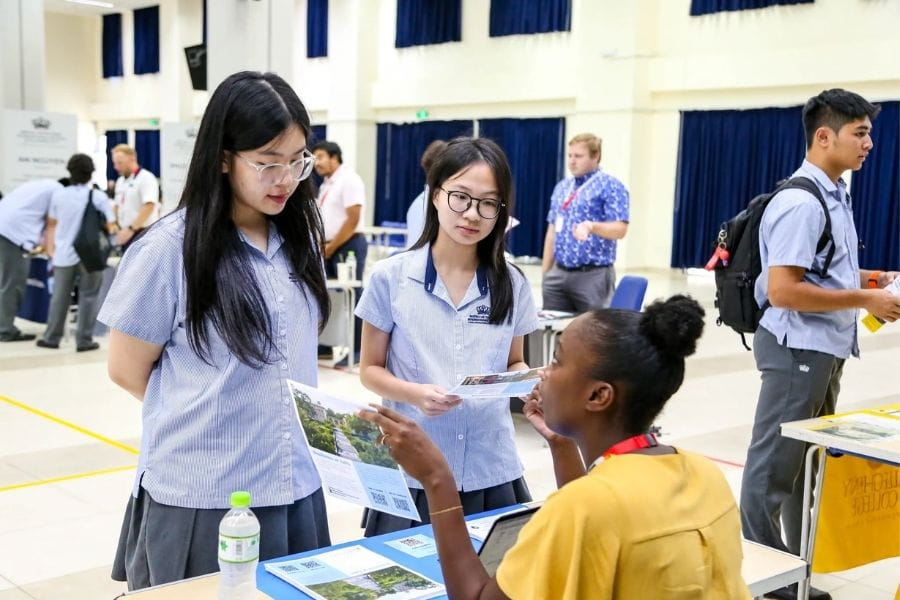
A Levels at an international school should be supported by university guidance, subject and career advice, and application preparation, helping students feel more confident about their next steps after secondary school (Source: BVIS HCMC)
>> Find out more: How British education supports flexible career pathways
Tuition fees
A Level tuition fees vary depending on the type of learning environment. International schools generally have higher tuition fees, but students follow a structured A Level pathway with access to a learning environment, facilities, extracurricular activities and university guidance. A Level preparation centres offer more flexible costs and can be suitable for students who want to study or revise individual subjects, while online learning generally offers advantages in terms of cost and flexibility but requires a high level of independent learning.
>> Read more: Top 8 tips for choosing an international school for your child that parents should know
Why Do Many Families Choose BVIS HCMC When Looking for an A-Level School for Their Child?
The globally recognised curriculum and learning pathway
BVIS HCMC offers the International A Level programme, which is assessed and awarded by two international examination boards: Cambridge and Pearson Edexcel. Students are prepared for A Levels through a structured learning pathway beginning with IGCSE, allowing them to build a strong knowledge base while developing research skills, critical thinking and academic abilities before progressing to more specialised study.
With 17 subjects and a range of flexible subject combinations, students can personalise their learning pathway according to their strengths, career aspirations and university goals. The A Level qualification is widely recognised by leading universities in the UK, US, Australia, Canada and many other countries around the world.
Experienced teaching staff
The teaching team at BVIS has strong subject expertise and extensive experience teaching the British curriculum. In addition to supporting students in achieving excellent results in international examinations, teachers also focus on developing critical thinking, research skills and independent learning. These are important skills that can help students succeed in A Levels and later at university.
Excellent A Level results and progression to leading universities worldwide
Over the years, BVIS HCMC students have achieved examination results significantly above the UK national average, demonstrating the quality of the British education programme, strong teaching expertise and a learning environment that consistently encourages students to develop their strengths and passions.
In the 2025–2026 academic year, 57% of all IGCSE grades achieved A*–A, compared with 22% in the UK. In A Level examinations, 44.4% of all grades achieved A*–A, significantly higher than the UK average of 28.3%, based on comparative data from Ofqual, the UK's qualifications regulator.
Thanks to their strong academic results and comprehensive preparation, BVIS students regularly receive offers from prestigious universities, including Ivy League universities in the US, Russell Group universities in the UK and Group of Eight universities in Australia, such as University College London (UCL), King's College London, the University of Warwick, the University of Melbourne, the University of Sydney, Monash University, the University of Toronto, the University of British Columbia (UBC) and New York University (NYU).
University application and career guidance
The University & College Guidance Counsellor at BVIS supports students in choosing A Level subject combinations, identifying suitable degree courses and developing their university applications. Students receive support throughout the process, from exploring career options and selecting suitable universities to preparing personal statements and application materials, helping them confidently pursue their future academic and career aspirations.
Tuition fees that support a holistic education
When considering A Level tuition fees, many families look beyond the cost itself and assess the overall value students receive throughout their education. At BVIS HCMC, students have access to a globally recognised curriculum, a modern international learning environment that promotes balanced learning and wellbeing, a wide range of extracurricular activities, as well as dedicated academic and university guidance. Together, these provide a foundation for students to develop holistically and prepare for future educational and career opportunities.
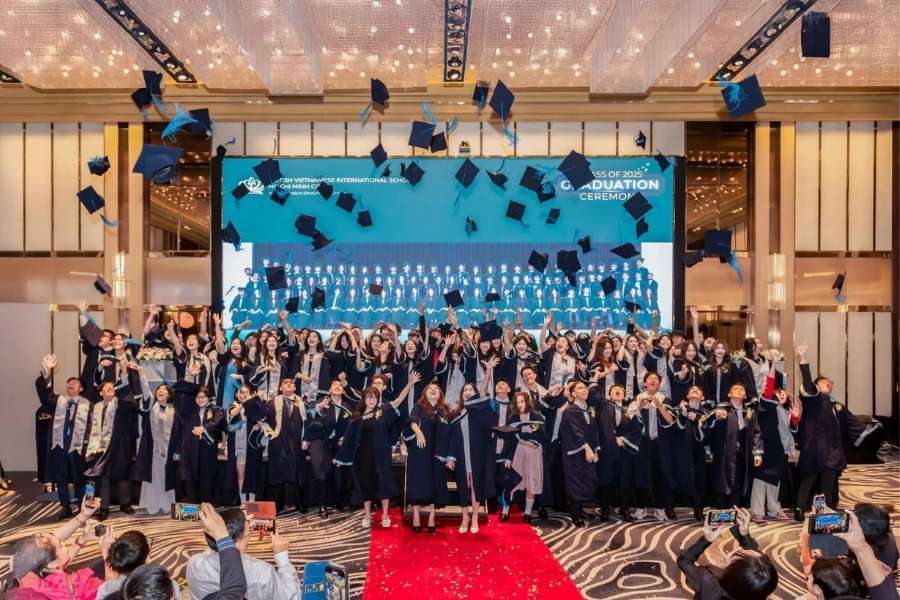
BVIS HCMC celebrates strong A Level achievements, alongside numerous opportunities for students to study at international universities after graduation (Source: BVIS HCMC)
>> You may also be interested in:
- What Is the IGCSE Curriculum? Subjects, Standards & Benefits
- IB vs A Levels: What's the difference? Which is better for your child?
A Level FAQs
How many years does A Level programme take?
The A Level programme lasts two years: the first year is AS Level (Year 12), followed by the second year, A2 Level (Year 13).
Which universities can students attend with A Levels?
Recognised by universities worldwide, A Levels is a respected academic qualification that allows students to confidently apply to leading universities in the UK, US, Australia, Canada, Singapore and many other countries. Its strong academic value and subject depth make A Levels one of the most popular pathways for preparing for international university study. However, specific entry requirements vary by university, degree course and the A Level subjects selected by each student.
How much does A Level cost?
- International schools: From VND 500–800 million/year, depending on the school.
- A Level preparation centres: From VND 50–150 million per course/subject.
- Studying in the UK: From VND 800 million–1.5 billion/year, including accommodation and living costs.
>> Find out: International School Fees in Ho Chi Minh City for the 2026–2027 Academic Year
Where students study A Levels should depend on their learning goals, abilities and future plans. While A Level preparation centres or online programmes may suit students who need greater flexibility, international schools generally provide a continuous learning pathway alongside support for skills development, subject and career guidance and university preparation.
With its well-established A Level programme, strong academic results and comprehensive university guidance system, British Vietnamese International School Ho Chi Minh City (BVIS HCMC) is one option worth considering for families looking for an international learning pathway for their child.
If you are interested in the A Level programme at BVIS HCMC, please contact us:
- Campus address: 44–46 Street No. 1, Intresco 6B Residential Area, Binh Hung Commune, Ho Chi Minh City.
- Opening hours: Monday - Friday (8:00 AM – 5:00 PM)
- Hotline:
- Primary: +84 (28) 3758 0709 ext. 111
- Secondary: +84 (28) 3758 0717 ext. 211
- Email: admissions@bvisvietnam.com
Discover more about BVIS:
Related news
News image ![Where to Study A Levels in Vietnam? Criteria for Choosing the Right School - hoc a level o dau]() News | Educational Insights
News | Educational Insights
News | Educational Insights Where to Study A Levels in Vietnam? How to Choose the Right School for Your Child
Where to study A Levels in Vietnam? Explore reputable international schools and specialised A Level preparation centres in this guide to find the right option and achieve strong results.
News image ![Top 8 International Kindergartens in District 7 Chosen by Parents - truong mam non quoc te quan 7]() Blog | Educational Insights
Blog | Educational Insights
 Blog | Educational Insights
 Top 8 International Kindergartens in District 7 Trusted by Families
Discover the top 8 International Kindergartens in District 7 for the 2026–2027 academic year, including British Vietnamese International School (BVIS HCMC), Kindy City, Mini Minds Preschool, Kid’s Club and more.


