

International school curriculum are often designed to meet global education standards, taught entirely or largely in English, and combined with soft skills development.
When exploring the curriculum offered by international schools, parents often consider whether the teaching programme meets global standards, develops students’ academic capabilities and equips them with the skills needed to thrive in an international environment. Each school develops its own learning pathway, combining academic knowledge, language development and holistic development activities. Join British Vietnamese International School Ho Chi Minh City (BVIS) as we explore the curriculum offered by international schools in detail in the article below.

28 August, 2026
Top 6 International School Curriculum and How to Choose the Right One for Your Child

TABLE OF CONTENTS
- Quick comparison of 6 international education programmes
- Top 6 most popular international education programmes today
- How is the curriculum at an international school different from that at a state school?
- Which international education programme should parents choose for their child?
- Why should your child learn and develop at BVIS HCMC?
Quick comparison of 6 international education programmes
Each international education programme has its own focus, pathway and strengths. The table below allows parents to quickly compare six popular programmes for an overview before exploring each one in detail.
| Programme | Origin | Key focus | Pathway | Qualifications |
| National Curriculum for England | England | A comprehensive and highly systematic educational pathway that builds a strong academic foundation while developing critical thinking, research, creativity and independent learning, with a focus suited to each stage and students’ needs. | Early Years (EYFS) - Primary - Secondary - IGCSE - A Level | IGCSE, International A Level |
| Cambridge International | England | International curriculum and qualifications, with a focus on academic knowledge, thinking and the ability to learn in an international environment | Cambridge Primary - Cambridge Lower Secondary - Cambridge Upper Secondary - Cambridge Advanced | Cambridge IGCSE, International AS & A Level |
| International Baccalaureate (IB) | Switzerland | Developing critical thinking, independent research, interdisciplinary learning and global citizenship | Primary Years Programme (PYP) - Middle Years Programme (MYP) - Diploma Programme (DP) / Career-related Programme (CP) | IB Diploma, IB Career-related Programme |
| US Curriculum | United States | Flexible and personalised, encouraging students to choose subjects according to their interests, abilities and career aspirations | Elementary School - Middle School - High School | High School Diploma, AP |
| Singapore Education Programme | Singapore | A foundation in mathematics, logical thinking and problem-solving, with a strong academic focus | Primary School - Secondary School - Pre-University / Polytechnic | GCE O-Level, GCE A-Level |
| Australian Curriculum | Australia | Holistic development of knowledge, skills, individual capabilities and adaptability | Foundation - Primary School - Secondary School - Senior Secondary | State-based upper secondary graduation certificates (HSC, VCE...) |
Top 6 most popular international education programmes today
Below are six popular international education programmes currently offered by many international schools around the world and in Vietnam, helping students build a foundation of knowledge, skills and global-minded thinking.
National Curriculum for England
The National Curriculum for England is one of the world’s longest-established and most widely recognised academic programmes. It provides a continuous learning pathway from early years to upper secondary education, with clear stages as follows:
- Foundation Stage (ages 2–5): At the Early Years stage, EYFS focuses on holistic development through play, exploration and experiential learning, while building language foundations through a distinctive phonics programme, as well as social skills and thinking skills for the years ahead.
- Key Stage 1–2 (ages 5–11): At the Primary stage, students build a strong foundation in reading, writing, mathematics and core subjects, while also developing thinking, communication and learning skills.
- Key Stage 3 (ages 11–14): In the first years of secondary education, the school broadens students’ knowledge across a range of areas, encourages independent thinking and helps students discover their strengths in preparation for more specialised programmes of study.
- Key Stage 4 (ages 14–16): During the following years of secondary education, students study the IGCSE programme and sit examinations for the IGCSE qualification, awarded by international examination boards such as Cambridge International, Pearson Edexcel or AQA.
- Key Stage 5 (ages 16–18): In the final years of school, students study AS & A Level with a focus on subjects that match their interests, passions, abilities and career goals. A Level qualifications are recognised by leading universities worldwide and are an important requirement for applications to international universities.
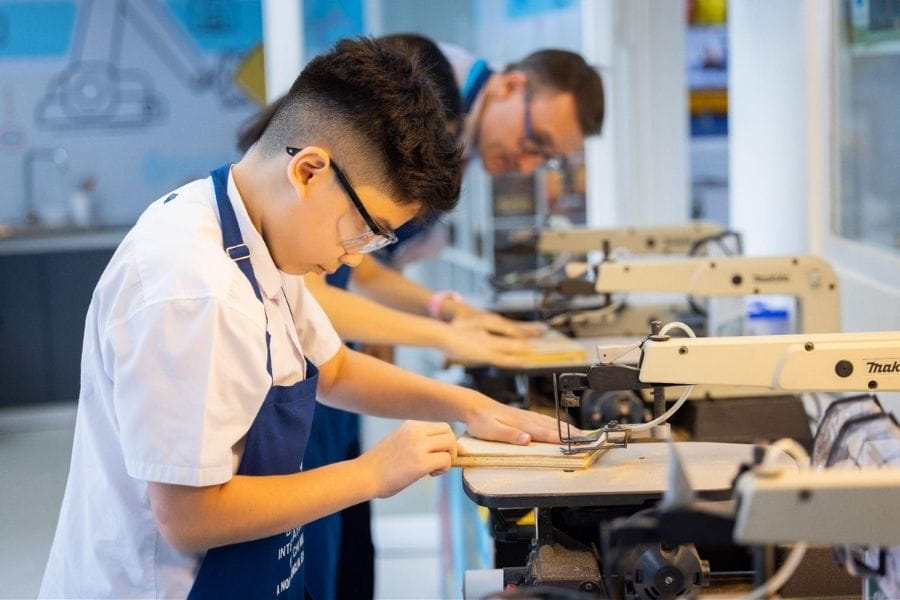
The National Curriculum for England at BVIS provides a continuous learning pathway, enabling students to develop according to their strengths, interests and future aspirations at each stage (Source: BVIS HCMC)
BVIS Ho Chi Minh City is one of the few international schools in Vietnam offering a continuous pathway following the National Curriculum for England from Early Years to Upper Secondary. Students are prepared for internationally recognised IGCSE and A Level qualifications, awarded by reputable examination boards such as Cambridge International and Pearson Edexcel.
>> Read more:- How Does Early Years Foundation Stage (EYFS) Prepare Children for a Confident Start in Primary School?
- The complete guide to understanding National Curriculum Levels
Cambridge International
The Cambridge International programme is a system of international curriculum and qualifications for students aged 5–19, delivered in many countries around the world.How is Cambridge International different from the National Curriculum for England?
Although both originated in England, Cambridge International and the National Curriculum for England are two different systems, as follows:
| Criteria | Cambridge International | National Curriculum for England |
| Nature | An international curriculum and qualification system from Cambridge International | England’s national education curriculum framework |
| Examination board | Managed and qualifications awarded by CAIE (Cambridge Assessment International Education) | A range of independent examination boards (AQA, Pearson Edexcel, OCR, etc.) |
| Focus | Designed for international education, with flexibility to suit different countries and school models | Builds a comprehensive educational foundation within the English education system, developing students’ knowledge, skills and capabilities through a continuous pathway from the early years to secondary education |
| Key qualifications | Students sit examinations for IGCSE (International GCSE) and International AS & A Level | Students sit examinations for GCSE (at the end of Year 11) and A Level (at the end of Year 13) |
| Flexibility | Can be combined by schools with national curriculum or other programmes depending on the educational model | Has a curriculum framework and learning requirements defined for each educational stage in England |
| Application in Vietnam | Implemented across a range of school models. Depending on its educational direction, a school may combine Cambridge with the Vietnamese General Education Programme (MOET) or other international programmes | Typically chosen by international schools following an English education approach, such as BVIS, to maintain a consistent English-system educational pathway from the early years through secondary education |
| Suitable for | Students pursuing Cambridge qualifications, particularly those planning to study in multiple countries | Students seeking a consistent, continuous English educational pathway from the early years through secondary education, while building a strong foundation for subsequent educational stages and international programmes |
Important point: Cambridge is not another name for the National Curriculum for England. A school may implement the National Curriculum for England and use Cambridge qualifications at appropriate stages; alternatively, it may choose Cambridge International as its main international curriculum, depending on the school’s educational model and learning pathway.
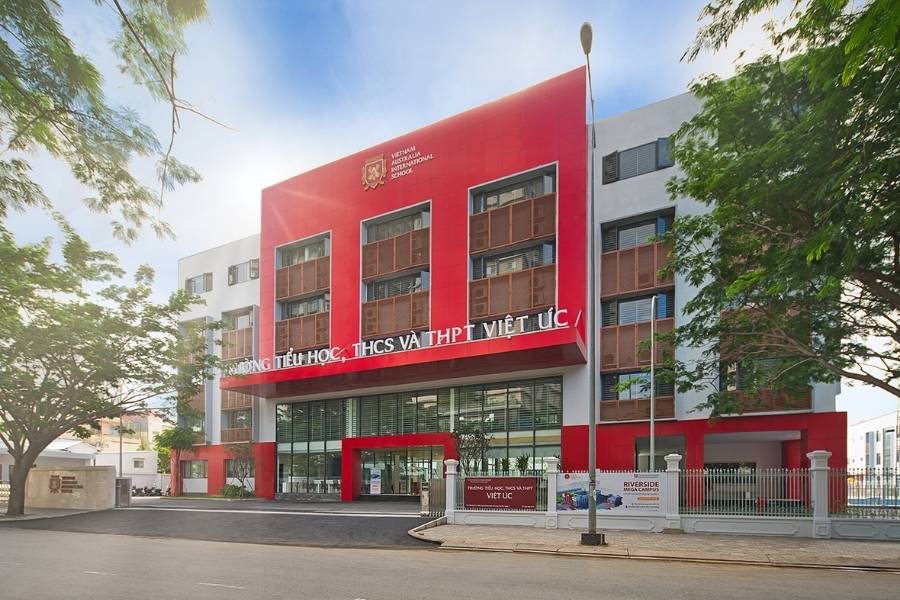
VAS is one of the bilingual international schools teaching the Cambridge programme with an international outlook (Source: VAS)
International Baccalaureate (IB)
The International Baccalaureate (IB) is an international education programme designed to develop students into global citizens through critical thinking, research and interdisciplinary learning.
The pathway includes three programmes by age group: Primary (PYP, ages 3–12), Lower Secondary (MYP, ages 11–16), and Upper Secondary (DP and CP, ages 16–19). Each stage is designed to develop students’ knowledge, skills and thinking, while creating continuity across educational stages.
IB helps students develop well-rounded thinking, independent research skills and strong time-management skills due to its relatively demanding workload. The IB Diploma is recognised by most major universities worldwide; however, the programme requires students to have a strong academic foundation and a high level of independent learning ability in order to keep up.
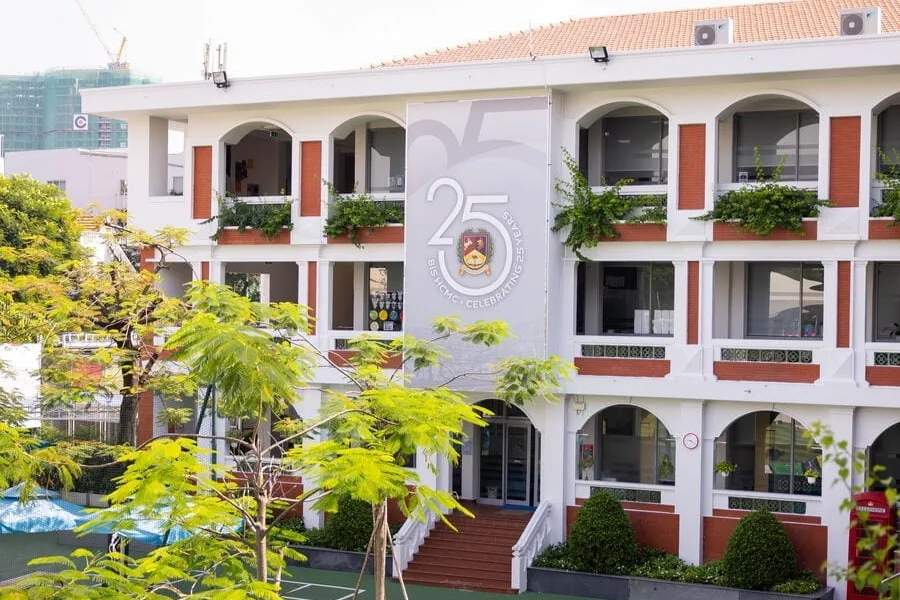
BIS is one of the leading international schools in Ho Chi Minh City offering the International Baccalaureate (IB), with a focus on developing thinking, research and independent learning skills (Source: BIS HCMC)
US Curriculum
The US Curriculum is developed according to US education standards, with a focus on developing individual capabilities, flexibility in learning and a balance between academic study and extracurricular activities.
The programme comprises three main educational stages: Elementary School, Middle School and High School. US students have the freedom to choose subjects according to their personal interests, while also being able to take Advanced Placement (AP) courses, which are designed to a higher academic standard and recognised by many international universities during the admissions process.
The strength of the US Curriculum lies in its flexibility in subject selection and its ability to personalise students’ learning pathways. However, the US curriculum assesses students using a GPA throughout their studies rather than relying solely on final examinations, so students need to maintain consistent performance over the years.
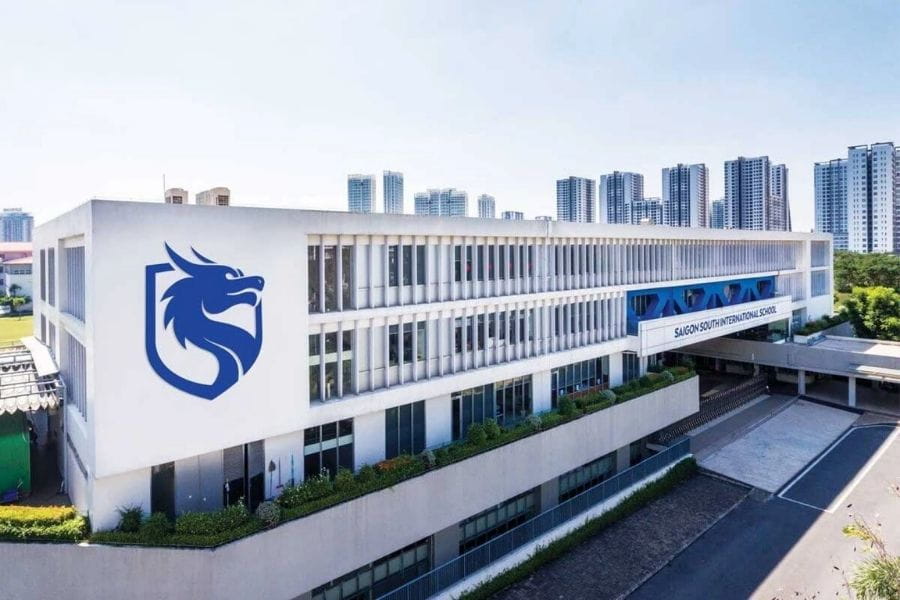
SSIS is one of the international schools implementing the US Curriculum, with a flexible approach and a focus on personalised learning pathways (Source: SSIS)
Singapore Education Programme
The Singapore programme is globally renowned for its distinctive approach to mathematics (Singapore Math), focusing on building logical thinking through the CPA (Concrete – Pictorial – Abstract) approach.
The programme is divided into Primary School, Secondary School and Pre-University or vocational education (Polytechnic), providing a range of learning options suited to students’ aspirations.
The Singapore programme helps students build a strong foundation in logical thinking and numeracy skills, and is often highly regarded in international education rankings such as PISA. However, the programme is competitive and carries relatively high academic pressure, so students need to remain proactive and disciplined throughout their studies.
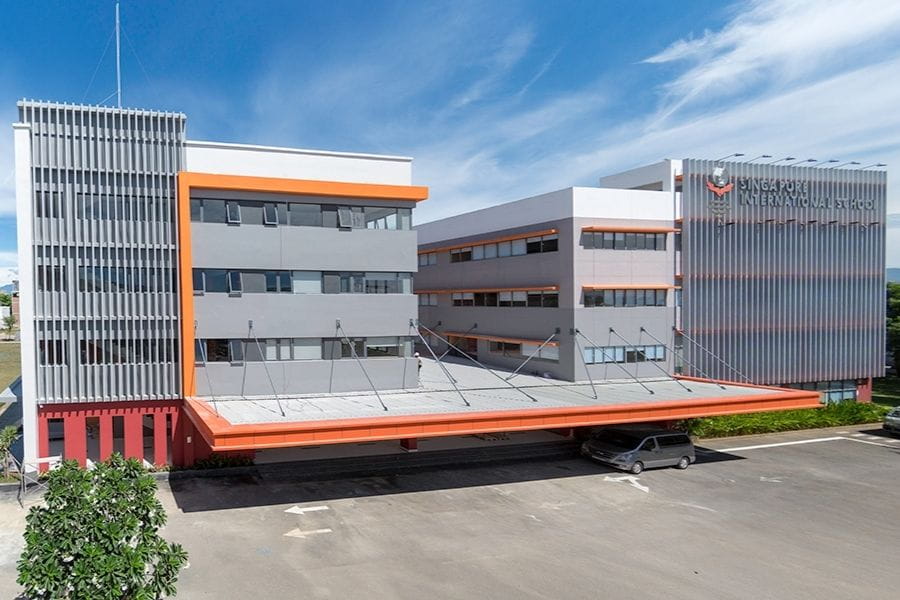
SIS is a prominent international education system offering the Singapore programme, with a focus on developing logical thinking and a strong academic foundation (Source: SIS)
Australian Curriculum
The Australian Curriculum is developed within a unified national curriculum framework from Foundation Year to Year 12, concluding with an upper secondary graduation certificate equivalent in each state, such as HSC or VCE.
The programme includes Foundation, Primary School, Secondary School and Senior Secondary, with content adapted to students’ age and abilities.
The Australian Curriculum enables students to develop holistically in terms of academic knowledge, skills and adaptability. Graduation certificates are recognised by many international universities; however, they are not as widely recognised globally as A Level or IB qualifications.
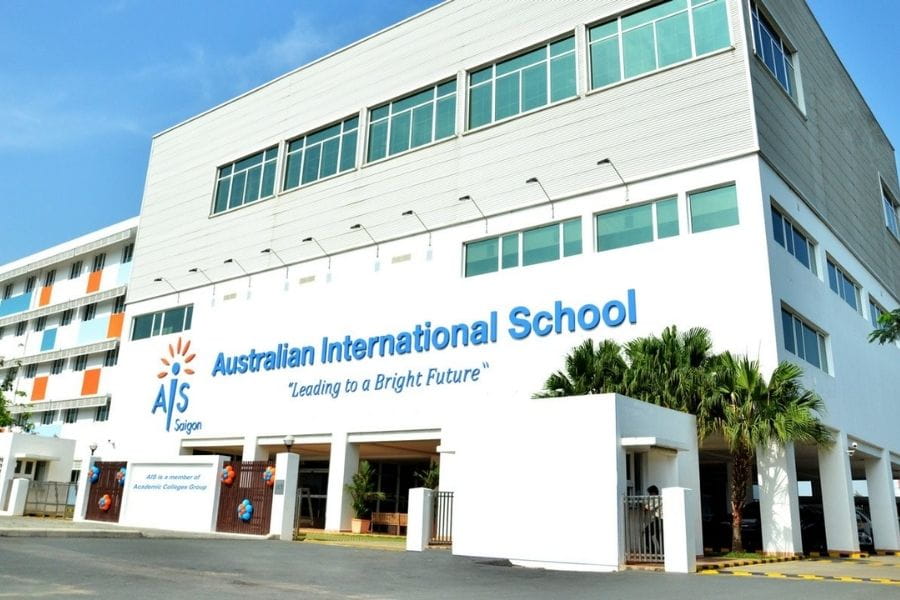
AIS is one of the international schools implementing the Australian Curriculum in Ho Chi Minh City, with a focus on developing academic knowledge, skills and adaptability. (Source: AIS)
>> Read more:
- International School Fees in Ho Chi Minh City
- Top 10 Best International Schools in Ho Chi Minh City
How is the curriculum at an international school different from that at a state school?
Although both aim to educate students, international education differs significantly from state schools in terms of curriculum, teaching methods, learning environment and development orientation. The key differences between the two models are outlined below.
International curriculum are globally recognised
International schools implement widely recognised education programmes such as Cambridge, the International Baccalaureate (IB), the US Curriculum and the Singapore Education Programme. This gives students access to education aligned with international standards, makes it easier to transfer between schools and expands opportunities for study in multiple countries.
Student-centred learning methods
Unlike traditional teaching models that focus on one-way knowledge transmission, international schools often adopt student-centred learning. Teachers act as guides, encouraging students to actively explore, investigate and express their own views.
Through discussions, projects and presentations, students develop critical thinking, problem-solving, communication and teamwork skills, creating a foundation for future learning and work.
Rich extracurricular activities and learning experiences
Bên cạnh chương trình học chính khóa, trường quốc tế đặc biệt chú trọng đến các hoạt động ngoại khóa và trải nghiệm thực tế. Các em học sinh có cơ hội tham gia các câu lạc bộ Alongside the core curriculum, international schools place particular emphasis on extracurricular activities and real-world experiences. Students have opportunities to take part in academic, arts and sports clubs, community activities, young leadership programmes, as well as field trips and experiential learning both locally and internationally.
These experiences not only help students discover their interests and develop their individual talents, but also contribute to improving their social skills, sense of responsibility and ability to adapt to different environments.
>> Read more: Five Benefits of Residential Trips and Field Trip for BVIS HCMC Students
Experienced international teaching staff
Teachers at international schools hold professional qualifications and international teaching certificates, as well as experience teaching in multicultural environments. Students learn with international and native English-speaking teachers, helping them improve their language proficiency, broaden their cultural understanding and receive guidance suited to their individual abilities.
>> Read more:
- Long-term considerations when choosing an international school in Ho Chi Minh City
- How to recognise strong teaching quality in international schools in Vietnam
Which international education programme should parents choose for their child?
Choosing the right international education programme should be based on the student’s long-term learning goals, abilities, interests and future aspirations, rather than simply on the popularity of each programme. Parents can consider the following criteria:
- If prioritising a comprehensive, systematic learning pathway and a strong academic foundation: The National Curriculum for England is suitable for students who want to develop knowledge, critical thinking, research, creativity and independent learning skills at each stage, with a clear pathway from EYFS to IGCSE and A Level.
- If prioritising an international curriculum and qualification system: Cambridge International is suitable for students who want to pursue Cambridge qualifications such as Cambridge IGCSE and International AS & A Level.
- If focusing on critical thinking, research and interdisciplinary learning: The International Baccalaureate (IB) is suitable for students who enjoy exploration, connecting knowledge across disciplines and developing a global perspective.
- If valuing flexibility and personalisation in subject selection: The US Curriculum may be suitable for students who want to build a learning pathway based on their interests, abilities and career aspirations.
- If prioritising a foundation in mathematics, logical thinking and problem-solving: The Singapore Education Programme is an option worth considering.
- If seeking to develop knowledge, skills and adaptability: The Australian Curriculum focuses on students’ holistic development while combining it with a strong knowledge base.
In addition to the curriculum, parents should also explore how the school implements the programme, the quality of its teaching staff, the learning environment, facilities and the pathway to university. These are factors that determine students’ actual learning experience and outcomes.
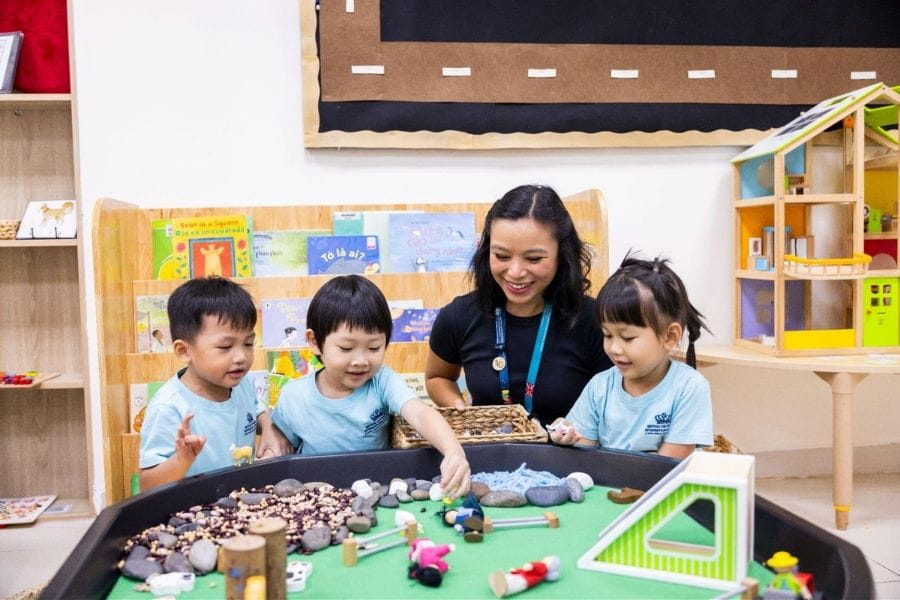
The National Curriculum for England helps students develop knowledge and skills holistically
Why should your child learn and develop at BVIS HCMC?
The curriculum at BVIS Ho Chi Minh City is designed not only to help students achieve excellent academic results but also to develop the capabilities they need for the future. As a member of Nord Anglia Education, BVIS combines the National Curriculum for England with an international educational environment and a global learning network, providing a distinctive educational experience from Early Years to Secondary.
A continuous learning pathway
The curriculum at BVIS is designed as a continuous and systematic pathway from Early Years to Secondary, helping students develop knowledge, thinking and skills at each stage. As they progress to more specialised programmes, students can choose subjects that match their abilities, interests and university aspirations.
A strong academic foundationAlongside subject knowledge, BVIS focuses on developing critical thinking, research, creativity, communication and independent learning. Active learning approaches encourage students to ask questions, investigate issues, exchange ideas and apply knowledge to real-life situations. This approach helps students not only work towards strong academic outcomes but also develop the capabilities needed for continued learning and adaptation in an international environment.
Preparing for university and the future
Students are supported in choosing subjects, exploring fields of study and developing an appropriate university pathway. In particular, the IGCSE programme and A Level programme help students gradually build the knowledge foundation relevant to their intended field of study, while preparing for applications to universities in the UK and many other countries around the world.
Expanding global learning experiences
As a member of Nord Anglia Education, BVIS gives students opportunities to learn, connect and participate in international projects through Global Campus and collaborative programmes with MIT, The Juilliard School, UNICEF and IMG Academy.
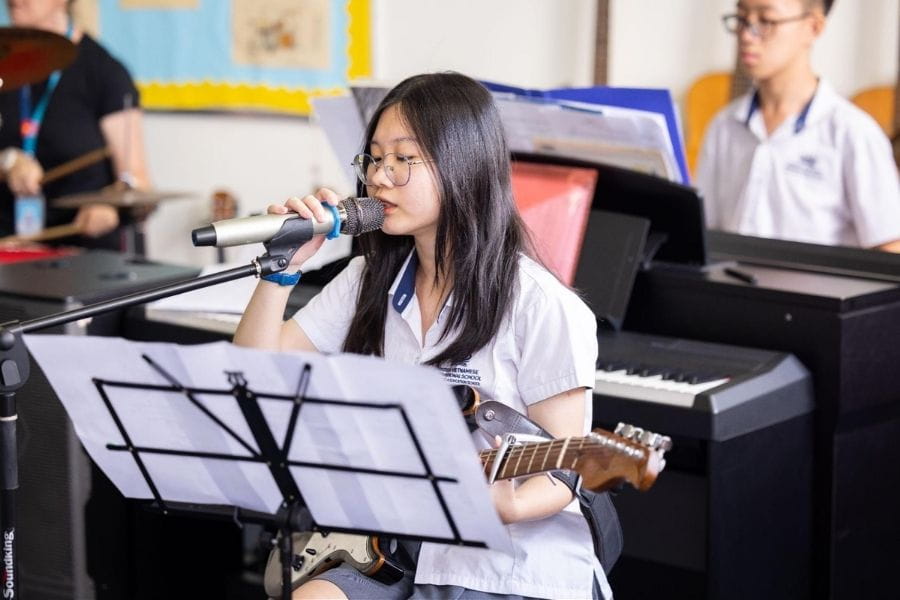
BVIS students are inspired by the arts and develop their musical skills through activities at school (Source: BVIS HCMC)
>> Read more:
- Tips for Applying to Study Abroad
- Making decisions about university and future careers: When is the right time?
Each international education programme has its own strengths, suited to each student’s learning direction and development goals. The key is for parents to choose an environment with a clear educational pathway, an internationally recognised curriculum and teaching methods suited to their child’s abilities.
At BVIS HCMC, students follow the National Curriculum for England in an international-standard environment, while also accessing global learning and experiential opportunities through the Nord Anglia Education network. If parents would like detailed advice on the learning pathway and admissions requirements, please contact:
Related news
News image ![Top 6 International School Curriculum and How to Choose the Right One for Your Child - chuong trinh hoc cua truong quoc te]() News | Educational Insights
News | Educational Insights
News | Educational Insights Top 6 International School Curriculum and How to Choose the Right One for Your Child
International school curriculum are often designed to meet global education standards, taught entirely or largely in English, and combined with soft skills development
News image ![Top 5 essential life skills for children to build their confidence and independence - ky nang song cho tre mam non]() Blog | Educational Insights
Blog | Educational Insights
 Blog | Educational Insights
 Top 5 Essential Life Skills for Children to Build Confidence and Independence
Discover 5 essential life skills for children and learn how parents can help them build confidence, independence and healthy habits from an early age.
News image ![What Is an International School? A Parent’s Guide to Choosing A Suitable One - truong quoc te la gi]() Blog | Educational Insights
Blog | Educational Insights
 Blog | Educational Insights
 What Is an International School? Understanding the Different Types of Schools
What is an international school? Learn about international curricula such as the British curriculum, IB and American programmes, as well as the benefits, entry requirements and key factors to consider when choosing a school for your child.
.jpg?h=768&iar=0&w=1366&rev=abcfa7f5b3a1430782fbb0d5f8a6af81&hash=0D57866CB8B9553A82776C4E59E17820)


