

We use cookies to improve your online experiences. To learn more and choose your cookies options, please refer to our cookie policy.

15 July, 2026
What Is the IGCSE Curriculum? Subjects, Standards & Benefits
.jpg?h=499&iar=0&w=887&rev=81e5d0ca518e41aeb14231200d40b614&hash=D91ECA9FBABE2805235753F5DA1059CB)
The IGCSE (International General Certificate of Secondary Education) is an international secondary school qualification for students aged 14–16, awarded by prestigious exam boards such as Cambridge International. This stage serves as a crucial stepping stone, preparing students thoroughly for advanced programmes like A Levels or the IB. Discover how the IGCSE helps students build a solid academic foundation in the article below!
What is the IGCSE Qualification?
The IGCSE stands for the International General Certificate of Secondary Education. This programme is equivalent to the GCSE qualification in the United Kingdom but is specifically designed to suit international students.
The IGCSE curriculum spans two years and is awarded by Cambridge Assessment International Education (CAIE), based in the UK. In addition to Cambridge, other exam boards such as Pearson Edexcel and OxfordAQA also offer this qualification.
Throughout their studies, students are equipped with a solid academic foundation while developing analytical thinking, problem-solving abilities, and independent learning skills—all of which are crucial factors in preparing for higher levels of education such as A Levels, the IB, and other advanced programmes.
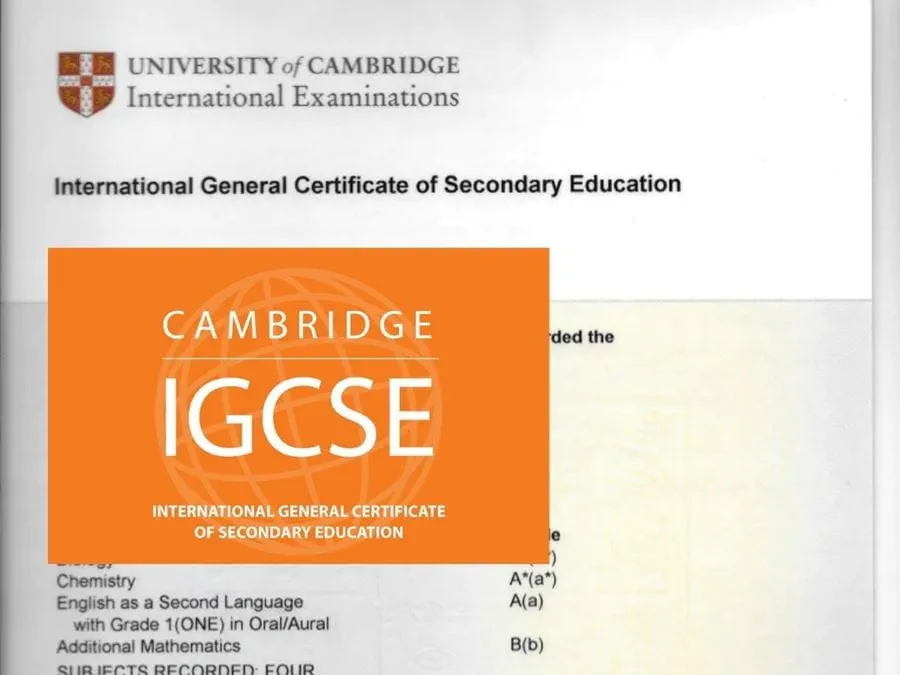
The IGCSE is an internationally recognised secondary school qualification, widely accepted by universities worldwide (Source: Internet)
>> Discover more: What is A Level? A Complete Guide for Parents
What is the Global Value of the IGCSE Qualification?
One of the main reasons why the IGCSE qualification attracts significant attention from parents is its international recognition. The IGCSE curriculum is utilised in numerous schools worldwide and is widely regarded as the academic foundation before students progress to programmes such as A Levels, the IB, or equivalent international pathways.
For students planning to study abroad, the IGCSE can strengthen their academic profile by providing internationally benchmarked assessment results. This is particularly beneficial when students intend to transition into an English-speaking learning environment or need to demonstrate their academic capability at the secondary school level.
However, parents should have an accurate understanding of the IGCSE's value. The IGCSE qualification is not a "guaranteed ticket" for admission into every international school or foreign university. Each school, country, and study programme maintains its own specific admissions criteria. The IGCSE should be viewed as an important cornerstone within an educational pathway, rather than the sole factor determining study abroad outcomes.
Beyond its profile-building value, the IGCSE curriculum helps students familiarise themselves with international learning methodologies. Students do not merely learn by rote to memorise knowledge; they are also trained in skills such as critical reading, problem analysis, essay writing, presenting arguments, and applying knowledge to concrete scenarios.
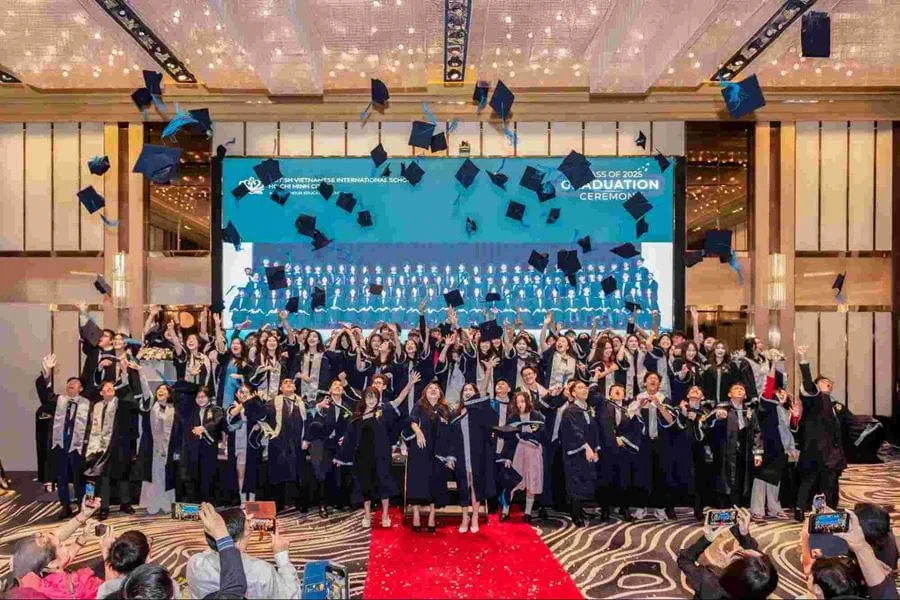
IGCSE serves as a foundation for international academic success, equipping students with the confidence and competencies to pursue their global educational aspirations.
(Source: BVIS Ho Chi Minh City)
Who is the IGCSE Curriculum Designed For?
The IGCSE is designed for students aged 14–16, which typically covers the final stage of lower secondary education, equivalent to Years 10 and 11 in the Vietnamese education system.
This curriculum is well-suited to students who wish to develop their academic English proficiency. As many subjects are taught and assessed in English, students will have the opportunity to familiarise themselves with reading literature, writing essays, and processing knowledge using international academic language.
In particular, the IGCSE is regarded as an essential stepping stone for students aiming to progress to A Levels, the IB, AP, Foundation programmes, or other overseas high school and university preparation pathways. Studying the IGCSE early can help students gain a clearer understanding of their strengths across various subject groups, allowing them to make informed choices for their higher educational pathways.
>> Read more:
- Montessori vs EYFS: Choosing the right early years curriculum for your child
- The Outstanding Strengths of the A Level and the International Baccalaureate Diploma programme (IBDP)
Overview of the IGCSE curriculum Structure
Having gained a clear understanding of what the IGCSE qualification is, parents can see that this programme is designed to offer a balance between foundational knowledge and academic skill development. Consequently, the IGCSE comprises compulsory subjects to ensure a common foundation, combined with elective subjects that help students leverage their individual strengths and shape their future career orientations.
Compulsory Subjects in the IGCSE
Depending on the specific school and educational system, students typically study foundational subjects such as:
- English (English Literature, English as a First Language, or English as a Second Language): Developing reading, writing, listening, and speaking skills.
- Mathematics: Equipping students with mathematical knowledge and skills from core to extended levels.
- Science: This can be studied as Co-ordinated/Combined Science or as separate subjects including Physics, Chemistry, and Biology.
Elective Subjects in the IGCSE
Alongside the compulsory subjects, students can select elective modules based on their interests and future goals, including:
- Humanities and Social Sciences: History, Geography, Economics, Business Studies, Psychology.
- Arts and Creative Subjects: Art and Design, Music, Drama.
- Technology: Information and Communication Technology (ICT), Computer Science, Design and Technology.
- Physical Education
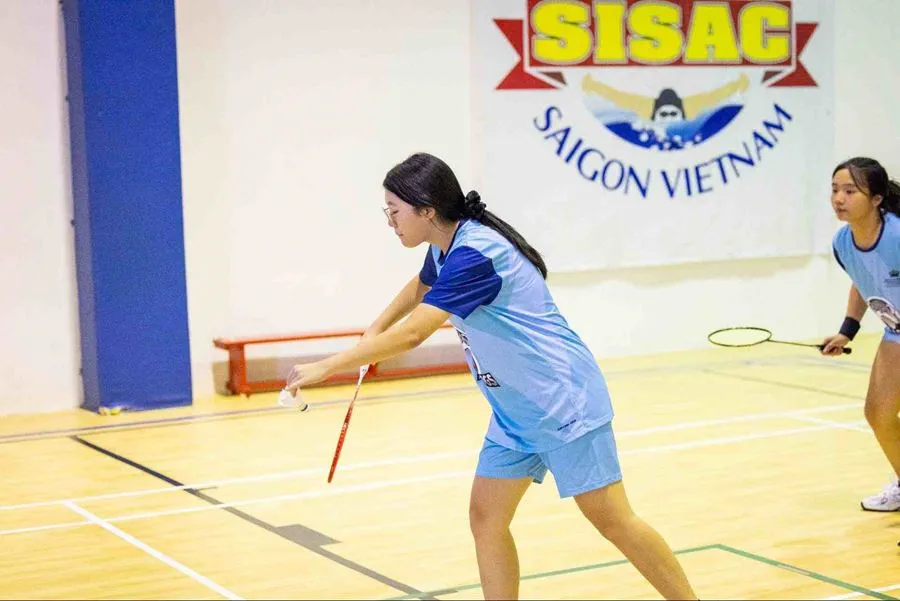
Physical Education is one of the optional subjects in the IGCSE programme, giving students the opportunity to develop their physical fitness and collaborative skills, depending on the sport or activity. (Source: BVIS HCMC)
This flexibility in subject selection provides students with an early opportunity to explore their own capabilities. However, choosing subjects should not merely be based on which ones are "easy to score points in". Parents and students should simultaneously consider three factors: current academic ability, future educational orientation, and the entry requirements of post-IGCSE curriculums to construct an appropriate pathway.
IGCSE Exam Series Throughout the Year
The IGCSE examinations are typically held during two main series each year:
- May - June
- October - November
Depending on the specific subject and exam board, students will take written papers, practical exams, or internal assessments to complete the programme. Students will receive their results in August and January/February of the following year.
With the IGCSE curriculum, subject selection and exam planning should be prepared well in advance to ensure students have sufficient time to study, revise, and manage their workload effectively. Generally, students need to pay close attention to key milestones such as:
- Exam registration deadlines
- Fees payment deadlines
- Exam timetables for each subject
- Results release dates
- Regulations regarding resits, if required.
Why Choose the IGCSE curriculum?
With the growth of international education, the IGCSE has become a top choice for many parents and students. Below are the core values that make this programme distinctive and worthwhile.
Globally Recognised Qualification
One of the major advantages of the IGCSE is its widespread prevalence within the international educational system. For students aiming to transition between international school systems or preparing profiles to apply for advanced study programmes, the IGCSE qualification can make the application process much smoother.
This broad recognition also helps parents easily gauge their child's academic capability against an international assessment standard. Rather than relying solely on a school's internal marks, IGCSE results provide a more objective point of reference.
Flexibility in Subject Selection Based on Ability
The IGCSE offers a diverse catalogue of subjects, ranging from Mathematics, Sciences, and Languages to Business, Arts, Technology, and Physical Education. Students can choose a subject combination that aligns with their interests, abilities, and future career orientations. Through this, they have the opportunity to explore and develop their unique strengths right from secondary school.
An Inclusive Programme Catering to All Learning Levels
The IGCSE offers various subjects and tiers, helping students select a pathway tailored to their capability. Depending on the course design and the specific exam board, certain subjects offer Core and Extended tiers. This allows students to be guided according to their actual ability rather than being forced to study at the exact same level as all of their peers.
However, flexibility does not mean students should choose subjects haphazardly. Subject selection requires a strategic approach, particularly for students who already have a clear progression route mapped out post-IGCSE.
A Foundation to Access Global Knowledge
By studying in English and acquiring knowledge based on international standards, IGCSE students comprehensively develop vital skills such as critical thinking, problem-solving, and communication. Consequently, students can confidently integrate and easily adapt to global learning and working environments.
A Stepping Stone to Higher Levels of Education
The foundation of knowledge and skills built during the IGCSE stage helps students familiarise themselves with higher academic demands. Therefore, starting with the IGCSE serves as a solid "stepping stone" for students to successfully pursue advanced international programmes such as A Levels, the International Baccalaureate (IB), or other university foundation pathways.
>> Discover more:
- Practice makes perfect: why mock exams are great for students’ brains
- How British education supports flexible career pathways
Academic Pathways After the IGCSE Curriculum
Upon completing the IGCSE curriculum, students enter the university preparation stage with a variety of international programmes to choose from. Among these, A Levels stand out as one of the most widely recognised pathways, highly valued by leading universities worldwide.
A Levels represent the advanced level school-leaving qualification in the United Kingdom, allowing students to select 3–4 subjects that align with their interests, abilities, and career orientations. This in-depth study helps them build a solid academic foundation, develop personal strengths, and gain a competitive edge when applying to universities in the UK, the US, Australia, Canada, and many other countries.
Alongside A Levels, students can also opt for the International Baccalaureate Diploma Programme (IBDP)—a comprehensive two-year programme that combines multiple subject groups, research, and community activities.
At BVIS HCMC, students are accompanied by a dedicated team of teachers and University Guidance Counsellors to select the most appropriate A Level subject combination, construct an optimal learning pathway, and prepare to conquer the world's top universities.
BVIS’s Outstanding Achievements in the IGCSE Programme
The British Vietnamese International School Ho Chi Minh City (BVIS HCMC) is a leading international school in Vietnam and a proud member of Nord Anglia Education, a global network spanning over 90 schools across more than 30 countries. The school delivers the National Curriculum for England, enhanced through unique collaborations with world-renowned organisations such as MIT, Juilliard, UNICEF, and IMG Academy.
At BVIS HCMC, students in Years 10 and 11 follow the IGCSE curriculum (KS4)—a prestigious, internationally recognised secondary school qualification. Developed and assessed by Cambridge Assessment International Education and Pearson Edexcel, this programme ensures students build a rigorous academic foundation for advanced pathways like A Levels and university education.
At BVIS HCMC, every student sits compulsory examinations in Mathematics, English, and IGCSE Co-ordinated/Combined Science (which counts as two IGCSE qualifications). Additionally, they choose three elective IGCSE subjects from a diverse list including:
- Art & Design, Drama, Music
- Business Studies, Economics
- Computer Science
- Design & Technology
- Geography, History
- Physical Education
Thanks to exceptional teaching standards, BVIS students consistently achieve impressive results in international IGCSE examinations. In the 2024–2025 academic year, 62% of IGCSE grades were at A–A* and 94% were at A–C*, significantly exceeding the UK national average. Furthermore, numerous students have been honoured with prestigious "Top in the World" and "Top in Vietnam" awards from Cambridge and Pearson Edexcel, reaffirming their outstanding academic excellence and comprehensive preparation for the next steps of their international educational journey.
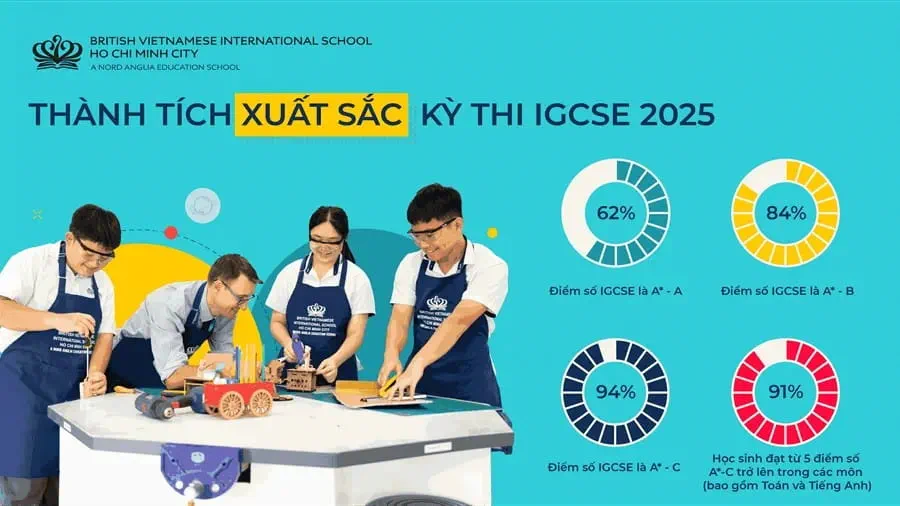
Outstanding achievements of BVIS HCMC students in the 2025 IGCSE examinations. (Source: BVIS HCMC)
Every educational choice made today shapes a student's future opportunities and success. With a globally recognised curriculum, modern pedagogical methods, and a clear developmental pathway, the IGCSE provides a robust foundation for students to confidently conquer advanced studies and achieve greater heights on their international learning journey.
To learn more about the IGCSE curriculum at BVIS Ho Chi Minh City, please contact the school for further information:
- Campus Address: 44–46 Street No. 1, 6B Intresco Residential Area, Binh Hung Commune, Ho Chi Minh City, Vietnam
- Office Hours: Monday to Friday, 8:00 am – 5:00 pm
- Telephone:
- Primary School: +84 (28) 3758 0709 (Extension 111)
- Secondary School: +84 (28) 3758 0717 (Extension 211)
- Email: admissions@bvisvietnam.com
Facebook | Instagram | Tiktok | Linkedin | YouTube
Related news
News image ![BVIS HCMC A Level]() News
News
 News
News What is A Level? A Complete Guide for Parents
A Level is an advanced level qualification for students typically aged 16 to 19 years, awarded by the education authorities in the United Kingdom.
News image ![BVIS Highlights in October 2026 - BVIS Highlights in October 2026]() News | Whole School
News | Whole School
 News | Whole School
 BVIS Highlights in October 2026
Monthly Highlights in October is a monthly newsletter sent by the BVIS Leadership Team to parents, providing updates on notable news and activities at the school. The newsletter consists of three main sections: updates from the Principal, Head of Primary, and Head of Secondary.
News image ![What are communication skills? How to improve children’s communication skills effectively - ky nang giao tiep]() Blog | Educational Insights
Blog | Educational Insights
.jpg?h=768&iar=0&w=1366&rev=2fb4f209d25e42a897f5b5b385d67323&hash=1C4A126CB4C9BEB80FE0B10AB53D2FA5) Blog | Educational Insights
Blog | Educational Insights What are communication skills? 7 Effective Ways to Improve Children's Communication Skills
Communication skills are the ability to interact with others and convey information and emotions clearly and effectively to build connections. Discover effective ways to develop children’s communication skills with confidence.
News image ![Soft skills: 8 Essential soft skills and their importance for students - ky nang mem]() Blog | Educational Insights
Blog | Educational Insights
 Blog | Educational Insights
 Soft Skills: 8 Essential Soft Skills and Their Importance for Students
Discover 8 essential soft skills that help students communicate confidently, collaborate effectively, solve problems and adapt to a changing world. Learn why these skills are vital for future success.


