
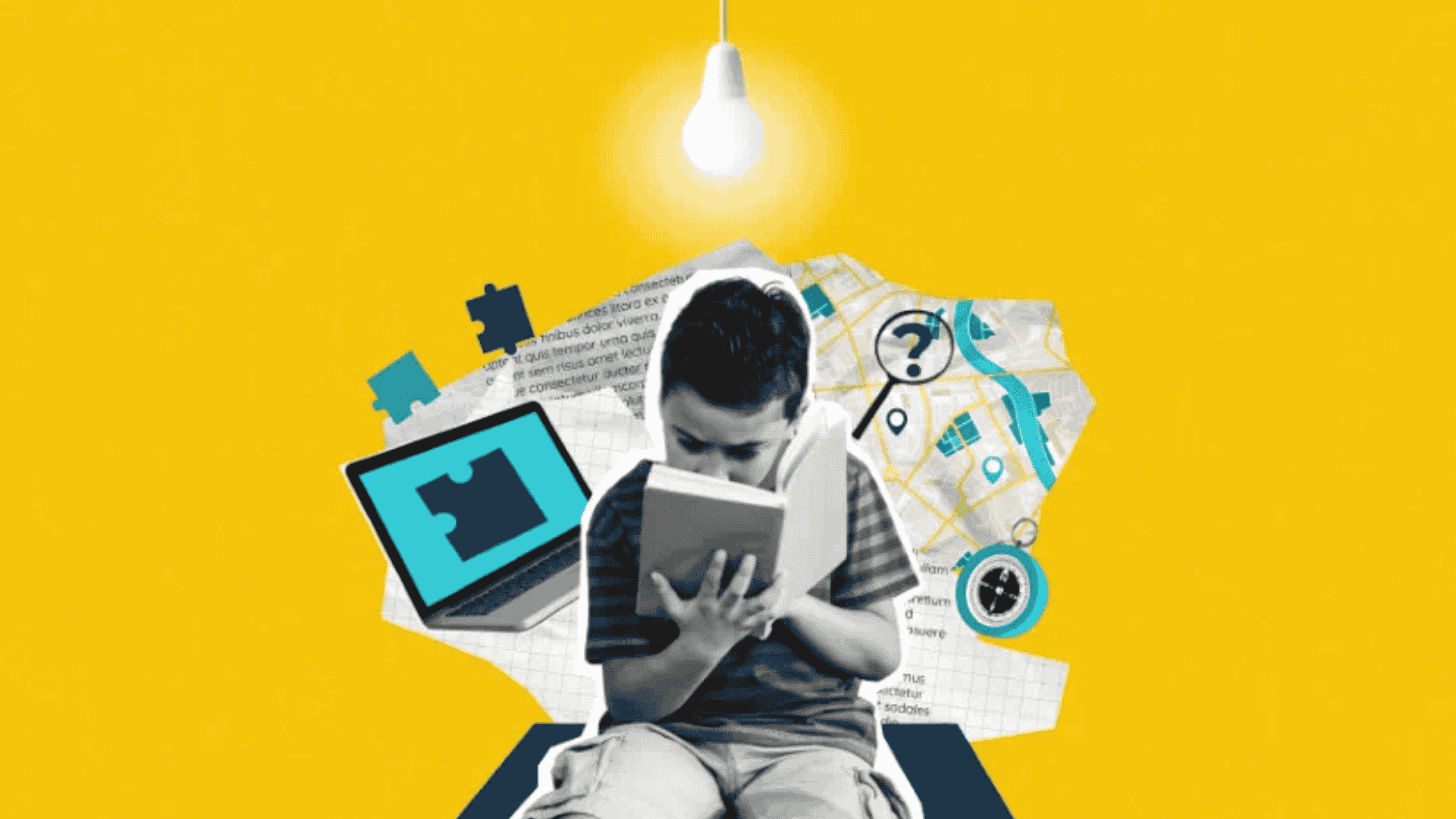
Your child asks ChatGPT to help with their homework.
Seconds later, the answer appears. It’s confident, detailed, and very convincing.
But will your child know whether it’s actually true?

27 April, 2026
Teaching the skills AI can’t replace: Can your child tell when AI is wrong?
Your child asks ChatGPT to help with their homework.
Seconds later, the answer appears. It’s confident, detailed, and very convincing.
But will your child know whether it’s actually true?
Artificial intelligence is rapidly changing how children learn, research, and complete schoolwork. They’re growing up in a world where information appears instantly, often generated by AI tools that sound 100% convincing, even when they’re wrong.
For parents, this raises an important question:
How do you prepare your child for a world where answers are everywhere, but judgement matters more than ever?
The answer can’t simply be teaching children how to use AI.
The real advantage lies in developing skills that AI can never replace, especially critical thinking.
Critical thinking helps children pause before accepting information, question where it came from, and decide whether or not it should be trusted.
At Nord Anglia Education, we think that ability may become one of the most valuable skills your child can possibly develop in the age of AI.
Why critical thinking matters more than ever
Critical thinking “is the means by which we make sense of the world”, says Dr Kate Erricker, Group Head of Education Research and Global Partnerships at Nord Anglia
Education.
“With the rise of AI, it’s more important than ever,” she explains.
“We can't take the information we read or images we see at face value. We need to understand how they were created, and for what purpose.”
Children today are surrounded by information. Social media posts, online articles, videos, and AI-generated answers and images.
Critical thinking gives them the tools to pause and ask the right questions:
Is this information reliable? Who created it? What evidence supports it?
These questions don't just matter in school, but throughout your child’s life.
Employers are already recognising this shift.
When the CEO of JPMorgan Chase was asked what skills might best protect workers from being replaced by AI, his answer was clear.
“My advice to people would be critical thinking,” said Jamie Dimon.
Related news
News image ![TEACHING THE SKILLS AI CAN'T REPLACE]() News | Academic | technology
News | Academic | technology
 News | Academic | technology
 Teaching the Skills AI Can't Replace
Nord Anglia Education’s global research with Boston College shows that when children are deliberately taught how to think, they grow into more confident, reflective, and independent learners.
News image ![Metacognition Article Header]() Blog | Academic | Homepage Featured Article | School News
Blog | Academic | Homepage Featured Article | School News
 Blog | Academic | Homepage Featured Article | School News
 Metacognition in Action: How ISR is Shaping Future-Ready Students
During December and January, ISR students, teachers, and parents participated in focus groups to provide feedback on the new Learner Portfolio tool piloted during the November parent conferences.
News image ![How we teach - How we teach]() Blog | Academic | technology
Blog | Academic | technology
 Blog | Academic | technology
 Teaching the skills AI can’t replace: Can your child tell when AI is wrong?
Many parents assume critical thinking develops naturally as children grow older. But ground-breaking new research suggests something even more encouraging. Critical thinking can be actively taught and strengthened.