


Study in Australia: A complete guide to preparing for university

Why Study in Australia?
For many families, the decision to study abroad in Australia is shaped by the quality, flexibility and international outlook of its education system. Key advantages include:
- A wide choice of university courses: Australian universities offer subjects and specialisations across applied science, business, technology, the arts and many other fields.
- Internationally recognised degrees: Accredited Australian degrees provide a strong foundation for further study and future careers.
- A multicultural learning environment: Students can learn alongside peers from many countries while strengthening communication, independence and adaptability.
- Applied approaches to learning: Many courses combine theory with practical projects, research and industry experience.
- Flexible routes into university: In addition to direct entry to a bachelor’s degree, students may consider Foundation Studies, diplomas and other pathway programmes.
>> Read more: Requirements for study abroad in the USA: what do students need to prepare to get into their dream university?
Entry Requirements to Study in Australia
Students planning to study in Australia must meet both the university’s admission criteria and the requirements for an Australian Student visa. The specific conditions depend on each student’s age, nationality, chosen programme and level of study.
Age and Welfare Requirements
Age requirements vary according to the student’s programme, level of study and individual education plan. Under current visa rules, applicants for an Australian Student visa (subclass 500) must generally be at least six years old and meet the minimum age requirement for their intended year level.
For students under 18, families must also arrange suitable accommodation, welfare support and guardianship throughout the student’s time in Australia. Depending on the circumstances, this may involve:
- Travelling with an eligible parent or guardian.
- Living with an eligible relative.
- Using welfare and accommodation arrangements approved by the education provider or relevant authority.
- Providing documentation confirming that suitable accommodation and welfare arrangements have been made in accordance with visa requirements.
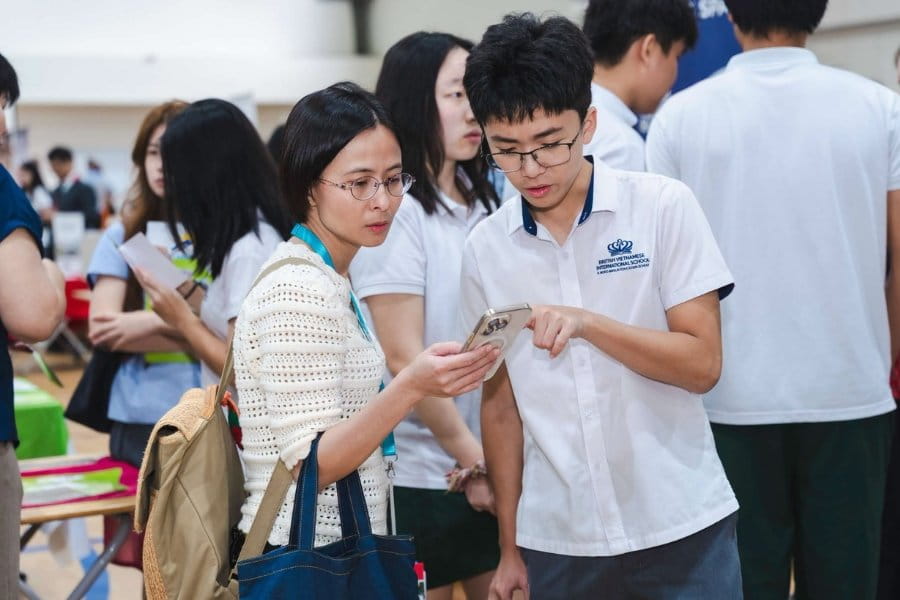
Parents and students should review age requirements carefully when planning an appropriate pathway to study in Australia (Source: BVIS)
Academic Requirements
Academic results play an important role in admission to Australian universities. As each institution and university course sets its own criteria, students should research entry requirements before selecting subjects and developing a clear study plan.
Those entry requirements may include:
- Accepted qualifications: Completion of Year 12 or a recognised international equivalent, such as A Level or the International Baccalaureate Diploma.
- Required grades: Meeting the grade requirements for the chosen university and course. More competitive programmes may expect higher overall results or strong performance in specific subjects.
- Subject prerequisites: Courses in Science, Engineering and Health may require particular subjects during the later years of Secondary or an equivalent qualification.
Checking each university’s official course page early allows students to choose suitable subjects and prepare a well-informed application.
English-Language Proficiency
Strong English proficiency enables students to follow lectures, engage with academic texts, complete written assignments and contribute confidently to university discussions.
Australian universities may accept IELTS Academic, PTE Academic or other recognised evidence. Some institutions may also consider previous education delivered in English. Students should confirm the current policy for each intended university and course.
>> Read more:
- What is A Level? A Complete Guide for Parents
- What is the SAT? Key things you need to know about the SAT exam
Financial Planning
Careful financial planning is essential before studying in Australia. A realistic family budget should include:
- Annual tuition fees
- Accommodation
- Food, transport, everyday living costs
- Overseas Student Health Cover
- Visa and medical fees
- Flights, learning materials and an emergency allowance
Students Visa Documents
Applicants for an Australian Student visa (subclass 500) must provide the documents requested by the Australian immigration authorities. These commonly include:
- Personal documents: A valid passport and the required identification documents.
- Academic documents: School reports, transcripts, qualifications, evidence of English proficiency where required and a Confirmation of Enrolment.
- Financial evidence: Documents showing the ability to meet tuition and living costs under the current requirements.
- Genuine Student evidence: Information and supporting documents demonstrating a genuine purpose for studying in Australia.
- Additional documents: Birth certificates, evidence of family relationships and guardianship or accommodation documents for students under 18, where applicable.
Requirements can change. Families should consult the Australian Department of Home Affairs for the latest Student visa checklist before applying.
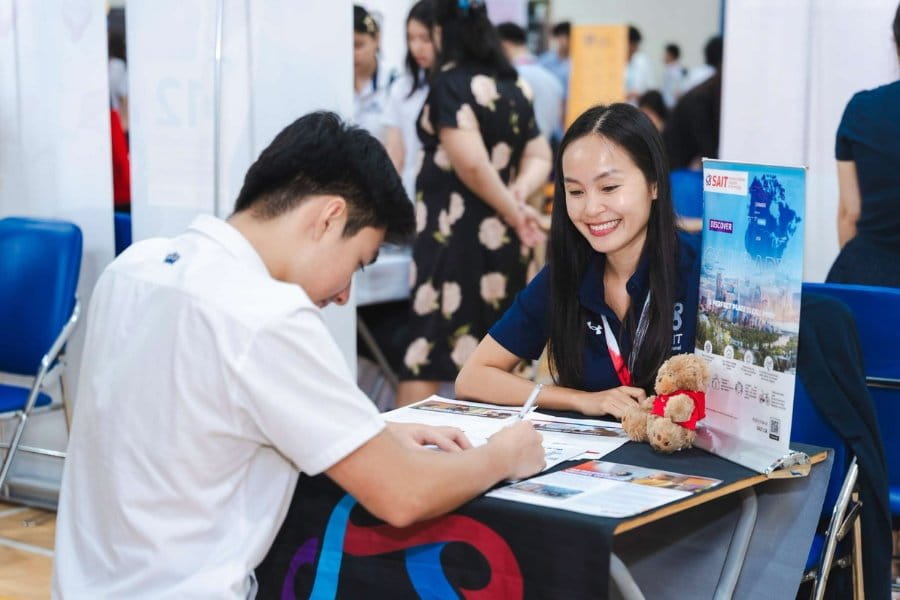
Preparing a complete study-abroad application is an important step in finalising the visa process and getting ready for the journey to study in Australia (Source: BVIS)
Health and Insurance Requirements
Student visa applicants must meet the health requirements that apply to their circumstances. A medical examination with an approved provider may be required. International students are also generally expected to maintain Overseas Student Health Cover for the period specified by their visa, unless an exemption applies.
>> Explore more: Requirements for study abroad in the USA: what do students need to prepare to get into their dream university?
Top 10 Universities in Australia
| No | University | Location | World Ranking |
| 1 | UNSW Sydney | Sydney, New South Wales | 19 |
| 2 | The University of Melbourne | Melbourne, Victoria | =22 |
| 3 | The University of Sydney | Sydney, New South Wales | 28 |
| 4 | Australian National University | Canberra, Australian Capital Territory (ACT) | 29 |
| 5 | Monash University | Melbourne, Victoria | 31 |
| 6 | The University of Queensland | Brisbane, Queensland | =40 |
| 7 | The University of Western Australia | Perth, Western Australia | =77 |
| 8 | The University of Adelaide | Adelaide, South Australia | 79 |
| 9 | University of Technology Sydney | Sydney, New South Wales | =87 |
| 10 | RMIT University | Melbourne, Victoria | =119 |
Please note: The rankings above follow the QS World University Rankings 2027 as stated in the source article. Rankings may change, so families should check the latest official table before making decisions.
How to Prepare During Secondary to Study in Australia
Students planning to study in Australia should begin preparing during Secondary by strengthening their academic results, academic English and independent learning skills, while exploring potential university courses.
Strong Academic Foundations
A student’s academic results during Secondary are an important part of university admission. Depending on the institution and course, applicants may need to meet requirements relating to overall grades, prerequisite subjects or recognised qualifications. Maintaining consistent results is an important first step. A Level provides a focused pathway by allowing students to specialise in subjects aligned with their future university plans.
Course and University Research
Identifying potential university courses and target institutions early helps students develop a clear and purposeful study plan. Students should research course content, career prospects, entry requirements and any prerequisite subjects for their intended degree.
University rankings are only one consideration. Students should also assess how well each option aligns with their interests and abilities, as well as tuition fees and living conditions in their preferred city. This enables them to create a balanced university list based on suitability and understand the requirements they need to meet during each year of Secondary.

Students should explore entry requirements, course content and career opportunities when choosing a university course and institution aligned with their future aspirations (Source: BVIS Ho Chi Minh City)
>> Read more: Understanding university destination information
Academic English
English is not only an entry requirement for many Australian university courses. It is also the language students use to access course content, read specialist materials, write assignments and deliver presentations.
Rather than focusing only on test preparation, students should develop listening, speaking, reading and writing in academic contexts. Reading complex texts, writing analytical essays, presenting ideas and contributing to discussion all provide valuable preparation for university.
Independent Learning and Research Skills
At university, students are expected to find resources independently, analyse information, solve problems and manage their own progress. Projects, small-scale research assignments, group work and presentations during Secondary help build these habits.
Critical thinking is equally important because it enables students to assess sources and construct evidence-based arguments. This provides a valuable foundation for adapting to a university environment that values independence and initiative in learning.
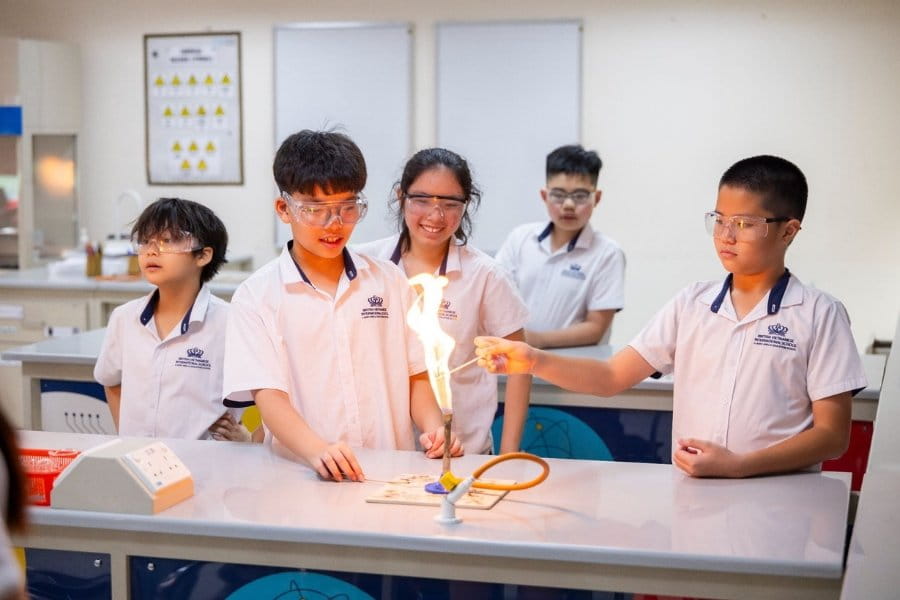
Science experiments at BVIS help students apply their knowledge in practical contexts and develop their thinking skills (Source: BVIS Ho Chi Minh City)
>> Learn more:
- How to write an impressive personal statement for university?
- Tips for Applying to Study Abroad
Exploring Future Pathways Through Real-World Experiences
Alongside researching their options, students should take part in activities that connect classroom learning with real-world contexts. These may include clubs, community projects, academic competitions, careers programmes and visits to leading universities or businesses where opportunities are available.
These experiences help students identify their interests, discover their strengths and gain a clearer understanding of careers in fields they may wish to pursue. This gives them a stronger basis for selecting a suitable university course while developing the communication, teamwork and problem-solving skills needed for future study.
>> Explore: Five Benefits of Residential Trips and Field Trip for BVIS HCMC Students
From BVIS Ho Chi Minh City to Australian Universities
At British Vietnamese International School (BVIS) Ho Chi Minh City, students follow a consistent British curriculum pathway from Primary through to Secondary. During Secondary, IGCSE and A Level help students strengthen their subject knowledge, develop independent thinking and prepare for university. Alongside their academic studies, personalised university and careers guidance supports students in setting goals, choosing a field of study and developing an application pathway aligned with their future plans.
How Do IGCSE and A Level Provide a Pathway to Australian Universities?
At BVIS Ho Chi Minh City, the British IGCSE and A Level pathway helps students build strong foundations for university. Students progress from developing knowledge across a broad range of subject areas to studying selected subjects in greater depth according to their future career interests. Through this progression, they gradually strengthen their academic abilities and define their future educational goals.
Through this pathway, students have opportunities to:
- Build strong academic foundations: Develop analytical thinking, problem-solving skills and the ability to apply knowledge in real-world contexts.
- Develop English proficiency: Become familiar with reading academic materials, writing essays, delivering presentations and constructing arguments in English.
- Choose subjects aligned with university plans: Focus on A Level subjects relevant to their intended field of study while checking the entry requirements of their target universities.
- Develop independent learning skills: Strengthen independent research, critical thinking and time-management skills to prepare for an international university environment.
With academic results that reflect their individual abilities, students can use their internationally recognised A Level qualifications to apply to a wide range of Australian universities. As admission requirements vary by university and course, setting clear goals early enables students to make informed subject choices, create a purposeful study plan and prepare their university applications proactively.
>> Discover more:
- What Are Life Skills? The Role of Life Skills Education in Child Development
- Soft Skills: 8 Essential Soft Skills and Their Importance for Students
BVIS Students Progressing to Leading Australian Universities
From the academic foundations developed at BVIS Ho Chi Minh City to opportunities at some of Australia’s leading universities, the journeys of An Khang and Lim Se Bin illustrate how students can pursue their passions, develop their abilities and prepare for an international future.
An Khang – From International Awards to The University of Melbourne
An Khang was admitted to the Bachelor of Computer Science programme at The University of Melbourne. An Khang also received offers from several leading universities in Australia and the United States. These included the University of Massachusetts Amherst with a scholarship of USD 16,000 per year, Illinois Institute of Technology with a scholarship of USD 25,000 per year, and The University of Sydney with a 20% reduction in total tuition fees.
At BVIS Ho Chi Minh City, An Khang developed strong academic foundations through the A Level programme while extending his abilities through international competitions in Mathematics, Physics, Computer Science and Economics. An Khang achieved the highest marks in Vietnam in several A Level subjects, received Outstanding Learner Awards from Pearson Edexcel and Cambridge in 2023, won an individual Gold Medal at the 2021 World Economics Cup and received a Gold Award in the 2021 Bebras Computational Thinking Challenge. Alongside these academic achievements, community service projects and extracurricular activities contributed to an impressive university application.
An Khang’s journey demonstrates how a combination of advanced academic study, international competition achievements and experiences beyond the classroom can broaden university opportunities and provide the confidence to pursue a passion for Computer Science in Australia.
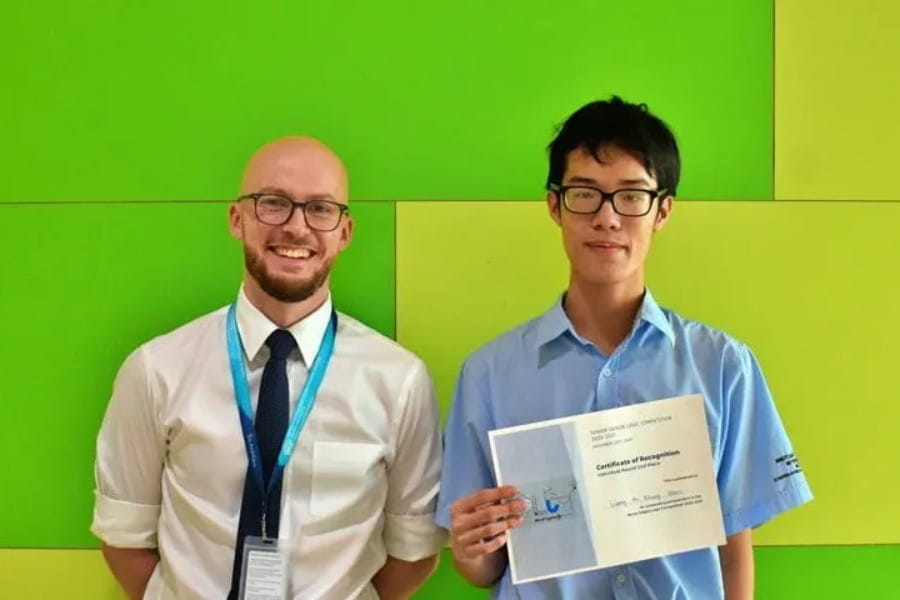
An Khang’s journey at BVIS Ho Chi Minh City, marked by outstanding academic achievements, has opened up opportunities to pursue Computer Science at The University of Melbourne (Source: BVIS Ho Chi Minh City)
Lim Se Bin – Outstanding A Level Results and Admission to The University of Sydney
After 12 years at BVIS Ho Chi Minh City, from Year 2 through to graduation, Lim Se Bin was admitted to the Bachelor of Business programme at The University of Sydney. Lim Se Bin achieved A Level results of A* in Business Studies, A* in Psychology and A in Mathematics. Lim Se Bin also achieved the highest mark in Vietnam for Cambridge International A Level Psychology in 2025 and received a Cambridge Outstanding Learner Award.
Lim Se Bin’s journey reflects the academic foundations developed over many years at BVIS, together with an active approach to exploring knowledge, asking questions and contributing to discussions. Beyond the classroom, Lim Se Bin served as a Student Tutor supporting English learning and co-founded the Korean Club. Through these responsibilities, Lim Se Bin developed communication skills, shared knowledge and contributed to the wider school community.
A particularly significant achievement was Lim Se Bin’s national-level result in A Level Psychology. This outcome reflects a consistent commitment to learning, intellectual curiosity and independence, all of which are valuable when progressing to an international university environment.
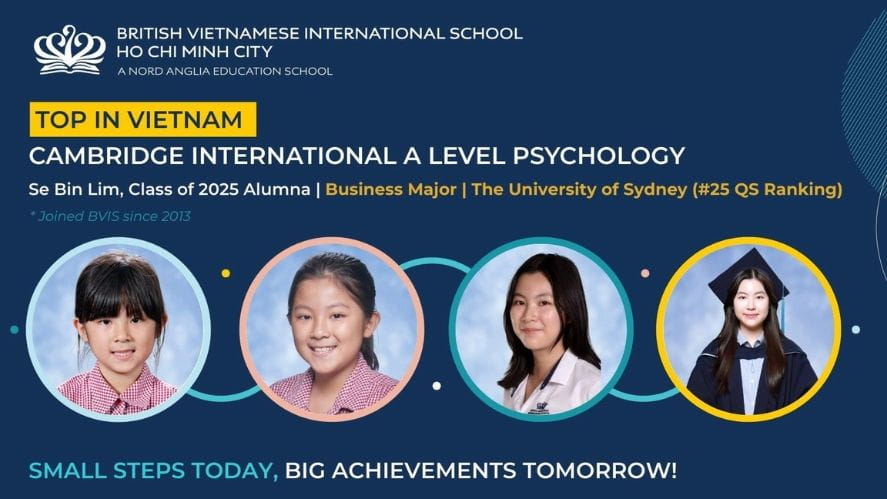
Lim Se Bin graduated from BVIS Ho Chi Minh City with outstanding A Level results and was admitted to study Business at The University of Sydney (Source: BVIS Ho Chi Minh City)
>> Read more: Class of 2026: From BVIS to the world's leading universities
Frequently Asked Questions About Studying in Australia
When Should Students Begin Preparing to Study in Australia?
Students can begin preparing during the early years of Secondary, or even earlier, depending on whether they intend to study in Australia at school or university level. For students planning to enter an Australian university after completing lower secondary education, the later years of Secondary are particularly important for maintaining strong academic results, developing English proficiency, exploring possible university courses and checking admission requirements.
Starting early gives students sufficient time to select appropriate subjects, strengthen their applications and develop a realistic financial plan with their families.
>> Learn more:
- How your child’s learning needs evolve from primary years to university readiness
- Understanding the student experience in the first years at an international school
Is IELTS Required to Study in Australia?
IELTS is not compulsory in every case. Universities may accept other English-language qualifications or waive the requirement for a separate English-language certificate when students meet specific conditions.
However, students should distinguish between the university’s English-language entry requirements and the requirements that apply to the Australian Student visa, subclass 500. Both sets of requirements should be checked before students choose an English-language test and decide when to take it.
Can Students with IGCSE and A Level Qualifications Apply to Australian Universities?
Yes. These qualifications can provide students with a significant advantage.
All eight members of Australia’s Group of Eight accept A Level qualifications for direct undergraduate admission. These universities are: The University of Melbourne, The University of Sydney, Australian National University, Monash University, UNSW Sydney, The University of Queensland, The University of Western Australia, The University of Adelaide.
Admission is based on the university’s conversion of results from the applicant’s principal A Level subjects, together with any course-specific requirements. Students who have completed IGCSE at an international school may also be eligible to enter Foundation Studies, diploma or other pathway programmes offered by these universities without necessarily continuing to A Level. The available pathways and entry requirements vary by institution and programme.
>> Learn more:
- IGCSE and A Level: Understanding the Key Differences and Choosing the Right Pathway
- IB vs A-Levels: What's the difference? Which is better for your child?
How Much Does It Cost to Study in Australia?
The annual cost of studying in Australia typically ranges from approximately VND 650 million to VND 1.2 billion, equivalent to around AUD 40,000 to AUD 75,000, including tuition fees and living expenses. Actual costs vary according to the level of study, chosen course, university, city and expected standard of living.
>> Read more:
- What Is STEAM Education? Benefits of Applying the STEAM Approach to Learning
- What Is Personalised Learning? Benefits of a Personalised Approach to Education
Studying in Australia requires early preparation across academic performance, English proficiency, financial planning and university course selection. Researching admission requirements carefully, choosing a suitable programme and developing a strong application during the later years of Secondary can help students take greater ownership of their pathway to university.
At BVIS Ho Chi Minh City, the British IGCSE and A Level pathway helps students build strong academic foundations, develop independent learning skills and prepare for universities in Australia and many other countries. Families considering Australia as a future study destination are welcome to explore the academic pathway at BVIS Ho Chi Minh City and begin planning appropriately from today.
- Campus address: 44–46 Street No. 1, Binh Hung Residential Area, Binh Chanh District, Ho Chi Minh City.
- Opening hours: Monday - Friday (8:00 AM – 5:00 PM)
- Hotline:
- Primary: +84 (28) 3758 0709 ext. 111
- Secondary: +84 (28) 3758 0717 ext. 211
- Email:admissions@bvisvietnam.com
Related news
Blog | Educational Insights  Blog | Educational Insights


