


Requirements for study abroad in the USA: what do students need to prepare to get into their dream university?

Requirements for study abroad in the USA
Requirements for study abroad in the USA may vary depending on the level of study, university and academic programme. For students planning to apply to universities in the USA, the basic requirements typically include:
- Age requirements: Most universities in the USA do not set a minimum or maximum age for undergraduate applicants. However, students typically enrol after completing secondary education, at around 17–19 years old.
- Academic qualifications: Students must complete secondary education or an equivalent international qualification, such as A Level, the International Baccalaureate (IB) or other recognised qualifications before formally enrolling on an undergraduate degree programme in the USA.
- Academic requirements: Students must meet each university's admissions criteria through their secondary school academic performance (GPA), transcripts and relevant academic evidence. In addition, some universities or degree programmes may require standardised test scores, such as the SAT or ACT, to assess academic ability.
- English language proficiency: International students must demonstrate their English language proficiency through qualifications such as IELTS, TOEFL, the Duolingo English Test or SAT scores. Specific score requirements vary by university.
- Extracurricular activities and personal essays: US universities use a holistic admissions approach, in which extracurricular activities, personal essays (Personal Statement/Supplemental Essays) and teacher recommendations play an important role in demonstrating an applicant's individuality, leadership skills and potential for development.
- Financial requirements: Families need to prepare a budget for tuition fees and living expenses throughout the period of study abroad in the USA. Students can also explore scholarship opportunities and financial aid available to international students.
- Health requirements: Students must complete their medical records, receive all vaccinations required by their school and meet the health requirements for obtaining a student visa.
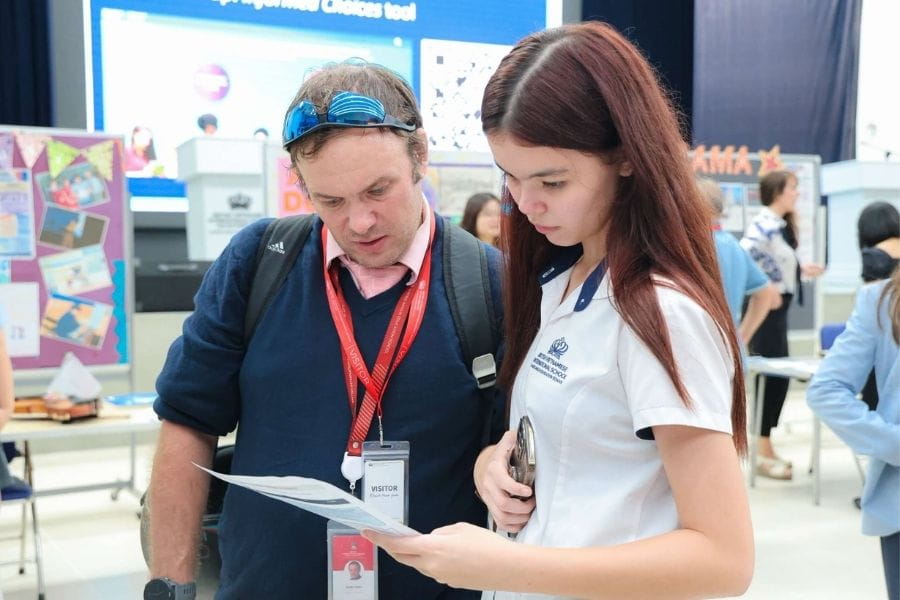
Parents and students should carefully research the requirements for study abroad in the USA to prepare applications that meet the requirements of each university and academic programme (Source: BVIS HCMC)
>> Read more: Top 6 International School Curriculum and How to Choose the Right One for Your Child
What documents are required to study abroad in the USA?
University application requirements in the USA may vary between institutions. Typically, a standard application includes:
- University application form
- Academic transcripts and school records
- Standardised test scores, if required or accepted by the university
- English language proficiency certificates, if applicable
- Personal statement (main essay) and supplementary essays, depending on each university's specific requirements
- Extracurricular activity records
- Letters of recommendation from teachers or university counsellors
- List of achievements and awards, if applicable
- Financial documents for stages of the application process that require proof of ability to cover the costs
- Additional documents required by individual universities or degree programmes
As admissions policies may change each year, students should check the official requirements of each university before preparing their applications.
>> Explore more:
- How to study abroad: A step-by-step guide & Tips for studying aboard
- How to write an impressive personal statement for university?
- Tips for Applying to Study Abroad
What should students prepare during secondary school to study abroad in the USA?
Build a strong academic foundation and maintain good academic results
Students should maintain consistent academic results throughout their secondary school years while choosing appropriately challenging subjects that align with their strengths, abilities and future goals. Beyond subject knowledge, developing critical thinking, research skills and independent learning skills will also help students prepare for the university environment.
Develop academic English proficiency
Students should develop their reading skill, essay writing and presentation skills in English, while also strengthening their research, debating and ability to express their views. Preparing for appropriate English language qualifications should also be guided by the admissions requirements of each university.
Participate in extracurricular activities and develop leadership skills
Alongside their studies, students can take part in clubs, sports, arts or community projects to explore their interests and develop communication, teamwork and leadership skills. Rather than participating in too many activities without focus, students should prioritise those that allow them to demonstrate meaningful involvement and clearly reflect their strengths or individual identity.

A strong record of extracurricular activities helps students build a standout profile for international university admissions (Source: BVIS HCMC)
Choose a degree subject and build a strong personal profile
Exploring interests and abilities, and identifying career goals early, helps students make informed decisions when choosing suitable degree subjects and universities. Throughout this process, students can build up their achievements and experiences while preparing key application components, such as personal statements and letters of recommendation.
Plan university applications by academic year
Preparation can be divided into different stages. In Grade 9 - 10 (Years 10–11 in the British education system), students focus on building a strong academic foundation and exploring their interests. Grade 11 (Year 12) is the time to research universities, prepare for relevant qualifications and plan their applications. In Grade 12 (Year 13), students complete their applications, submit them and explore scholarship opportunities.
>> Find out more:
- How your child’s learning needs evolve from primary years to university readiness
- Understanding the student experience in the first years at an international school
From BVIS to universities in the USA
For students aspiring to study abroad in the USA, an international learning environment can help them develop a strong academic foundation, English language proficiency and essential skills from secondary school onwards.
At the British Vietnamese International School Ho Chi Minh City (BVIS HCMC), students follow an educational pathway from Early Years through to Secondary, including the IGCSE and A Levels programmes, within an international learning environment.
BVIS students' achievements and university destinations
Over the past three academic years, the USA has consistently ranked among the top three study destinations for BVIS graduates. Many students have received offers from Ivy League universities, including the University of Pennsylvania (UPenn) and Brown University, as well as highly ranked institutions such as New York University (NYU), Boston University, Boston College, the Georgia Institute of Technology (Georgia Tech) and the University of California system, including UC Berkeley.
For the Class of 2025, BVIS students received more than 305 offers from international universities, with scholarships worth a total of US$6.67 million. The Class of 2026 has continued this record of achievement, receiving offers from Imperial College London, University College London (UCL), UC Berkeley, Georgia Tech and many other leading universities worldwide.
BVIS alumni in the USA
Behind these impressive figures are the individual journeys of students, whose skills are nurtured throughout their secondary education and further developed as they enter the American university environment.
Nguyễn Lâm Nhật Minh – a scholarship worth over US$165,000 from New York University (NYU)
Graduating from BVIS in 2023, Nhật Minh received a scholarship worth over US$165,000 (approximately VND 4 billion) to study Business at NYU over four years. At the time, the university had an acceptance rate of approximately 8%.
Nhật Minh demonstrated outstanding academic achievement, earning four A grades at AS Level and achieving the highest IGCSE History result among Vietnamese students. However, he explained that the strengths of his application also came from the skills and experiences he gained during his time at BVIS. Serving as a Secondary Student Council leader helped him develop leadership and teamwork skills. Winning the Race4Good business entrepreneurship challenge at the 2023 FOBISIA Student Leadership Conference with his Wild Wallet project helped him develop entrepreneurial thinking and social responsibility. Community fundraising activities also strengthened his perseverance and commitment to giving back to the community.
In addition, the English-speaking learning environment within the British curriculum helped Nhật Minh develop his academic English proficiency. Early guidance from university counsellors also enabled him to shape his application step by step and develop a thoughtful personal essay that clearly reflected his personality and individual story.

A strong academic foundation and practical experiences at BVIS helped Nguyễn Lâm Nhật Minh secure a scholarship worth over US$165,000 from New York University (Source: BVIS HCMC)
Kevin Lương Nghị – from BVIS to an entrepreneurship award at Fordham University
A member of the Class of 2023, Kevin received offers from Fordham University, the University of Massachusetts Amherst (UMass Amherst), with a scholarship of US$16,000 per year, UC Davis and UC Santa Barbara. He chose to study International Business and Economics at the Gabelli School of Business, Fordham. In his first year, Kevin and his team won the “Best Pitch” award at the PVH Corp. Ground Floor Challenge 2024, an entrepreneurship competition.
According to Kevin, success depended not only on the business plan but also on presentation and public speaking skills, which he had continually developed at BVIS through Drama lessons, hosting events, performing arts and classroom presentations each term. His role as Student Council President, alongside activities ranging from swimming to business, also helped him build confidence, leadership skills and practical thinking. Kevin shared that it was only after moving to the USA and speaking with international peers that he truly recognised how distinctive and effective the skills development at BVIS had been.
Although their journeys were different, both alumni shared a similar starting point: early guidance, a strong academic foundation through IGCSE and A Levels, and leadership, communication and practical thinking skills developed through activities at BVIS. These experiences equip BVIS students not only to gain admission to leading universities in the USA, but also to thrive once they begin their university journeys.
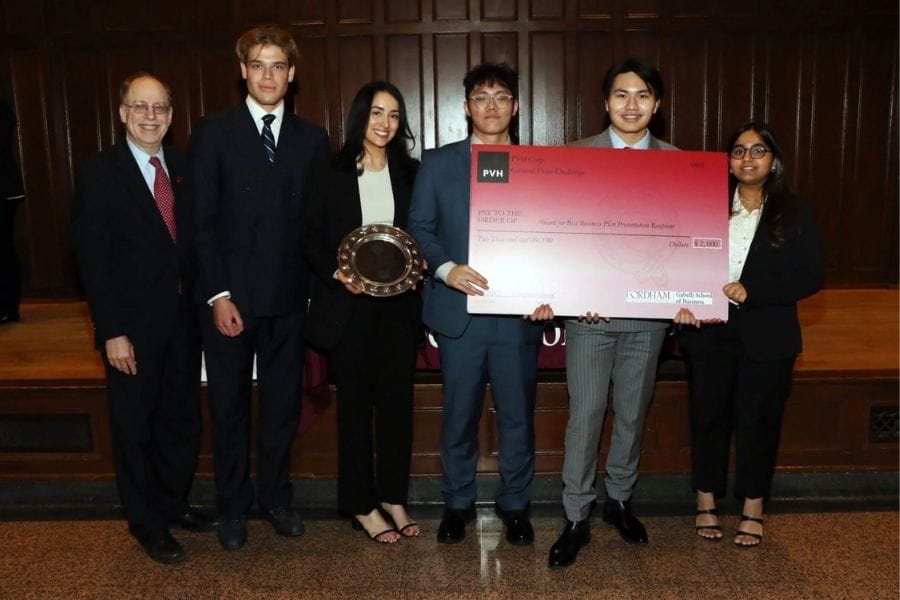
From the skills developed at BVIS to his achievements at Fordham, Kevin Lương Nghị has demonstrated the confidence and mindset of a young leader (Source: BVIS HCMC)
>> Read more: Class of 2026: From BVIS to leading universities around the world
Frequently asked questions about study abroad in the USA
When should students start preparing to study abroad in the USA?
The US university admissions system evaluates students' academic performance and extracurricular activities throughout all four years from Grade 9 to Grade 12 (Year 10 to Year 13 in the British education system), rather than relying solely on final examination results. Therefore, the ideal time to start preparing a university application is at the beginning of Grade 9 (which corresponds to the first year of the IGCSE programme in the British education system).
The recommended preparation timeline for each year is as follows:
- Grade 9 (Year 10): Focus on maintaining a high grade point average (GPA); take part in a range of clubs and extracurricular activities to explore personal interests and strengths.
- Grade 10 (Year 11): Identify areas of interest or potential degree subjects; take on greater responsibilities in activities, such as committee or leadership roles; begin preparing for English language proficiency tests (IELTS/TOEFL) and standardised tests (SAT/ACT).
- Grade 11 (Year 12): Take the IELTS/TOEFL and SAT/ACT; develop personal projects or pursue activities in greater depth; build and maintain positive relationships with teachers in preparation for requesting recommendation letters; compile a shortlist of target universities.
- Grade 12 (Year 13): Finalise the main personal statement and supplementary essays; submit applications according to the relevant deadlines, either through Early Decision/Early Action in November or Regular Decision in January.
>> Read more: Understand the information about university destinations
Is the SAT still important for university admissions in the USA?
Yes, SAT scores still play an important role in university admissions in the USA. Although requirements vary between institutions, current admissions policies generally fall into three categories:
- Test-required: Many leading universities, including the Massachusetts Institute of Technology (MIT), Harvard University, Yale University, Stanford University, Dartmouth College and Brown University, require applicants to submit SAT/ACT scores.
- Test-optional: Applicants can choose whether to submit their scores. However, a high SAT score (1450+) can still give international students an advantage when competing for admission and scholarships.
- Test-blind/test-free: A small number of university systems, such as the University of California (UC), do not consider SAT scores, even if applicants submit them.
Can students studying A Levels apply to universities in the USA?
Absolutely. A Levels are widely recognised by universities in the USA and can offer several advantages in the admissions process.
- Highly regarded for their academic rigour: US university admissions committees are very familiar with A Levels and recognise them as evidence of strong academic ability, comparable to other advanced programmes such as Advanced Placement (AP) and the International Baccalaureate (IB).
- Eligible for university credit: Many universities in the USA allow students with high A Level grades, typically an A or B, to receive university credit for relevant subjects.
>> Read more: IB vs A-Levels: What's the difference? Which is better for your child?
How do extracurricular activities affect university applications?
In holistic admissions, extracurricular activities are an important factor that helps admissions committees assess applicants' individual abilities and potential beyond their academic results. Specifically, they can:
- Help applicants stand out: Unlike GPA or SAT scores, which provide an indication of academic performance, extracurricular activities reveal an applicant's individuality, genuine passions and unique perspective on the world.
- Demonstrate leadership and impact: Admissions committees value the scale and impact of projects on the community rather than simply the number of clubs an applicant has joined.
- Show long-term commitment: Pursuing one or two areas of interest consistently throughout secondary school demonstrates responsibility, self-discipline and personal growth over time.
- Provide material for personal essays: Practical experiences and the lessons learned through extracurricular activities provide authentic, compelling material for personal essays.
>> Find out more:
- Top 10 Best International Schools in Ho Chi Minh City
- Top 8 International Schools in District 7 – Quick comparison
Preparing to study abroad in the USA is a long-term process that involves gradually building academic performance, academic English proficiency, extracurricular involvement, personal skills and a clear direction for future degree studies. Preparation for university should not begin in Year 13. Students can take a proactive approach from the early years of secondary school, giving themselves more time to explore their strengths and strengthen their applications.
At British Vietnamese International School Ho Chi Minh City (BVIS HCMC), students learn in an international environment, developing a strong academic foundation and the essential skills needed for university. Parents are welcome to contact BVIS to learn more about the curriculum and how students can prepare for their goal of study abroad in the USA. For further information, please contact us via:
- Telephone:
- Primary: +84 (28) 3758 0709 ext. 111
- Secondary: +84 (28) 3758 0717 ext. 211
- Email: admissions@bvisvietnam.com
- Opening hours: Monday - Friday (8:00 AM – 5:00 PM)
Discover more about BVIS:
Related news
Blog | Educational Insights  Blog | Educational Insights
 Blog | Educational Insights


