

We use cookies to improve your online experiences. To learn more and choose your cookies options, please refer to our cookie policy.

09 July, 2026
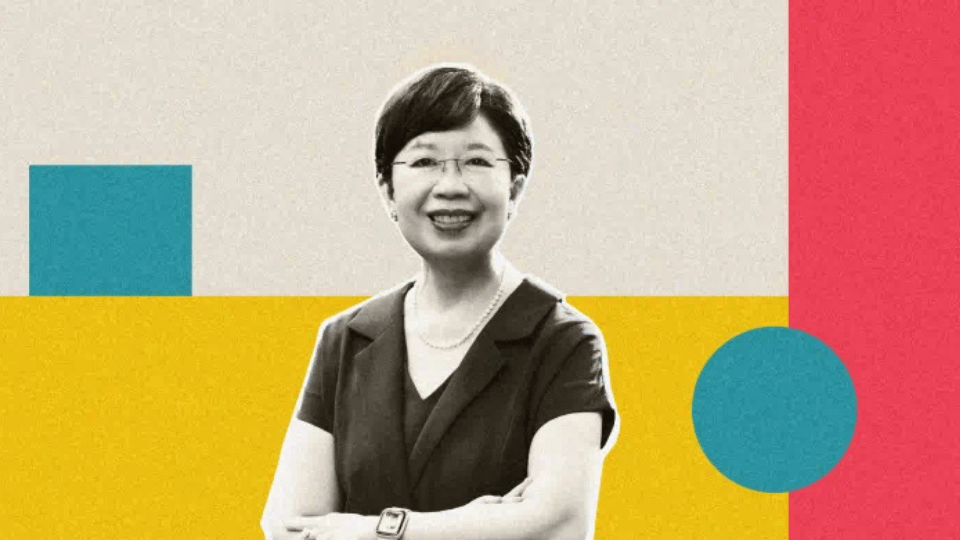
In Conversation with Professor Lily Kong, Rethinking Learning in an AI-Driven World
How did you become an academic?
I've always wanted to be a teacher. My mother told me that, from the time I was three, I would line up my dolls against the wall and pretend to be a teacher with them.I’ve always enjoyed explaining things to people and always thought I would teach ata pre-tertiary school one day.Even during my school or university vacations, I worked as a part-time relief teacher to help at schools, and I thoroughly enjoyed it.But as an undergraduate I gradually grew to love research as well. A week or so after my final exams, my head of department called me and said,“We'd like to sponsor your PhD, and then after your PhD you could come back and work with us. Would you like that?” And I absolutely loved the idea of being able to combine both teaching and research.
Why did you join Nord Anglia’s Education Advisory Board?
There are a few reasons. First, as part of my research I’ve studied students who attend international schools and grow up in communities outside of their home countries. I visited the British School of Guangzhou, which is part of the Nord Anglia network, and I’ve long been interested in the phenomenon of “Third Culture Kids” — how they develop and learn — so I saw this as a great opportunity to deepen my understanding and, hopefully, contribute something meaningful to this area.
The second reason is that Nord Anglia is such a large network of schools, and I mean that in the best possible way. There are so many schools within the system, and if good practices exist in one, there's real potential for them to have a broader impact across the network. If, as a board member, I can play a part in that multiplier effect, it would be incredibly rewarding.
I also wanted to help bridge the gap between K-12 and university — whether it’s practices in universities that K-12 can adopt, or vice versa — it would be gratifying to contribute to that shared learning and growth.
You’ve just given a series of lectures on the future of universities and argued they need to change dramatically to stay relevant in a world with Generative AI and people living to be 100 years old. Do you think the same is true of K-12 education?
Absolutely. Let me start by revisiting a point I made in those lectures. We need to shift our focus beyond purely "cognitive intelligence" and place greater emphasis on other areas like bodily-kinesthetic, interpersonal and intrapersonal intelligences. These are all vital and they can’t be left to develop once someone enters university. They need to be nurtured throughout a person’s education from an early age.
In fact, I would argue that schools are currently doing a better job of supporting these areas than universities. For instance, many schools still prioritise physical education, which hones a bodily-kinesthetic intelligence, whereas universities often neglect it, and I think that’s a real loss. If we’re to live longer lives and make meaningful contributions to society and the economy, then maintaining our physical, emotional, and social well-being will be crucial. That foundation needs to be laid early.
Schools provide an environment where young people learn essential life skills, such as how to collaborate, handle conflict, and repair relationships. These human experiences are fundamental, and schools play a key role in helping students navigate them.
Related news
News image ![The Generative Generation - The Generative Generation]() Blog | Academic | Académico
Blog | Academic | Académico
 Blog | Academic | Académico
 The Generative Generation: What skills will set children apart in an AI world?
A parent, a book report, and a question about AI in education
News image ![Teaching Skills - Teaching Skills]() Blog | Academic
Blog | Academic
 Blog | Academic
 Teaching the skills AI can’t replace: Can your child tell when AI is wrong?
Your child asks ChatGPT to help with their homework. Seconds later, the answer appears. It’s confident, detailed, and very convincing. But will your child know whether it’s actually true?
News image ![How we teach - How we teach]() Blog | Academic | technology
Blog | Academic | technology
 Blog | Academic | technology
 Teaching the skills AI can’t replace: Can your child tell when AI is wrong?
Many parents assume critical thinking develops naturally as children grow older. But ground-breaking new research suggests something even more encouraging. Critical thinking can be actively taught and strengthened.


