


What Is Early Years Education? What Do Children Learn in an International Early Years Programme?

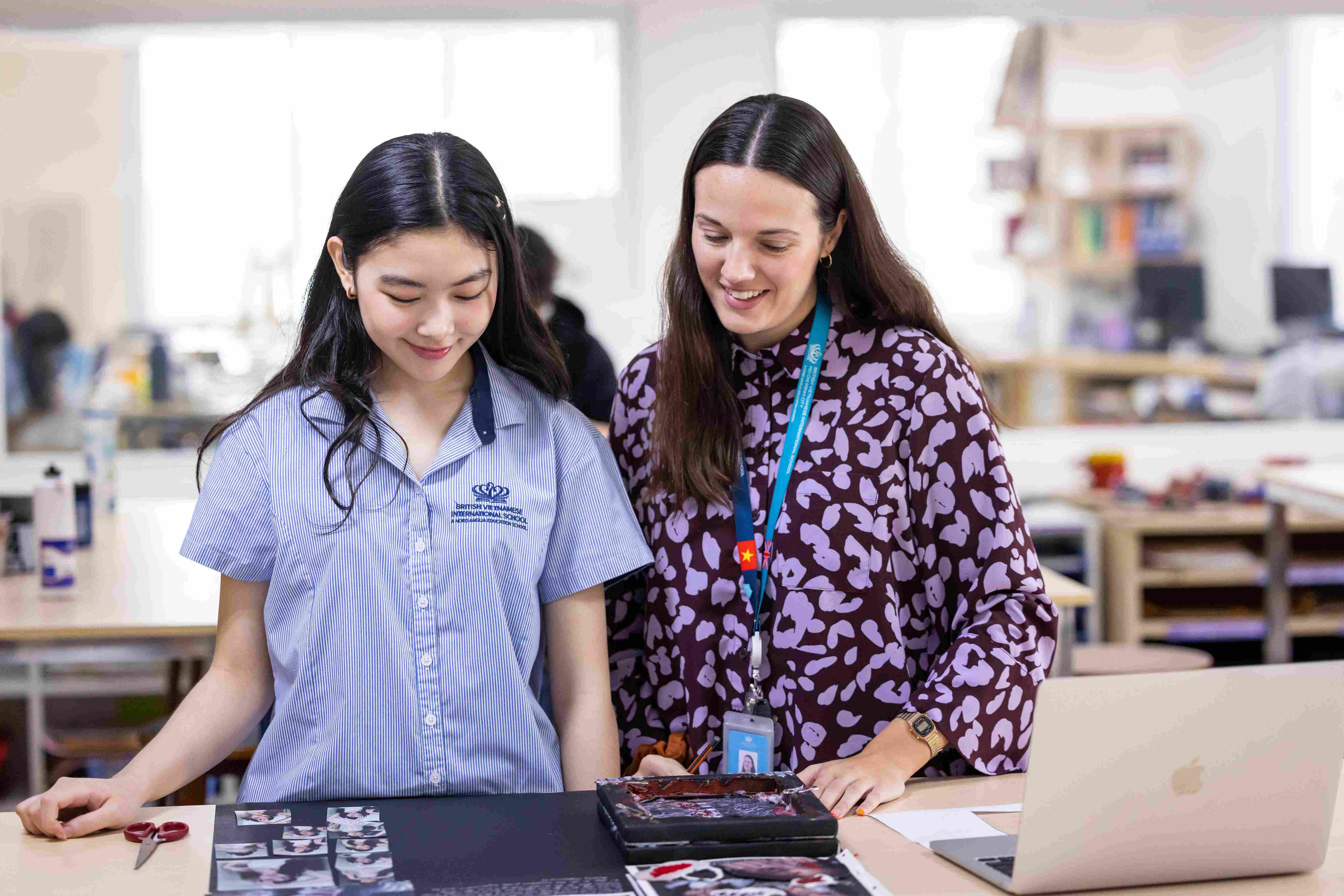
What Is Early Years Education?
Early years education is the first stage of a child's educational journey, typically supporting children from infancy to the age of six. It provides children with their first experience of learning beyond the family environment, introducing them to a nurturing educational setting where they begin developing essential knowledge, skills and attitudes.
The purpose of early years education is to support children's holistic development and help them build age-appropriate skills, habits and behaviours across a range of important areas:
- Physical Development: Developing movement, coordination and independence in daily routines.
- Cognitive Development: Encouraging curiosity, observation, thinking skills and exploration of the world around them.
- Language Development: Building children's ability to listen, understand, communicate and express their ideas.
- Personal, Social and Emotional Development: Helping children understand their emotions, develop confidence, build independence and learn to interact positively with others.
- Creative Development: Nurturing imagination and self-expression through music, art and creative experiences.
An effective Early Years programme should also:
- Be appropriate to children's age and stage of development.
- Balance care, wellbeing and education to support all-round growth.
- Provide opportunities for learning through play, exploration and meaningful experiences.
- Build strong foundations that help children transition confidently into Primary.
The Early Years also play an important role in shaping children's attitudes towards learning. When children feel safe, supported and valued, they are more willing to explore, try new things and participate actively in their learning experiences.
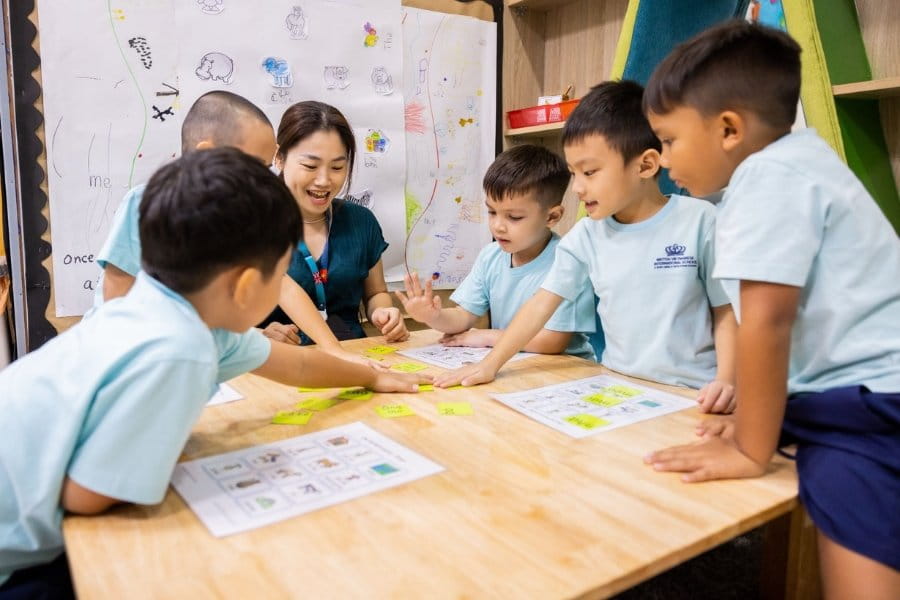
Early years education provides the foundations children need to thrive and transition confidently into Primary (Source: BVIS HCMC)
>> Read more:
- Early Years Foundation Stage (EYFS): Preparing Children for a Confident Start to Primary
- Montessori vs EYFS: Choosing the right early years curriculum for your child
Why Is Early Years Education So Important?
Early years education lays the foundations for children's development across multiple areas.
Building Strong Foundations for Language and Learning
From birth to age six, children's brains develop rapidly. During this time, they build language skills through conversations, storytelling, singing, reading and interactions with the people around them. These experiences help children expand their vocabulary, express their ideas and develop the communication skills they need to learn effectively.
At the same time, children begin developing essential learning skills such as observation, memory, pattern recognition and problem-solving. Whether they are sorting objects by size or completing a puzzle, they are learning how to think, test ideas and learn from experience.
Developing Social and Emotional Skills
Early Years environments provide children with regular opportunities to interact with both adults and peers. Through these everyday experiences, children learn how to share, take turns, collaborate with others and resolve simple disagreements.
They also begin to recognise their own emotions, understand how others may feel and develop appropriate ways of responding in different situations. For example, when a preferred activity is unavailable or a challenge arises during play, children learn to communicate their needs, seek support and regulate their emotions constructively.
Nurturing Confidence and Independence
When children are encouraged to make choices, try new activities and complete age-appropriate tasks independently, they begin to develop confidence in their own abilities. Supportive guidance from teachers, combined with opportunities to practise and improve, helps children become more resilient, independent and willing to embrace new challenges.
Independence is also developed through everyday routines such as tidying away resources, selecting books, making choices about activities and preparing for transitions. Over time, these experiences help children develop a sense of responsibility and ownership of their learning.
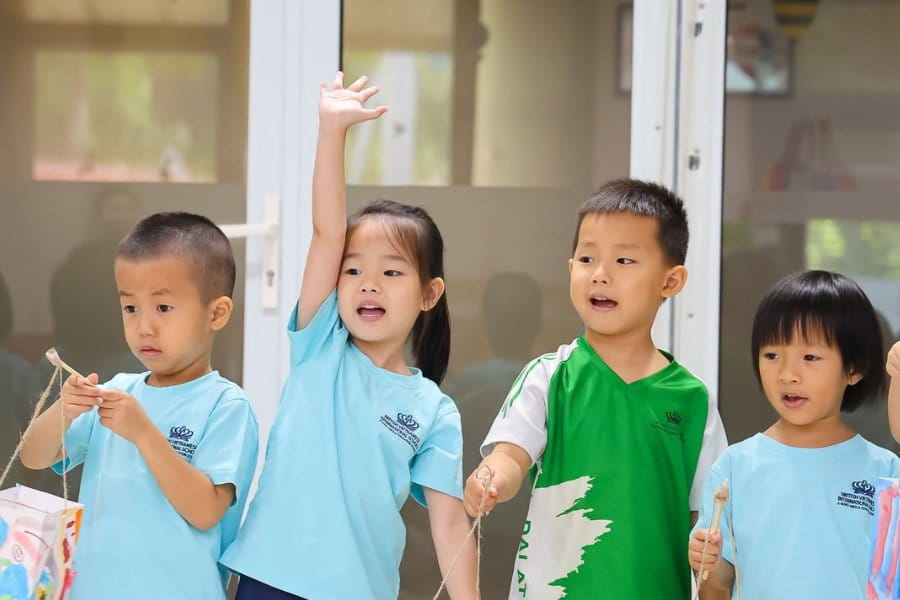
Children confidently perform, developing communication skills and self-confidence before transitioning to Primary (Source: BVIS Ho Chi Minh City)
>> Read more: How to build confidence: creating an environment that nurtures and inspires
Preparing Children for Primary
A high-quality Early Years programme equips children with the foundations they need before entering Primary school. Through age-appropriate learning experiences, children develop language, thinking skills, concentration and communication abilities.
They also become familiar with classroom routines, learn how to follow instructions, collaborate with others and complete age-appropriate tasks. These experiences help children feel confident, prepared and excited about taking their next steps in education.
>> Discover more: Development of Babies and Toddlers - From One to Two years
How Does an International Early Years Programme Differ from Traditional Approaches?
Unlike more traditional models, international Early Years programmes are built around internationally recognised educational frameworks that support children's development according to carefully designed developmental milestones. The difference extends beyond learning environments. It lies in the educational philosophy itself.
Encouraging Children to Explore and Develop Their Unique Potential
Children are encouraged to ask questions, make choices and try new experiences. Rather than simply receiving information, they actively participate in their learning by exploring ideas, expressing their thoughts and learning through first-hand experiences. Teachers guide and support each child according to their individual interests, abilities and stage of development.
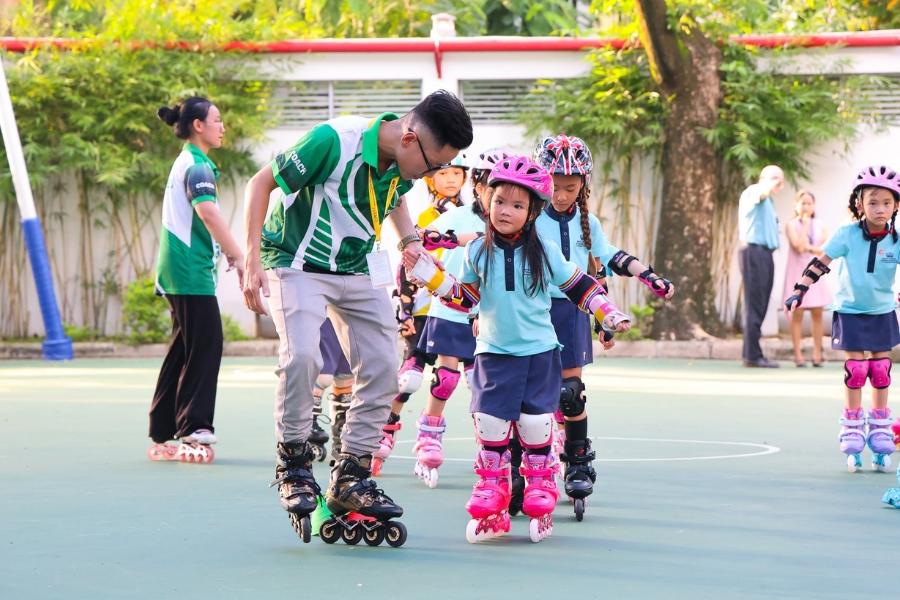
Children take on new challenges such as roller skating, developing confidence, independence and new skills with guidance from their teachers (Source: BVIS Ho Chi Minh City)
Fostering a Love of Learning Through Meaningful Experiences
Children learn through play, hands-on activities and exploration of topics that connect to their everyday lives. Whether taking part in creative arts, simple science investigations or outdoor learning experiences, children develop observation skills, curiosity and problem-solving abilities while discovering new ideas. These engaging experiences help make learning meaningful and inspire a genuine enthusiasm for exploration and discovery.
>> Read more: The importance of play in child development
Supporting Holistic Development
Alongside language and cognitive development, children learn how to recognise and express their emotions, understand the feelings of others and build positive relationships. Group activities and daily interactions help children practise sharing, cooperation, patience and conflict resolution, supporting both emotional wellbeing and social development.
Building Skills for the Future
International Early Years programmes help children develop independence, creativity, communication and problem-solving skills from an early age. Children gradually learn to complete age-appropriate tasks, adapt to new situations and seek support when needed. These capabilities prepare them not only for Primary but also for lifelong learning and future success.
>> Discover more: AI in education: Practical applications of AI in teaching and learning
What Do Children Learn in the Early Years Programme at BVIS Ho Chi Minh City?
At BVIS Ho Chi Minh City - one of Ho Chi Minh City’s leading international schools, children follow the British Early Years Foundation Stage (EYFS) framework, one of the world's leading Early Years curricula. Designed for children aged 2 to 5, the programme supports academic, personal and social development through carefully designed learning experiences that promote confidence, life skills and a lifelong love of learning.
Building Confidence and a Love of Learning from an Early Age
Curiosity is a powerful driver of learning during the early years. At BVIS, children are encouraged to ask questions, share ideas and explore the world through play-based and inquiry-led learning experiences.
Every effort, question and attempt is valued and acknowledged by teachers, creating a safe and supportive environment where children feel comfortable taking risks, making mistakes and trying again. This approach helps children develop resilience, confidence and an enthusiasm for learning that extends well beyond the classroom.
>> Read more: What Is Personalised Learning? Benefits of a Personalised Approach to Education
Learning to Collaborate, Manage Emotions and Become Independent
The EYFS programme places strong emphasis on children's emotional intelligence and social development. Children learn how to recognise emotions, build positive relationships and develop strategies to manage their feelings.
Through collaborative projects and shared activities, they practise taking turns, sharing, cooperating and working towards common goals. At the same time, everyday self-help skills such as putting on shoes, tidying away resources and managing meal times encourage children to become increasingly independent and responsible.
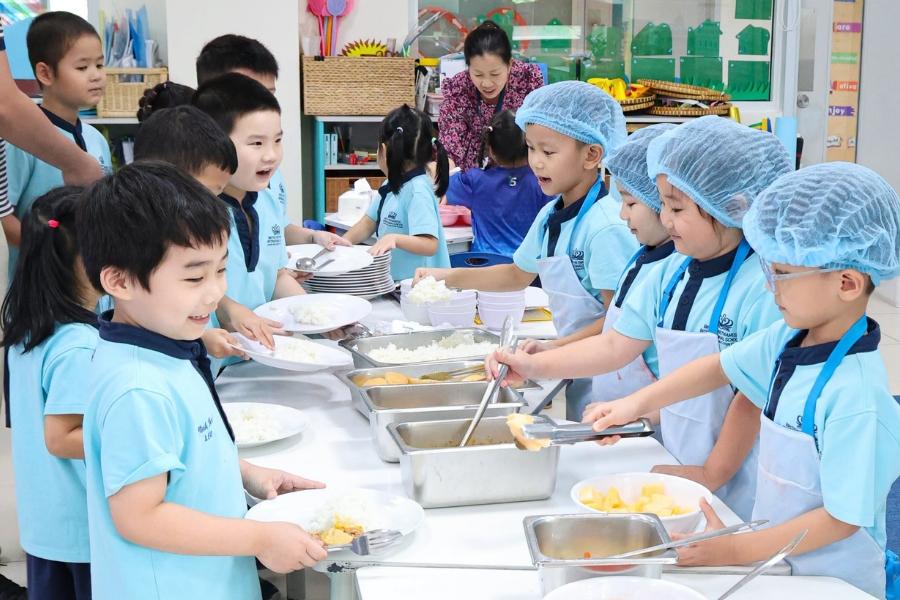
Children independently choose their meals and take responsibility for age-appropriate routines during lunch time, supporting the development of independence and positive habits (Source: BVIS HCMC)
>> Read more: Top 5 Essential Life Skills for Children to Build Confidence and Independence
Developing Holistically Through the British EYFS Curriculum
The British Early Years Foundation Stage (EYFS) framework supports children's development across seven key areas of learning.
- Communication and Language: Developing listening, speaking and interaction skills.
- Physical Development: Supporting coordination, movement and self-care.
- Personal, Social and Emotional Development: Building confidence, independence and emotional awareness.
- Literacy: Developing an early understanding of books, stories, sounds and pre-reading skills.
- Mathematics: Introducing numbers, shapes, patterns and early mathematical thinking.
- Understanding the World: Exploring people, communities, nature and the wider world.
- Expressive Arts and Design: Encouraging creativity through music, art and imaginative experiences.
By integrating these areas through meaningful learning experiences, children develop balanced growth across academic, physical, social, emotional and creative domains
>> Explore: How Early Years Foundation Stage (EYFS) Builds Confidence and Independence in Young Children?
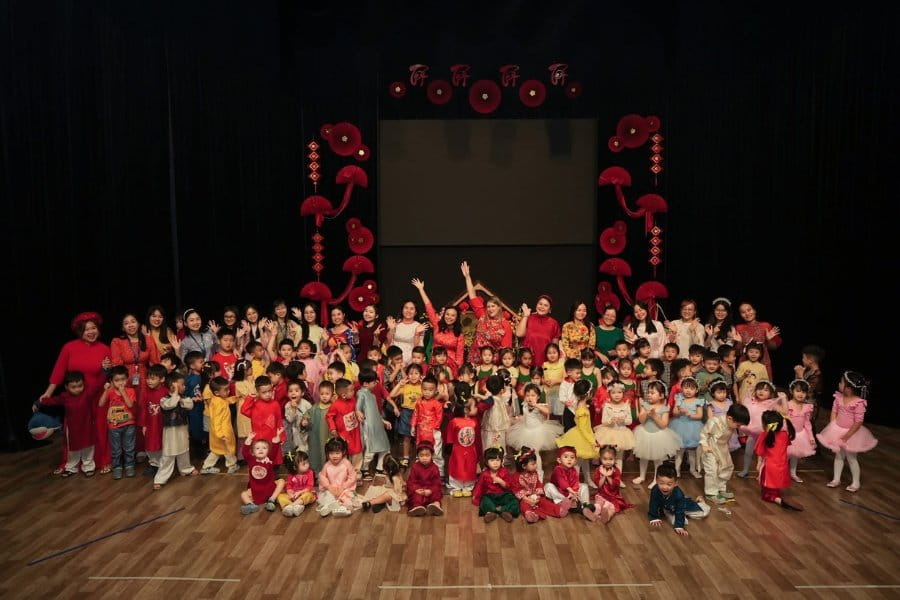
BVIS Early Years students regularly participate in performances and presentations, helping them build confidence and prepare for the transition to Primary (Source: BVIS HCMC)
Frequently Asked Questions About Early Years Education
1. What Age Should Children Start Nursery?
Children typically begin nursery or preschool between 18 months and 3 years of age, depending on their individual readiness and family circumstances. Parents may wish to consider factors such as communication skills, independence, social development and childcare needs when deciding the most appropriate time to start.
2. How Can Parents Help Children Adjust to Nursery?
Parents can support a smooth transition by gradually introducing new routines, encouraging basic self-help skills and talking positively about school. Maintaining consistent and working closely with teachers can also help children feel secure and confident during the adjustment period.
3. How Can Parents Choose the Right Early Years Programme?
Parents should consider their child's age, personality and developmental needs while evaluating the curriculum, learning environment, class size and quality of teaching. Visiting the school, observing classroom activities and speaking with teachers can provide valuable insight into whether the programme is the right fit for their child.
4. What is EYFS?
EYFS (Early Years Foundation Stage) is the British Early Years curriculum framework that guides children's care, learning and development during their earliest years. It includes seven areas of learning, supporting children's communication, physical development, emotional wellbeing, literacy, mathematics, understanding of the world and creativity.
5. What Age Groups Does the BVIS Early Years Programme Accept?
The Early Years programme at BVIS Ho Chi Minh City is designed for children aged 2 to 5 years. Parents are encouraged to contact the Admissions Team for the latest information regarding age requirements, admissions criteria and suitable entry points.
Early years education plays a vital role in laying the foundations for children's future success. Choosing the right programme can help children develop confidence, independence, essential life skills and a positive attitude towards learning that lasts throughout their educational journey.If you would like to learn more about the Early Years programme at BVIS Ho Chi Minh City, please contact our Admissions Team for personalised guidance on your child's educational journey:
- Campus address: 44–46 Street No. 1, Binh Hung Residential Area, Binh Chanh District, Ho Chi Minh City.
- Opening hours: Monday - Friday (8:00 AM – 5:00 PM)
- Hotline:
- Primary: +84 (28) 3758 0709 ext. 111
- Secondary: +84 (28) 3758 0717 ext. 211
- Email: admissions@bvisvietnam.com
Related news
Blog | Educational Insights  Blog | Educational Insights
 Blog | Educational Insights


